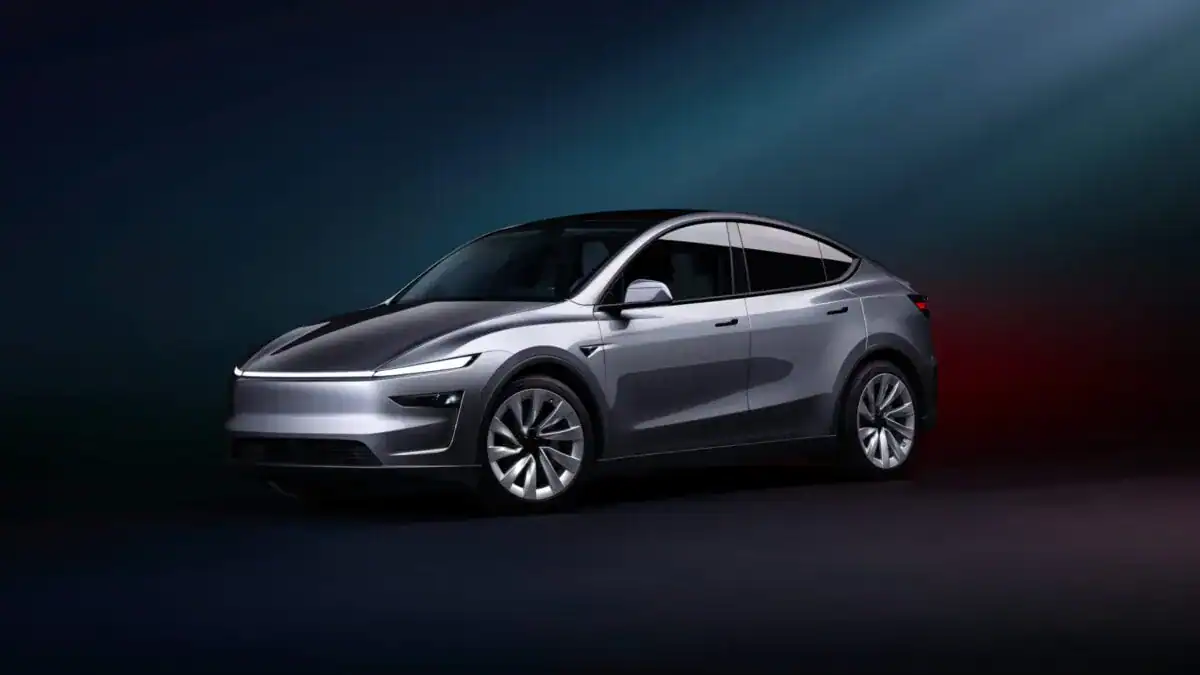
Why the Tesla Model Y is not sold in South Africa
The question of why the Tesla Model Y is not sold in South Africa continues to puzzle local electric vehicle (EV) enthusiasts. Despite being the world’s best-selling car in 2023 and 2024, the Model Y remains unavailable to South African buyers — mainly due to high import taxes, outdated ad valorem duties, and the absence of a local EV manufacturing framework.
Global Success of the Tesla Model Y
The Tesla Model Y achieved a historic milestone when it became the world’s top-selling car in 2023. Surpassing traditional automotive giants like Toyota, Volkswagen, and Ford, Tesla’s midsize electric SUV led global sales with over 1.22 million units, well ahead of the Toyota RAV4 and Corolla.
In 2024, the Model Y retained its crown, narrowly beating the Toyota Corolla with 1.08 million units sold. Its success in major markets such as China, Europe, and North America highlights Tesla’s dominance in the electric vehicles sector.
While it’s not the cheapest EV, the Tesla Model Y offers excellent value-for-money, combining impressive range, advanced technology, and safety. The entry-level version boasts a 501km WLTP range, accelerates from 0–100km/h in 5.6 seconds, and includes Tesla’s signature Autopilot system.
Its rapid adoption demonstrates how Tesla transformed electric cars from niche products into mainstream transportation — yet South African motorists are still left out of this revolution.
Why the Tesla Model Y is not sold in South Africa
So, why is the Tesla Model Y not sold in South Africa? The primary reason lies in the country’s high import duties and outdated taxation structure on vehicles.
Tesla CEO Elon Musk has publicly stated several times that import duties are “super high” in South Africa, making it financially impractical to launch locally. He emphasized that electric cars are not locally made, so the government applies steep taxes to protect domestic industries — a policy that unintentionally stifles EV adoption.
South Africa currently charges a 25% customs duty on imported EVs, significantly higher than the 18% duty applied to vehicles from Europe and the UK. In addition, there’s the ad valorem tax, a luxury-style levy based on a car’s retail price. This formula has not been updated in over 30 years, meaning even mid-range EVs are taxed as luxury vehicles.
Industry experts argue that this policy no longer makes sense. According to Toyota South Africa CEO Andrew Kirby, “An ad valorem tax made sense in 1995, but we are now taxing lower-end vehicles as if they were premium products.”
These outdated taxes make the cost of bringing a Tesla Model Y into South Africa almost 40% higher than its retail price in the UK.
The Financial Impact of South Africa’s Import Taxes
MyBroadband conducted an analysis comparing the current cost of importing a Tesla Model Y from the UK versus a revised tax scenario.
-
Current UK retail price (excluding VAT): R871,400
-
Customs duty (25%): R217,850
-
Ad valorem tax (20.91%): R182,241
-
Total landing price (excluding shipping): R1,451,217
If South Africa reduced the customs duty to 18% and adjusted the ad valorem tax to reflect inflation, the total import cost would drop to around R1,223,508 — a savings of nearly R230,000.
This significant reduction shows how modernizing South Africa’s automotive tax policies could make electric vehicles more accessible and encourage foreign brands like Tesla to enter the market.
Elon Musk’s Vision and South Africa’s Missed Opportunity
Elon Musk, a South African-born entrepreneur, has repeatedly expressed his desire for Tesla to enter the local market. In 2018, he hinted that Tesla would “probably” open its first dealership in South Africa by the end of 2019. Unfortunately, due to the country’s unfavorable tax environment, those plans were shelved.
Musk reaffirmed in 2024 that the current import duties make it “illogical” for Tesla to operate in South Africa. The company reportedly set a sales threshold for local EV adoption before revisiting the idea of a South African launch — a number that is more than three times higher than the current level.
This has left many South Africans frustrated. A handful of individuals, like Rubicon Energy’s Greg Blandford, have imported Teslas privately, but Blandford advises against it due to the complex import process, costs, and lack of official Tesla service infrastructure.
The Future of Electric Vehicles in South Africa
The future of electric vehicles in South Africa depends heavily on government policy reform. To attract manufacturers like Tesla, the state must create incentives for EV imports, reduce tariffs, and invest in charging infrastructure.
The World Health Organization and other environmental agencies have emphasized that transitioning to electric mobility is critical for reducing emissions and achieving sustainability goals. However, without tax relief and clear regulation, South Africa risks falling behind global EV trends.
Countries like China, Norway, and the United Kingdom have already implemented tax cuts, subsidies, and infrastructure investments to make EVs affordable. South Africa could follow suit to support green innovation and improve air quality in urban areas.
What Needs to Change
To make Tesla Model Y and other electric vehicles viable in South Africa, several policy and market changes are needed:
-
Reduce Import Duties: Lowering customs tax from 25% to 18% or less would significantly reduce EV prices.
-
Update Ad Valorem Formula: Modernize the outdated 1995 formula to reflect inflation and new technologies.
-
Encourage Local Assembly: Incentivize manufacturers to assemble EVs locally to qualify for tax exemptions.
-
Expand Charging Infrastructure: Increase the number of public charging stations nationwide.
-
Offer Buyer Incentives: Introduce rebates or subsidies to encourage EV adoption.
If these steps are taken, Tesla and other global EV manufacturers may see South Africa as a viable and profitable market.
Conclusion
In summary, the answer to why the Tesla Model Y is not sold in South Africa comes down to policy, pricing, and infrastructure. Despite its global success and the enthusiasm of local car lovers, import duties and outdated taxes keep Tesla out of reach.
As the world moves rapidly toward sustainable transportation, South Africa’s automotive industry must adapt — or risk being left behind in the electric revolution.
🌟 Thanks for reading! 🌟
We truly appreciate you taking the time to stay informed with eKayNews.co.za — your trusted source for the latest breaking news, politics, lifestyle, and entertainment, etc across South Africa. 🇿🇦 Don’t miss out on the stories shaping our nation every day! 💡

👉 Subscribe now at www.eKayNews.co.za and join a growing community that values truth, insight, and real South African voices. 📲 Stay ahead — be the first to know, the first to share, and the first to make a difference! 🚀
You May Like: