Argentina’s President Javier Milei withdraws from G20 summit in Joburg, supporting Donald Trump’s boycott
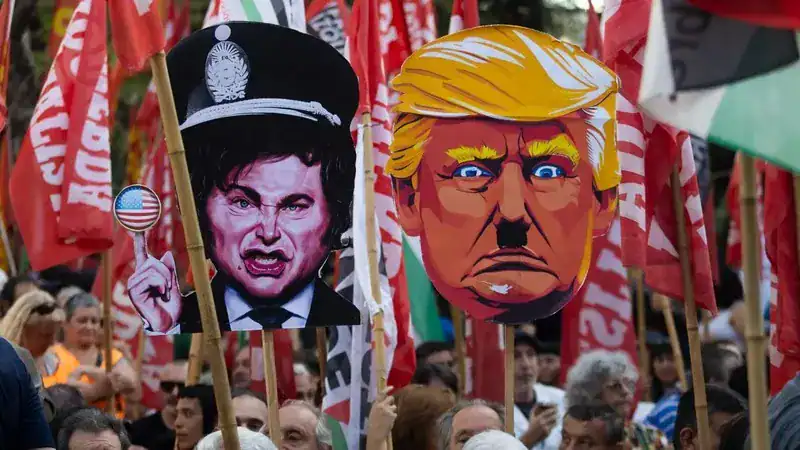
Argentina’s President Javier Milei withdraws from G20 summit in Joburg, supporting Donald Trump’s boycott, marking a bold diplomatic statement that underscores Argentina’s deepening ties with the United States. The decision has sparked mixed reactions across the international community, particularly in South Africa, which is hosting the G20 Summit for the first time in its history.
Milei’s Decision and Alignment with Washington
Argentina’s President Javier Milei officially confirmed that he will not attend the G20 leaders’ summit scheduled for later this month in Johannesburg. The Argentine leader’s decision aligns with a boycott led by U.S. President Donald Trump, who recently announced that the United States would not participate in the summit. According to the Trump administration, the boycott is a response to what they describe as “human-rights abuses against Afrikaner farmers in South Africa.”
Argentine media reports reveal that Foreign Minister Pablo Quirno and G20 negotiator Federico Pinedo will represent Argentina in Milei’s absence. This delegation will engage in lower-level discussions but will not participate in the heads-of-state sessions typically attended by presidents and prime ministers.
A Diplomatic Setback for South Africa
The withdrawal of Argentina’s President Javier Milei is viewed as a setback for South Africa’s diplomacy, especially as this year’s G20 marks a historic milestone—the first time the global summit is being hosted on African soil. The South African government had anticipated full participation from all G20 members to showcase its leadership role in global governance and multilateral cooperation.
South Africa’s Department of International Relations and Cooperation (DIRCO) has not yet issued an official response. However, analysts in Pretoria suggest that this withdrawal may raise questions about the strength of South Africa’s diplomatic relations with both Argentina and the United States.
Argentina’s Changing Foreign Policy Direction
Political analysts in Buenos Aires interpret Milei’s decision as part of a broader strategy to strengthen ties with Washington under Donald Trump’s influence. The move signifies Argentina’s gradual shift away from its traditional multilateral approach and closer alignment with U.S.-driven foreign policy.
Argentina, one of three Latin American members of the G20 alongside Brazil and Mexico, has historically used the summit to advocate for developing nations’ interests. Under Javier Milei, however, there has been a noticeable pivot toward pro-market policies and a desire to reestablish stronger links with Western powers.
“This decision reflects President Milei’s ideological and diplomatic alignment with Trump’s vision of global politics,” said Buenos Aires-based political analyst Esteban Rivas. “It sends a clear message that Argentina is willing to follow Washington’s lead, even when it means distancing itself from multilateral forums.”
Global Reaction and Regional Implications
The boycott has triggered strong reactions worldwide. European Union representatives have expressed disappointment, emphasizing the importance of maintaining G20 unity amid ongoing global challenges such as economic recovery, climate change, and geopolitical instability.
For South Africa, which invested significant resources and political capital in organizing the summit, the absence of two major economies—the United States and Argentina—dampens what was expected to be a landmark event showcasing African leadership on the world stage.
Economists warn that Argentina’s withdrawal could also impact trade relations within the Southern Hemisphere. The G20 summit is an important forum for discussing bilateral cooperation in infrastructure, investment, and sustainable development—key areas where South Africa and Argentina have historically collaborated.
Controversy Surrounding the Boycott
The controversy stems from Donald Trump’s claim that South Africa’s government has ignored violence against white farmers, particularly within the Afrikaner community. The South African government has categorically dismissed these allegations as “false, inflammatory, and politically motivated.”
DIRCO spokesperson Lunga Ngqengelele said, “South Africa remains committed to human rights, equality, and social justice. Any attempt to distort these principles for political gain undermines international cooperation.”
Trump’s stance has reignited old tensions between Pretoria and Washington, highlighting the challenges of balancing diplomatic relations while navigating political narratives rooted in domestic agendas.
Impact on the G20 Agenda
The G20 summit, scheduled for November 22–23 in Johannesburg, will focus on critical issues such as global economic recovery, reform of international financial institutions, and energy transition. World leaders including China’s Xi Jinping, India’s Narendra Modi, and Brazil’s Luiz Inácio Lula da Silva have confirmed their attendance.
The absence of both the U.S. and Argentina is expected to alter the tone of discussions. Experts say this could limit progress on trade reforms and climate finance—two areas where both countries have historically played influential roles.
Dr. Lindiwe Maseko, a South African political economist, commented, “This is a symbolic blow. The G20 summit was an opportunity for South Africa to demonstrate its leadership within emerging economies. Losing two member states, particularly due to political alignments, weakens that narrative.”
Milei’s Domestic Motives
Inside Argentina, Javier Milei’s decision is being interpreted not only as an act of solidarity with Trump but also as a strategic move to appeal to his conservative voter base. Known for his libertarian and pro-American stance, Milei has frequently expressed admiration for Trump’s economic policies and anti-establishment rhetoric.
Supporters argue that by skipping the G20 summit, Milei is sending a signal that Argentina will prioritize bilateral partnerships with nations that share its political ideology. Critics, however, warn that the decision could isolate Argentina from key trade partners and reduce its influence in global economic forums.
South Africa’s Response and Future Implications
Although South Africa’s diplomacy is being tested, the government remains confident that the G20 summit will proceed successfully. Officials have reiterated that the event will still host over 19 member states and the European Union, representing more than 85% of global GDP.
South Africa’s presidency stated that the summit will focus on “building an inclusive global economy, promoting energy reform, and strengthening international cooperation.” The withdrawal of certain nations, it added, “does not diminish the historic significance of hosting the first G20 on African soil.”
Political observers believe that the fallout from this incident could reshape future G20 dynamics and South-South cooperation. As global polarization increases, alliances such as BRICS and Western-aligned nations continue to vie for influence within multilateral platforms.
YOU MAY LIKE:
Trump says no US government official will attend G20 summit in South Africa
Trump linked to Jeffrey Epstein victim newly released emails reveal
Conclusion
The announcement that Argentina’s President Javier Milei withdraws from G20 summit in Joburg, supporting Donald Trump’s boycott, underscores the growing intersection between domestic politics and global diplomacy. For South Africa, it poses both a challenge and an opportunity—to reaffirm its position as a credible host and bridge-builder between the Global North and South.
While Argentina’s absence may cast a shadow over the proceedings, the summit remains a pivotal moment for Africa’s engagement in global decision-making. As the world watches, Javier Milei’s move will be remembered not only for its symbolism but for the questions it raises about the future of international cooperation, ideological alignment, and diplomacy in a divided world.
Kindly consider to support eKayNews, further consider buying us a virtual coffee or subscribe to any amount of your choice also in the links below or check at the footer of website

Payment handled by Pay fast the most and eKayNews doesn’t access your payments details at all:
Subscribe with any amount and cancel anytime:
Subscribe any amount of your choice:
Consider Buy us once off virtue coffee of any amount
Your incredible generosity in financially contributing to eKayNews fills our hearts with profound gratitude. Thank you, truly.
Your support is the very lifeline that allows us to remain online, to continue our work, and most importantly, to keep serving you with the news and information you rely on.
No matter the size, makes a tangible difference and empowers us to keep going.
From the entire team at eKayNews, thank you for being such a vital part of our community. We are committed to continuing to serve you even better, thanks to your kindness
We’re grateful for your Love and support of eKayNews

Thank you supporting eKayNews! Follow us for the latest news and updates. We appreciate your readership and engagement.
eKayNews on Facebook
eKayNews on X
Follow the eKayNews What Sapp: News Channel