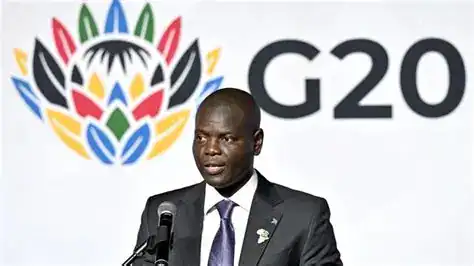
No G20 leader will face arrest after Lamola extends diplomatic immunity privileges
No G20 leader will face arrest after Lamola extends diplomatic immunity privileges for the upcoming summit, a decisive move by the South African government to ensure the smooth running of the first-ever G20 Leaders’ Summit on African soil. International Relations and Cooperation Minister Ronald Lamola officially gazetted the notice this week, creating a legal safety net for the heads of state and high-level delegations descending on Johannesburg.
The announcement comes amidst a heightened global focus on international justice and the obligations of host nations. By invoking specific sections of South African law, Pretoria has clarified the legal standing of the summit’s attendees, insulating the diplomatic gathering from potential legal disruptions.
Gazetting the Immunity
In terms of the Diplomatic Immunities and Privileges Act, Minister Lamola exercised his powers to formally recognise the gathering as an internationally protected event. The Act requires that for immunity to apply to a specific conference or meeting, the Minister must publish a notice in the government gazette.
Lamola announced that:
“It is hereby published for general information that the Minister of International Relations and Cooperation, in terms of section 6(2) of the Diplomatic Immunities and Privileges Act, 2001 (Act 37 of 2001) has recognised the fourth Sherpa meeting, to be held from 16 to 19 November 2025 and the G20 Leaders’ Summit, to be convened on 22 and 23 November 2025, both in Johannesburg”.
This gazette is not merely a procedural formality; it is the legal instrument that activates the protections. Without it, foreign dignitaries would legally be treated as ordinary visitors, subject to the standard jurisdiction of South African courts.
Scope of the Privileges
He stated that in accordance with the act, the immunities and privileges to be accorded to both meetings in Johannesburg are substantial. They are aligned with international standards, specifically those provided for in the 1946 Convention of the Privileges and Immunities of the United Nations and the 1947 Convention on the Privileges and Immunities of Specialised Agencies.
These conventions generally provide for:
-
Immunity from Arrest: Delegates cannot be arrested or detained.
-
Legal Process: They are immune from legal suits regarding acts performed in their official capacity.
-
Inviolability: Their papers, documents, and official residences (hotel rooms) are protected from search and seizure.
This legal shield is critical for summits like the G20 Leaders’ Summit, where leaders from nations with complex or hostile relations often gather under one roof. It ensures that diplomatic dialogue can occur without the threat of domestic legal interference.
The Arrest Clause: A Warning?
While the focus has been on protection, Ronald Lamola was careful to outline the boundaries of this protection. Lamola said the Act also makes provision for the arrest of guest who may not be granted immunity.
This statement serves as a crucial reminder that immunity is not a blanket “get out of jail free” card for everyone. It typically applies to the accredited delegates and heads of state. Individuals who are not officially part of the protected delegation, or who commit serious crimes outside the scope of their diplomatic duties (depending on the specific waiver provisions), could theoretically still face the full might of South African law.
Furthermore, the Act contains provisions where immunity can be waived by the sending state. If a diplomat commits a grave crime, South Africa can request that their home country waive immunity to allow for prosecution. If refused, the host nation can declare the individual persona non grata, forcing their immediate departure.
Extending Protection to Civil Society
Interestingly, the government’s legal umbrella covered more than just politicians. The immunity also extends to the Solidarity, Equality, Sustainability, the Social G20 Summit, which took place earlier this week.
This side summit was a unique feature of South Africa’s presidency. It bought together formal and informal networks, including:
-
Youth groups
-
Women’s organisations
-
Persons with disabilities
-
Faith-based organisations
-
Community forums and other grassroots structures.
These groups engaged directly on global issues that affect daily lives, from climate justice to debt relief. Extending privileges to this summit underscores South Africa’s commitment to “democratizing” the G20 process, ensuring that civil society actors could speak freely and safely without fear of retribution or legal harassment.
YOU MAY LIKE:
G20 summit in South Africa: Who’s attending and what’s on the agenda?
Context: The “Arrest” Elephant in the Room
The explicit discussion of immunity and arrest is likely shadowed by the controversy that plagued the BRICS summit earlier in the administration’s term, regarding Russian President Vladimir Putin and the International Criminal Court (ICC) warrant.
Although Russia is represented at this G20 Leaders’ Summit by a delegation rather than the President himself, the meticulous gazetting of immunity by Lamola seems designed to preempt any similar legal ambiguities. It sends a clear message to international bodies and local activists: the South African government has locked down the legal status of its guests.
As the summit kicks off this weekend, the focus can now shift from legal technicalities to the substantive agenda of the Global South. With the legal framework secure, Ronald Lamola and the South African government will hope the headlines focus on policy breakthroughs rather than police warrants.
Here are two references from mainstream South African media confirming the details of the diplomatic immunity granted for the G20 Summit:
-
Pretoria News
-
Headline: No G20 leader will face arrest after Lamola extends diplomatic immunity privileges
-
Date: November 21, 2025
-
-
The Mercury
-
Headline: No G20 leader will face arrest after Lamola extends diplomatic immunity privileges
-
Date: November 21, 2025
-
Kindly consider to support eKayNews, further consider buying us a virtual coffee or subscribe to any amount of your choice also in the links below or check at the footer of website

Payment handled by Pay fast the most and eKayNews doesn’t access your payments details at all:
Subscribe with any amount and cancel anytime:
Subscribe any amount of your choice:
Consider Buy us once off virtue coffee of any amount
Your incredible generosity in financially contributing to eKayNews fills our hearts with profound gratitude. Thank you, truly.
Your support is the very lifeline that allows us to remain online, to continue our work, and most importantly, to keep serving you with the news and information you rely on.
No matter the size, makes a tangible difference and empowers us to keep going.
From the entire team at eKayNews, thank you for being such a vital part of our community. We are committed to continuing to serve you even better, thanks to your kindness
We’re grateful for your Love and support of eKayNews

Thank you supporting eKayNews! Follow us for the latest news and updates. We appreciate your readership and engagement.
eKayNews on Facebook
eKayNews on X
Follow the eKayNews What Sapp: News Channel