Kenya halts China trade deal following pressure from the US
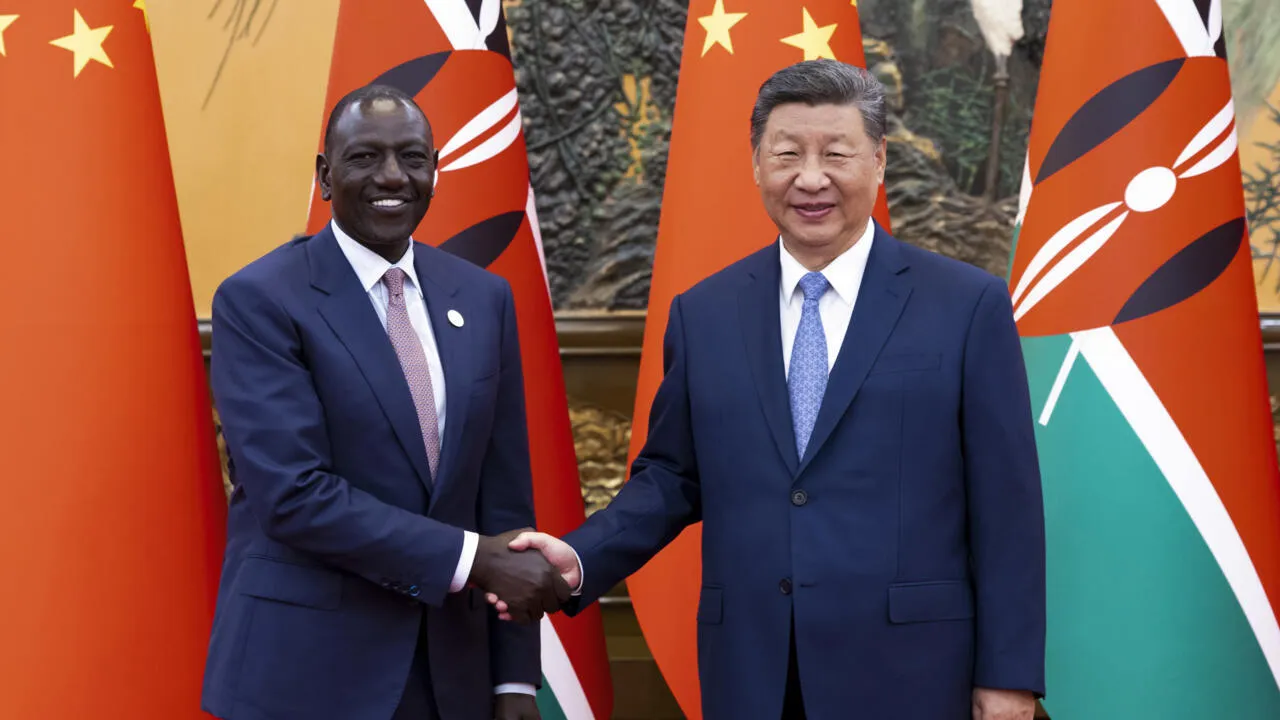
Kenya halts China trade deal following pressure from the US is the latest geopolitical flashpoint in East Africa as Nairobi navigates a high-stakes trade war between two global giants. In a move that has sent ripples through regional markets, President William Ruto’s administration has reportedly paused a significant “Early Harvest” trade agreement with Beijing. The decision comes after explicit warnings from Washington that deepening trade ties with China could jeopardize Kenya’s future participation in critical American trade frameworks.
The Kenya-China trade deal was designed to eliminate tariffs on Kenyan agricultural exports like tea, coffee, and avocados—products that currently face duties of up to 20% in the Chinese market. However, the suspension of this $1 billion pact highlights Nairobi’s precarious position as it seeks to balance its largest creditor, Beijing, against its core security and trade ally, Washington.
US pressure on Kenya: The AGOA Ultimatim
The primary driver behind the US pressure on Kenya is the looming uncertainty surrounding the African Growth and Opportunity Act. Since the original AGOA framework expired on September 30, 2025, Kenyan exporters have been in a state of crisis. American officials have reportedly signaled that a formal trade pact with China would be seen as a “red flag,” potentially disqualifying Kenya from the AGOA renewal 2026 negotiations currently underway in the US Congress.
The AGOA Renewal 2026 Timeline:
-
October 2025: AGOA formally expires, ending 25 years of duty-free access.
-
January 12, 2026: The US House of Representatives passes H.R. 6500, a bill to extend AGOA through 2028.
-
January 13, 2026: Kenya officially pauses the China deal as the AGOA extension moves to the US Senate.
For Nairobi, the choice is binary: secure a bilateral win with Beijing or protect the 25-year-old trade bridge to the United States.
The Economic Cost: Kenyan apparel exports tariffs
The impact of the trade standoff is most visible in the Special Economic Zones (SEZs) of Athi River and Mombasa. Since the lapse of AGOA in late 2025, Kenyan apparel exports tariffs have skyrocketed from 0% to as high as 28%. This sudden jump has made Kenyan-made clothing uncompetitive against rivals from Bangladesh and Vietnam.
Sectoral Vulnerabilities:
-
Jobs at Risk: The Kenya Association of Manufacturers (KAM) warns that 66,000 direct jobs in textiles and agriculture are on the line.
-
Export Value: Kenya’s apparel shipments to the US are worth over $600 million annually; without a deal, this revenue is expected to halve by the end of 2026.
-
Tariff Burden: In addition to the loss of AGOA, the Trump administration’s 10% reciprocal tariffs imposed in April 2025 have further strained the textile sector.
Navigating Icasa and International Trade Licensing
While the Kenya-China trade deal offered a “buffer” for agricultural producers, the technicalities of Icasa telecommunications licensing and other regulatory frameworks are also coming under scrutiny. Washington has expressed concern that Chinese involvement in Kenya’s digital and physical infrastructure could undermine the “Strategic Trade and Investment Partnership” (STIP) that Kenya is currently negotiating with the US.
The US argues that a high-standard agreement like STIP requires transparency and data protections that may conflict with the terms of a comprehensive Chinese trade pact. This has left the Kenyan cabinet and parliament in a deadlock, unable to ratify the Beijing agreement without risking a total lockout from the American market.
Comparison: China vs. US Trade Offerings for Kenya (2026)
| Feature | Proposed China Deal | Proposed US STIP / AGOA |
| Primary Benefit | 0% Tariff on Tea, Coffee, Avocados | Duty-free Apparel & Agro-exports |
| Trade Deficit | Ksh 475.6 Billion (Negative) | Highly Positive for Kenya |
| Strategic Risk | High Debt-to-Equity concerns | Sovereignty & Governance requirements |
| Status | Suspended/Halted | Awaiting Senate Approval |
YOU MAY LIKE:
India Takes Charge as BRICS Chair | 18th BRICS Summit in 2026
Conclusion: A Delicate Balancing Act
As Kenya halts China trade deal following pressure from the US, the Ruto administration is betting that the US Senate will follow the House’s lead and finalize the AGOA renewal 2026 by the end of the first quarter. For the thousands of workers in Kenya’s garment factories, the news of the pause on the China deal is a bitter pill to swallow if it does not immediately lead to the removal of Kenyan apparel exports tariffs.
Nairobi’s decision to pause proves that in the current global trade environment, “neutrality” is becoming an expensive luxury. Kenya must now hope that its loyalty to the American trade system is rewarded with a long-term extension that provides the stability its manufacturing sector so desperately needs.
Mainstream Media Reference
1: The Standard (Kenya)
Kindly consider to support eKayNews, Buy Us a Coffee & Keep the News Flowing!

Love what we do? You can now support eKayNews directly! Your contributions empower us to deliver the breaking news, sports, and local updates you trust.
Ways to Support:
-
Subscribe: Choose any amount (cancel anytime).
-
Virtual Coffee: A quick, once-off donation to say thanks.
Note: Payments are 100% secure via PayFast. We never see your banking details.
To our amazing readers: Your support fills us with gratitude. You are the reason we can keep doing this every day. Thank you for being a vital part of the eKayNews family!
We’re feeling the love at eKayNews!

Facebook: [eKayNews on Facebook] X (Twitter): [eKayNews on X] WhatsApp: [Follow the eKayNews WhatsApp Channel] Join our inner circle for real-time news alerts!
📢 Advertising Packages on www.eKayNews.co.za
Package 1. Link Booster: We add 7 links to 7 articles over 7 days – R2,500
Package 2. Permanent Feature: Sponsored Blog Article (hosted permanently) – R4,000
Package 3. Prime Visibility: Home Page Banner Ad (30 days) – R5,000
Book now: Email info@ekaynews.co.za or WhatsApp us on +27710961185