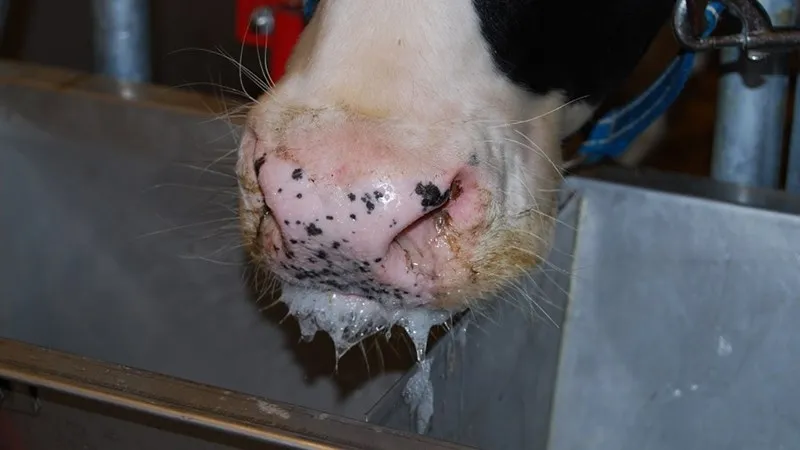
What national FMD disaster means for food and farmers is now one of the most urgent questions facing South Africa’s agricultural sector as foot-and-mouth disease continues to disrupt livestock production, food supply chains, and rural livelihoods.
The declaration of foot-and-mouth disease (FMD) as a foot-and-mouth disease national disaster marks a major turning point for the country’s livestock industry. Beyond animal health, the crisis is already pushing pork prices higher, placing pressure on food inflation, and raising concerns about long-term food security.
For farmers, particularly in the Free State, the national disaster declaration brings both urgency and uncertainty. While it unlocks government intervention, it also places new responsibilities on farmers, communities, and authorities to act swiftly and collectively.
Foot-and-mouth disease national disaster explained
The national disaster declaration, signed on 5 February, calls on all spheres of government to strengthen existing response structures and implement contingency measures to curb the spread of FMD.
According to Free State Agriculture, the declaration acknowledges the scale of the outbreak and the severe threat it poses to livestock farming, rural economies, and food supply chains.
“Every farmer just wants to protect his cows,” said Free State Agriculture vice-president Friedl von Maltitz. He stressed that the disaster declaration places responsibility squarely on government, farming communities, and individual producers to prevent further spread of the disease.
Without coordinated action and transparent communication, uncertainty will continue to undermine farmer confidence and delay recovery.
Impact on food price and consumer costs
One of the most immediate consequences of the foot-and-mouth disease national disaster is its impact on food price. Pork prices are already climbing as movement restrictions and biosecurity controls limit supply.
When livestock production slows or animals are culled, shortages ripple through the value chain. Abattoirs, processors, retailers, and ultimately consumers feel the pressure. Higher meat prices also place strain on households already battling rising fuel, electricity, and transport costs.
Economists warn that prolonged disruptions could extend beyond pork, affecting beef and dairy markets if containment measures fail. This makes rapid disease control critical not only for farmers but for national food affordability.
Livestock biosecurity measures become non-negotiable
Strict controls to stop the spread
Effective livestock biosecurity measures are now the frontline defence against further outbreaks. Farmers are being urged to implement strict livestock movement control, limit farm access, disinfect vehicles and equipment, and monitor animals closely for symptoms.
Local farmers’ associations are expected to play a key role in coordinating these measures, ensuring clear communication between farmers, veterinarians, and authorities.
Free State Agriculture highlighted the importance of biosecurity checkpoints, shared reporting systems, and ongoing farmer education to prevent gaps in disease control.
Community cooperation is critical
Biosecurity cannot succeed in isolation. Neighbouring farms, transporters, auction houses, and informal livestock traders must comply with movement restrictions. Any weak link risks undoing collective efforts.
Veterinary experts stress that early reporting of suspected cases is essential. Delays allow the virus to spread silently, increasing economic damage and prolonging recovery.
Vaccine rollout for farmers under the spotlight
Clarity, speed, and access
As the outbreak continues, attention is turning to the vaccine rollout for farmers. While vaccines are seen as a crucial tool, many producers remain uncertain about when doses will arrive and how distribution will work.
“What the farmer wants to know is how the vaccine will reach his farm and what he needs to do from his side,” von Maltitz said. “Clarity and speed are now critical.”
Clear allocation of responsibilities for vaccine procurement, distribution, and administration is essential. Any delays risk prolonging restrictions and deepening financial losses.
Affordability matters
Free State Agriculture emphasised that vaccines must be affordable. Farmers are already facing rising input costs, disrupted sales, and cash-flow constraints. Adding high vaccination costs could push some producers to the brink.
The organisation confirmed it would continue to apply pressure to ensure vaccines reach animals as quickly as possible and at a cost farmers can manage.
Financial strain on farmers and rural economies
The national FMD disaster is not only a veterinary crisis; it is a financial one. Movement bans, lost markets, and reduced slaughter capacity mean many farmers are losing income daily.
Free State Agriculture has called on banks and insurance companies to recognise the magnitude of the crisis and provide relief measures such as loan repayment holidays, extended credit terms, and flexible insurance arrangements.
“No farmer should lose his farm or leave his family with unpaid obligations because of circumstances beyond his control,” said Free State Agriculture president Francois Wilken.
Without financial relief, the long-term damage could include farm closures, job losses, and weakened rural economies.
YOU MAY LIKE:
Ramaphosa declares foot-and-mouth outbreak a national disaster
What happens next for food and farmers?
The declaration of a foot-and-mouth disease national disaster provides an opportunity for decisive action. However, its success depends on execution.
Government coordination, effective livestock biosecurity measures, and a transparent vaccine rollout for farmers will determine how quickly the sector stabilises. At the same time, managing the impact on food price is vital to protect consumers.
For farmers, the road ahead demands vigilance, cooperation, and resilience. For policymakers, it demands urgency, clarity, and accountability.
Ultimately, what national FMD disaster means for food and farmers is a test of South Africa’s ability to protect its food system while supporting those who feed the nation.
References from mainstream media.
-
Reuters – South African farmers count mounting losses as foot-and-mouth disease rages: Coverage of the economic impacts on farmers, export losses, and vaccine responses including local and imported vaccines. Read more: https://www.reuters.com/business/healthcare-pharmaceuticals/south-african-farmers-count-mounting-losses-foot-and-mouth-disease-rages-2026-02-12/
-
IOL – Farmers express outrage over delayed vaccine rollout amid Foot-and-Mouth Disease crisis: Reporting on farmers’ frustrations with the speed of vaccine distribution and concerns for food security. Read more: https://iol.co.za/news/2026-02-14-farmers-express-outrage-over-delayed-vaccine-rollout-amid-foot-and-mouth-disease-crisis/
Kindly consider to support eKayNews, Buy Us a Coffee & Keep the News Flowing!

Love what we do? You can now support eKayNews directly! Your contributions empower us to deliver the breaking news, sports, and local updates you trust.
Ways to Support:
-
Subscribe: Choose any amount (cancel anytime).
-
Virtual Coffee: A quick, once-off donation to say thanks.
Note: Payments are 100% secure via PayFast. We never see your banking details.
To our amazing readers: Your support fills us with gratitude. You are the reason we can keep doing this every day. Thank you for being a vital part of the eKayNews family!
We’re feeling the love at eKayNews!

Facebook: [eKayNews on Facebook] X (Twitter): [eKayNews on X] WhatsApp: [Follow the eKayNews WhatsApp Channel] Join our inner circle for real-time news alerts!
📢 Advertising Packages on www.eKayNews.co.za
Package 1. Link Booster: We add 7 links to 7 articles over 7 days – R2,500
Package 2. Permanent Feature: Sponsored Blog Article (hosted permanently) – R4,000
Package 3. Prime Visibility: Home Page Banner Ad (30 days) – R5,000
Book now: Email info@ekaynews.co.za or WhatsApp us on +27710961185