US Warns Iran to Make A Deal or Fighting Will Resume
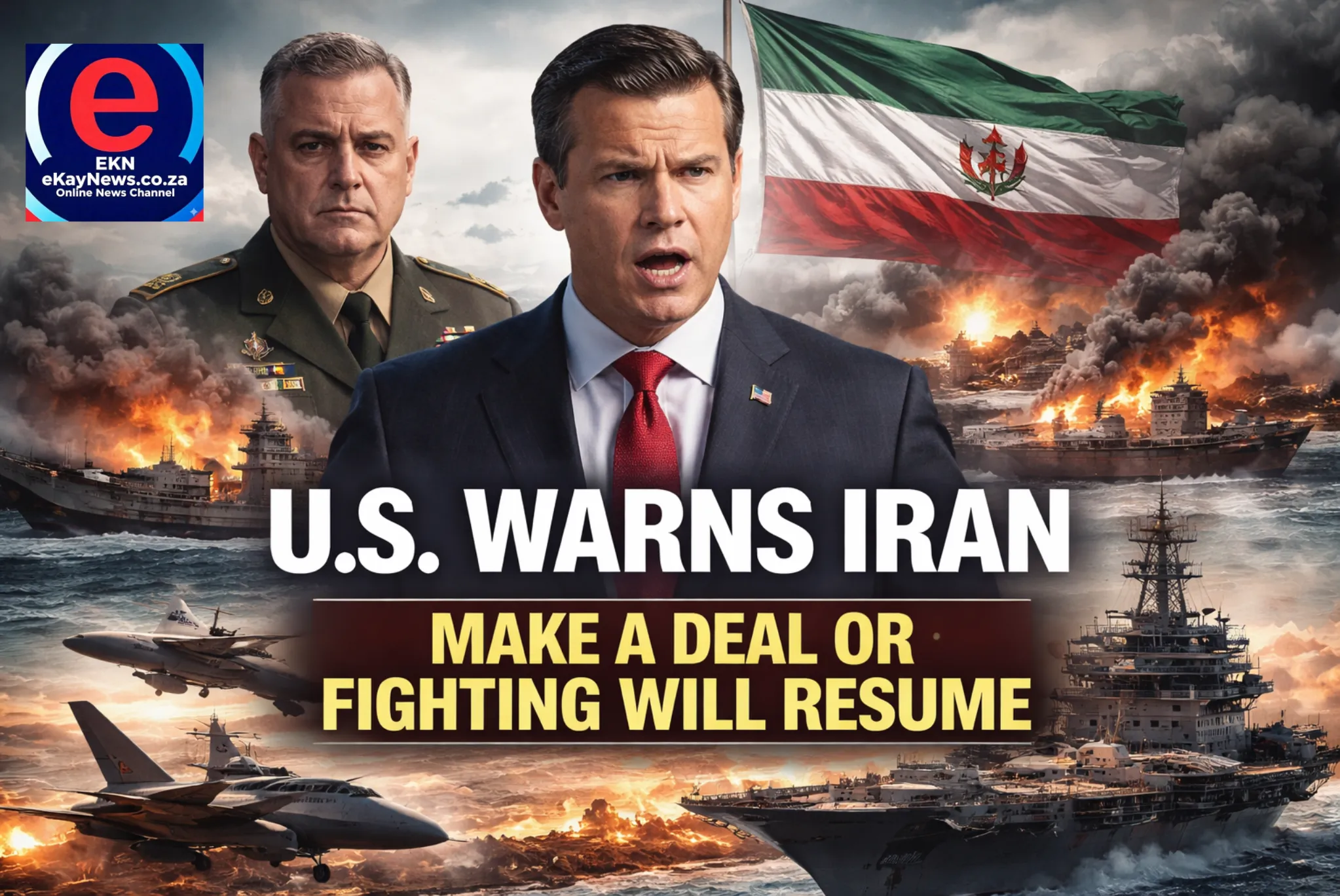
US warns Iran to make a deal or else fighting will resume as tensions between Washington and Tehran intensify, with senior US officials signaling that military action remains a strong possibility if diplomatic efforts fail.
The statement comes amid rising US Iran tensions, with the United States maintaining a firm stance that Iran must agree to a deal or face renewed conflict that could further destabilize the Middle East.
US warning highlights growing Middle East conflict escalation
The latest US warning was delivered by Defense Secretary Pete Hegseth, who made it clear that the United States is prepared to escalate pressure on Iran if negotiations do not succeed.
Speaking at a press conference, Hegseth said the US would continue enforcing a blockade on Iranian ports while simultaneously increasing economic and military pressure.
“In the meantime, and for as long as it takes, we will maintain this successful blockade,” he said. “But if Iran chooses poorly, then they will have a blockade and bombs dropping on infrastructure and power and energy.”
This statement reinforces the central message behind the US warns Iran to make a deal or else fighting will resume narrative, highlighting a dual strategy of economic sanctions and military readiness.
Iran blockade remains central to US strategy
The ongoing Iran blockade is a key component of the United States’ approach to forcing Iran back to the negotiating table. According to officials, the blockade is designed to weaken Iran’s economic capabilities and limit its access to global trade routes.
Hegseth confirmed that the US Treasury Department is actively working to maximize economic pressure on Tehran, further tightening restrictions that have already strained Iran’s economy.
The US Iran tensions have been building for months, with both sides engaging in strategic positioning while leaving the door open for diplomacy.
“I pray you choose a deal which is within your grasp, for the betterment of your people, for the betterment of the world,” Hegseth added, emphasizing that the US still prefers a peaceful resolution.
US military threat signals readiness for combat
The US military threat was further underscored by Dan Caine, Chairman of the Joint Chiefs, who confirmed that American forces remain on high alert.
“I’d like to emphasize during this pause that the United States joint force remains postured and ready to resume major combat,” Caine stated.
This declaration reinforces concerns about potential Middle East conflict escalation, as it signals that the US is not only prepared but actively positioned for rapid military engagement if necessary.
The phrase US warns Iran to make a deal, or else fighting will resume has now become a defining message in the current geopolitical climate, reflecting the seriousness of the situation.
Diplomatic pressure versus military action
While the US warning is firm, it is also paired with a clear diplomatic objective: bringing Iran back to negotiations.
Analysts say the strategy combines three main elements:
- Sustained Iran blockade to weaken economic stability
- Intensified sanctions through financial systems
- A credible US military threat to enforce consequences
This combination is intended to push Iran into accepting terms that align with US and allied interests.
However, critics argue that such an approach risk triggering unintended consequences, including retaliation from Iran or escalation involving regional allies.
Global reaction to US Iran tensions
The international community is closely monitoring the US Iran tensions, with many countries urging restraint and a return to diplomacy.
Global markets have also responded to the uncertainty, particularly in the energy sector, where fears of supply disruptions have led to volatility in oil prices.
The Middle East conflict escalation scenario remains a major concern for global stability, as any military confrontation could have far-reaching consequences beyond the region.
What happens if Iran refuses a deal?
If Iran declines to engage in a deal, the consequences outlined by US officials suggest a significant escalation.
The US warns Iran to make a deal or else fighting will resume position indicates that military strikes targeting infrastructure and energy facilities could be imminent.
Such actions would likely provoke a strong response from Iran, potentially leading to a broader regional conflict involving multiple actors.
The continued Iran blockade would also intensify, further isolating the country economically and politically.
Strategic stakes in the Middle East
The current situation underscores the high stakes involved in the Middle East conflict escalation.
For the United States, the goal is to prevent Iran from expanding its influence and capabilities, particularly in areas related to security and energy.
For Iran, resisting external pressure while maintaining sovereignty remains a central priority.
This dynamic has created a volatile environment where US Iran tensions can quickly shift from diplomatic standoffs to active conflict.
YOU MAY LIKE:
Conclusion: A critical moment in US Iran relations
The message that US warns Iran to make a deal or else fighting will resume reflects a निर्णng moment in international relations, where diplomacy and military power are being used simultaneously to shape outcomes. With the US warning, ongoing Iran blockade, and visible US military threat, the path forward remains uncertain.
Whether the situation leads to renewed negotiations or escalates into conflict will depend on the decisions made in the coming days by both Washington and Tehran. For now, the world watches closely as US Iran tensions continue to rise, with the risk of Middle East conflict escalation looming large over global stability.
References (Mainstream Media Sources)
- Reuters – US ready to restart combat if Iran rejects deal
https://www.reuters.com/world/middle-east/us-forces-ready-restart-combat-if-iran-doesnt-agree-deal-says-hegseth-2026-04-16/ -
The Guardian – US ‘locked and loaded’ warning to Iran
https://www.theguardian.com/us-news/2026/apr/16/pete-hegseth-iran-energy-infrastructure
Keep the Headlines Fresh!

Quality news takes time, effort, and a whole lot of coffee. If you value what we do at eKayNews, consider “buying a round” for the team!
-
Join the Inner Circle: Set up a custom subscription.
-
The Instant Jolt: Send a one-time “coffee” donation.
Why trust us? We use PayFast for 100% secure, encrypted transactions. Your data stays yours; the news stays ours.
To our amazing readers: You’re the reason we’re first on the scene. Thanks for being part of the family!
Feel the Pulse of the News with eKayNews!

Join the ever-growing eKayNews community and stay connected to the stories that matter. Follow us on Facebook, X, and WhatsApp for real-time updates, breaking news, and exclusive alerts straight to your feed. Your support keeps us digging deeper and sharing the news you can trust.
Stay Connected:
-
Facebook: [eKayNews on Facebook]
-
X (Twitter): [eKayNews on X]
-
WhatsApp: [Join the eKayNews WhatsApp Channel]
Become part of our inner circle and get instant news alerts as events unfold across South Africa and beyond!
Promote Your Brand with eKayNews
Looking to reach a wide, engaged audience? Explore our advertising packages:
-
Link Booster: 7 links to 7 articles over 7 days – R2,500
-
Permanent Feature: Sponsored blog article hosted permanently – R4,000
-
Prime Visibility: Home page banner ad for 30 days – R5,000
Don’t miss your chance to connect with our audience. Book your package today via email at info@ekaynews.co.za or WhatsApp us on +27710961185.
Be part of a platform where news meets community—stay informed, stay ahead, stay with eKayNews!