Elon Musk sues OpenAI over nonprofit mission abandonment
Setting the stage for one of the most consequential and heavily scrutinized legal battles in the history of Silicon Valley, Elon Musk sues OpenAI over nonprofit mission abandonment. Arguing forcefully that the pioneering artificial intelligence organization has completely ditched its original altruistic goals and gone full-on for-profit. He famously calls this organizational pivot a “bait and switch,” insisting to the jury that he was deliberately misled about the company’s overarching direction and ultimate corporate structure. The high-stakes case is happening right now in Oakland, California, drawing intense scrutiny from tech leaders, global investors, and legal experts. The fact that Elon Musk sues OpenAI over nonprofit mission abandonment highlights a deep, systemic philosophical rift regarding exactly how advanced artificial intelligence should be developed, funded, and ultimately controlled by humanity.
The origins of OpenAI and the fundamental nonprofit mission
To truly understand why this massive lawsuit is happening today, one must look back to the foundational days of the company. In 2015, Elon Musk played a pivotal and undeniably central role in creating the organization. During his extensive testimony, Musk spent considerable time reminding the courtroom that he helped start the enterprise from the ground up. He drew heavily on his vast experience from previous successful business ventures, including Zip2, PayPal, SpaceX, Neuralink, and Tesla.
“I came up with the idea, the name, recruited the key people, taught them everything I know, provided all of the initial funding,” he testified before the court. At the time of its inception, his primary concern was that the rapid, unchecked advancement of artificial intelligence could become a dangerous “double-edged sword” for society. He firmly believed that while AI possessed the unparalleled ability to make everyone globally prosperous, it also carried the severe existential risk that “it could also kill us all.” Therefore, a strict, public-focused framework dedicated to a nonprofit mission was deemed absolutely essential.
Countering tech giants and protecting humanity
During his early exploratory discussions around 2015, Musk spoke to numerous industry leaders about his growing fears, including Google co-founder Larry Page. Musk recounted to the jury that he felt the powerful tech executive “was not being sufficiently caring about the safety of AI.” When Musk brought up a hypothetical, apocalyptic scenario where AI wipes out humans, he claimed Page was dismissive. According to Musk’s testimony, Page stated that such an outcome would be fine as long as artificial intelligence survives, and allegedly called Musk a “speciesist” for prioritizing the survival of humans over machines.
Believing this specific perspective was entirely “nuts” and incredibly dangerous, Musk sought to create a direct, powerful counterpoint to Google’s technology. Because Alphabet Inc.’s Google was an early leader with “all the money, all the computers and all the talent for AI,” Musk envisioned the exact opposite: an open-source entity strictly dedicated to a transparent philanthropic goal.
A tense battle unfolds in federal court
The current, highly publicized legal proceedings are a boiling point—the culmination of years of mounting animosity and bitter public feuding between former allies who have now become fierce industry rivals. As Elon Musk sues OpenAI over nonprofit mission abandonment, he is presenting a dire, sweeping warning to the federal court. Musk told jurors at the outset of the trial that the startup’s pivot from a charity to a massive for-profit business is inherently wrong and deeply unethical.
The alleged “charity looting” and precedent risk
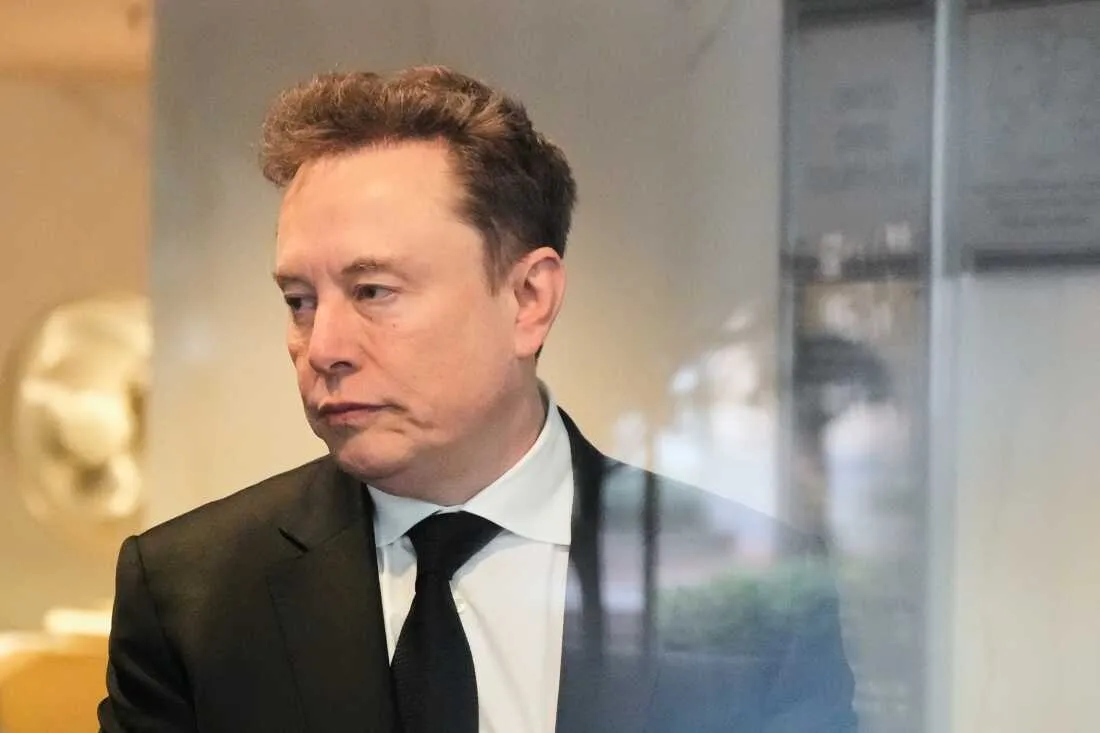
“It is not okay to steal a charity, that’s my view,” Musk declared from the witness stand, appearing comfortable and enthusiastic in his signature black suit and tie. He stressed that the consequences of this case extend far beyond the immediate founders involved in the dispute. Musk explicitly warned the jury that if the executives’ conduct isn’t deemed legally improper, the outcome “will become case law and become precedent to looting every charity in America.”
OpenAI counters Musk’s narrative
The defense has fiercely rejected Musk’s characterization of the historical events. An attorney for OpenAI, William Savitt, openly objected to Musk’s sweeping legal explanations, although US District Judge Yvonne Gonzalez Rogers denied the request to strike the testimony, allowing Musk to continue.
In his own opening statements to the jury, Savitt argued that the lawsuit is not genuinely about protecting a charity or upholding public morals. Instead, he painted the litigation as a calculated, aggressive attempt to undermine a top competitor to Musk’s own recently launched AI company, xAI. Savitt also laid the groundwork to show that Musk himself was actually a vocal proponent of restructuring the organization as a lucrative for-profit entity during its formative, financially strained years.
Sam Altman, Microsoft, and the pivot to profit
At the absolute center of this corporate controversy is Sam Altman, the chief executive officer of the organization, alongside his co-founder Greg Brockman. Musk’s highly aggressive legal team, spearheaded by attorney Steven Molo, argues that these specific executives took full advantage of Musk’s money, his sterling Silicon Valley reputation, and his early industry guidance to get the ambitious project off the ground. Molo forcefully alleges that once the difficult foundational work was completed, they made a calculated decision to abandon their public-focused principles and capitalize on the project for their own massive financial benefit.
Furthermore, Molo argued before the nine-person jury that Microsoft Corp. was a “knowing accomplice” to this ultimate betrayal. The software giant famously pumped a staggering $13 billion into the artificial intelligence company starting in 2019, exactly one year after Musk officially left the startup’s board of directors. Molo accused Microsoft of standing by Sam Altman and Brockman as they made an “absolute mockery” of the original charitable intentions.
Emails reveal early internal debates
Despite the public assertion that Elon Musk sues OpenAI over nonprofit mission abandonment purely on altruistic and moral grounds, the defense brought forward several old, internal emails to severely complicate that clean narrative. Savitt revealed that in the organization’s very first year as a research lab, Musk allegedly wrote in an email that it was “probably better to have a standard C corp with a parallel nonprofit.” The following year, Musk reportedly wrote that it might have been a mistake to set up as a nonprofit, given the rapid progress competing projects were making.
The struggle for corporate control
By 2017, as the immense computing resources required to train large language models became painfully apparent, the founders held “dozens” of meetings to discuss creating a for-profit arm to attract necessary capital. Savitt stated that during these intense discussions, Musk never once expressed the view that the entity should remain purely nonprofit. Instead, the defense claims Musk actually “wanted to turn OpenAI into a full-on for-profit company and take absolute control of it,” a sweeping power grab that the other founders firmly refused to allow.
Musk clarified during his time on the stand that he was always open to the concept of a for-profit subsidiary, but strictly on the condition that the profits were heavily capped and any money generated would funnel directly back to the parent charity. He felt that a proposed equal equity split among the four key leaders—including himself, Altman, Brockman, and chief scientist Ilya Sutskever—was “unfair and inappropriate” given that he had provided virtually all of the initial funding up to that point. He expected to hold the majority interest, a position he knew would dilute over time.
What the advisory verdict means for the industry
Today, the organization maintains that its nonprofit mission is still intact, claiming the nonprofit foundation remains in ultimate control while holding a 26% equity stake alongside Microsoft’s 27%. Russell Cohen, an attorney representing Microsoft in the federal court, defended the massive financial partnership, stating they “never tried to control” the company and simply saw a partnership that could benefit everyone.
As the three-week trial progresses, the jury will continue to hear from a parade of VIP witnesses and wade through years of complex text messages and corporate documents. The jury will issue an “advisory verdict,” which Judge Gonzalez Rogers will use as a legal guidepost for her final, binding ruling. With a highly anticipated, potentially trillion-dollar public offering (IPO) looming on the horizon, this fierce courtroom drama will definitively determine whether the company’s original charter can be legally enforced, or if its current lucrative structure will be validated.
YOU MAY LIKE:
Conclusion: The future of AI governance
Because Elon Musk sues OpenAI over nonprofit mission abandonment, the eventual outcome could dictate the future trajectory of the global tech economy. The verdict in this federal court case will do more than just resolve a dispute between Silicon Valley titans; it will establish a profound legal and ethical framework for how AI companies operate. Whether the court sides with Musk’s vision of public-focused charity protection or validates Sam Altman and OpenAI’s pragmatic pivot to a capped-profit model, the ripple effects will be felt across every boardroom and research lab racing to build the future of artificial intelligence.
References
- Reuters – “Elon Musk sues OpenAI over shift to for-profit model”
https://www.reuters.com/technology/elon-musk-sues-openai-over-for-profit-shift-2024-03-01/ - BBC News – “Elon Musk files lawsuit against OpenAI and Sam Altman”
https://www.bbc.com/news/technology-68434579
Keep the Headlines Fresh!
Quality news takes time, effort, and a whole lot of coffee. If you value what we do at eKayNews, consider “buying a round” for the team!
-
Join the Inner Circle: Set up a custom subscription.
-
The Instant Jolt: Send a one-time “coffee” donation.
Why trust us? We use PayFast for 100% secure, encrypted transactions. Your data stays yours; the news stays ours.
To our amazing readers: You’re the reason we’re first on the scene. Thanks for being part of the family!
Feel the Pulse of the News with eKayNews!

Join the ever-growing eKayNews community and stay connected to the stories that matter. Follow us on Facebook, X, and WhatsApp for real-time updates, breaking news, and exclusive alerts straight to your feed. Your support keeps us digging deeper and sharing the news you can trust.
Stay Connected:
-
Facebook: [eKayNews on Facebook]
-
X (Twitter): [eKayNews on X]
-
WhatsApp: [Join the eKayNews WhatsApp Channel]
Become part of our inner circle and get instant news alerts as events unfold across South Africa and beyond!
Promote Your Brand with eKayNews
Looking to reach a wide, engaged audience? Explore our advertising packages:
-
Link Booster: 7 links to 7 articles over 7 days – R2,500
-
Permanent Feature: Sponsored blog article hosted permanently – R4,000
-
Prime Visibility: Home page banner ad for 30 days – R5,000
Don’t miss your chance to connect with our audience. Book your package today via email at info@ekaynews.co.za or WhatsApp us on +27710961185.
Be part of a platform where news meets community—stay informed, stay ahead, stay with eKayNews!