Tulsi Gabbard to resign as US national intelligence directorz
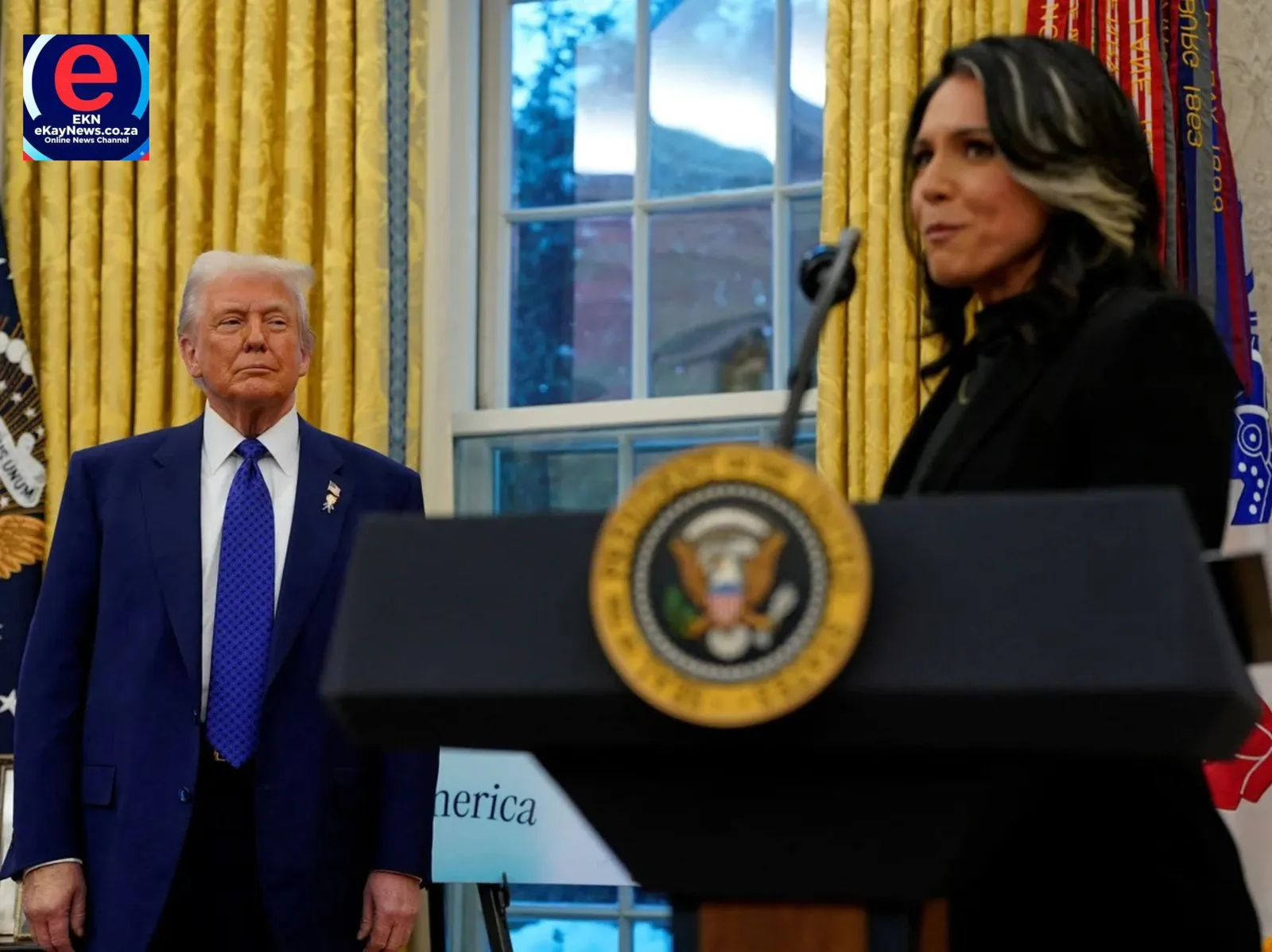
Tulsi Gabbard to resign as US national intelligence directorz, stepping down from one of the most powerful and demanding roles in the federal government. Following 15 eventful and sometimes turbulent months overseeing the sprawling apparatus of 18 federal intelligence agencies, Gabbard has officially submitted her resignation to the Trump administration.
The decision marks a profound shift for the 43-year-old political figure who journeyed from being a rising star in the Democratic Party to becoming one of President Donald Trump’s most prominent conservative allies. Her departure, effective as of June 30, 2026, highlights the heavy personal toll that public service can demand, particularly in the face of unexpected family tragedies.
Husband Abraham Williams battles rare bone cancer
The primary catalyst for her sudden departure is a heartbreaking family medical crisis. In a deeply personal resignation letter submitted on Friday, Gabbard revealed that her husband, Abraham Williams, was recently diagnosed with a severe and extremely rare form of bone cancer. The diagnosis necessitates immediate and intensive medical treatment, shifting Gabbard’s priorities entirely away from Washington, D.C.
“His strength and love have sustained me through every challenge,” Gabbard wrote movingly in her public resignation letter. During her 11-year marriage to Williams, a cinematographer from Hawaii, the couple has weathered military deployments, gruelling political campaigns, and intense public scrutiny. However, the severity of this medical diagnosis proved to be a hurdle requiring her undivided attention.
“I cannot in good conscience ask him to face this fight alone while I continue in this demanding and time-consuming position,” she continued. “He faces major challenges in the coming weeks and months. At this time, I must step away from public service to be by his side and fully support him through this battle.”
Trump praises Gabbard’s tenure in national intelligence
President Donald Trump, who controversially appointed Gabbard to the vital role shortly after winning the 2024 election, publicly confirmed and accepted her resignation on his Truth Social platform. Despite rumors of increasing friction between Gabbard and the White House’s inner circle over the ongoing military engagements in the Middle East, Trump offered a warm public farewell.
He stated that Gabbard “rightfully, wants to be with him, bringing him back to good health as they currently fight a tough battle together. I have no doubt he will soon be better than ever.” He added that she had “done an incredible job, and we will miss her.”
To ensure continuity within the intelligence community, Trump announced that Aaron Lukas, the current principal deputy director of national intelligence, will step in to serve as the acting director following Gabbard’s official departure at the end of June. Lukas, an experienced intelligence professional and former undercover CIA officer, is expected to provide stability during a highly volatile period for US foreign policy.
A turbulent era for Tulsi Gabbard and US national intelligence
The news that Tulsi Gabbard to resign as US national intelligence directorz brings to a close a highly unusual and transformative era for the Office of the Director of National Intelligence (ODNI). When Trump nominated her to head the intelligence community in 2025, the decision sent shockwaves through Washington. A military veteran who had served in a medical unit in Iraq, Gabbard had a wealth of foreign policy opinions but lacked traditional, high-level intelligence management experience.
As head of the intelligence community, Gabbard was tasked with coordinating among multiple, often competing intelligence agencies and serving as the principal intelligence adviser to the president. Under her leadership, she enacted sweeping, controversial changes. She argued that the national intelligence apparatus had become “bloated and inefficient” over the past two decades of the global war on terror.
True to her word, she aggressively shrank the size of the intelligence community. Last year, she announced radical plans to cut the agency’s internal ODNI staff by almost 50%, a move that drew severe criticism from career intelligence professionals but won high praise from the Trump administration’s conservative base, who actively campaigned against what they viewed as a “deep state” bureaucracy.
Conflicts with Trump over Iran and foreign intervention
Despite her initial alignment with the Trump administration’s goals of restructuring the federal government, Gabbard’s deeply held anti-interventionist views repeatedly put her at odds with the White House’s actual foreign policy decisions. During her 2020 presidential run, and later as an independent and Republican surrogate, she had positioned herself as a fierce opponent of unnecessary foreign wars.
This philosophical stance created massive tension after President Trump decided to launch direct military attacks against Iran. This year, Gabbard has largely been out of public view as the United States drastically escalated its military action against Iran, ramped up economic and political pressure on Cuba, and notably participated in the removal of Venezuela’s president.
Following controversial US-Israel strikes, Gabbard conspicuously avoided explicitly endorsing the military decision. During a tense congressional hearing in March, she carefully evaded direct questions regarding whether the administration fully understood the conflict’s potential geopolitical fallout.
Furthermore, she faced intense scrutiny and aggressive questioning over what Democratic lawmakers perceived as glaring discrepancies between the White House’s aggressive rhetoric and the intelligence community’s actual assessments regarding Iran’s nuclear enrichment capabilities.
Sidelined in the Trump administration
The friction peaked last year when Trump appeared to completely dismiss Gabbard’s sworn declaration before Congress that Iran was not actively seeking to build a nuclear weapon. “I don’t care what she said,” Trump bluntly told reporters at the time, openly undermining his own intelligence chief. “I think they were very close to having a weapon.” Trump has repeatedly cited Iran’s alleged nuclear capability as the primary justification for the current US war with Iran.
This profound policy disconnect was further highlighted when Gabbard’s top aide, former National Counterterrorism Center director Joe Kent, abruptly left the administration two months ago over his staunch opposition to the war in Iran, openly urging the president to “reverse course.” Following Kent’s highly publicized resignation, Gabbard was seemingly pressured to fall in line, publicly stating that as commander-in-chief, the president was solely responsible for determining what constituted an imminent threat.
Tulsi Gabbard’s historic and unconventional political career
Before the headlines broke stating Tulsi Gabbard to resign as US national intelligence directorz, she had already established one of the most unconventional political resumes in modern American history. Her career has been defined by a series of political firsts, unexpected pivots, and an unwavering willingness to challenge party establishments.
Her transition from a progressive darling—who famously endorsed Bernie Sanders in 2016—to a prominent contributor on Fox News who was vocal on topics such as gender identity and freedom of speech, completely redefined her public persona. By the time she endorsed Trump in 2024, campaigned vigorously alongside him, and served on his transition team, she had fully cemented her status as a leading voice in the “America First” movement.
High turnover plagues the Trump cabinet
The revelation that Tulsi Gabbard to resign as US national intelligence directorz adds to a growing list of high-profile departures within Donald Trump’s second administration. Gabbard is officially the fourth major cabinet-level member to depart the administration this year alone.
This latest exit follows Lori Chavez-DeRemer, who left her position as labor secretary in April amidst internal administration restructuring. Earlier in the year, Homeland Security Secretary Kristi Noem and Attorney General Pam Bondi both abruptly left the administration. The rapid turnover of top female officials has sparked widespread commentary regarding the intense pressure, demanding loyalty tests, and volatile policy shifts that characterize the current White House.
While Gabbard’s resignation is explicitly tied to her husband’s tragic medical diagnosis, political analysts have noted that her departure conveniently resolves the growing ideological clash between her anti-war principles and the administration’s increasingly hawkish foreign policy actions in the Middle East and Latin America.
YOU MAY LIKE:
Looking ahead: What this means for national intelligence
As Gabbard prepares to step down on June 30, the intelligence community braces for another transition. Aaron Lukas will inherit an ODNI that is significantly smaller, highly scrutinized, and deeply involved in providing real-time intelligence for multiple active global conflicts.
For Gabbard, the immediate future will be entirely dedicated to her family. Her husband’s battle with bone cancer will require intense focus and emotional resilience. While her political career has been characterized by fierce public battles and ideological crusades, she has made it clear that her current fight is an entirely private and personal one.
Whether she will eventually return to the political arena, media commentary, or public service remains an open question. For now, the focus shifts to her husband’s health, as the Trump administration scrambles to maintain stability within the nation’s critical intelligence infrastructure during a period of unprecedented global tension.
References
-
CNN. (2026). “Tulsi Gabbard resigns as Director of National Intelligence, citing husband’s cancer diagnosis.” https://www.cnn.com/2026/05/22/politics/tulsi-gabbard-resigns-dni-trump-administration/index.html
-
Fox News. (2026). “DNI Tulsi Gabbard stepping down to care for husband amid cancer battle; Trump praises her ‘incredible job’.” https://www.foxnews.com/politics/tulsi-gabbard-resigns-dni-husband-cancer-trump-administration
Keep the Headlines Fresh!

Quality news takes time, effort, and a whole lot of coffee. If you value what we do at eKayNews, consider “buying a round” for the team!
-
Join the Inner Circle: Set up a custom subscription.
-
The Instant Jolt: Send a one-time “coffee” donation.
Why trust us? We use PayFast for 100% secure, encrypted transactions. Your data stays yours; the news stays ours.
To our amazing readers: You’re the reason we’re first on the scene. Thanks for being part of the family!
Feel the Pulse of the News with eKayNews!

Join the ever-growing eKayNews community and stay connected to the stories that matter. Follow us on Facebook, X, and WhatsApp for real-time updates, breaking news, and exclusive alerts straight to your feed. Your support keeps us digging deeper and sharing the news you can trust.
Stay Connected:
-
Facebook: [eKayNews on Facebook]
-
X (Twitter): [eKayNews on X]
-
WhatsApp: [Join the eKayNews WhatsApp Channel]
Become part of our inner circle and get instant news alerts as events unfold across South Africa and beyond!
Promote Your Brand with eKayNews
Looking to reach a wide, engaged audience? Explore our advertising packages:
-
Link Booster: 7 links to 7 articles over 7 days – R2,500
-
Permanent Feature: Sponsored blog article hosted permanently – R4,000
-
Prime Visibility: Home page banner ad for 30 days – R5,000
Don’t miss your chance to connect with our audience. Book your package today via email at info@ekaynews.co.za or WhatsApp us on +27710961185.
Be part of a platform where news meets community—stay informed, stay ahead, stay with eKayNews!