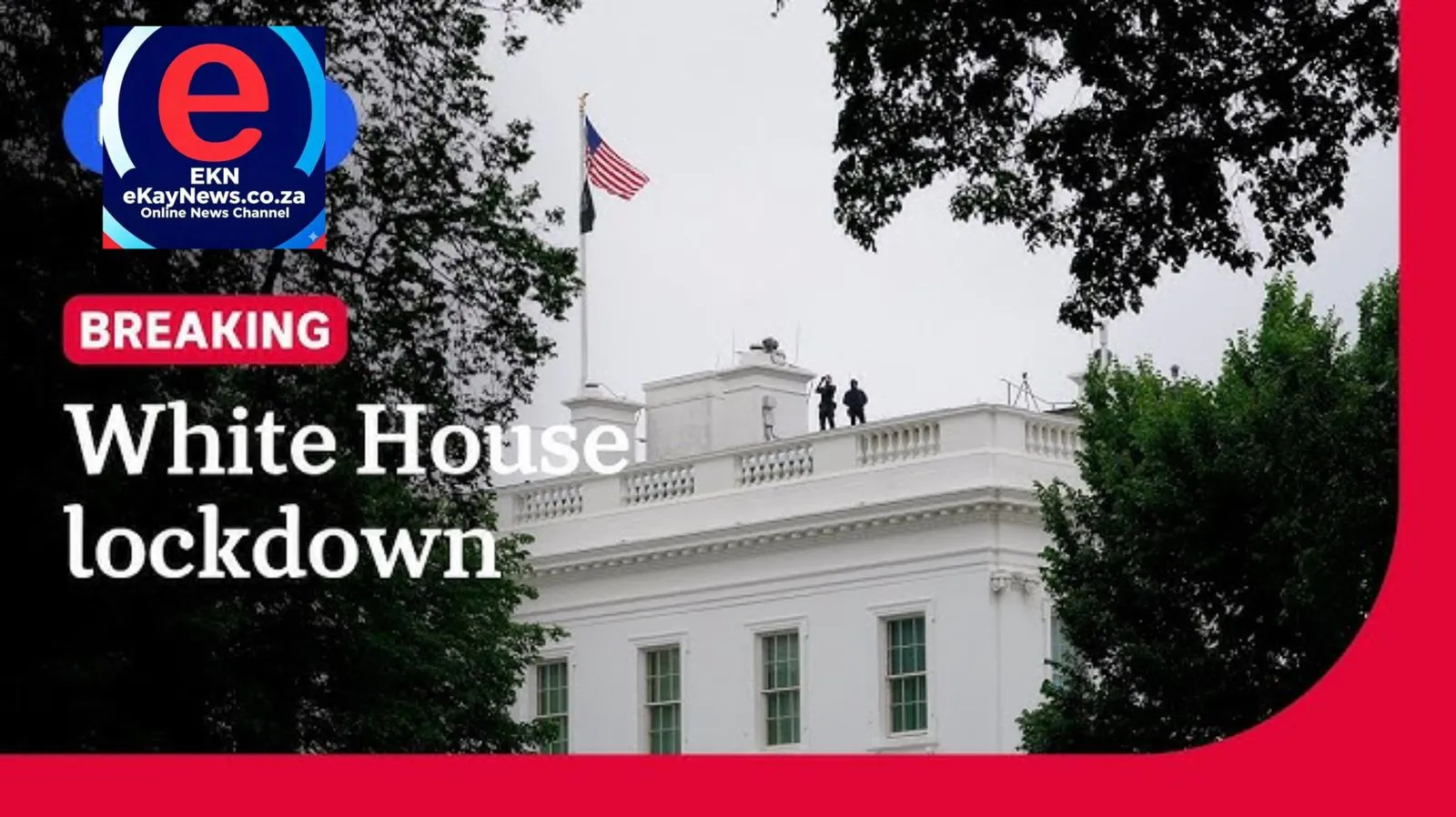
Shots fired at WHITE HOUSE, Trump in lockdown as gunman shot
Shots fired at WHITE HOUSE, Trump in lockdown as a chaotic and terrifying scene unfolded just outside the executive mansion on Saturday evening. In what became a stark reminder of the ever-present security threats facing the nation’s capital, a 21-year-old gunman approached a heavily guarded security checkpoint near the intersection of 17th Street and Pennsylvania Avenue NW. Without warning, the suspect retrieved a revolver from a bag and unleashed a volley of gunfire directly at posted United States Secret Service officers. The sudden eruption of violence triggered an immediate and overwhelming tactical response from federal law enforcement, sending shockwaves through the heart of Washington, D.C., and prompting an emergency lockdown of the entire White House complex while President Donald Trump was safely secured inside the Oval Office.
The terrifying incident, which occurred shortly after 6:00 p.m. Eastern Time, resulted in a rapid exchange of gunfire. Secret Service agents, trained specifically for such worst-case scenarios, returned fire with precision, critically wounding the suspect. The gunman, later identified as Nasire Best, was rushed to George Washington University Hospital, where he subsequently succumbed to his injuries. A civilian bystander who was caught in the crossfire was also struck and left in critical condition, though authorities are still investigating whether the bystander was hit by the suspect’s initial barrage or the subsequent return fire from law enforcement.
The immediate tactical response to the shooting
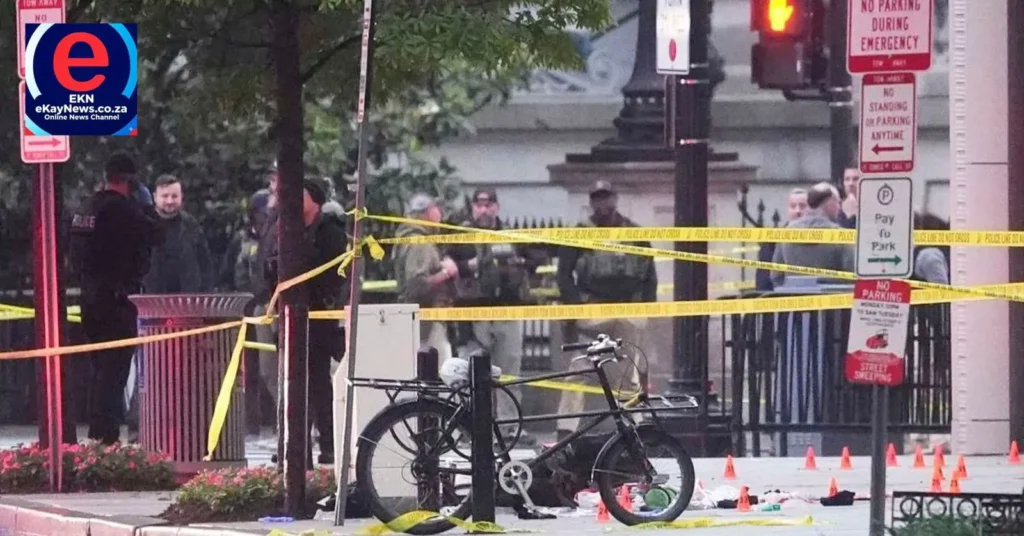
The sheer intensity of the shooting immediately activated the highest levels of security protocols across the federal government. The United States Secret Service Uniformed Division, which maintains a visible and heavily armed presence around the perimeter of the White House, reacted instantaneously. Witnesses and journalists stationed near the North Lawn reported hearing anywhere from 15 to 30 gunshots echoing rapidly across the area, a sound that instantly transformed a quiet Saturday evening into an active combat zone.
Within moments of the first shots ringing out, tactical teams swarmed the perimeter. Heavily armed agents with rifles drawn moved quickly across the grounds, securing all potential entry points and ensuring that the suspect could not breach the inner perimeter of the White House. The rapid containment of the threat prevented what could have been a catastrophic breach of national security. During these frantic moments, the phrase Shots fired at WHITE HOUSE, Trump in lockdown became the defining reality for everyone trapped within the complex, as blaring alarms and shouted commands from security personnel dictated the emergency procedures.
FBI and interagency coordination
Following the neutralization of the active shooter, the Federal Bureau of Investigation (FBI) immediately deployed its own specialized units to the scene to assist the Secret Service. The collaboration between these elite federal agencies is standard protocol for any major security incident involving the White House or the President of the United States.
FBI Director Kash Patel quickly took to social media to confirm the bureau’s involvement. In a post shared on X (formerly Twitter), Patel stated, “FBI is on the scene and supporting Secret Service responding to shots fired near White House grounds – we will update the public as we’re able.” The Bureau of Alcohol, Tobacco, Firearms and Explosives (ATF) also joined the investigation to trace the origins of the revolver used by the suspect. The interagency coordination highlighted the massive security apparatus designed to protect the executive branch from all forms of domestic and international threats.
Media panic and the press briefing room lockdown
For the members of the White House press corps, the shooting provided a terrifying, firsthand experience of an active threat scenario. Numerous journalists were positioned outside on the North Lawn, conducting live broadcasts and filming social media content, when the gunfire erupted.
Selina Wang, a senior White House correspondent for ABC News, was in the middle of recording a report regarding the Trump administration’s ongoing negotiations with Iran when the loud pops of gunfire interrupted her broadcast. In a dramatic video that quickly went viral, Wang is seen realizing the nature of the sounds before ducking for cover. She later recounted the terrifying experience, noting that what sounded like dozens of gunshots prompted an immediate evacuation order from the Secret Service.
Officers shouted “get down!” and instructed the panicked reporters to sprint as fast as they could into the James S. Brady Press Briefing Room, located inside the West Wing. Once inside, the heavy doors were secured, and armed Secret Service agents stood guard outside. Inside the cramped and tense briefing room, journalists monitored police scanners and awaited official updates. It was a harrowing wait as the reality of the situation—Shots fired at WHITE HOUSE, Trump in lockdown—sank in for those sheltering in place, completely cut off from the outside world until the all-clear was finally given.
The psychological toll on the White House press corps
The trauma experienced by the journalists and White House staff who were caught in the middle of the active shooter scenario cannot be understated. Reporters who cover the executive branch are accustomed to high-stress environments, tight deadlines, and the intense pressure of political reporting, but finding themselves in the direct line of a deadly firefight is a fundamentally different ordeal.
Inside the briefing room, the atmosphere was thick with anxiety and confusion. Seasoned correspondents found themselves huddled on the floor, frantically texting loved ones and editors to confirm their safety. Network producers and camera operators attempted to maintain their composure while monitoring the chaotic situation unfolding just outside. For many, the incident brought back traumatic memories of other recent instances of political violence, underscoring the inherent physical risks that increasingly accompany the profession of political journalism in the modern era. The psychological aftermath of such an event will undoubtedly linger, prompting news organizations to reevaluate the safety protocols and trauma resources available to their correspondents assigned to the White House beat.
Background of the gunman: Warning signs and mental health
As the immediate danger passed and the lockdown was lifted, investigators began the arduous task of unraveling the motive behind the brazen attack. The suspect, 21-year-old Nasire Best, was a resident of the Washington metropolitan area who had a documented history of mental health struggles and previous, highly concerning interactions with federal law enforcement.
According to various law enforcement sources and court documents, Best was not a stranger to the Secret Service. In July 2025, nearly a year prior to the fatal shooting, he was arrested after attempting to enter a different White House security checkpoint without proper authorization. During that bizarre encounter, Best reportedly ignored repeated commands from officers to stop, blocked a vehicle from entering the complex, and allegedly claimed that he was Jesus Christ.
Following that incident, he was placed under an involuntary psychiatric hold and subsequently issued a “Pretrial Stay Away Order,” a legal directive explicitly barring him from approaching the White House or its immediate vicinity. A bench warrant was later issued for his arrest in August 2025 after he failed to appear for a scheduled court hearing. Despite these glaring red flags and his known status to authorities, Best managed to return to the perimeter armed with a deadly weapon, raising serious questions about the effectiveness of current threat-monitoring systems for individuals suffering from severe emotional disturbances.
A tragic toll: The wounded bystander
While the swift neutralization of the gunman prevented further loss of life among law enforcement and White House staff, the incident was not without collateral damage. An innocent civilian who happened to be standing on the street near the Eisenhower Executive Office Building was struck during the chaotic exchange of gunfire.
Emergency medical services rushed the bystander to an area hospital, where they were listed in critical condition. The Secret Service has initiated a comprehensive internal review to determine the exact trajectory of the bullets and ascertain whether the civilian was hit by the suspect’s revolver or by a ricocheting round from an agent’s weapon. Regardless of the ballistic findings, the tragic injury underscores the extreme danger posed to the general public whenever an active shooter situation unfolds in the densely populated areas surrounding the nation’s most famous residence.
President Trump’s reaction and escalating security threats
At the time of the shooting, President Donald Trump was safely secured inside the Oval Office. According to official statements from the Secret Service, the President was never in any direct danger and his schedule was not significantly impacted by the brief lockdown. However, the proximity of the violence to the Commander-in-Chief has inevitably sparked renewed debates regarding the security perimeter around the White House.
On Sunday morning, President Trump took to his Truth Social platform to address the terrifying incident. He offered his profound gratitude to the federal agencies involved, praising the “swift and professional action taken this evening against a gunman near the White House, who had a violent history and possible obsession with our Country’s most cherished structure.” Trump further used the opportunity to advocate for enhanced security infrastructure, stating that the shooting “goes to show how important it is, for all future Presidents, to get, what will be, the most safe and secure space of its kind ever built in Washington, D.C. The National Security of our Country demands it!”
A disturbing trend of violence
The timeline of recent events paints a deeply troubling picture for the Secret Service and federal law enforcement. This latest incident did not occur in a vacuum; it is part of a growing and disturbing trend of violence directed at high-profile political targets and the White House itself.
Remarkably, the shooting on May 23 comes barely a month after another high-profile security breach. On April 25, 2026, gunshots were fired near the security screening area of the Washington Hilton during the annual White House Correspondents’ Dinner. That incident forced the emergency evacuation of President Trump, First Lady Melania Trump, and numerous other high-ranking government officials. The suspect in that case, Cole Tomas Allen, was heavily armed and managed to shoot a Secret Service agent before being apprehended.
When we consider the phrase Shots fired at WHITE HOUSE, Trump in lockdown, it is no longer an isolated, once-in-a-decade anomaly. Instead, it reflects a volatile political and social climate where the Secret Service is being constantly tested by individuals seeking to commit acts of violence. The escalating frequency of these attacks has placed an unprecedented strain on the agents tasked with protecting the President and has prompted urgent congressional calls for a complete review of the security perimeters surrounding federal buildings.
The broader implications for national security
Beyond the immediate physical danger, the shooting raises profound questions about the broader implications for national security. The White House is not just the residence of the President; it is the ultimate symbol of American democracy and executive power. Any attack on its perimeter, regardless of the perpetrator’s mental state or exact motives, is inherently an attack on the institution itself. The fact that a known individual with a history of threatening behavior and an active “stay-away order” could approach a major security checkpoint armed with a firearm exposes potential vulnerabilities in the outer ring of the security apparatus.
Security experts and former law enforcement officials are likely to call for an expansion of the restricted zones surrounding the complex. This could involve permanently closing more public streets, installing advanced threat-detection technologies, and increasing the physical distance between pedestrian walkways and Secret Service checkpoints. While such measures are necessary to ensure the safety of the President, the staff, and the protective details, they also represent a tragic concession to the realities of a violent world, further distancing the “People’s House” from the very public it is meant to serve.
YOU MAY LIKE:
Tulsi Gabbard to resign as US national intelligence director
The aftermath and the path forward
In the days following the shooting, the area around 17th Street and Pennsylvania Avenue will remain heavily scrutinized. Yellow crime scene tape and dozens of orange evidence markers served as a temporary and grim reminder of the violence that erupted over the weekend.
The FBI and Secret Service will continue their joint investigation, analyzing forensic evidence, interviewing witnesses, and delving deeper into Nasire Best’s digital footprint and personal history to determine if there were any missed opportunities to intervene before the tragedy occurred. Lawmakers on Capitol Hill have already expressed their support for the Secret Service’s rapid response, while simultaneously demanding answers regarding the overall security posture of the executive mansion.
Ultimately, the events of Saturday evening serve as a harrowing testament to the bravery and readiness of the Secret Service. The agents on duty placed themselves directly in the line of fire to neutralize an active threat, preventing what could have been a historic national tragedy. As the investigation continues and the injured bystander fights for their life, the echoes of the gunfire will undoubtedly influence the future of security protocols in Washington, D.C., ensuring that the protection of the White House remains an ever-evolving, top national priority.
References:
-
CBS News. (2026). “Gunman killed after opening fire on Secret Service checkpoint outside White House, officials say.”
https://www.cbsnews.com/live-updates/white-house-gun-shots-north-lawn/ -
Fox News. (2026). “Gunshots heard outside White House, male suspect taken down by Secret Service.”
https://www.foxnews.com/live-news/gunshots-heard-outside-white-house-male-suspect-taken-down-by-secret-service
Keep the Headlines Fresh!

Quality news takes time, effort, and a whole lot of coffee. If you value what we do at eKayNews, consider “buying a round” for the team!
-
Join the Inner Circle: Set up a custom subscription.
-
The Instant Jolt: Send a one-time “coffee” donation.
Why trust us? We use PayFast for 100% secure, encrypted transactions. Your data stays yours; the news stays ours.
To our amazing readers: You’re the reason we’re first on the scene. Thanks for being part of the family!
Feel the Pulse of the News with eKayNews!

Join the ever-growing eKayNews community and stay connected to the stories that matter. Follow us on Facebook, X, and WhatsApp for real-time updates, breaking news, and exclusive alerts straight to your feed. Your support keeps us digging deeper and sharing the news you can trust.
Stay Connected:
-
Facebook: [eKayNews on Facebook]
-
X (Twitter): [eKayNews on X]
-
WhatsApp: [Join the eKayNews WhatsApp Channel]
Become part of our inner circle and get instant news alerts as events unfold across South Africa and beyond!
Promote Your Brand with eKayNews
Looking to reach a wide, engaged audience? Explore our advertising packages:
-
Link Booster: 7 links to 7 articles over 7 days – R2,500
-
Permanent Feature: Sponsored blog article hosted permanently – R4,000
-
Prime Visibility: Home page banner ad for 30 days – R5,000
Don’t miss your chance to connect with our audience. Book your package today via email at info@ekaynews.co.za or WhatsApp us on +27710961185.
Be part of a platform where news meets community—stay informed, stay ahead, stay with eKayNews!