US launches new strikes on Iran, targeting missile sites and boats
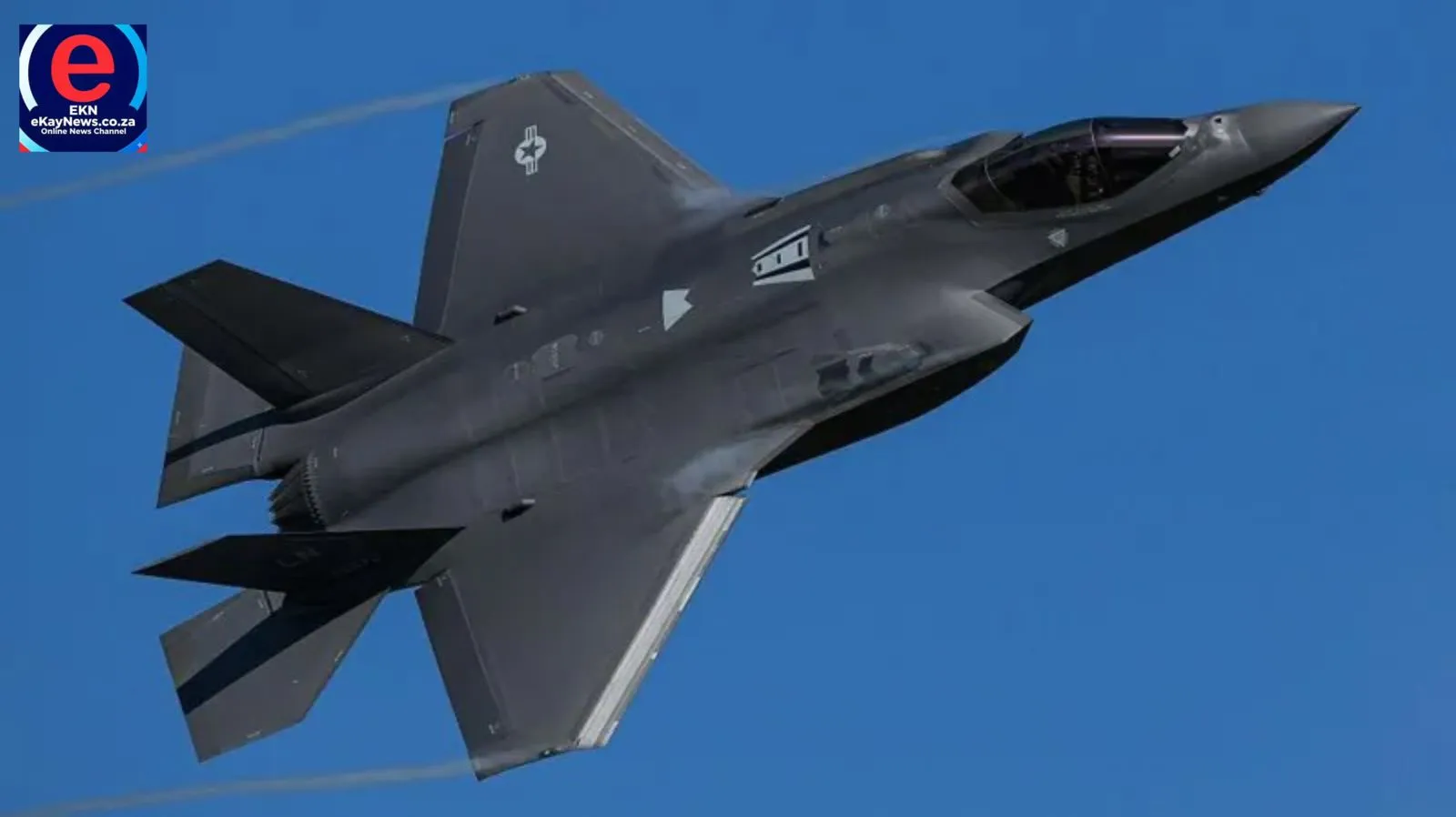
US launches new strikes on Iran, targeting missile sites and boats as tensions in the Middle East continue to rise despite ongoing ceasefire negotiations between Washington and Tehran. The latest military action by the United States has intensified fears of a wider regional conflict, particularly around the strategic Strait of Hormuz, a critical global oil shipping route.
The strikes, confirmed by the United States Central Command (Centcom), reportedly targeted Iranian missile installations and boats suspected of attempting to place naval mines near the Strait of Hormuz. US officials described the operation as an act of self-defence aimed at protecting American troops and safeguarding international maritime traffic.
The latest escalation comes while diplomatic talks remain underway between the US and Iran, with senior officials still expressing cautious optimism about reaching a broader peace agreement.
US strikes on Iran intensify regional tensions
The Pentagon said American forces launched precision strikes on southern Iran on Monday after identifying what officials described as immediate threats posed by Iranian military units.
According to Centcom spokesperson Captain Tim Hawkins, the military operation targeted areas near Bandar Abbas, a strategically important Iranian naval city located on the Strait of Hormuz.
“US forces conducted self-defence strikes in southern Iran today to protect our troops from threats posed by Iranian forces,” Hawkins said in an official statement.
He added that US Central Command continues to exercise restraint despite the fragile ceasefire that has technically remained in effect since April 8.
Iranian state media confirmed explosions in Bandar Abbas shortly after the strikes, although local authorities initially said investigations were ongoing into the cause of the blasts.
The operation marks another dangerous chapter in the increasingly volatile relationship between Washington and Tehran, which has already seen months of military confrontations, economic sanctions, and diplomatic deadlock.
Strait of Hormuz tensions raise global concerns
The Strait of Hormuz tensions have become one of the biggest concerns for global markets and governments. The narrow waterway handles a significant percentage of the world’s oil and gas shipments, making stability in the region crucial for the global economy.
Iran has maintained restrictions on shipping through the strait since conflict erupted earlier this year following joint US-Israeli strikes on Iranian military infrastructure.
American officials claim Iran has attempted to disrupt international maritime traffic by deploying mines and threatening commercial vessels in the Gulf.
US Secretary of State Marco Rubio defended the latest military action while insisting diplomacy remains possible.
“The straits have to be open. They’re going to be open one way or the other,” Rubio told reporters during an official visit to India.
“What’s happening there is unlawful, illegal, and unsustainable for the world economy,” he added.
Oil prices have fluctuated sharply since Iran tightened its control over Gulf shipping routes. Analysts warn that any prolonged disruption to shipping traffic through the Strait of Hormuz could trigger major economic consequences worldwide.
Iran warns of retaliation after drone incident
Iran’s Islamic Revolutionary Guard Corps (IRGC) claimed on Tuesday that it had shot down an American drone and opened fire on a US fighter jet and another unmanned aircraft that allegedly entered Iranian airspace.
Iranian authorities did not specify when the incidents occurred but insisted that Tehran reserves the right to respond to what it considers violations of the ceasefire agreement.
The IRGC warned that any further aggression from the United States would face “legitimate and definite” retaliation.
Meanwhile, Iran’s Supreme Leader Mojtaba Khamenei delivered a strongly worded message during the annual Hajj pilgrimage commemorations.
“The Middle East will no longer serve as shields for US bases,” Khamenei declared.
He also accused Washington of destabilising the region through military intervention and warned that American influence in the Middle East was steadily declining.
The rhetoric from Tehran highlights the fragile state of current negotiations and the deep mistrust that continues to define relations between the two countries.
Donald Trump says deal still possible
Despite the renewed fighting, US President Donald Trump insists a diplomatic breakthrough remains achievable.
Trump recently said he still wants a peace agreement with Iran but warned that negotiations would not be rushed.
“He’s either going to make a good deal or no deal,” Rubio said while referring to Trump’s position on the ongoing talks.
Over the weekend, Trump claimed that negotiations with Tehran were progressing well and that both sides were close to reaching a framework agreement.
However, Iranian Foreign Ministry spokesperson Esmail Baqai cautioned against expectations of an immediate breakthrough.
“It is correct to say that we have reached a conclusion on a large portion of the issues under discussion,” Baqai said.
“But to say that this means the signing of an agreement is imminent — no-one can make such a claim.”
Reports suggest the current memorandum under discussion could include a 60-day extension of the ceasefire, the reopening of the Strait of Hormuz, and further negotiations surrounding Iran’s nuclear programme.
Iran nuclear programme remains central issue
The Iran nuclear programme continues to be one of the most contentious issues in negotiations between Tehran and Washington.
The International Atomic Energy Agency (IAEA) estimates that Iran currently possesses around 440 kilograms of uranium enriched to 60% purity. Experts say this material could potentially be refined further to weapons-grade levels.
American officials have repeatedly insisted that any long-term peace agreement must address Iran’s enriched uranium stockpile and nuclear capabilities.
Trump recently stated that the uranium would either be handed over to the United States or destroyed under international supervision.
According to reports, one proposal being discussed involves Iran disposing of its highly enriched uranium in exchange for the lifting of US naval blockades and economic restrictions.
However, significant disagreements reportedly remain over how such measures would be implemented and verified.
Middle East ceasefire talks face uncertainty
The Middle East ceasefire talks have become increasingly complicated as military incidents continue to occur alongside diplomatic efforts.
Pakistan and Qatar remain heavily involved in mediation attempts aimed at securing a lasting settlement between Iran and the United States.
Pakistan’s military chief Asim Munir and Prime Minister Shehbaz Sharif recently travelled to China for discussions with Chinese leaders regarding regional peace efforts.
China has publicly supported diplomatic initiatives aimed at restoring stability in the Middle East and reopening vital trade routes.
However, analysts warn that repeated military exchanges between the US and Iran could derail negotiations completely.
Charles Kupchan, a senior fellow at the Council on Foreign Relations, said the constant back-and-forth between both governments reflects the unpredictability of the situation.
“One day they walk this way. The next day they walk that way,” Kupchan said during an interview discussing the negotiations.
He added that a final agreement remains far from guaranteed while unresolved issues surrounding nuclear inspections and maritime security continue to dominate talks.
Global markets monitor developments closely
Financial markets and global energy traders are watching the situation closely as fears grow over the long-term stability of the Gulf region.
The Strait of Hormuz is considered one of the world’s most important energy corridors, with millions of barrels of oil passing through the waterway daily.
Any prolonged closure or military escalation could disrupt global supply chains and push fuel prices significantly higher.
Several governments have already called for restraint from both Washington and Tehran while urging all parties to continue negotiations.
International observers also fear that additional conflict could draw other regional powers deeper into the crisis, further destabilising the Middle East.
YOU MAY LIKE:
Trump says any deal with Iran will be ‘great and meaningful’
Conclusion
US launches new strikes on Iran, targeting missile sites and boats at a time when hopes for peace remain uncertain and tensions in the Strait of Hormuz continue to threaten global stability. While American officials insist the strikes were defensive, Iran has warned it will respond firmly to any violations of the ceasefire.
At the same time, diplomatic talks involving the United States, Iran, Pakistan, Qatar, and China continue behind closed doors as leaders attempt to avoid a broader regional war.
With the Iran nuclear programme, Gulf shipping routes, and Middle East security all hanging in the balance, the coming days could prove decisive in determining whether diplomacy prevails or the conflict escalates even further.
References from mainstream media
- BBC News – US launches new strikes on Iran targeting missile sites and boats
BBC News Iran coverage - Reuters – US and Iran ceasefire talks amid Strait of Hormuz tensions
Reuters Middle East News
Keep the Headlines Fresh!

Quality news takes time, effort, and a whole lot of coffee. If you value what we do at eKayNews, consider “buying a round” for the team!
-
Join the Inner Circle: Set up a custom subscription.
-
The Instant Jolt: Send a one-time “coffee” donation.
Why trust us? We use PayFast for 100% secure, encrypted transactions. Your data stays yours; the news stays ours.
To our amazing readers: You’re the reason we’re first on the scene. Thanks for being part of the family!
Feel the Pulse of the News with eKayNews!

Join the ever-growing eKayNews community and stay connected to the stories that matter. Follow us on Facebook, X, and WhatsApp for real-time updates, breaking news, and exclusive alerts straight to your feed. Your support keeps us digging deeper and sharing the news you can trust.
Stay Connected:
-
Facebook: [eKayNews on Facebook]
-
X (Twitter): [eKayNews on X]
-
WhatsApp: [Join the eKayNews WhatsApp Channel]
Become part of our inner circle and get instant news alerts as events unfold across South Africa and beyond!
Promote Your Brand with eKayNews
Looking to reach a wide, engaged audience? Explore our advertising packages:
-
Link Booster: 7 links to 7 articles over 7 days – R2,500
-
Permanent Feature: Sponsored blog article hosted permanently – R4,000
-
Prime Visibility: Home page banner ad for 30 days – R5,000
Don’t miss your chance to connect with our audience. Book your package today via email at info@ekaynews.co.za or WhatsApp us on +27710961185.
Be part of a platform where news meets community—stay informed, stay ahead, stay with eKayNews!