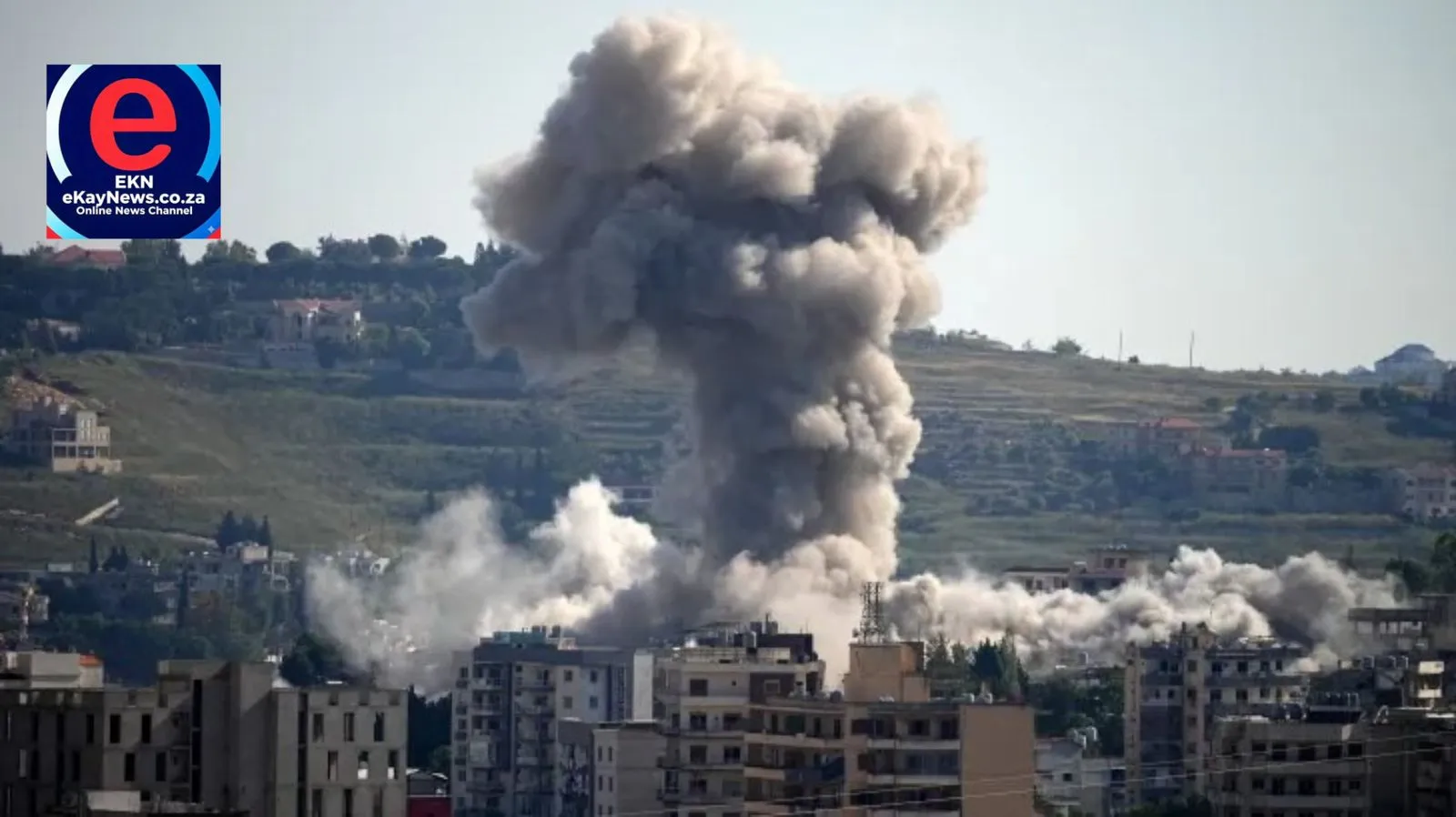
US bombs Iranian military sites, Kuwait reports incoming fire
US bombs Iranian military sites, Kuwait reports incoming fire as tensions between the United States and Iran reached a dangerous new escalation, with fresh airstrikes, missile exchanges, and regional spillover shaking global security and energy markets.
The latest US bombs Iranian military sites, Kuwait reports incoming fire incident follows a series of rapid retaliations after Iran downed an American surveillance drone operating near contested airspace over the Gulf region. The situation has intensified fears that the fragile ceasefire between Washington and Tehran could collapse entirely.
US bombs Iranian military sites, Kuwait reports incoming fire escalation begins
The confrontation escalated after US bombs Iranian military sites, Kuwait reports incoming fire, marking one of the most serious flare-ups in recent months of the conflict. The United States confirmed that it conducted precision strikes against Iranian radar installations and drone control facilities following what it described as “hostile Iranian actions” targeting American aerial assets.
According to US Central Command, the strikes were “measured and deliberate,” aimed at degrading Iran’s ability to threaten maritime and aerial operations in the region. Iran, however, responded swiftly, claiming it had launched retaliatory attacks on US-linked positions in the Gulf. Almost simultaneously, Kuwait reported incoming drone and missile fire, activating its air defence systems.
The overlapping attacks have raised fears that the region may be sliding toward broader war.
Iran-US confrontation intensifies after drone shootdown
The chain reaction began when Iran shot down an American reconnaissance drone operating near international waters. The US responded with strikes on Iranian military infrastructure, escalating the cycle of retaliation.
As US bombs Iranian military sites, Kuwait reports incoming fire, analysts warn that both sides are now operating within a highly unstable pattern of “action and counteraction” that leaves little room for diplomacy.
Iran claimed its air defence action was defensive, while US officials insisted the drone was operating lawfully in international airspace. The disagreement over airspace sovereignty has become one of the central flashpoints in the wider conflict.
US military strikes target radar and drone systems
The US military strikes focused on two key Iranian locations: the coastal region near Geruk and facilities on Qeshm Island. US Central Command stated that Iranian radar systems and drone command stations were disabled during the operation.
The Pentagon said the mission was necessary to neutralize “immediate threats” to commercial shipping routes in the Strait of Hormuz, one of the world’s most important oil transit corridors. Officials added that Iranian one-way attack drones were also destroyed before they could be deployed against naval vessels.
Iranian state media confirmed explosions in the targeted areas but insisted damage was “limited” and vowed retaliation.
Strait of Hormuz becomes global pressure point
The Strait of Hormuz remains at the centre of the conflict, with Iran maintaining a strategic chokehold over the narrow waterway. Nearly one-fifth of global oil shipments pass through the strait, making it a critical artery for the world economy.
As US bombs Iranian military sites, Kuwait reports incoming fire, shipping companies have already begun rerouting vessels, increasing freight costs and insurance premiums. Energy analysts warn that prolonged disruption could lead to global fuel shortages and further inflation in energy-dependent economies.
Iran has repeatedly threatened to close the strait entirely if attacks on its territory continue.
Kuwait reports incoming fire amid regional escalation
The phrase Kuwait reports incoming fire became central to global headlines after Kuwaiti air defence systems intercepted drones and missiles early Monday morning. Authorities confirmed that multiple aerial objects entered its airspace, triggering emergency response protocols.
While Kuwait did not officially attribute the attack, Iranian Revolutionary Guard sources suggested that US military facilities in the region were targeted in retaliation.
Kuwait hosts key US military logistics and command infrastructure, making it a strategic hub in the Gulf. The incident raised fears that the conflict is no longer contained strictly between the US and Iran, but is spreading across neighbouring states.
Ceasefire tensions weaken diplomatic efforts
Despite ongoing violence, officials from both sides insist that ceasefire negotiations are still technically active.
However, ceasefire tensions have grown significantly after repeated violations, drone attacks, and naval confrontations. Diplomatic mediators warn that the situation is “one miscalculation away” from full-scale regional war.
Talks reportedly include discussions around Iran’s nuclear program, sanctions relief, and the reopening of maritime trade routes. Yet each new military incident undermines progress, making agreement increasingly difficult.
Drone attacks widen conflict zone
A surge in drone attacks has expanded the battlefield beyond traditional military zones. Unmanned aerial systems have been used for reconnaissance, targeted strikes, and maritime disruption.
Iranian-backed forces have deployed drones against shipping routes, while US forces have targeted drone launch sites in response.
The use of drones has lowered the threshold for engagement, allowing both sides to strike quickly without risking large-scale troop deployments. Military analysts warn that this “low-cost warfare” model increases the likelihood of miscalculation and accidental escalation.
Regional security under severe pressure
The broader issue of regional security has become a growing concern for Gulf nations, European allies, and global markets. Neighbouring countries fear being drawn into the conflict, especially as missile and drone debris increasingly crosses borders.
Energy markets have reacted sharply, with oil prices fluctuating and supply chains under stress. Governments are now reviewing evacuation plans, naval patrols, and airspace restrictions in anticipation of further escalation.
Iran denies collapse of military capability
Despite US claims of successful strikes, Iranian officials insist their military remains fully operational. Tehran has rejected suggestions that its air defence systems or drone networks have been significantly degraded.
Instead, Iran has framed the conflict as a defensive war against foreign aggression and vowed continued resistance. State media has broadcast footage of missile launches and military exercises, reinforcing domestic messaging of resilience.
US strategy focuses on deterrence
US officials maintain that the goal of the strikes is deterrence rather than full-scale war. Washington has repeatedly stated that it does not seek prolonged conflict but will respond to threats against its forces and allies.
Military planners say operations are designed to prevent Iran from targeting shipping lanes in the Strait of Hormuz. However, critics argue that the lack of clear diplomatic resolution increases long-term instability.
Economic consequences spread globally
The US bombs Iranian military sites, Kuwait reports incoming fire crisis is already affecting global markets. Oil prices have surged intermittently, while shipping insurance costs have risen significantly.
Food supply chains are also under pressure due to fertilizer exports from the Gulf region being disrupted. Economists warn that prolonged instability could trigger inflation spikes in multiple continents.
Outlook remains uncertain
As the situation develops, US bombs Iranian military sites, Kuwait reports incoming fire continues to define one of the most volatile geopolitical moments in recent years.
With both sides maintaining military readiness and diplomatic talks struggling to progress, analysts say the risk of escalation remains high. The coming days are expected to determine whether the conflict stabilizes or expands further into a regional war involving multiple actors.
YOU MAY LIKE:
Trump now says US left Iran’s military alone as he considers deal
US ‘more than capable’ of resuming war with Iran, Hegseth says
Conclusion
The latest US bombs Iranian military sites, Kuwait reports incoming fire escalation highlights how quickly regional conflicts can spread beyond their original borders.
With the Strait of Hormuz under pressure, drone warfare intensifying, and ceasefire negotiations weakening, the world now watches closely for the next move in a conflict that shows no clear path to resolution.
References from mainstream media
- BBC News: “US airstrikes target Iranian military sites after drone shootdown”
- CNN: “Tensions escalate as US bombs Iranian sites amid regional conflict”
Keep the News Flowing – Buy the Team a Coffee! ☕

Love the updates? Help us stay on the beat! Whether it’s a quick one-time donation or a monthly subscription, your support keeps the eKayNews lights on and the stories flowing.
-
Secure & Simple: We use PayFast for total transaction peace of mind.
-
Make an Impact: Every “coffee” you send directly supports our newsroom.
Your Brand, Our Audience: Let’s Make Headlines Together! 🚀

Looking for real engagement? At eKayNews, we don’t just share news—we build connections. Whether you’re a local startup or a growing business, our advertising packages are designed to put your brand in front of a loyal, highly engaged audience.
Choose Your Spotlight:
-
Link Booster (R2,500): Dominate the feed with 7 links across 7 days.
-
Permanent Feature (R4,000): Your story, hosted on our site for a lifetime.
-
Prime Visibility (R5,000): Claim the top spot with a 30-day homepage banner.
Ready to grow? 📩 Email us: info@ekaynews.co.za 💬 WhatsApp us: +27 71 096 1185
Get Connected:
-
Facebook & X (Twitter) : Follow us for real-time updates and community debates.
-
WhatsApp Channel: Get exclusive alerts sent directly to your phone.
Stay informed, ahead, connected with the eKayNews family!