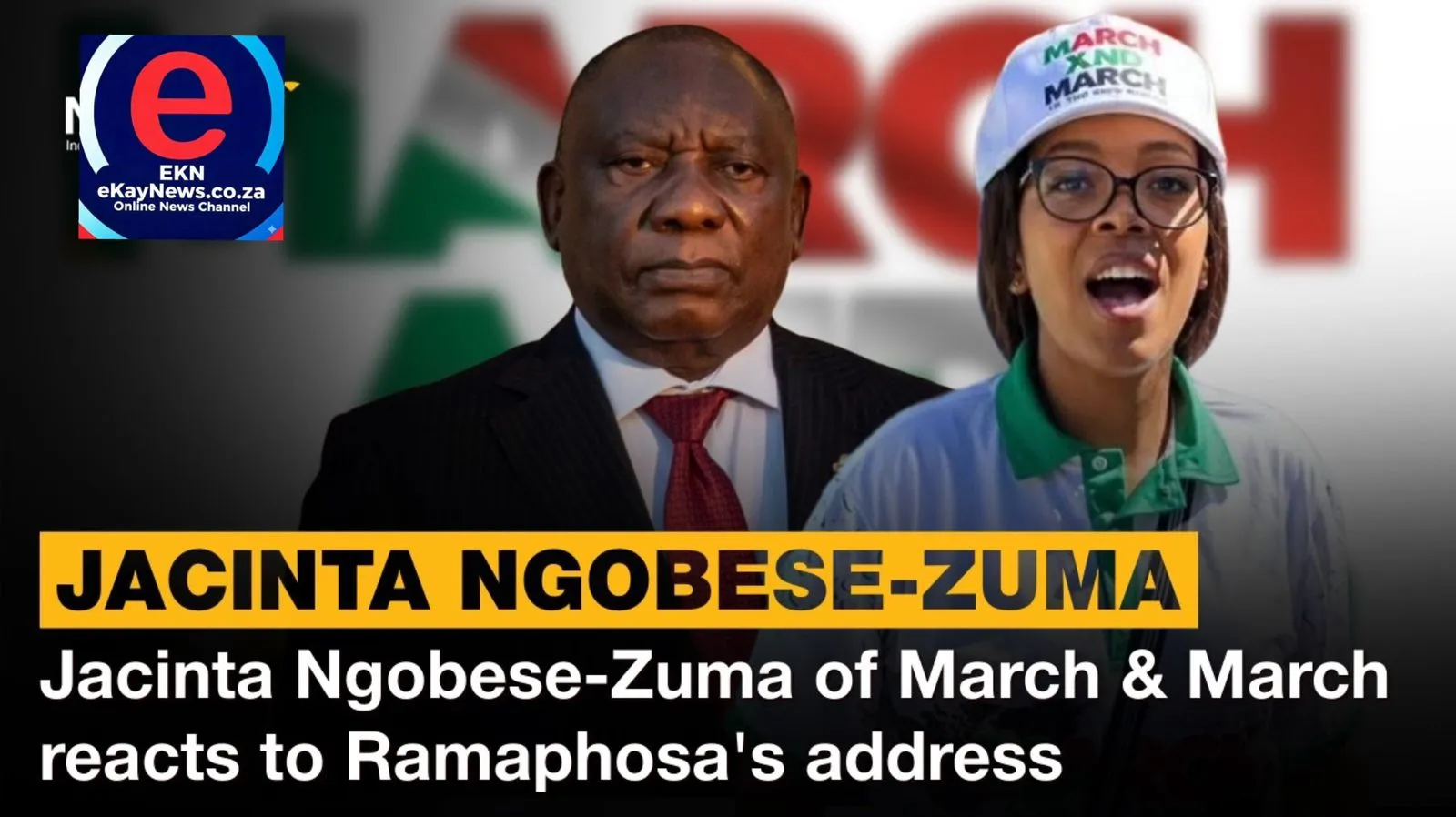
Jacinta Ngobese Zuma Questions Ramaphosa Briefing
Jacinta Ngobese Zuma Questions Ramaphosa Briefing following President Cyril Ramaphosa’s recent national address on illegal immigration, with the March and March leader arguing that the president has not been adequately informed about the severity of the challenges facing South Africa.
Ngobese-Zuma has publicly criticized the information being provided to the president, claiming that officials responsible for advising him are failing to present the full picture regarding illegal immigration and its impact on communities across the country. According to her, the government’s proposed solutions do not reflect the realities experienced by ordinary South Africans because decision-makers are disconnected from conditions on the ground.
Her comments have added another dimension to the ongoing national debate about illegal immigration, border security, law enforcement, and the role of citizens in assisting authorities to address immigration-related concerns.
Jacinta Ngobese Zuma Challenges Government’s Understanding
The central theme of Ngobese-Zuma’s criticism is her belief that President Cyril Ramaphosa has not received a comprehensive briefing on the effects of illegal immigration in South Africa.
Speaking after the president’s national address, she argued that those advising the head of state are doing him a disservice by failing to provide accurate and detailed information about conditions in communities affected by undocumented migration.
According to Ngobese-Zuma, the president’s remarks suggested a disconnect between government policy and the realities experienced by residents who regularly encounter immigration-related challenges.
She believes that before announcing solutions, government leaders should conduct extensive fact-finding visits and engage directly with frontline officials responsible for managing immigration matters.
“The president cannot fully understand the scope of the problem if he relies solely on reports from advisers,” she suggested during public discussions surrounding the issue.
Concerns Over Limited First-Hand Exposure
One of Ngobese-Zuma’s strongest criticisms focuses on what she describes as a lack of direct engagement by senior government officials with immigration hotspots. She argues that President Cyril Ramaphosa should personally visit Home Affairs offices, border posts, refugee reception centres, and communities that face immigration-related pressures.
According to her, such visits would provide valuable insight into the daily challenges experienced by officials and citizens alike. Ngobese-Zuma contends that immigration officials often deal with overwhelming workloads, long queues, document fraud concerns, and enforcement challenges that may not be fully reflected in official reports.
She believes that observing these conditions first-hand would allow policymakers to develop more practical and effective solutions.
Debate Over Illegal Immigration Intensifies
Illegal immigration remains one of the most debated public policy issues in South Africa. Government estimates, political parties, civic organizations, and community groups frequently differ on the scale of the problem and the most appropriate solutions.
Supporters of stricter immigration controls argue that undocumented migration places additional pressure on public services, healthcare facilities, schools, housing, and employment opportunities. Others maintain that immigration contributes positively to economic activity and that broader structural challenges such as unemployment, poverty, and inequality cannot be blamed solely on migrants.
Ngobese-Zuma has consistently positioned herself among those calling for stronger immigration enforcement and tighter border management.
Her latest comments have reignited discussions about whether the government is taking sufficient action to address concerns raised by communities across South Africa.
National Address Sparks Mixed Reactions
President Cyril Ramaphosa’s national address on migration was intended to reassure South Africans that government is taking steps to improve immigration management and strengthen enforcement. The president outlined several measures aimed at improving border security, reducing illegal immigration, enhancing inspections, and modernizing immigration systems.
While some stakeholders welcomed the interventions, others argued that the proposals did not go far enough. Ngobese-Zuma was among the most vocal critics, suggesting that many of the proposed solutions would be difficult to implement effectively because they do not address the root causes of the problem.
She argued that policy decisions should be informed by extensive consultations with affected communities and frontline officials rather than administrative reports alone.
Questions Over Practicality of Proposed Solutions
Another key concern raised by Ngobese-Zuma relates to the practicality of the measures announced by government. She believes that several proposals outlined during the national address may face significant implementation challenges due to capacity constraints, resource shortages, and existing administrative difficulties.
According to her, effective immigration management requires not only strong policy but also the infrastructure, staffing, and operational support necessary to enforce regulations consistently. She questioned whether current systems are capable of delivering the outcomes government hopes to achieve.
Critics of government policy have similarly argued that strengthening immigration controls requires sustained investment in border management, law enforcement coordination, and technological systems.
Home Affairs Under Increasing Pressure
The Department of Home Affairs has been tasked with implementing a range of reforms designed to improve immigration management. Recent announcements have included plans for enhanced biometric systems, increased inspections, specialised courts for immigration cases, and improved border control mechanisms.
While government officials have expressed confidence in these measures, concerns remain regarding implementation timelines and available resources. Ngobese-Zuma argues that understanding these operational realities is essential if policymakers are to develop solutions that can be successfully executed.
Her comments reflect broader frustrations expressed by some community groups regarding the pace of immigration reform.
Citizens’ Arrest Debate Creates Legal Questions
One of the most controversial aspects of Ngobese-Zuma’s response to the president’s national address concerns the issue of citizens’ arrest. President Ramaphosa emphasized that law enforcement authorities are responsible for enforcing immigration laws and determining an individual’s legal status.
However, Ngobese-Zuma challenged this position, arguing that South African legislation provides circumstances under which citizens may conduct lawful arrests. She specifically referenced provisions contained within the Criminal Procedure Act and the Immigration Act as grounds for her interpretation.
According to Ngobese-Zuma, citizens have certain legal rights when dealing with suspected violations of the law, including immigration-related offences.
Legal Experts Urge Caution
The debate surrounding citizens’ arrest has generated significant discussion among legal observers and policy analysts. While South African law does contain provisions relating to citizens’ arrests in certain circumstances, legal experts often emphasize that such actions must be conducted strictly within the limits of the law.
Improper detention, profiling, harassment, or unlawful conduct can expose individuals to legal consequences. For this reason, many legal professionals advise members of the public to report suspected violations to relevant authorities rather than attempting enforcement actions themselves.
The issue remains a sensitive area within the broader immigration debate and continues to generate differing interpretations.
Political Implications Ahead
The exchange between Ngobese-Zuma and President Ramaphosa highlights the growing political significance of immigration policy in South Africa. Immigration has increasingly become a central issue in public discourse, with political leaders, civic organizations, and community activists offering competing perspectives on how the country should respond.
For supporters of stricter immigration enforcement, Ngobese-Zuma’s comments reflect frustrations with what they perceive as insufficient government action.
For others, the focus remains on balancing immigration enforcement with constitutional protections, human rights obligations, and regional cooperation.
As immigration policy continues to evolve, debates over enforcement, border security, deportations, and legal processes are likely to remain prominent in national discussions.
YOU MAY LIKE:
Nigeria to repatriate citizens from SA, first flight leaves Wednesday
Looking Ahead
The controversy generated by Jacinta Ngobese Zuma Questions Ramaphosa Briefing underscores the deep divisions surrounding immigration policy in South Africa.
While government continues to roll out reforms aimed at strengthening immigration management, critics maintain that more direct engagement with communities and frontline officials is needed.
Ngobese-Zuma’s call for greater first-hand investigation by national leaders reflects broader demands for practical, evidence-based solutions that address both public concerns and operational realities.
Whether government adopts additional measures or modifies existing policies, the debate over illegal immigration, border control, and enforcement is expected to remain a major issue in South Africa’s political and social landscape for the foreseeable future.
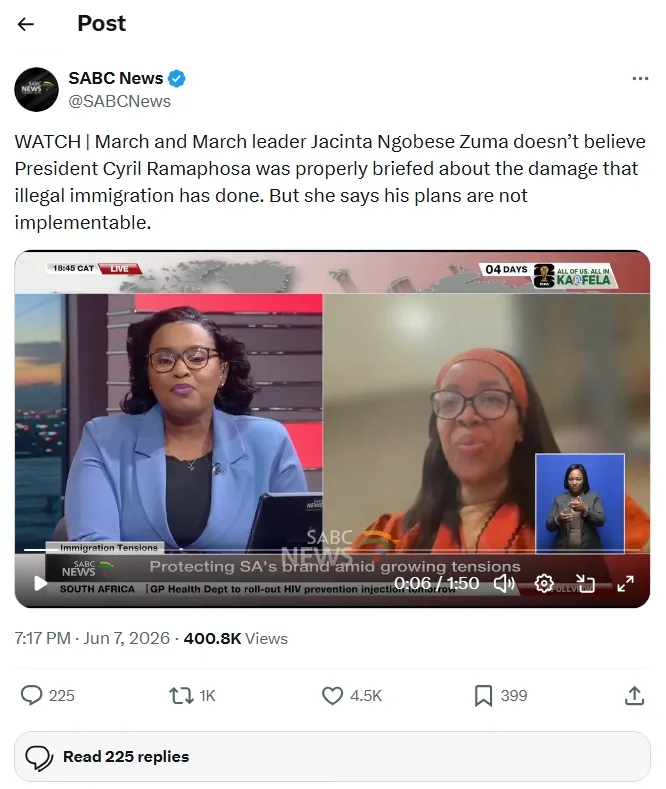
References from mainstream media
Keep the News Flowing – Buy the Team a Coffee! ☕

Love the updates? Help us stay on the beat! Whether it’s a quick one-time donation or a monthly subscription, your support keeps the eKayNews lights on and the stories flowing.
-
Secure & Simple: We use PayFast for total transaction peace of mind.
-
Make an Impact: Every “coffee” you send directly supports our newsroom.
Your Brand, Our Audience: Let’s Make Headlines Together! 🚀

Looking for real engagement? At eKayNews, we don’t just share news—we build connections. Whether you’re a local startup or a growing business, our advertising packages are designed to put your brand in front of a loyal, highly engaged audience.
Choose Your Spotlight:
-
Link Booster (R2,500): Dominate the feed with 7 links across 7 days.
-
Permanent Feature (R4,000): Your story, hosted on our site for a lifetime.
-
Prime Visibility (R5,000): Claim the top spot with a 30-day homepage banner.
Ready to grow? 📩 Email us: info@ekaynews.co.za 💬 WhatsApp us: +27 71 096 1185
Get Connected:
-
Facebook & X (Twitter) : Follow us for real-time updates and community debates.
-
WhatsApp Channel: Get exclusive alerts sent directly to your phone.
Stay informed, ahead, connected with the eKayNews family!