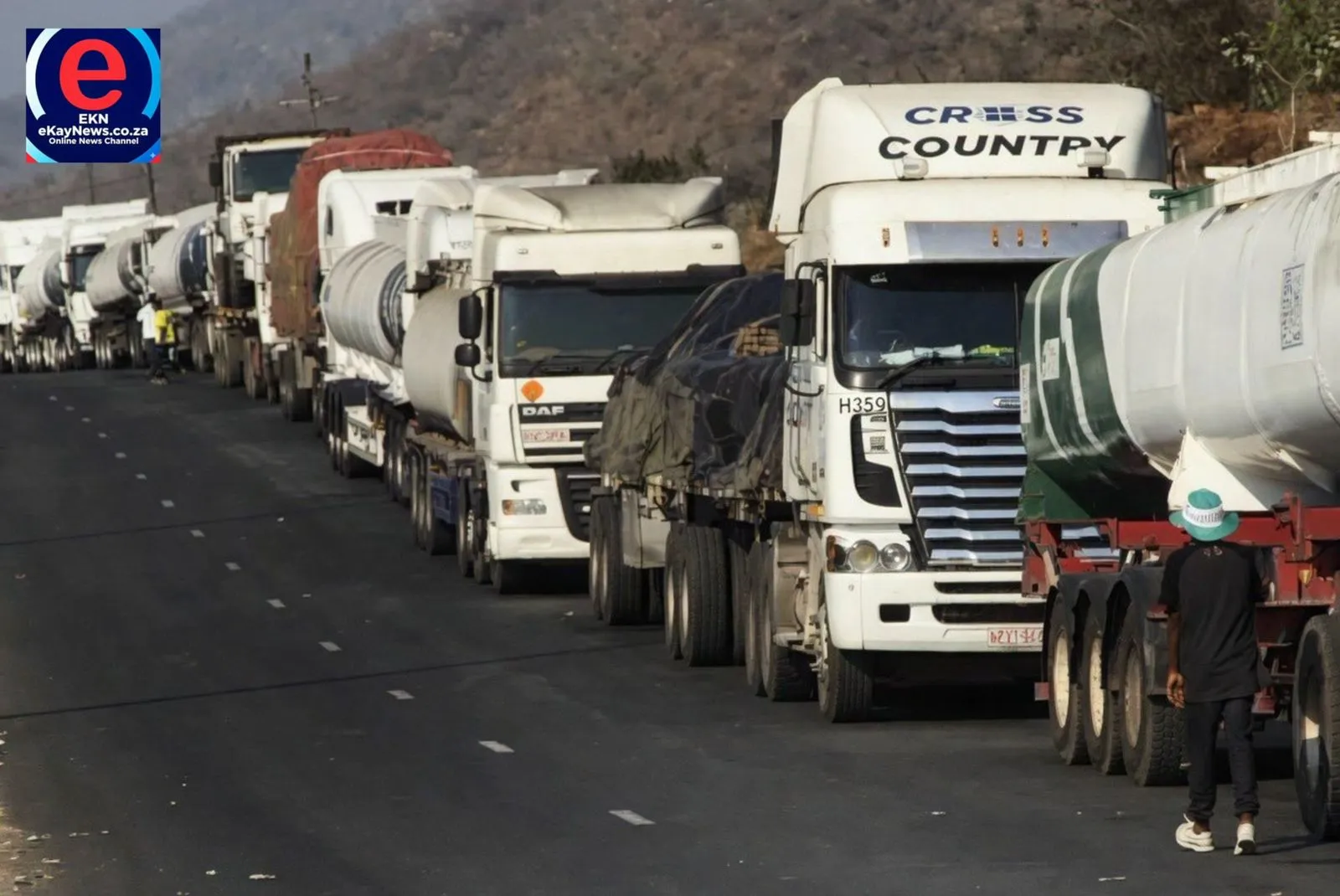
Mozambique blocks over 5,000 South African trucks from passing through its country.
Mozambique blocks 5,000 South African trucks from entry, triggering one of the most significant trade disruptions Southern Africa has faced in recent years. The blockade at one of the region’s busiest trade corridors has stranded thousands of freight vehicles, disrupted supply chains, and raised serious concerns about political stability, regional trade, and economic cooperation.
What appears to be a transport crisis is, in reality, a complex issue involving political unrest, economic frustrations, border security, and the interconnected economies of South Africa and Mozambique. As protests continue to affect cross-border movement, businesses, governments, and transport operators are questioning how long the disruption can continue without causing lasting economic damage.
Mozambique truck blockade exposes deeper political tensions
The Mozambique truck blockade has become far more than a logistical challenge.
Recent demonstrations linked to political unrest and disputed elections have led protesters to block roads leading to the country’s major border crossings. Protesters argue that economic activity should not continue as usual while many citizens believe their political and economic grievances remain unaddressed.
For many demonstrators, interrupting trade has become an effective way of drawing both national and international attention.
Rather than targeting government buildings, protesters have focused on strategic transport routes that directly affect commerce between neighbouring countries.
The result has been a growing queue of thousands of trucks waiting to cross the border.
Mozambique-South Africa border remains a vital trade gateway
The Mozambique-South Africa border is among Africa’s busiest commercial crossings.
At the heart of this trade relationship is the Ressano Garcia-Lebombo border crossing, which connects South Africa’s industrial centres with the Port of Maputo through the Maputo Development Corridor.
Every day, thousands of trucks transport:
- Minerals
- Agricultural products
- Fuel
- Consumer goods
- Industrial machinery
- Manufactured products
This corridor plays a crucial role in supporting economic activity throughout Southern Africa.
Any prolonged disruption immediately impacts exporters, importers, retailers, manufacturers and consumers across the region.
Why protesters are targeting trade routes
The current blockade reflects growing frustration among sections of the Mozambican population.
Many citizens continue to express concerns over:
- Rising unemployment
- High food prices
- Increasing fuel costs
- Economic inequality
- Political representation
- Public trust in government institutions
For protesters, blocking freight traffic creates immediate economic consequences that governments cannot easily ignore.
Trade corridors have increasingly become strategic pressure points during political demonstrations because they quickly attract media coverage and official attention.
The question many observers are asking is whether economic disruption is becoming a substitute for traditional political dialogue.
South African trucks stranded for days
Thousands of South African trucks have reportedly been delayed as authorities monitor the evolving security situation.
Truck drivers face growing uncertainty while waiting near border crossings.
Many have reported concerns over:
- Safety
- Delivery deadlines
- Financial losses
- Fuel expenses
- Food and accommodation costs
Several transport companies have warned that repeated disruptions threaten the reliability of regional supply chains.
Business organisations are also calling for stronger protection measures to safeguard drivers operating along international transport routes.
Ressano Garcia-Lebombo border crossing under pressure
The Ressano Garcia-Lebombo border crossing has long served as one of Southern Africa’s most important trade gateways.
Its strategic location allows goods to move efficiently between South Africa and the Port of Maputo before reaching international markets.
The corridor supports multiple industries including:
- Mining
- Manufacturing
- Agriculture
- Retail
- Logistics
- Construction
When movement stops at this border, the effects ripple throughout the regional economy.
Companies waiting for imported raw materials may experience production delays.
Retailers may face stock shortages.
Exporters risk missing delivery deadlines.
Farmers transporting perishable products may suffer financial losses.
Southern Africa trade disruption raises regional concerns
The current Southern Africa trade disruption highlights how dependent neighbouring economies have become on stable cross-border transport.
South Africa and Mozambique have spent decades strengthening regional trade links through infrastructure investment and economic cooperation.
If repeated blockades become more common, businesses may begin reconsidering their logistics strategies.
Alternative transport corridors through neighbouring countries could become increasingly attractive.
While this may reduce business risks for exporters, it could also reduce transit revenue generated by Mozambique.
That would create additional economic challenges for border communities that depend on transport-related activity.
Businesses question long-term reliability
Business leaders across Southern Africa are increasingly asking important questions.
Can companies continue relying on trade routes vulnerable to prolonged political protests?
Will investors view regional transport infrastructure as dependable?
Who absorbs the financial losses when cargo cannot move?
How should governments balance the right to protest with the need to protect economic activity?
These questions have no easy answers.
However, uncertainty itself carries significant economic costs.
Investors generally prefer markets where transport networks operate predictably.
Repeated disruptions can influence future investment decisions.
The human impact behind the headlines
Although attention often focuses on economics and politics, thousands of ordinary people are directly affected by the blockade. Behind every delayed truck is someone waiting.
Drivers remain separated from their families while spending extended periods inside their vehicles. Businesses await critical deliveries needed to continue operations.
Factories depend on imported components. Farmers rely on timely exports before produce spoils. Retailers anticipate stock for customers.
Consumers ultimately feel the effects through higher prices and product shortages. The human cost extends well beyond transport companies.
Government faces difficult balancing act
Mozambique’s government faces a complex challenge. Authorities must protect citizens’ constitutional rights to peaceful protest while ensuring national economic interests remain protected.
Security measures alone are unlikely to resolve the deeper frustrations driving demonstrations. Many analysts argue that lasting stability requires addressing underlying concerns including:
- Political transparency
- Electoral confidence
- Economic opportunity
- Job creation
- Rising living costs
- Public trust
Without progress in these areas, future disruptions may continue regardless of temporary security interventions.
South Africa calls for cooperation
South Africa also has a strong interest in resolving the crisis quickly. The economies of both countries remain closely interconnected. Government officials, transport associations and regional business organisations continue encouraging greater cooperation between both governments.
Their priorities include:
- Restoring secure freight movement
- Protecting truck drivers
- Maintaining supply chains
- Supporting diplomatic engagement
- Preventing future disruptions
Long-term solutions will require collaboration rather than confrontation.
Economic corridors becoming political pressure points
The blockade illustrates an important shift in modern political activism. Roads, ports and border crossings are increasingly becoming symbols of economic leverage.
Rather than focusing exclusively on political institutions, demonstrators increasingly recognise that disrupting trade generates immediate financial consequences. Governments often respond more rapidly when commercial activity is affected.
This trend could influence future protests across Africa where economic infrastructure becomes a focal point for public demonstrations.
Regional integration faces new challenges
Southern Africa has invested heavily in regional economic integration. Cross-border trade agreements, transport infrastructure and customs cooperation have strengthened commerce across the region. However, repeated disruptions threaten that progress.
If neighbouring countries begin viewing one another primarily through the lens of political risk, transportation costs could increase while investor confidence declines.
Protecting regional trade corridors therefore remains essential for long-term economic growth.
Looking ahead
While authorities continue working to restore normal operations, the broader issues behind the protests remain unresolved.
The trucks will eventually move. Cargo will reach destinations. Trade will resume. Yet the political and economic frustrations that contributed to the blockade may continue unless governments address their root causes.
The Mozambique truck blockade has demonstrated that modern trade routes are more than highways for commerce. They have become powerful political symbols capable of influencing governments, businesses and regional economies.
YOU MAY LIKE:
Conclusion
Mozambique halts 5,000 South African trucks from entry has become one of the defining regional stories of 2026, highlighting the fragile relationship between politics, trade and economic stability in Southern Africa. The disruption at the Mozambique-South Africa border and the Ressano Garcia-Lebombo border crossing serves as a reminder that regional prosperity depends not only on infrastructure but also on political stability, public trust and effective governance.
As governments work to reopen one of Africa’s busiest trade corridors, the challenge extends beyond moving freight. Preventing future Southern Africa trade disruption will require meaningful dialogue, stronger regional cooperation, and long-term solutions that address the economic and political concerns driving public unrest.
References (Mainstream Media)
- Reuters – South Africa reopens key border after Mozambique post-election unrest disrupts trade
https://www.reuters.com/world/africa/south-africa-reopens-key-border-after-mozambique-unrest-2024-11-11/ - BBC News – Mozambique election protests disrupt transport and trade with South Africa
https://www.bbc.com/news/articles/cx2l9l5v3zgo - News24 – Lebombo border disruptions leave hundreds of trucks stranded as unrest continues in Mozambique
https://www.news24.com/news24/southafrica/news/
Keep the News Flowing – Buy the Team a Coffee! ☕

Love the updates? Help us stay on the beat! Whether it’s a quick one-time donation or a monthly subscription, your support keeps the eKayNews lights on and the stories flowing.
-
Secure & Simple: We use PayFast for total transaction peace of mind.
-
Make an Impact: Every “coffee” you send directly supports our newsroom.
Your Brand, Our Audience: Let’s Make Headlines Together! 🚀

Looking for real engagement? At eKayNews, we don’t just share news—we build connections. Whether you’re a local startup or a growing business, our advertising packages are designed to put your brand in front of a loyal, highly engaged audience.
Choose Your Spotlight:
-
Link Booster (R2,500): Dominate the feed with 7 links across 7 days.
-
Permanent Feature (R4,000): Your story, hosted on our site for a lifetime.
-
Prime Visibility (R5,000): Claim the top spot with a 30-day homepage banner.
Ready to grow? 📩 Email us: info@ekaynews.co.za 💬 WhatsApp us: +27 71 096 1185
Get Connected:
-
Facebook & X (Twitter) : Follow us for real-time updates and community debates.
-
WhatsApp Channel: Get exclusive alerts sent directly to your phone.
Stay informed, ahead, connected with the eKayNews family!