No Casualties Reported Amid De-escalation Efforts
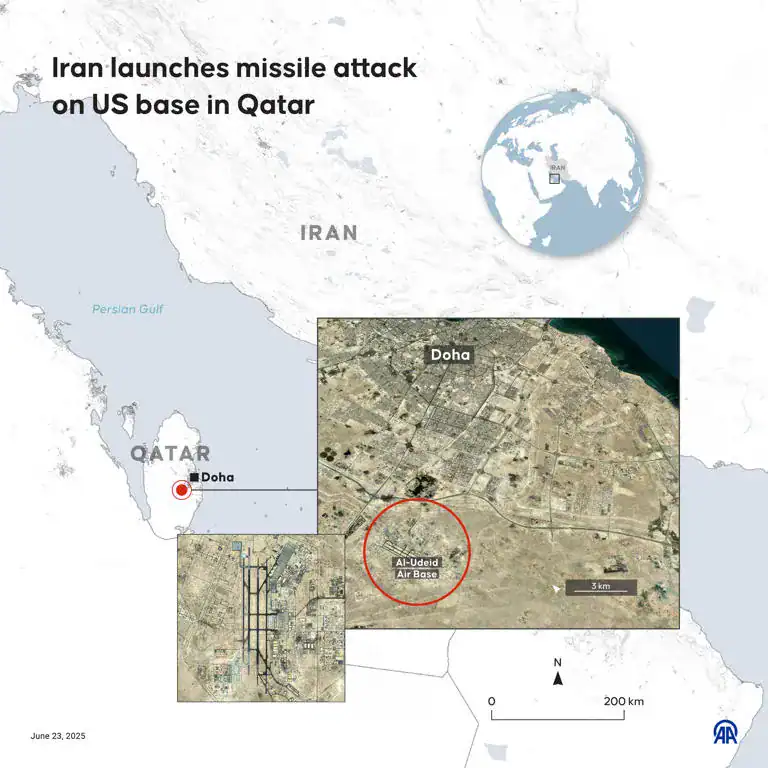
Iran Launches Six Missiles At USA Base In Qatar in a significant escalation of regional tensions, as the Islamic Republic retaliated for recent U.S. strikes on its nuclear facilities.2 The overnight assault on Al Udeid Air Base in Qatar, a pivotal American military installation in the Middle East, saw multiple Iranian missiles launched.3 Crucially, and perhaps signaling a deliberate intent for de-escalation, no casualties were reported among U.S. personnel or Qatari forces.4 This incident, while demonstrating Iran’s capability and resolve, appears to have been meticulously orchestrated to avoid fatalities, with both the Qatari and Trump administrations reportedly given advance notice of the incoming projectiles.5 The delicate balance between demonstrating force and preventing a wider conflict remains a critical challenge in the volatile region.
Iran Missile Attack: A Calculated Retaliation
The Iran missile attack on Al Udeid Air Base was a direct response to the U.S. strike on Iranian nuclear facilities over the weekend.6 This tit-for-tat exchange underscores the perilous nature of the ongoing standoff between Washington and Tehran. While the exact number of missiles that reached the vicinity of the base is still being assessed, initial reports indicate approximately 14 Iranian missiles were launched, with Qatari air defenses intercepting many of them. One missile reportedly struck a building near the base, but remarkably, it caused no casualties and no damage to military infrastructure. This precision, coupled with the reported advance warning, suggests a deliberate effort by Iran to demonstrate its military reach without inciting a full-scale war.
The motivations behind this carefully calibrated Iran missile attack are multifaceted. On one hand, it served to satisfy domestic calls for retaliation following the U.S. aggression. Iran’s Supreme Leader Ayatollah Ali Khamenei’s post on X, featuring a burning American flag and a defiant message, clearly aimed to project strength and resolve to his domestic audience. On the other hand, the nature of the attack – a targeted strike with no reported casualties and, crucially, prior notification to Qatar and the U.S. – strongly indicates a desire for de-escalation. Iran’s Supreme National Security Council explicitly stated that the number of missiles fired at Qatar was equal to the number of bombs the U.S. used in its strike on Saturday, a clear signal of proportionality and a measured response.7 This aligns with past Iranian behavior, such as the 2020 missile strikes on U.S. bases in Iraq following the assassination of General Qassem Soleimani, which also resulted in no fatalities and were preceded by warnings.8
U.S. Base Qatar: A Strategic Target
Al Udeid Air Base in Qatar holds immense strategic importance for the U.S. base Qatar presence in the Middle East. It is the largest U.S. military installation in the region, serving as the forward headquarters for U.S.9 Central Command (CENTCOM), which oversees operations across 20 countries.10 Targeting such a prominent base sends a powerful message about Iran’s ability to reach American interests. However, the fact that there were no casualties at this heavily fortified installation is a testament to both the effectiveness of Qatari air defenses and, potentially, the precision and intent of the Iranian strike itself.
The choice of Al Udeid was likely deliberate, balancing symbolic significance with a desire to avoid outright conflict. The base is located away from major urban centers in Qatar, a point highlighted by Iran’s Supreme National Security Council in its statement. This geographical consideration further supports the narrative of a calculated attack aimed at making a statement rather than inflicting widespread destruction. In the weeks leading up to the attack, there had been reports of aircraft and personnel being evacuated from Al Udeid, suggesting a heightened state of alert and preparedness.11 This foresight, coupled with the advance warnings, contributed significantly to the successful avoidance of any no casualties in the incident.
No Casualties: A Collective Goal in Crisis Management
The most significant takeaway from this Iran missile attack is the resounding report of no casualties. This outcome is not accidental but a result of a complex interplay of factors, including the reported advance warnings from Iran, the preparedness of U.S. and Qatari forces, and effective air defense systems. The Foreign Ministry of Qatar promptly issued a statement confirming that Qatari air defenses “thwarted the attack and successfully intercepted the Iranian missiles,” reiterating that no injuries or deaths were reported.12 This swift and transparent communication from Qatar played a crucial role in managing the narrative and preventing further panic.
The Trump administration’s response also emphasized the absence of casualties, with President Trump commenting on the “very weak response” from Iran and expressing satisfaction that “NO Americans were harmed.”13 This messaging, while seemingly downplaying the Iranian attack, serves to create an “off-ramp” for de-escalation, allowing all parties to claim a degree of success without further escalating the conflict. The emphasis on no casualties is a powerful indicator that, despite the aggressive posturing, neither side currently seeks a full-blown war. This collective effort to prevent bloodshed amidst rising tensions is a critical aspect of crisis management in the volatile Middle East.
De-escalation: A Fragile Path Forward
The aftermath of the Iran missile attack on Al Udeid highlights the urgent need for de-escalation in the region. Qatar, often acting as an intermediary in diplomatic talks, immediately condemned the attack and called for a return to the negotiating table.14 This proactive stance from a key regional player is vital in preventing a further spiral of violence.
The current situation presents President Trump with a critical decision: how to respond without plunging the U.S. deeper into the broader regional conflict, particularly in light of Israel’s ongoing actions. The U.S. had previously warned that any Iranian retaliation “will be met with force far greater than what was witnessed” during the strike on Iran’s nuclear sites.15 However, the outcome of no casualties provides a diplomatic opening, allowing for a less aggressive counter-response. The reopening of the U.S. embassy in Doha the following day further signals a return to a semblance of normalcy and a commitment to continued diplomatic engagement.
In conclusion, the Iran missile attack on the U.S. base Qatar represents a dangerous moment in regional geopolitics. While Iran demonstrated its retaliatory capability, the meticulous execution of the strike, coupled with reported advance warnings and the resulting no casualties, suggests a deliberate strategy aimed at de-escalation rather than full-scale war.16 The coming days will be crucial as international efforts focus on steering the situation away from further conflict and towards a diplomatic resolution. The world watches anxiously, hoping that restraint and strategic calculation will prevail over unchecked escalation.
Five Reference Mainstream Media Articles:
- Al Jazeera: “Iran attacks Al Udeid Air Base housing US troops in Qatar” – https://www.aljazeera.com/news/2025/6/23/iran-attacks-al-udeid-air-base-housing-us-troops-in-qatar
- The Times of Israel: “Iran launches missile attack on American base in Qatar in retaliation for US strikes” – https://www.timesofisrael.com/iran-launches-missile-attack-on-american-base-in-qatar-in-retaliation-for-us-strikes/
- CBS News: “Iran launches missile attack on U.S. base at Al Udeid in Qatar, no injuries reported” – https://www.cbsnews.com/news/qatar-explosions-us-air-base-strikes-on-iran/
- Sky News: “Iran says its carried out ‘mighty and successful’ attack on US base – as Qatar air defences ‘thwart assault'” – https://news.sky.com/story/iran-says-its-carried-out-mighty-and-successful-attack-on-us-base-as-qatar-air-defences-thwart-assault-13387642
- PBS NewsHour: “Iran retaliates for U.S. air strikes, launches missile attack on American military base in Qatar” – https://www.pbs.org/newshour/world/explosions-heard-in-qatar-home-to-u-s-airbase-amid-iranian-threats-to-retaliate-for-strike-on-nuclear-sites
🙏 Support eKayNews – Keep Independent News Alive in South Africa
Your support keeps us reporting. At eKayNews.co.za, we work hard to deliver quality, reliable, and independent news — covering the stories that matter across South Africa and the world. But we can’t do it without you.
💳 Support us by donating or subscribing today:
- ✅ Subscribe with any amount of your choice – cancel anytime
- ☕️ Buy us a once-off virtual coffee – any amount helps!
- 🔒 Secure payments via PayFast – eKayNews never sees your payment details
👉 [Visit our donation/subscribe page] or scroll down to the footer of our website to make your contribution.
Why Your Support Matters
Your generosity directly powers our newsroom. Every rand helps us remain online, keep reporting freely, and improve the quality of the journalism you rely on.
💬 “No matter the size, every contribution makes a difference. You are the lifeline of eKayNews, and we are deeply grateful.”
From the entire eKayNews team:
Thank you for being part of our community.
❤️ Stay Connected with eKayNews
👉 Follow us for the latest headlines, breaking stories, and community updates:
Together, we can keep independent journalism alive. Thank you for your support.