US spat deepens over G20 Summit
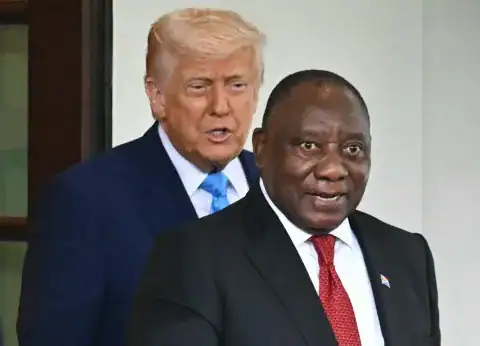
US spat deepens over G20 Summit, marking a new low in relations between Pretoria and Washington as the gathering of world leaders kicks off in Johannesburg. The public spat between South Africa and the United States has worsened significantly in the last 24 hours, transforming what is usually a diplomatic formality into a heated exchange of insults and accusations.
Pretoria has responded to comments by White House Press Secretary Karoline Leavitt, who delivered a stinging rebuke of the South African government on Thursday. The clash highlights a growing ideological rift that threatens to overshadow the critical discussions on global inequality and sustainable development scheduled for the weekend.
White House Slams Ramaphosa
The latest escalation began when Leavitt expressed US President Donald Trump’s unhappiness with President Cyril Ramaphosa‘s choice of words earlier in the day. Ramaphosa had suggested to reporters that the US might be reconsidering its boycott of the summit, citing a “last-minute” communication from American officials.
The White House moved quickly to quash this narrative. In a briefing that stunned diplomatic observers, Leavitt accused the South African President of spreading false information.
“The United States is not participating in official talks at the G20 in South Africa,” Leavitt told reporters. “I saw the South African president running his mouth a little bit against the United States and the president of the United States earlier today, and that language is not appreciated by the president or his team.”
This direct attack—accusing a sitting head of state of “running his mouth”—has poured fuel on an already volatile fire. It signals that the Trump administration is unwilling to observe the niceties of diplomatic protocol, opting instead for a confrontational approach that has left South African officials scrambling to manage the fallout.
“We Will Not Be Bullied”
Despite the harsh rhetoric from Washington, Cyril Ramaphosa remained defiant. Speaking at the conclusion of the G20 Social Summit, he was resolute in his announcement that South Africa will not be bullied by absent superpowers.
He was referring specifically to the United States’ formal warning that Pretoria should not issue a G20 leaders declaration at the end of the summit. The US argument is procedural but pointed: because they are boycotting the event, there can be no true “consensus,” and therefore any declaration issued by South Africa would be illegitimate.
Ramaphosa dismissed this logic entirely.
“We will have a declaration. The talks are going extremely well. I’m confident we are moving towards a declaration, and they are now just dotting the i’s and crossing the t’s,” Ramaphosa said, drawing applause from the delegates present. “We will not be bullied. We will not agree to be bullied.”
This diplomatic row has raised the stakes for South Africa’s presidency. By insisting on a declaration, Ramaphosa is effectively declaring that the G20 can function and make decisions without the approval—or even the presence—of the United States.
The Roots of the Conflict
To understand why the US spat deepens over G20 Summit, one must look beyond this week’s events. The friction has been building for months, fueled by deep ideological differences between the Ramaphosa administration and the returning Trump presidency.
A primary flashpoint has been the Trump administration’s revival of allegations regarding the treatment of white farmers in South Africa—claims that Pretoria has repeatedly debunked as baseless and inflammatory. Additionally, South Africa’s steadfast non-aligned stance on global conflicts and its legal actions in international courts regarding the Middle East have alienated the current US administration.
The US decision to boycott the summit—sending only a chargé d’affaires to the ceremonial handover—is an unprecedented snub. It is designed to delegitimize South Africa’s moment on the global stage. However, Ramaphosa’s strategy appears to be to use this absence to rally the “Global South,” positioning the summit as a victory for developing nations against Western hegemony.
The Battle for the Declaration
The G20 leaders declaration is the centerpiece of any summit. It outlines the shared commitments of the world’s largest economies. Without it, a summit is often viewed as a talk shop with no tangible outcome.
Washington’s attempt to block the declaration is a strategic move to ensure South Africa does not cement policy shifts on issues like debt relief, climate financing, and reform of international financial institutions—topics that are central to Pretoria’s agenda but “run counter to US policy views,” according to leaked diplomatic cables.
South African officials argue that the G20 has evolved. They contend that one nation, even the world’s largest economy, should not hold a veto over the collective will of the other 19 members. By pushing forward with the declaration, South Africa is setting a precedent that could reshape how multilateral organizations function in a multipolar world.
Implications for US-South Africa Relations
As the US spat deepens over G20 Summit, the long-term implications for bilateral relations are becoming increasingly severe. The US remains one of South Africa’s largest trading partners, and the African Growth and Opportunity Act (AGOA) is a critical economic lifeline for Pretoria.
Diplomatic experts warn that Karoline Leavitt‘s comments and Trump’s hostility could be a precursor to punitive economic measures. If the US administration feels “disrespected” by Ramaphosa’s defiance, tariffs or exclusion from trade agreements could be the next weapon in this diplomatic war.
Conversely, South Africa is finding support from other quarters. Delegates from Brazil, China, and the African Union have expressed solidarity with Ramaphosa’s stance. The summit is now morphing into a geopolitical litmus test: nations are being forced to choose between aligning with US absenteeism or supporting South Africa’s attempt to forge a new path for the G20.
YOU MAY LIKE:
A Summit Defined by Absence
Ultimately, history may record this summit not for who was there, but for who wasn’t. The empty chair of the United States looms large over the proceedings at the Sandton Convention Centre.
However, Ramaphosa seems determined to spin this absence into a narrative of resilience. By insisting that “boycott politics never work,” he is trying to isolate the US position, framing it as petulant rather than principled.
As the weekend approaches, all eyes will be on the final plenary session. If South Africa successfully issues a G20 leaders declaration signed by the remaining members, it will be a massive diplomatic coup for Ramaphosa and a stark indicator of waning US influence. If the declaration falls apart under US pressure, it will be a humiliating defeat.
For now, the rhetoric continues to escalate. The diplomatic row has moved from private cables to public insults, ensuring that this G20 summit will be one of the most contentious and consequential in the bloc’s history.
Here are two references from mainstream media confirming the details of the diplomatic spat between the US and South Africa regarding the G20 Summit:
-
eNCA
-
Headline: SA–US spat deepens over G20 Summit
-
Date: November 21, 2025
-
Link: https://www.enca.com/news-top-stories/sa-us-spat-deepens-over-g20-summit
-
-
AP News
-
Headline: White House hits out at South African leader for ‘running his mouth’ over US boycott of G20
-
Date: November 20, 2025
-
Link: https://apnews.com/article/g20-south-africa-united-states-trump-boycott
-
Kindly consider to support eKayNews, further consider buying us a virtual coffee or subscribe to any amount of your choice also in the links below or check at the footer of website

Payment handled by Pay fast the most and eKayNews doesn’t access your payments details at all:
Subscribe with any amount and cancel anytime:
Subscribe any amount of your choice:
Consider Buy us once off virtue coffee of any amount
Your incredible generosity in financially contributing to eKayNews fills our hearts with profound gratitude. Thank you, truly.
Your support is the very lifeline that allows us to remain online, to continue our work, and most importantly, to keep serving you with the news and information you rely on.
No matter the size, makes a tangible difference and empowers us to keep going.
From the entire team at eKayNews, thank you for being such a vital part of our community. We are committed to continuing to serve you even better, thanks to your kindness
We’re grateful for your Love and support of eKayNews

Thank you supporting eKayNews! Follow us for the latest news and updates. We appreciate your readership and engagement.
eKayNews on Facebook
eKayNews on X
Follow the eKayNews What Sapp: News Channel