Iran hits Israel and Gulf states after denying US talks
Iran launches strikes on Israel and Gulf, denying US talks plunging the Middle East into one of the most dangerous and unpredictable escalations in recent history. What began as a tense geopolitical standoff has now spiraled into a multi-front conflict involving missile strikes, covert operations, and competing narratives from global powers.
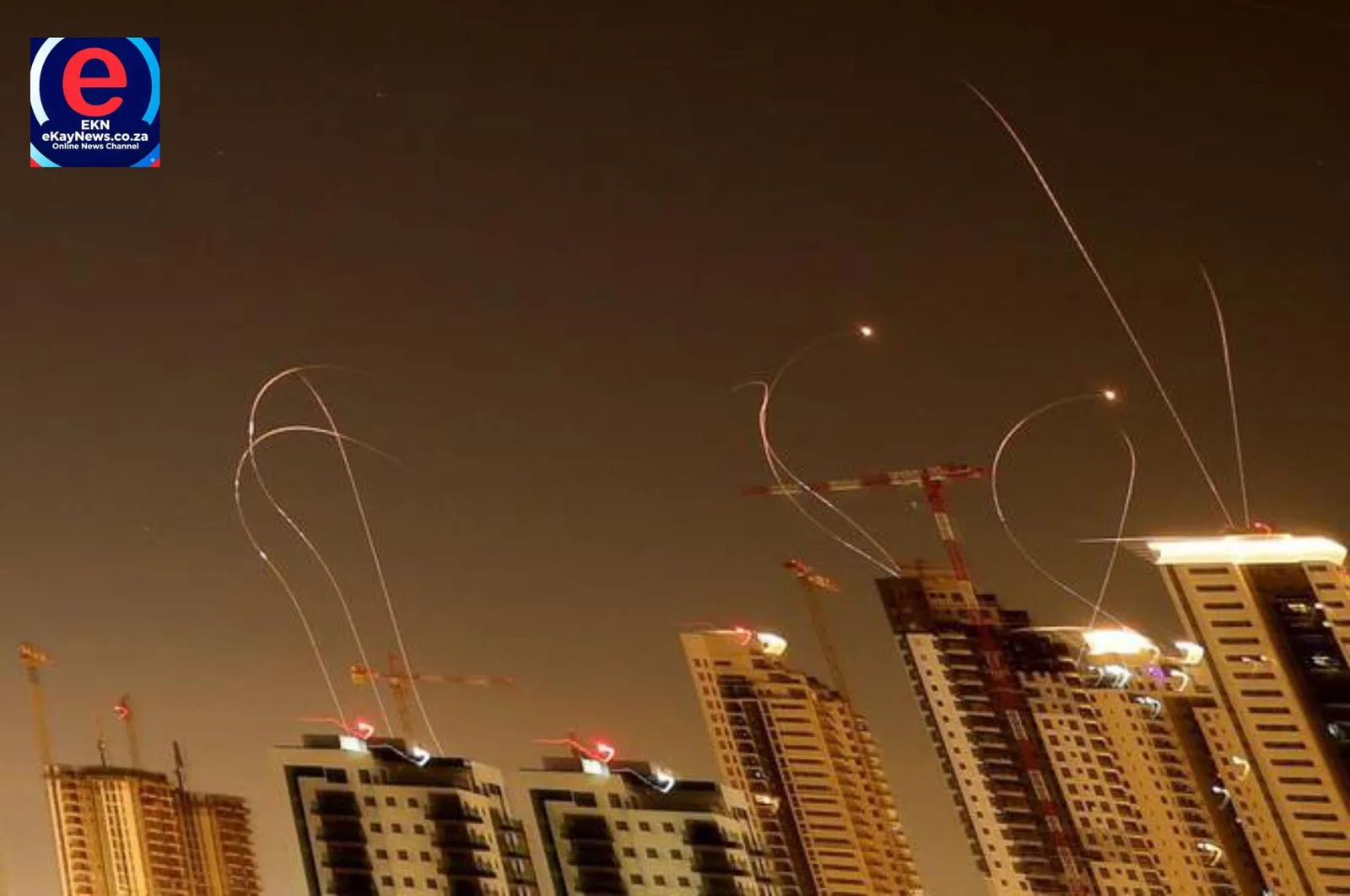
Early Tuesday morning, Iran launched a fresh wave of ballistic missile attacks targeting Israeli positions and key infrastructure across parts of the Gulf region. The strikes came just hours after US President Donald Trump claimed that diplomatic progress was being made behind the scenes—claims that Tehran has firmly rejected.
This widening gap between political rhetoric and military reality has created deep uncertainty, leaving global leaders, markets, and civilians bracing for what could become a prolonged regional war.
Conflicting Narratives: Diplomacy or Strategic Misinformation?
The latest escalation follows comments from President Trump, who stated that his administration was in active communication with a high-ranking Iranian official. According to Trump, these discussions were productive enough to justify extending a previously issued 48-hour ultimatum by five additional days.
The ultimatum demanded that Iran reopen the Strait of Hormuz—a critical oil transit chokepoint responsible for roughly 20% of global petroleum flows. Trump warned that failure to comply would result in devastating US airstrikes targeting Iran’s energy infrastructure.
His remarks, including a controversial statement about continuing bombing campaigns if talks fail, have intensified global concern. Critics argue that such rhetoric risks further destabilizing an already volatile situation.
However, Iran has categorically denied that any such negotiations are taking place.
Tehran Rejects US Claims
Iranian officials have strongly pushed back against Washington’s narrative. Mohammad Bagher Ghalibaf, Iran’s parliamentary speaker, publicly dismissed Trump’s claims, accusing the US of attempting to manipulate global oil markets and shape political perception.
Meanwhile, Foreign Ministry spokesperson Esmaeil Baqaei confirmed that indirect messages had been received via intermediaries, but emphasized that no formal negotiations or agreements had been established.
This contradiction has deepened mistrust between the two nations, raising fears that diplomacy may be little more than a strategic smokescreen while military operations continue.
Global Markets React to Uncertainty
Despite the lack of confirmed diplomatic progress, Trump’s statements triggered a temporary sense of relief in global financial markets.
Major US indices responded positively:
- The S&P 500 rose by 1.1%
- The Dow Jones Industrial Average gained 1.4%
- The Nasdaq Composite climbed 1.4%
Oil prices, which had surged amid fears of supply disruption, briefly dipped below $100 per barrel.
However, analysts warn that this stability is fragile. Continued attacks in the Gulf region and threats to the Strait of Hormuz could quickly reverse gains, potentially triggering global economic instability or even recession.
Mystery Airstrikes Hit Iranian Infrastructure
Adding to the tension, Iranian media reported that two major energy facilities were struck by unidentified airstrikes.
Targets included:
- Natural gas infrastructure in Isfahan
- A pipeline linked to the Khorramshahr power plant
No country has officially claimed responsibility. However, both Israel and the United States have historically maintained strategic ambiguity regarding covert operations of this nature.
These strikes signal a dangerous new phase of the conflict—one that directly targets economic lifelines and critical infrastructure, increasing pressure on Iran internally.
Israel Expands Military Operations
Israel has made it clear that it will not slow its military campaign. Prime Minister Benjamin Netanyahu confirmed ongoing coordination with Washington but emphasized that Israeli operations would continue regardless of diplomatic developments.
Israeli forces have intensified attacks in both Iran-linked targets and neighboring Lebanon.
Beirut Under Fire
In a significant escalation, Israeli jets launched multiple airstrikes on Beirut’s southern suburbs—an area known to house Hezbollah strongholds.
Lebanese state media reported at least seven air raids overnight. Residents described massive explosions, fires, and widespread destruction as panic spread across the city.
The Israeli military stated that the strikes were aimed at dismantling Hezbollah infrastructure embedded within civilian areas.
Meanwhile, on the ground in southern Lebanon, clashes between Israeli forces and Hezbollah fighters have intensified. UN peacekeepers reported heavy gunfire and ongoing combat operations, further raising fears of a broader regional war.
Rising Humanitarian Crisis
As the conflict expands, the human cost continues to rise sharply.
Reported casualties include:
- Over 1,500 deaths in Iran
- More than 1,000 in Lebanon
- At least 15 in Israel
- 13 US military personnel killed
Beyond these figures, countless civilians have been injured or displaced. Entire communities have been forced to flee, creating a rapidly growing refugee crisis.
Critical infrastructure—including hospitals, power stations, and water systems—has been damaged or destroyed, worsening humanitarian conditions across the region.
YOU MAY LIKE:
Tehran vows to fight on, rejecting Trump’s peace talk claims
A Region on the Brink
The Middle East now stands at a crossroads between diplomacy and full-scale war. While political leaders speak of negotiations and deadlines, military actions on the ground tell a different story.
Trump’s five-day window for diplomacy is rapidly closing. If no agreement is reached, the United States has signaled its readiness to launch major strikes against Iran’s energy sector—an اقدام that could trigger an even wider conflict involving multiple global powers.
For now, uncertainty dominates. Markets fluctuate, civilians flee, and missiles continue to fly.
As Iran hits Israel and Gulf states after denying US talks, the prospects for peace remain uncertain, and the risk of a historic escalation grows with each passing hour.
References (Mainstream Media with Links)
- BBC News – Middle East coverage
https://www.bbc.com/news/world-middle-east - Al Jazeera – Iran-Israel conflict updates
https://www.aljazeera.com/middle-east/
Keep the Headlines Fresh!

Quality news takes time, effort, and a whole lot of coffee. If you value what we do at eKayNews, consider “buying a round” for the team!
-
Join the Inner Circle: Set up a custom subscription.
-
The Instant Jolt: Send a one-time “coffee” donation.
Why trust us? We use PayFast for 100% secure, encrypted transactions. Your data stays yours; the news stays ours.
To our amazing readers: You’re the reason we’re first on the scene. Thanks for being part of the family!
Feel the Pulse of the News with eKayNews!

Join the ever-growing eKayNews community and stay connected to the stories that matter. Follow us on Facebook, X, and WhatsApp for real-time updates, breaking news, and exclusive alerts straight to your feed. Your support keeps us digging deeper and sharing the news you can trust.
Stay Connected:
-
Facebook: [eKayNews on Facebook]
-
X (Twitter): [eKayNews on X]
-
WhatsApp: [Join the eKayNews WhatsApp Channel]
Become part of our inner circle and get instant news alerts as events unfold across South Africa and beyond!
Promote Your Brand with eKayNews
Looking to reach a wide, engaged audience? Explore our advertising packages:
-
Link Booster: 7 links to 7 articles over 7 days – R2,500
-
Permanent Feature: Sponsored blog article hosted permanently – R4,000
-
Prime Visibility: Home page banner ad for 30 days – R5,000
Don’t miss your chance to connect with our audience. Book your package today via email at info@ekaynews.co.za or WhatsApp us on +27710961185.
Be part of a platform where news meets community—stay informed, stay ahead, stay with eKayNews!