Trump Gives Iran 48 Hour Ultimatum to Reopen Strait of Hormuz or Face ‘Obliteration’ of Power Infrastructure
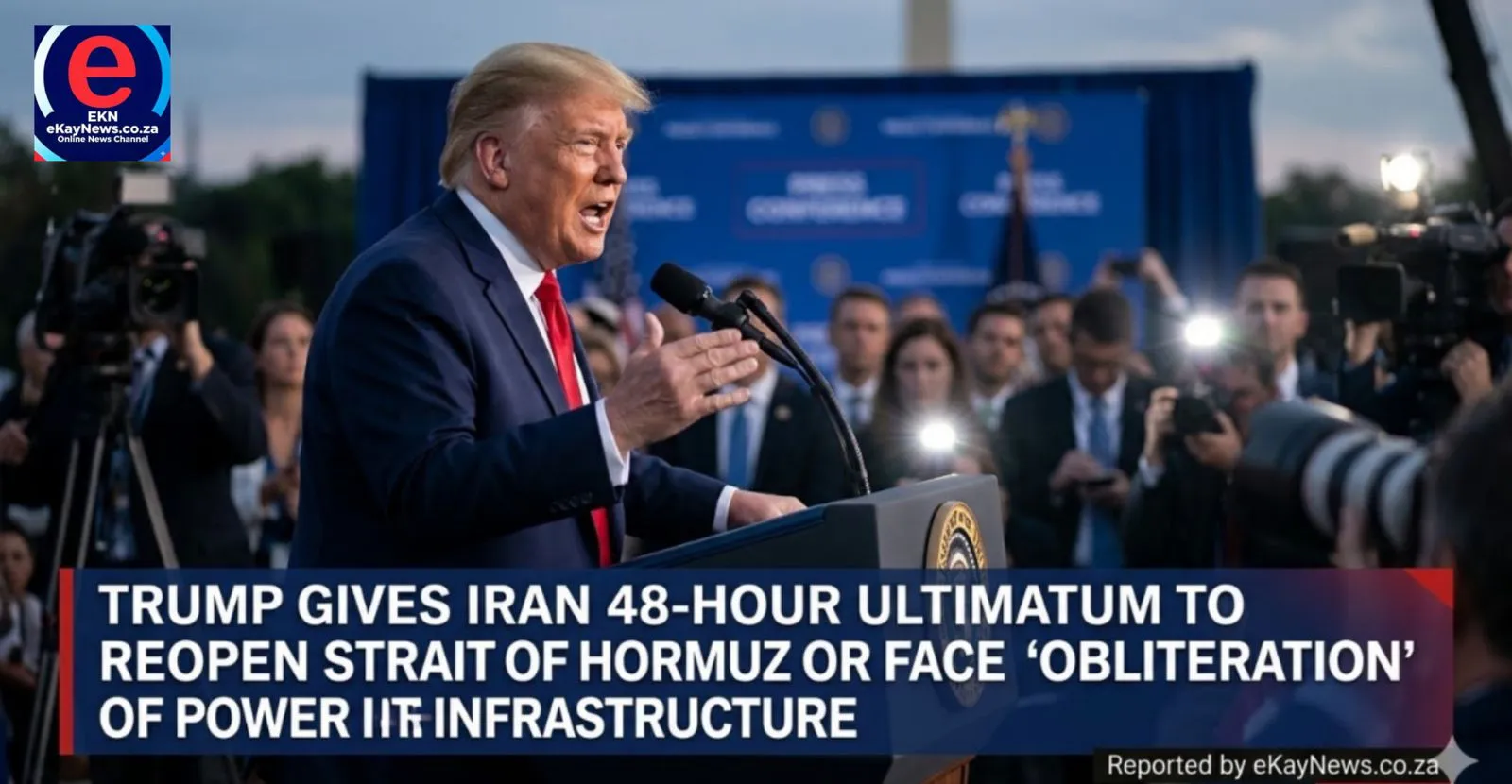
Trump gives Iran 48 hour ultimatum to reopen Strait of Hormuz or face ‘obliteration’ of power infrastructure, a dramatic escalation that has pushed global tensions to the brink and placed the world economy on edge. The ultimatum, reportedly issued via Truth Social from Donald Trump’s Mar-a-Lago residence, demands that Tehran immediately restore full maritime access through one of the most critical oil transit routes on the planet—or face overwhelming military retaliation.
The stark warning signals a return to high-stakes brinkmanship between Washington and Tehran, raising fears of a broader regional conflict with global consequences.
Why the Strait of Hormuz Matters
The Strait of Hormuz is widely regarded as the most strategically important oil chokepoint in the world. Roughly one-fifth of global petroleum consumption passes through this narrow corridor, linking the Persian Gulf to international markets.
Since the onset of renewed regional tensions, shipping through the strait has slowed dramatically. Reports indicate that tanker traffic has dropped sharply amid fears of confrontation, effectively creating a de facto blockade. The consequences have been immediate and severe.
Global oil prices have surged beyond $100 per barrel, while energy markets remain volatile. Countries heavily dependent on imported fuel—especially in Europe, Asia, and Africa—are already feeling the pressure.
For consumers, the impact is direct. Fuel prices have climbed steadily, with diesel and petrol costs increasing transportation expenses and driving inflation across supply chains. From food distribution to construction, the ripple effects are being felt worldwide.
Economic Shockwaves Across the Globe
The economic implications of the standoff extend far beyond energy markets. Analysts warn that prolonged disruption in the Strait of Hormuz could trigger a global slowdown, particularly if supply constraints persist.
In the United States, rising fuel prices have reignited concerns about inflation. Similarly, in developing economies, including parts of Africa, higher oil prices threaten to weaken currencies and increase the cost of living.
Global Energy Impact Snapshot (March 2026)
- Crude Oil (WTI): $74.50 → $104.20 (+39.8%)
- Diesel (Per Gallon): $3.85 → $5.12 (+32.9%)
- Hormuz Vessel Traffic: 21 tankers/day → 2 tankers/day (-90.4%)
These figures illustrate the scale of disruption caused by the ongoing standoff. The ultimatum issued by Trump is widely seen as an attempt to stabilize global markets by forcing a reopening of the strait.
Tehran’s Defiant Response
Iran’s reaction to the ultimatum has been swift and uncompromising. Officials have rejected the demand, framing it as an act of aggression and warning of severe consequences should the United States proceed with military action.
State media outlets have emphasized a “tit-for-tat” strategy, signaling that any attack on Iranian infrastructure would be met with retaliation. Potential targets, according to analysts, could include U.S. military bases and energy facilities across the Middle East.
This escalation has raised alarms among American allies in the Gulf region. Countries such as Saudi Arabia and the United Arab Emirates rely heavily on energy infrastructure and desalination plants—critical for providing fresh water in arid environments.
A direct strike on such facilities could trigger not only an energy crisis but also a humanitarian emergency.
Military Strategy Behind the Threat
The threat to “obliterate” Iran’s power infrastructure reflects a strategic calculation. Rather than deploying ground forces, the U.S. appears to be considering targeted strikes aimed at crippling Iran’s industrial and economic capabilities.
Military experts suggest that disabling power plants could have far-reaching effects, disrupting manufacturing, communications, and essential services. However, such actions carry significant risks, including civilian hardship and international condemnation.
At the same time, Iran’s ability to retaliate through asymmetric warfare—such as targeting shipping lanes or launching missile strikes—adds another layer of complexity to the situation.
Trump’s “Maximum Pressure” Returns
This latest development marks a resurgence of Donald Trump’s “maximum pressure” doctrine, which defined U.S. policy toward Iran during his previous presidency. The approach combines economic sanctions with military deterrence to force compliance.
By issuing a strict 48-hour deadline, Trump has dramatically reduced the window for diplomatic engagement. The ultimatum leaves little room for negotiation, increasing the likelihood of confrontation if neither side backs down.
Supporters argue that decisive action is necessary to restore stability in global energy markets. Critics, however, warn that such brinkmanship could lead to unintended consequences, including a wider regional war.
Global Reactions and Diplomatic Efforts
The international community has responded with concern, urging restraint from both sides. Major powers, including members of the European Union and China, have called for immediate de-escalation and renewed diplomatic talks.
The United Nations has also emphasized the importance of keeping vital trade routes open, warning that prolonged disruption could have devastating consequences for global food and energy security.
Behind the scenes, diplomatic channels are reportedly active, with intermediaries تلاشing to broker a compromise that would allow shipping to resume without further escalation.
A Critical Countdown
As the 48-hour deadline approaches, the world is watching closely. The stakes are extraordinarily high, with potential outcomes ranging from a peaceful resolution to a full-scale military confrontation.
Financial markets remain volatile, reflecting uncertainty about the next move. Oil traders, policymakers, and businesses alike are bracing for possible disruptions.
For ordinary citizens, the implications are tangible—rising fuel costs, increased prices for goods, and economic uncertainty.
YOU MAY LIKE:
Conclusion: A World on the Brink
Trump gives Iran 48 hour ultimatum to reopen Strait of Hormuz or face ‘obliteration’ of power infrastructure—a headline that encapsulates the gravity of the current moment. What began as a regional dispute has evolved into a global crisis with far-reaching implications.
Whether Iran chooses to comply, negotiate, or resist will determine the course of events in the coming days. Similarly, the United States faces a critical decision: follow through on its threat or seek an alternative path.
As the deadline looms, one thing is clear—the outcome of this standoff will shape global energy security, geopolitical stability, and economic conditions for years to come.
References (Mainstream Media)
- BBC News – Middle East & Oil Markets
https://www.bbc.com/news - Reuters – Energy & Geopolitics
https://www.reuters.com/world/middle-east/
Keep the Headlines Fresh!

Quality news takes time, effort, and a whole lot of coffee. If you value what we do at eKayNews, consider “buying a round” for the team!
-
Join the Inner Circle: Set up a custom subscription.
-
The Instant Jolt: Send a one-time “coffee” donation.
Why trust us? We use PayFast for 100% secure, encrypted transactions. Your data stays yours; the news stays ours.
To our amazing readers: You’re the reason we’re first on the scene. Thanks for being part of the family!
Feel the Pulse of the News with eKayNews!

Join the ever-growing eKayNews community and stay connected to the stories that matter. Follow us on Facebook, X, and WhatsApp for real-time updates, breaking news, and exclusive alerts straight to your feed. Your support keeps us digging deeper and sharing the news you can trust.
Stay Connected:
-
Facebook: [eKayNews on Facebook]
-
X (Twitter): [eKayNews on X]
-
WhatsApp: [Join the eKayNews WhatsApp Channel]
Become part of our inner circle and get instant news alerts as events unfold across South Africa and beyond!
Promote Your Brand with eKayNews
Looking to reach a wide, engaged audience? Explore our advertising packages:
-
Link Booster: 7 links to 7 articles over 7 days – R2,500
-
Permanent Feature: Sponsored blog article hosted permanently – R4,000
-
Prime Visibility: Home page banner ad for 30 days – R5,000
Don’t miss your chance to connect with our audience. Book your package today via email at info@ekaynews.co.za or WhatsApp us on +27710961185.
Be part of a platform where news meets community—stay informed, stay ahead, stay with eKayNews!