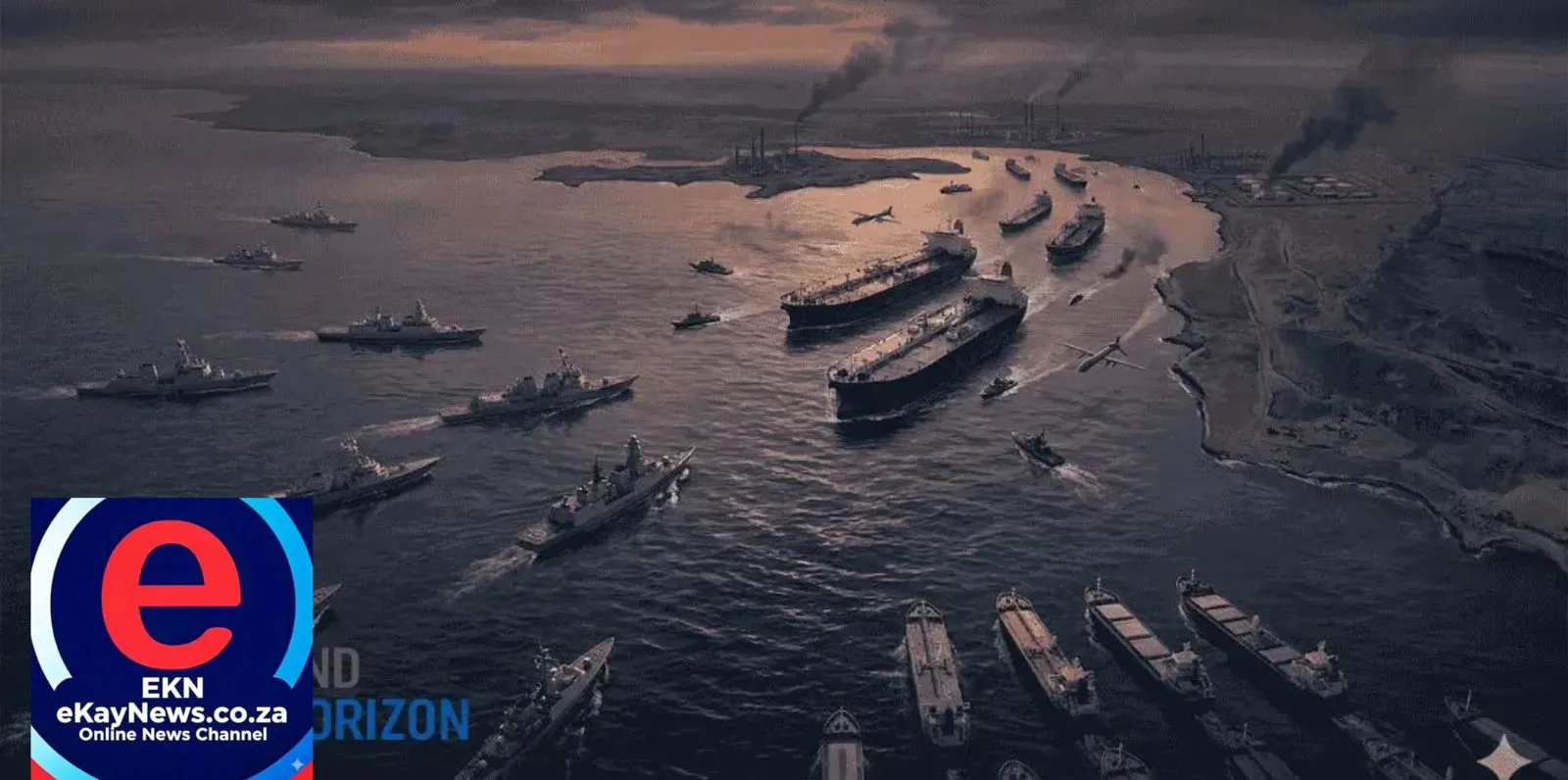
Strait of Hormuz blockage: A global crisis for 2026
Strait of Hormuz blockage: A global crisis for 2026 is rapidly emerging as one of the most severe threats to global economic stability and humanitarian systems in modern history. As tensions escalate in the Middle East, the closure and disruption of this critical maritime chokepoint have triggered a cascade of consequences affecting energy markets, food supply chains, and international trade.
The Strait of Hormuz is responsible for transporting nearly one-fifth of the world’s oil supply. Its disruption has sent shockwaves across continents, from fuel stations in South Africa to agricultural economies in Asia.
The Strait of Hormuz oil crisis and global energy inflation
The most immediate effect of the crisis is the Strait of Hormuz oil crisis, which has drastically reduced global energy supply. With approximately 20% of oil and liquefied natural gas (LNG) shipments disrupted, prices have surged to alarming levels.
Reports indicate that Brent crude oil has exceeded $113 per barrel, with peaks nearing $126. This dramatic increase has triggered widespread energy inflation, affecting both developed and developing economies.
In countries heavily reliant on imported energy, such as South Africa, the impact is already visible through rising fuel prices and increased transportation costs. The ripple effect extends to electricity generation and manufacturing, further driving inflation.
Fertilizer trade disruption and global food insecurity
One of the less visible but equally dangerous consequences is the disruption of global fertilizer supply chains. The Strait of Hormuz blockage: A global crisis for 2026 has cut off a major route used to transport fertilizers such as ammonia, urea, and phosphates.
Approximately 30% of the world’s seaborne fertilizer supply passes through this route. As a result, farming costs have surged, and agricultural production is under threat.
The World Food Programme has warned that reduced fertilizer availability could significantly lower crop yields. This may push millions of people into food insecurity, particularly in regions already facing economic hardship.
When food prices rise alongside energy costs, the burden falls most heavily on vulnerable populations.
Maritime insurance surge and global logistics disruption
The crisis has also led to a massive increase in maritime insurance costs. As the region is now classified as a high-risk war zone, insurance premiums for ships have skyrocketed by up to 5000%.
This surge has created severe logistical challenges:
-
Ships are being rerouted around the Cape of Good Hope
-
Transit times have increased by several weeks
-
Freight costs have risen by more than 50%
The rerouting of vessels around southern Africa has placed additional pressure on ports and shipping infrastructure in countries like South Africa.
Meanwhile, hundreds of ships remain stranded near the Persian Gulf, unable to proceed due to safety concerns and financial constraints.
Humanitarian aid blockage and rising human cost
Beyond economic impacts, the crisis has triggered a major humanitarian emergency. The disruption of shipping routes has hindered the delivery of essential medical supplies and food aid.
Organizations such as Save the Children have reported delays in aid shipments destined for conflict-affected regions.
Medical supplies intended for hundreds of thousands of vulnerable individuals remain stuck in transit hubs. In some cases, aid agencies are forced to rely on costly air transport, significantly reducing the volume of assistance they can deliver.
The result is a growing humanitarian crisis, with children and vulnerable populations facing increased risk.
Industrial slowdown and economic contraction
The Strait of Hormuz blockage: A global crisis for 2026 is also driving a global industrial slowdown. Energy-intensive industries such as steel production, aluminum smelting, and chemical manufacturing are particularly affected.
Rising energy costs have forced many factories to reduce output or shut down entirely. This has led to:
-
Job losses in manufacturing sectors
-
Reduced global production capacity
-
Increased prices for consumer goods
The aviation industry is also under pressure. Higher jet fuel prices have resulted in increased ticket costs and reduced flight availability, impacting tourism-dependent economies.
Countries that rely heavily on tourism are now facing slower economic growth as travel demand declines.
Global economic ripple effects
The interconnected nature of the global economy means that disruptions in one region quickly spread worldwide. The lottery result of geopolitical instability in the Middle East is being felt across multiple sectors.
Key impacts include:
-
Rising inflation across global markets
-
Supply chain disruptions affecting multiple industries
-
Increased cost of living for households
-
Slower economic growth in developing nations
Even countries not directly involved in the conflict are experiencing its consequences, highlighting the global importance of the Strait of Hormuz.
The role of international response
Efforts are underway to address the crisis through diplomatic and military means. Several nations are exploring strategies to secure alternative shipping routes and stabilize energy markets.
However, experts warn that without coordinated international action, the situation could worsen.
The focus is shifting toward:
-
Ensuring safe passage for commercial vessels
-
Stabilizing global energy supply
-
Supporting affected economies
-
Addressing humanitarian needs
A fragile global system exposed
The Strait of Hormuz blockage: A global crisis for 2026 has exposed the vulnerability of global systems that depend heavily on a few critical chokepoints.
From energy supply to food production, the crisis highlights the risks of over-reliance on specific routes and regions.
This situation may prompt long-term changes, including:
-
Diversification of energy sources
-
Investment in alternative shipping routes
-
Strengthening of global supply chains
YOU MAY LIKE:
Conclusion: A world on the brink
Strait of Hormuz blockage: A global crisis for 2026 is more than a regional conflict—it is a global emergency with far-reaching consequences. The disruption of energy supplies, food production, and trade routes has created a perfect storm that threatens economic stability and human well-being.
As the crisis unfolds, the need for swift and coordinated action becomes increasingly urgent. Without intervention, the current challenges could evolve into a prolonged period of global instability.
The world now watches closely as governments, organizations, and industries work to navigate one of the most complex crises of the modern era.
References (Mainstream Media with Links)
-
Reuters – UN calls for safe corridor as ships stranded in Hormuz crisis
-
Reuters – World faces largest oil supply disruption due to Hormuz blockade
Keep the Headlines Fresh!

Quality news takes time, effort, and a whole lot of coffee. If you value what we do at eKayNews, consider “buying a round” for the team!
-
Join the Inner Circle: Set up a custom subscription.
-
The Instant Jolt: Send a one-time “coffee” donation.
Why trust us? We use PayFast for 100% secure, encrypted transactions. Your data stays yours; the news stays ours.
To our amazing readers: You’re the reason we’re first on the scene. Thanks for being part of the family!
Feel the Pulse of the News with eKayNews!

Join the ever-growing eKayNews community and stay connected to the stories that matter. Follow us on Facebook, X, and WhatsApp for real-time updates, breaking news, and exclusive alerts straight to your feed. Your support keeps us digging deeper and sharing the news you can trust.
Stay Connected:
-
Facebook: [eKayNews on Facebook]
-
X (Twitter): [eKayNews on X]
-
WhatsApp: [Join the eKayNews WhatsApp Channel]
Become part of our inner circle and get instant news alerts as events unfold across South Africa and beyond!
Promote Your Brand with eKayNews
Looking to reach a wide, engaged audience? Explore our advertising packages:
-
Link Booster: 7 links to 7 articles over 7 days – R2,500
-
Permanent Feature: Sponsored blog article hosted permanently – R4,000
-
Prime Visibility: Home page banner ad for 30 days – R5,000
Don’t miss your chance to connect with our audience. Book your package today via email at info@ekaynews.co.za or WhatsApp us on +27710961185.
Be part of a platform where news meets community—stay informed, stay ahead, stay with eKayNews!