US Blockade of Strait of Hormuz Begins Amid New Push for Talks
US Blockade of Strait of Hormuz Begins Amid New Push for Talks as Donald Trump orders a major military operation targeting Iranian oil routes, intensifying Iran US tensions while diplomatic efforts quietly continue. The blockade, enforced by the United States Navy, is aimed at restricting Iran’s ability to export oil, marking a significant escalation in the ongoing regional conflict.
At the same time, Pakistan has stepped forward with a proposal to host a second round of negotiations in Islamabad, offering a potential diplomatic pathway before the fragile two-week ceasefire expires. This dual-track approach—military pressure combined with diplomatic outreach—highlights the complexity of the crisis unfolding in one of the world’s most strategic waterways.
Strait of Hormuz Blockade Takes Effect
The US Blockade of Strait of Hormuz Begins Amid New Push for Talks development has reshaped global attention on the Strait of Hormuz, a critical chokepoint through which nearly 20% of the world’s oil and liquefied natural gas flows.
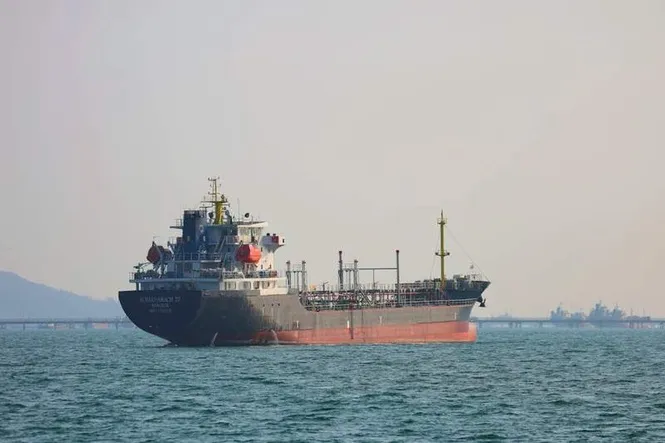
The United States Navy has deployed at least 15 warships to enforce the blockade, effectively shutting down Iranian access to key maritime routes. The operation has cut off vessels traveling to and from Iranian ports, significantly impacting Iran oil exports and raising concerns about global energy supply chains.
Despite the restrictions, ship-tracking data indicates that several Iran-linked vessels—including tankers and bulk carriers—have managed to transit the strait, testing the limits of the blockade and highlighting the challenges of enforcing such a large-scale operation.
US Navy Operations Intensify in the Region
A central element of US Blockade of Strait of Hormuz Begins Amid New Push for Talks is the scale and coordination of US Navy operations. Warships have been positioned strategically across the waterway, ensuring control over one of the busiest maritime corridors in the world.
The operation includes surveillance, interception, and potential diversion of vessels suspected of violating the blockade. While neutral ships are allowed to pass, they may be subject to inspection, adding another layer of complexity to global shipping operations.
The presence of advanced naval assets underscores the seriousness of the mission and signals the United States’ commitment to maintaining pressure on Iran.
Iran Oil Exports Disrupted
The blockade’s primary objective is to restrict Iran oil exports, a critical source of revenue for the country. By limiting access to international markets, the United States aims to force Tehran into negotiations over its broader strategic and nuclear ambitions.
Iran had previously attempted to control traffic in the strait, even deploying naval mines to enforce its own restrictions earlier in the conflict. However, recent reports suggest that Iran may have lost track of some of these mines, creating additional risks for maritime navigation.
The disruption of oil exports has already begun to impact global markets, with analysts warning of potential price volatility if the situation escalates further.
Demining Operations Underway
As part of US Blockade of Strait of Hormuz Begins Amid New Push for Talks, the United States has initiated demining efforts to secure safe passage through the waterway. The deployment of guided-missile destroyers such as USS Frank E. Peterson and USS Michael Murphy reflects the urgency of clearing potential hazards.
These operations are being coordinated by US Central Command (CENTCOM), which has emphasized the importance of ensuring the free flow of commerce. Admiral Brad Cooper confirmed that efforts are underway to establish a secure maritime route for international shipping.
The presence of naval mines adds a dangerous dimension to the conflict, increasing the risk of accidental incidents that could further escalate tensions.
Iran US Tensions Reach Critical Point
The US Blockade of Strait of Hormuz Begins Amid New Push for Talks marks a critical phase in Iran US tensions, with both sides adopting firm positions. Iran has condemned the blockade as an act of aggression and warned of potential retaliation if its interests are threatened.
Officials in Tehran have indicated that they may target regional ports or shipping routes in response, raising fears of a broader conflict in the Persian Gulf. The situation remains volatile, with multiple actors closely monitoring developments.
At the same time, diplomatic channels remain open, suggesting that both sides are aware of the risks associated with prolonged confrontation.
Diplomatic Efforts Gain Momentum
Despite the military escalation, US Blockade of Strait of Hormuz Begins Amid New Push for Talks also reflects renewed efforts toward dialogue. Pakistan’s proposal to host talks in Islamabad offers a potential platform for de-escalation.
Previous negotiations, led by US Vice President JD Vance, failed to produce an agreement, but both sides have expressed willingness to continue discussions. The goal is to reach a framework that addresses nuclear concerns while reducing regional tensions.
This diplomatic push highlights the importance of balancing military strategy with negotiation, as both sides seek to avoid a full-scale conflict.
Global Impact and Economic Concerns
The blockade’s implications extend far beyond the region. As a key route for global energy supplies, any disruption in the Strait of Hormuz has immediate consequences for international markets.
Oil prices have shown signs of volatility, while shipping companies are adjusting routes and strategies to navigate the evolving situation. The uncertainty surrounding the blockade has also raised concerns about long-term economic stability.
Countries dependent on energy imports are particularly vulnerable, making the resolution of the conflict a global priority.
YOU MAY LIKE:
Conclusion
US Blockade of Strait of Hormuz Begins Amid New Push for Talks represents a pivotal moment in international relations, where military action and diplomatic efforts intersect. While the United States seeks to pressure Iran through strategic naval operations, the possibility of renewed talks offers a path toward de-escalation.
As the situation continues to unfold, the balance between confrontation and cooperation will determine the future of the region. With global energy security and regional stability at stake, the coming weeks will be crucial in shaping the outcome of this high-stakes geopolitical conflict.
References
- The Guardian – Oil prices surge after US Hormuz blockade
https://www.theguardian.com/business/live/2026/apr/13/oil-price-barrel-trump-naval-blockade-strait-of-hormuz-stock-markets-ftse-latest-news-updates
Keep the Headlines Fresh!

Quality news takes time, effort, and a whole lot of coffee. If you value what we do at eKayNews, consider “buying a round” for the team!
-
Join the Inner Circle: Set up a custom subscription.
-
The Instant Jolt: Send a one-time “coffee” donation.
Why trust us? We use PayFast for 100% secure, encrypted transactions. Your data stays yours; the news stays ours.
To our amazing readers: You’re the reason we’re first on the scene. Thanks for being part of the family!
Feel the Pulse of the News with eKayNews!

Join the ever-growing eKayNews community and stay connected to the stories that matter. Follow us on Facebook, X, and WhatsApp for real-time updates, breaking news, and exclusive alerts straight to your feed. Your support keeps us digging deeper and sharing the news you can trust.
Stay Connected:
-
Facebook: [eKayNews on Facebook]
-
X (Twitter): [eKayNews on X]
-
WhatsApp: [Join the eKayNews WhatsApp Channel]
Become part of our inner circle and get instant news alerts as events unfold across South Africa and beyond!
Promote Your Brand with eKayNews
Looking to reach a wide, engaged audience? Explore our advertising packages:
-
Link Booster: 7 links to 7 articles over 7 days – R2,500
-
Permanent Feature: Sponsored blog article hosted permanently – R4,000
-
Prime Visibility: Home page banner ad for 30 days – R5,000
Don’t miss your chance to connect with our audience. Book your package today via email at info@ekaynews.co.za or WhatsApp us on +27710961185.
Be part of a platform where news meets community—stay informed, stay ahead, stay with eKayNews!