Trump says Iran deal ‘largely negotiated’ including reopening Strait of Hormuz
Trump says Iran deal ‘largely negotiated’, Hormuz opening as the world watches a delicate diplomatic process unfold in the Middle East. Following intense military conflict and weeks of high-stakes negotiations, US President Donald Trump announced that a comprehensive agreement with Iran is nearing its final stages. In a weekend statement that sent ripples across global energy markets and international diplomatic circles, the President revealed that the contours of a major diplomatic breakthrough have been established. This announcement marks a significant pivot from the hostilities that dominated earlier months, suggesting that a permanent resolution may soon replace the fragile temporary truce. As the administration works to finalize the specifics, the global community is cautiously optimistic that this breakthrough will stabilize the region and restore vital international shipping lanes.
Donald Trump Negotiates a Comprehensive Peace Deal with Iran
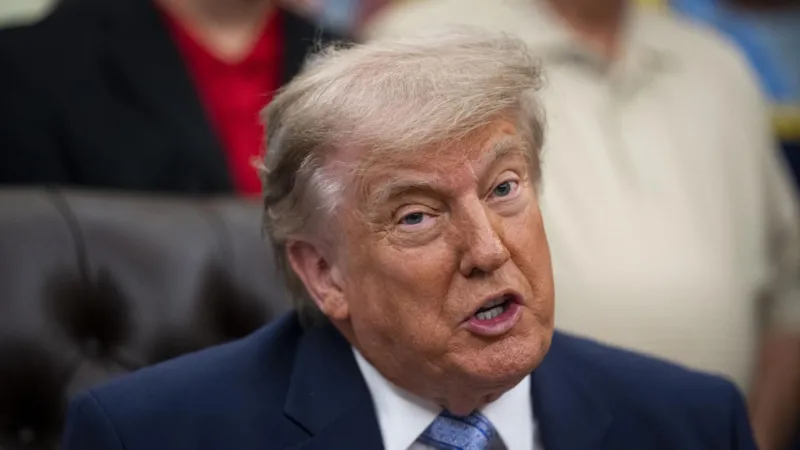
US President Donald Trump says an agreement with Iran has been “largely negotiated” and that the exact details of this historic arrangement will be announced shortly. Taking to his Truth Social platform, Trump confirmed that the proposed peace deal would include the reopening of the Strait of Hormuz, a critical maritime chokepoint that has been effectively closed to international commercial traffic due to the recent conflict. The announcement comes after Trump held what he described as a “very good call” with the leaders of Saudi Arabia, the United Arab Emirates, Qatar, and several other allied nations, discussing a “Memorandum of Understanding pertaining to PEACE.”
“An agreement has been largely negotiated, subject to finalisation between the United States of America, the Islamic Republic of Iran, and the various other Countries, as listed,” Trump wrote. He emphasized that the final aspects and the intricate details of the peace deal are currently being meticulously discussed by all parties involved. This diplomatic push by Donald Trump represents a monumental effort to transition the Middle East away from the brink of broader regional warfare and toward a structured, negotiated settlement that addresses both security concerns and economic blockades. As part of these efforts, Trump says Iran deal ‘largely negotiated’, Hormuz opening, signaling a major victory for international trade if the terms are fully implemented and respected by Tehran.
The Economic Imperative to Unblock the Strait of Hormuz
The Strait of Hormuz is arguably the most important strategic maritime chokepoint on the planet. Through this narrow waterway flows approximately 20 percent of the world’s oil and natural gas supplies. When hostilities erupted and the waterway became a militarized zone, the impact on global energy markets was immediate and severe. The closure of the Strait of Hormuz effectively strangled international trade, causing massive disruptions in supply chains and driving up the cost of energy worldwide. For the global economy, reopening this corridor is not just a political preference but an absolute necessity to prevent a prolonged global economic crisis.
When Trump says Iran deal ‘largely negotiated’, Hormuz opening, he is directly addressing the primary concern of global financial markets and energy-dependent nations. However, the situation remains incredibly complex. While the US insists on complete freedom of navigation, Iran has historically claimed the right to police the strait. Iranian media outlets have stated that even under a new agreement, transit through the area would require coordination with the “Persian Gulf Strait Authority,” a claim that the US and its Gulf allies have repeatedly rejected. Reconciling these diametrically opposed views on maritime sovereignty will be the ultimate test of the proposed peace deal and its viability in the long term.
Maintaining the Ceasefire and Resolving the Naval Standoff
The current diplomatic momentum stems from a fragile ceasefire that was struck early in April. This pause in hostilities came after a period of intense military engagement that began on February 28, when the United States and Israel launched wide-ranging strikes on Iran. These strikes, part of what became known as Operation Epic Fury, sparked retaliatory actions from Iran, which launched attacks on Israel and US-allied states in the Gulf. The escalation quickly led to a perilous naval standoff. In response to Iran leveraging its control over the Strait of Hormuz to block commercial vessels, the United States blockaded Iranian ports starting April 13.
Maintaining the ceasefire has been a monumental task. US Central Command (Centcom) took aggressive measures during the blockade, redirecting hundreds of vessels to completely halt trade into and out of Iranian ports. Centcom commander Adm. Brad Cooper noted that his forces had been “highly effective” in executing the blockade, which severely squeezed Iran economically while still allowing humanitarian aid ships to pass. The successful transition from this tense military standoff to a lasting peace deal requires unwinding these heavy militarized postures. For the ceasefire to evolve into a permanent resolution, both the US naval blockade and Iran’s restriction of the Strait of Hormuz must be dismantled simultaneously, a delicate synchronized maneuver that diplomats are currently trying to finalize.
Understanding Iran and Its 14-Point Diplomatic Framework
As negotiations progress, understanding the perspective and demands of Iran is crucial. Iranian foreign ministry spokesman Esmail Baghaei recently confirmed on state television that the positions of the US and Iran have been converging over the last week. However, Baghaei cautioned that convergence does not automatically equate to a finalized agreement on all key issues. He accused American officials of making “contradictory statements,” reflecting the deep-seated mistrust that continues to plague the negotiations.
Baghaei described the ongoing discussions around a “memorandum of understanding,” revealing that Iran’s intention is to reach an agreement “in the form of a framework, consisting of 14 points.” According to Iranian officials, Tehran is in the process of finalizing this memorandum so that further, more detailed talks can be held within a 30 to 60-day window. Ultimately, they hope a final agreement can be reached that addresses all 14 points of contention. This framework approach allows both sides to claim immediate victories—such as the extension of the ceasefire and the initial reopening of the Strait of Hormuz—while deferring more intractable issues, such as the specifics of Iran’s nuclear program, to a dedicated negotiation phase in the near future. Trump says Iran deal ‘largely negotiated’, Hormuz opening, but the success of the 14-point framework will dictate whether this opening is permanent or merely a temporary reprieve.
Global Reactions to the Proposed Peace Deal
The international community has reacted with a mixture of immense relief and cautious skepticism to the news of the impending peace deal. The possibility of averting a full-scale regional war has drawn praise from numerous global leaders who have been working behind the scenes to facilitate dialogue. Pakistan has played a particularly vital role as an intermediary in these negotiations. Pakistan’s Prime Minister Shehbaz Sharif publicly congratulated Donald Trump on his “extraordinary efforts to pursue peace,” describing a recent phone call with the US President as “very useful and productive.” Sharif expressed hope that Pakistan would host the next round of talks very soon, underscoring Islamabad’s commitment to regional stability.
Conversely, the proposed peace deal faces significant scrutiny and opposition from various political factions within the United States and Israel. In Washington, several conservative lawmakers and foreign policy hawks have expressed deep concern that any agreement might leave the current Iranian regime empowered and capable of pursuing a nuclear weapon. They argue that easing the economic blockade without securing ironclad, irreversible concessions on Iran’s nuclear enrichment program would be a strategic blunder.
Meanwhile, Donald Trump confirmed that he held a separate call with Israeli Prime Minister Benjamin Netanyahu, which the President stated “went very well.” However, Israel remains highly vigilant. The Israeli government has consistently demanded that any peace deal must completely dismantle Iran’s nuclear capabilities and permanently eliminate the threat posed by Tehran-backed militant groups across the region. Balancing the urgent need to reopen the Strait of Hormuz with Israel’s existential security concerns remains one of the most formidable challenges for the US negotiating team.
Donald Trump and the Future of the Ceasefire Strategy
The strategic calculus of the Donald Trump administration has been characterized by a willingness to use maximum economic and military pressure to force adversaries to the negotiating table. The implementation of the port blockade and the initial military strikes were designed to demonstrate overwhelming American resolve. Having achieved a ceasefire, the administration is now navigating the complex transition from coercion to diplomacy. Trump says Iran deal ‘largely negotiated’, Hormuz opening, projecting confidence that his high-pressure tactics have successfully yielded a favorable geopolitical outcome.
To secure his legacy and ensure the durability of the ceasefire, Donald Trump has insisted that any finalized peace deal would “absolutely” prevent Iran from obtaining a nuclear weapon. This hardline stance is intended to reassure domestic critics and international allies alike that the US is not capitulating to Iranian demands simply to alleviate the economic pain caused by the closure of the Strait of Hormuz. The administration’s strategy relies on the premise that Iran’s economy, severely battered by the blockade and prior sanctions, cannot sustain a prolonged conflict, thereby making Tehran more amenable to a comprehensive settlement.
The mood in Washington had recently appeared to sour, with leaks suggesting the administration was preparing for a fresh round of military strikes if Tehran’s demands remained “totally unacceptable.” By shifting the narrative back to a “largely negotiated” agreement, Donald Trump is attempting to lock in diplomatic gains and avoid the unpredictable consequences of a renewed military campaign during a critical period.
YOU MAY LIKE:
Tulsi Gabbard to resign as US national intelligence director
Conclusion: Will the Strait of Hormuz Finally See Free Navigation?
The coming weeks will be absolutely decisive for the future of the Middle East and the global economy. If the finalized memorandum of understanding holds, it could mark the end of one of the most dangerous periods of brinkmanship in recent history. The successful implementation of the peace deal hinges entirely on mutual compliance: the United States must systematically ease its crushing economic blockade, and Iran must definitively relinquish its militarized control over the Strait of Hormuz, allowing unimpeded access for international shipping.
While Trump says Iran deal ‘largely negotiated’, Hormuz opening, the true test lies in the execution of the 14-point framework and the subsequent negotiations regarding nuclear containment. The fragile ceasefire has provided a vital window for diplomacy, but the underlying tensions and historical grievances cannot be erased overnight. As the world awaits the official announcement of the final terms, the hope is that the leaders involved will prioritize long-term stability and economic prosperity over renewed conflict. The reopening of the Strait of Hormuz would not only be a triumph for international trade but a profound testament to the power of persistent, albeit tough, diplomatic engagement. Until the final signatures are applied and the first commercial vessels pass safely through the strait without incident, the international community will remain on high alert, watching to see if this historic peace deal can truly deliver on its promises.
References from mainstream media
-
BBC News: Cheetham, J. “At least nine ships have crossed Strait of Hormuz since ceasefire, data shows.”
www.bbc.co.uk/news/live/clyeg3224d9t -
Reuters: Fick, M. “Middle East war disrupts pharma air routes, risks cancer drugs supply.”
www.reuters.com/world/middle-east/middle-east-war-disrupts-pharma-air-routes-risks-cancer-drugs-supply-2026-03-16
Keep the Headlines Fresh!

Quality news takes time, effort, and a whole lot of coffee. If you value what we do at eKayNews, consider “buying a round” for the team!
-
Join the Inner Circle: Set up a custom subscription.
-
The Instant Jolt: Send a one-time “coffee” donation.
Why trust us? We use PayFast for 100% secure, encrypted transactions. Your data stays yours; the news stays ours.
To our amazing readers: You’re the reason we’re first on the scene. Thanks for being part of the family!
Feel the Pulse of the News with eKayNews!

Join the ever-growing eKayNews community and stay connected to the stories that matter. Follow us on Facebook, X, and WhatsApp for real-time updates, breaking news, and exclusive alerts straight to your feed. Your support keeps us digging deeper and sharing the news you can trust.
Stay Connected:
-
Facebook: [eKayNews on Facebook]
-
X (Twitter): [eKayNews on X]
-
WhatsApp: [Join the eKayNews WhatsApp Channel]
Become part of our inner circle and get instant news alerts as events unfold across South Africa and beyond!
Promote Your Brand with eKayNews
Looking to reach a wide, engaged audience? Explore our advertising packages:
-
Link Booster: 7 links to 7 articles over 7 days – R2,500
-
Permanent Feature: Sponsored blog article hosted permanently – R4,000
-
Prime Visibility: Home page banner ad for 30 days – R5,000
Don’t miss your chance to connect with our audience. Book your package today via email at info@ekaynews.co.za or WhatsApp us on +27710961185.
Be part of a platform where news meets community—stay informed, stay ahead, stay with eKayNews!