Iran Offers US A Deal To Reopen Strait Of Hormuz But With This ‘Nuke’ Condition
Iran Offers US A Deal To Reopen Strait Of Hormuz But With This ‘Nuke’ Condition, marking a critical turning point in an ongoing conflict that has destabilized the Middle East and sent global energy markets into a frenzy. As diplomatic tensions reach a fever pitch, Iran is reportedly offering to end its crippling chokehold on the vital waterway.
However, according to two regional officials with intimate knowledge of the proposal, Tehran is willing to do so without addressing its controversial nuclear program. This omission remains a major sticking point for the United States, as Iran’s foreign minister embarks on a strategic visit to Russia to consult with Moscow regarding the broader war.
A High-Stakes Geopolitical Gamble
The stakes could not be higher. The international community is watching closely to see how Washington will respond to the condition-heavy proposal.
-
The Core Demand: Iran fundamentally wants the U.S. to end its naval blockade of the country.
-
The U.S. Position: The proposal, passed to the U.S. via Pakistani intermediaries, will likely face rejection from U.S. President Donald Trump, who insists on definitively ending Iran’s atomic program as part of any comprehensive deal.
The Standoff in the Strait of Hormuz
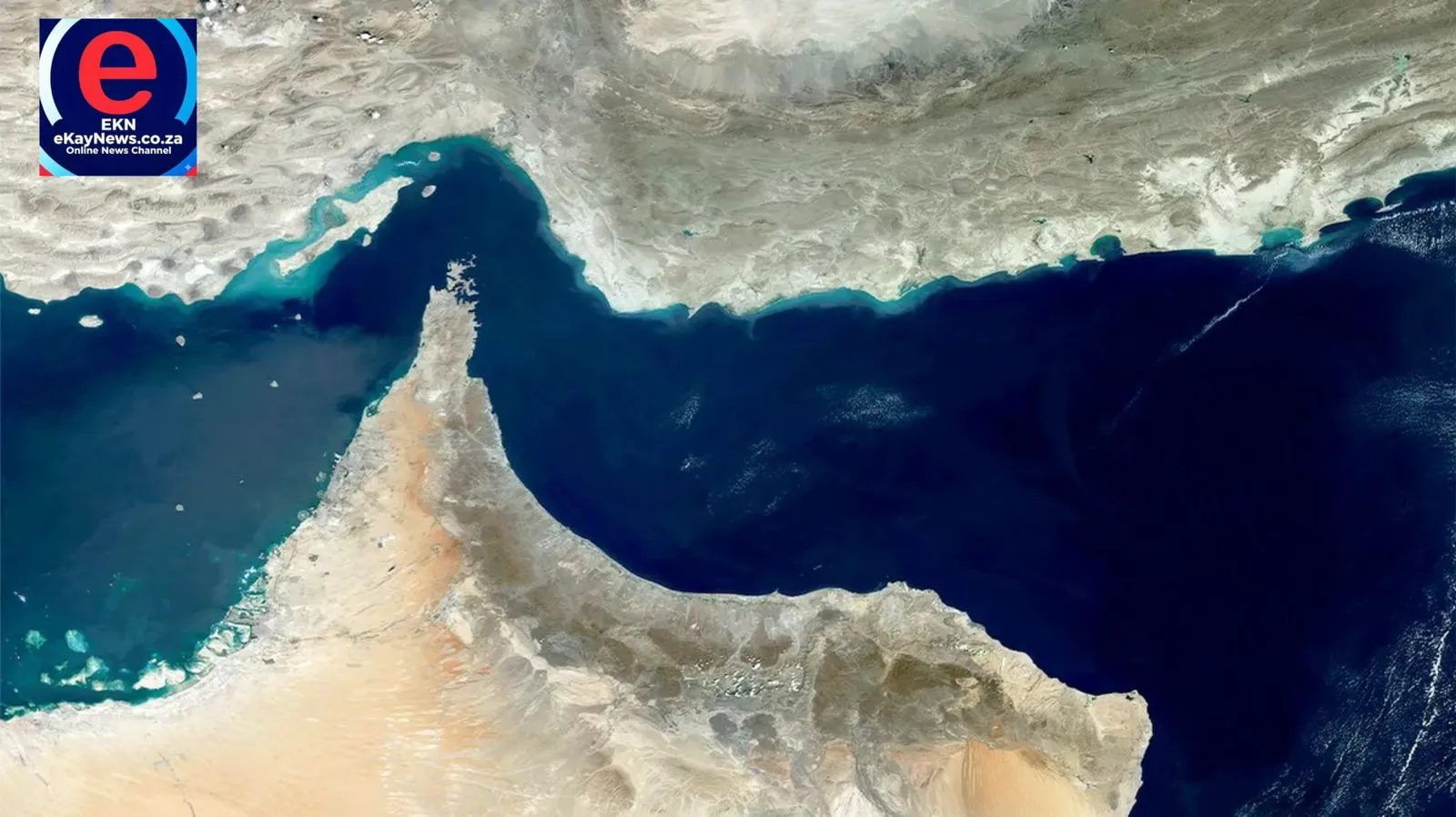
The Strait of Hormuz remains at the absolute center of global geopolitical discussions. As the narrow mouth of the Persian Gulf, approximately a fifth of all globally traded oil and natural gas normally passes through this corridor. Currently, a tense standoff remains: Iran has severely restricted commercial and maritime movement, while the U.S. enforces a strict blockade of Iranian ports.
Global Energy Markets in a Frenzy
The economic fallout of this near-closure has been swift and devastating.
-
Surging Oil Prices: The June contract for Brent crude was trading at a staggering $107 per barrel on Monday—a massive surge compared to $72 before the war began.
-
Stranded Supply: Massive tankers full of crude oil are currently stranded in the Persian Gulf, completely unable to safely transit to global distribution points.
Oman’s Potential Role in Toll Collection
The economic devastation is growing exponentially two months into the war, disrupting shipments of liquefied natural gas, agricultural fertilizer, and other essential supplies. In a controversial move to capitalize on the situation, Iran is attempting to persuade neighboring Oman to support a joint mechanism to collect tolls from vessels passing through the strait. Oman’s official response to this toll proposal remains unclear.
Donald Trump Weighs His Options
President Donald Trump has taken a hardline stance on the negotiations, directly challenging the premise of a deal that ignores Iran’s nuclear capabilities.
“We have all the cards. If they want to talk, they can come to us, or they can call us,” Trump stated Sunday during an interview with Fox News. Trump has publicly questioned who is actually in charge in Iran, suggesting that confusion within its theocracy has made a lasting deal incredibly difficult to reach.
Withdrawn Envoys and Revised Proposals
The diplomatic landscape has shifted rapidly over the past week:
-
Cancelled Mission: The White House initially planned to dispatch envoys Steve Witkoff and Jared Kushner to Islamabad for face-to-face talks.
-
Abrupt Reversal: Following Iranian Foreign Minister Abbas Araghchi’s departure from the Pakistani capital, Trump called off the U.S. mission entirely, citing a lack of progress.
-
A “Much Better” Offer: Trump told journalists that within 10 minutes of canceling the trip, Iran sent a “much better” proposal. While he did not elaborate on the details, he adamantly stressed his non-negotiable condition: Iran “will not have a nuclear weapon.”
The Unresolved Nuclear Program
The status of Iran’s enriched uranium has been the primary roadblock in peace talks for decades. The international community views the program as an existential threat to regional stability.
Uranium Enrichment Reaches Critical Levels
According to the U.N. nuclear watchdog agency, Tehran currently possesses a stockpile of 440 kilograms (970 pounds) of uranium enriched to 60% purity. This level of enrichment is considered a very short, technical step away from weapons-grade levels.
By offering a deal that conveniently ignores this massive stockpile, Tehran is attempting to leverage global economic pain to secure the lifting of the U.S. blockade. Consequently, the U.S. administration views the proposal with extreme skepticism, seeing it as a tactical maneuver rather than a genuine concession.
Demands to Lift the Naval Blockade
A key component of the ongoing negotiations is the stringent U.S. naval blockade. Officials involved in mediation efforts confirmed that Iran is insisting on the complete end of this blockade before any new, direct talks can commence. Pakistan-led mediators have been working tirelessly behind the scenes to bridge these significant gaps.
Escalating Military Threats in the Gulf
Both sides have continued to issue severe military threats, underscoring the fragility of the recent April 7 ceasefire.
-
Iran’s Warning: Iran’s joint military command warned that if the U.S. continues “aggressive military actions, including naval blockades, banditry, and piracy,” it will face a “strong response.”
-
U.S. Maritime Posture: Conversely, President Trump recently ordered the U.S. military to “shoot and kill” any small Iranian boats potentially placing explosive mines in the critical waterway, making the prospect of reopening the strait highly perilous.
Diplomatic Shuttling: Iran Looks to Russia
While the U.S. demands direct communication, Iran is actively solidifying alliances elsewhere. Iran’s state-run IRNA news agency reported that Foreign Minister Abbas Araghchi landed in St. Petersburg on Monday morning for a highly anticipated meeting with Russian President Vladimir Putin.
Stalled Talks in Islamabad
Araghchi’s whirlwind diplomatic trip over the weekend included stops in Pakistan and Oman. High-level negotiations had been expected to take place in Islamabad, but Araghchi pointed the finger squarely at Washington for the delays.
Blaming the failure on what he explicitly called Washington’s “excessive demands,” Araghchi stated, “The previous [approach], despite the progress that had been made, could not achieve its goals.” Following the cancellation of the U.S. envoys’ trip, Araghchi spoke by phone with counterparts in Qatar and Saudi Arabia, continuously building regional consensus before heading to Russia.
A Devastating Regional War
The context of these negotiations is a regional conflict that has exacted a horrific human toll. Trump indefinitely extended the ceasefire agreed to on April 7, which largely halted the direct fighting that began with joint U.S.-Israeli military strikes on Iranian targets on February 28. But a permanent settlement remains highly elusive.
The Staggering Human Toll
Since the war began, casualties have been staggering across the region:
-
Iran: At least 3,375 people killed.
-
Lebanon: At least 2,509 people killed (where Israel-Hezbollah fighting resumed shortly after the primary war started).
-
Israel: 23 civilians and 15 soldiers (in Lebanon) killed.
-
United States: 13 service members deployed in the region killed.
-
United Nations: 6 peacekeepers stationed in southern Lebanon killed.
-
Gulf Arab States: More than a dozen casualties reported.
Separate Ceasefire Agreements
Another separate ceasefire—between Israel and the powerful Iranian-backed Lebanese militant Hezbollah group—has recently been extended by three weeks. Notably, Hezbollah has not participated in the Washington-brokered diplomacy, further complicating the regional web of alliances.
Furthermore, Iran’s Foreign Ministry has explicitly stated that any future talks would be strictly indirect, reflecting Tehran’s deep wariness after previous rounds of indirect talks ended with joint U.S. and Israeli military strikes.
YOU MAY LIKE:
Trump claims Tehran ‘making an offer’ as US team heads for talks
Conclusion: Will the Deal Hold?
As the world watches the Brent crude index climb and maritime trade routes freeze, the reality of this conditional proposal forces the United States into a complex geopolitical corner. The core question remains: Does the U.S. prioritize global economic stability by lifting the blockade and securing the strait, or does it hold the line to ensure Iran never achieves nuclear weapons capability?
With Donald Trump confidently declaring that America “has all the cards,” the next move in this high-stakes diplomatic chess match will likely determine whether the Middle East steps back from the brink of a broader conflict or plunges deeper into economic and military warfare.
References
- Tensions rise over Strait of Hormuz as Iran signals conditional talks
Published by Reuters, this report covers Iran’s proposal to reopen the Strait of Hormuz and the ongoing dispute with the United States over nuclear conditions and sanctions. - US-Iran standoff deepens amid Hormuz crisis and nuclear dispute
Published by Al Jazeera, this article analyzes the geopolitical tensions, oil market impact, and diplomatic efforts surrounding the Strait of Hormuz crisis.
Keep the Headlines Fresh!

Quality news takes time, effort, and a whole lot of coffee. If you value what we do at eKayNews, consider “buying a round” for the team!
-
Join the Inner Circle: Set up a custom subscription.
-
The Instant Jolt: Send a one-time “coffee” donation.
Why trust us? We use PayFast for 100% secure, encrypted transactions. Your data stays yours; the news stays ours.
To our amazing readers: You’re the reason we’re first on the scene. Thanks for being part of the family!
Feel the Pulse of the News with eKayNews!

Join the ever-growing eKayNews community and stay connected to the stories that matter. Follow us on Facebook, X, and WhatsApp for real-time updates, breaking news, and exclusive alerts straight to your feed. Your support keeps us digging deeper and sharing the news you can trust.
Stay Connected:
-
Facebook: [eKayNews on Facebook]
-
X (Twitter): [eKayNews on X]
-
WhatsApp: [Join the eKayNews WhatsApp Channel]
Become part of our inner circle and get instant news alerts as events unfold across South Africa and beyond!
Promote Your Brand with eKayNews
Looking to reach a wide, engaged audience? Explore our advertising packages:
-
Link Booster: 7 links to 7 articles over 7 days – R2,500
-
Permanent Feature: Sponsored blog article hosted permanently – R4,000
-
Prime Visibility: Home page banner ad for 30 days – R5,000
Don’t miss your chance to connect with our audience. Book your package today via email at info@ekaynews.co.za or WhatsApp us on +27710961185.
Be part of a platform where news meets community—stay informed, stay ahead, stay with eKayNews!