A Diplomatic Hurdle in the Middle East Conflict
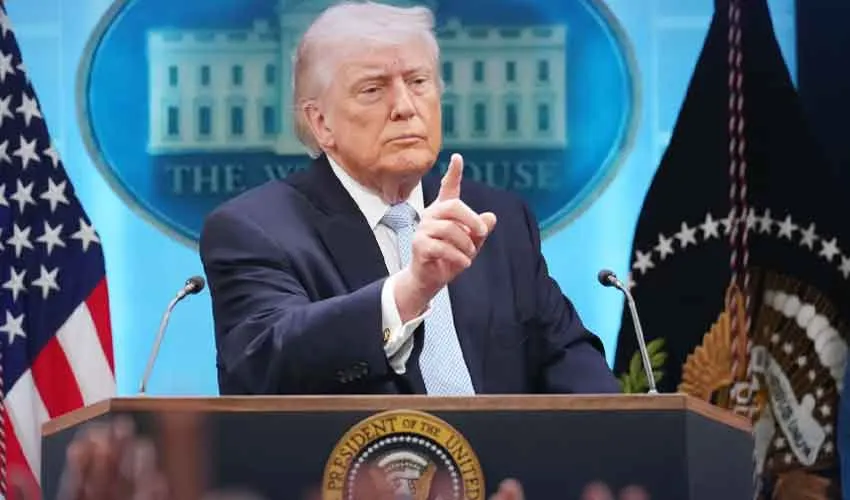
Trump: ‘Unhappy’ with latest Iran proposal to end war, signaling a significant diplomatic hurdle in the ongoing efforts to halt the devastating two-month conflict in the Middle East. As the war between the United States, Israel, and Iran continues to disrupt global energy supplies, fuel worldwide inflation, and claim thousands of lives, the path to a lasting ceasefire remains incredibly fraught.
U.S. President Donald Trump recently convened a high-stakes meeting at the White House with his top national security advisers to meticulously review a new set of proposals sent by Tehran. These proposals, relayed through diplomatic intermediaries in Pakistan, outlined a potential off-ramp for the hostilities.
The Breakdown of Islamabad Negotiations
However, according to U.S. officials and various media reports, the discussions did not yield the breakthrough many in the international community were desperately hoping for. While the administration did not completely reject the Iranian proposal outright, a clear line in the sand was drawn. The core issue driving the current stalemate is the sequencing of the diplomatic agenda. Specifically, the White House is demanding that the dismantling of Tehran’s atomic ambitions be front and center, rather than an afterthought in a prolonged diplomatic process.
Donald Trump Demands Upfront Focus on the Nuclear Program
The United States has long insisted that any comprehensive peace settlement must address the root causes of regional instability, which Washington believes is inextricably linked to Iran’s atomic ambitions. During the intensive White House consultations, a spokesperson confirmed to the media that proposals related to reopening vital maritime shipping lanes were indeed reviewed. However, the spokesperson made it unequivocally clear that the Trump administration wants a definitive deal that absolutely prevents Iran from acquiring nuclear weapons, describing this objective as Washington’s paramount, non-negotiable top priority.
White House Rejects Delayed Nuclear Timetable
Because Trump: ‘Unhappy’ with latest Iran proposal to end war, the U.S. negotiating team is holding firm on its demands. According to U.S. media outlets, Trump did not fully reject the Iranian framework, but he was deeply dissatisfied that Tehran’s plan would deliberately set aside comprehensive talks on the nuclear program until the physical war officially ends and all disputes over Gulf shipping are completely resolved.
The United States has consistently insisted that nuclear issues must be an integral part of the peace negotiations from the very beginning. A U.S. official briefed on Trump’s closed-door meeting told reporters that the president was highly dissatisfied with Iran’s phased approach for that exact reason. The administration views any delay in addressing uranium enrichment as a tactical stalling maneuver by Tehran to buy precious time while escaping the crushing weight of the current U.S. Navy blockade.
The Stance of the White House on Peace Negotiations
The public messaging from the White House has been one of resolute firmness. White House spokeswoman Olivia Wales addressed the media, stating emphatically that the United States “will not negotiate through the press.” She added that Washington has been exceptionally clear about its ultimate “red lines” as the Trump administration actively seeks to end the war against Iran, a conflict that began in February alongside allied Israeli forces.
Backdoor Channels and Dual-Track Diplomacy
Despite the firm public posturing, backdoor diplomatic efforts are continuing at a rapid pace to forge a possible final deal, according to reports from CNN. A dual-track strategy has been adopted by international mediators to keep the peace negotiations moving forward, despite the glaring differences between Washington and Tehran over the precise sequencing of the talks. “If they want to talk, they can come to us, or they can call us,” Trump recently stated, underscoring his belief that the U.S. holds the ultimate leverage in the current standoff.
Iran Wants War Ended Before Discussing the Nuclear Program
The Iranian perspective on the peace negotiations stands in stark contrast to Washington’s demands. Senior Iranian officials, speaking strictly on the condition of anonymity due to the sensitive nature of the ongoing talks, revealed that the proposal carried by Iranian Foreign Minister Abbas Araghchi to Islamabad over the weekend called for a meticulously phased process. This step-by-step approach is designed to ensure Iran’s immediate security and economic survival before making any concessions regarding its atomic capabilities.
Tehran’s Phased Proposal: A Three-Step Framework
The Iranian proposal envisions a very specific sequence of events:
-
Phase One: The absolute first step would require the immediate ending of the joint U.S.-Israeli war on Iran. This phase also demands ironclad, verifiable guarantees that the United States cannot simply restart the conflict at a later date.
-
Phase Two: After a verifiable ceasefire is implemented, negotiators would then address the crippling U.S. Navy blockade of Iran’s maritime trade. This phase would heavily focus on the future of the strategic waterways, which Iran wants to reopen under its own sovereign control.
-
Phase Three: Only after the military threat is neutralized and the economic blockade is lifted would talks finally move to other complex, long-running issues, primarily the dispute over Iran’s nuclear program.
This sequential framework is exactly why Trump: ‘Unhappy’ with latest Iran proposal to end war. The U.S. fears that once the blockade is lifted and the immediate military pressure is relieved, Iran will lose all incentive to negotiate away its nuclear infrastructure. Iran, however, is still aggressively seeking some form of official U.S. acknowledgment of its sovereign right to enrich uranium for domestic purposes.
The Shadow of the 2015 Agreement Over Current Talks
To truly understand the deep-seated mistrust permeating these peace negotiations, one must look back at the recent history between the two nations. A previous, landmark nuclear agreement signed in 2015 between Iran and several major world powers—including the United States—sharply restricted Iran’s nuclear program in exchange for the lifting of international sanctions.
Maximum Pressure and the Roots of Mistrust
Iran has long maintained that its nuclear activities are strictly for peaceful and civilian purposes, such as energy generation and medical research. However, that historic 2015 agreement dramatically collapsed after Donald Trump unilaterally withdrew the United States from the pact during his first term in office. This withdrawal led to the reimposition of severe “maximum pressure” sanctions. Consequently, Tehran is deeply wary of entering into a new agreement that relies on American goodwill, driving their current demand that the military and economic war must end before any atomic concessions are even considered.
The Strait of Hormuz Blockade and Surging Energy Markets
A central component of the current conflict, and a major sticking point in the stalled proposals, is the status of the Strait of Hormuz. Officials at the White House meeting specifically discussed a potential operation related to the complex removal of naval landmines. This operation is viewed as a necessary part of broader efforts to ease regional tensions and eventually restore safe commercial movement in the highly volatile region.
Global Oil Markets React to the Stalemate
With the warring sides still far apart on the diplomatic front, the economic fallout is intensifying globally. Because Trump: ‘Unhappy’ with latest Iran proposal to end war, the immediate prospect of reopening the strait has dimmed, causing oil prices to resume their aggressive upward movement. The global energy market extended its significant gains in early Asia trade on Tuesday, reacting directly to the stalled diplomacy in Islamabad.
Fawad Razaqzada, a respected market analyst at City Index and FOREX.com, noted that global oil traders are now focused significantly less on political rhetoric and much more on the actual, physical flow of crude oil through the Strait of Hormuz. He emphasized that this vital flow remains heavily constrained by the ongoing military actions, keeping immense upward pressure on global energy markets and threatening to trigger a broader economic recession if the conflict drags on.
Shipping Through the Strait of Hormuz Sharply Reduced
The sheer scale of the disruption in the Strait of Hormuz is staggering. Before the war erupted in February, between 125 and 140 commercial ships usually crossed in and out of the narrow waterway each day, carrying a massive percentage of the world’s daily oil supply.
However, the current reality paints a bleak picture of global logistics:
-
According to reliable Kpler ship-tracking data and advanced satellite analysis from SynMax, only seven ships crossed the strait in the past day.
-
Crucially, absolutely none of those seven ships were carrying crude oil bound for the global market.
-
Ship-tracking data has clearly shown that at least six massive tankers loaded with Iranian oil have been forcefully turned back to Iran by the enforcing U.S. naval blockade in just the recent days.
Allegations of Piracy and Naval Clashes
Iran’s foreign ministry vehemently condemned the ongoing U.S. seizures of Iran-linked tankers. In a fiery social media post, the ministry described the American naval blockade as the “outright legalization of piracy and armed robbery on the high seas.” This fierce rhetoric highlights the immense tension surrounding the waterway, making any agreement to clear the naval mines and resume shipping highly dependent on the broader success of the peace negotiations.
Domestic Pressure on Donald Trump Amid Stalled Peace Negotiations
While the geopolitical chessboard remains locked in a tense stalemate, President Donald Trump is simultaneously facing rapidly growing domestic pressure back home. As the economic realities of the war—namely surging gas prices and broader inflationary pressures—begin to hit American consumers hard, his approval ratings have begun to fall.
The U.S. president has given the American public shifting explanations for the necessity and scope of the war over the past two months. While the initial justification centered heavily on neutralizing immediate military threats alongside Israel, the evolving nature of the conflict has left many questioning the long-term strategy. Critics in Washington and across the country continue to loudly question the ultimate financial cost and the specific, achievable objectives of the military engagement, especially as hopes for a swift diplomatic resolution begin to fade.
A Scrapped Diplomatic Mission to Islamabad
The reality that Trump: ‘Unhappy’ with latest Iran proposal to end war means that the administration must prepare for a protracted standoff. Hopes of quickly reviving peace efforts have significantly weakened since Trump abruptly cancelled a planned diplomatic visit last weekend. His special envoy, Steve Witkoff, and his son-in-law and senior advisor, Jared Kushner, were scheduled to travel to Islamabad to engage in direct talks, but the trip was scrapped at the last minute due to the fundamental disagreements over the sequencing of the nuclear discussions.
Iran’s Diplomatic Pivot: Araghchi Meets Putin in Russia
With the U.S. peace negotiations currently stalled, Iran is not sitting idle. The Pakistani capital of Islamabad has been a crucial, central location for intense behind-the-scenes diplomacy, with Iranian Foreign Minister Abbas Araghchi shuttling in and out twice during the past weekend alone.
Following the breakdown in communication with the American envoys, Araghchi immediately pivoted to strengthen Iran’s other strategic alliances. He visited the neighboring Gulf state of Oman—a nation that shares control of the Strait of Hormuz and has historically acted as a neutral mediator—before traveling onwards to Russia on Monday.
YOU MAY LIKE:
Trump cancels US envoys’ trip to Pakistan for talks on Iran war
Looking Ahead: An Unyielding Standoff
In Moscow, Araghchi met directly with Russian President Vladimir Putin. According to state media reports, the Iranian diplomat received strong words of support from Putin, reaffirming the long-standing alliance between the two heavily sanctioned nations. Speaking to reporters in Russia following the meeting, Araghchi offered a defiant assessment of the current military and diplomatic landscape. He boldly claimed that Donald Trump had only requested negotiations in the first place because the United States military had completely failed to achieve any of its primary objectives during the two-month conflict.
As the diplomatic posturing continues and the U.S. naval blockade remains firmly in place, the world watches with bated breath. The fundamental divide remains clear: Washington demands immediate capitulation on the nuclear program, while Tehran demands immediate relief from the military and economic siege. Until a compromise can be found on the sequencing of these critical issues, the devastating war, the paralyzed shipping lanes, and the surging global oil prices show no signs of abating.
References
- U.S. weighs Iran proposal as nuclear issue stalls talks
Source: Reuters
- Trump cancels envoys’ trip amid stalled Iran diplomacy
Source: BBC News
Keep the Headlines Fresh!

Quality news takes time, effort, and a whole lot of coffee. If you value what we do at eKayNews, consider “buying a round” for the team!
-
Join the Inner Circle: Set up a custom subscription.
-
The Instant Jolt: Send a one-time “coffee” donation.
Why trust us? We use PayFast for 100% secure, encrypted transactions. Your data stays yours; the news stays ours.
To our amazing readers: You’re the reason we’re first on the scene. Thanks for being part of the family!
Feel the Pulse of the News with eKayNews!

Join the ever-growing eKayNews community and stay connected to the stories that matter. Follow us on Facebook, X, and WhatsApp for real-time updates, breaking news, and exclusive alerts straight to your feed. Your support keeps us digging deeper and sharing the news you can trust.
Stay Connected:
-
Facebook: [eKayNews on Facebook]
-
X (Twitter): [eKayNews on X]
-
WhatsApp: [Join the eKayNews WhatsApp Channel]
Become part of our inner circle and get instant news alerts as events unfold across South Africa and beyond!
Promote Your Brand with eKayNews
Looking to reach a wide, engaged audience? Explore our advertising packages:
-
Link Booster: 7 links to 7 articles over 7 days – R2,500
-
Permanent Feature: Sponsored blog article hosted permanently – R4,000
-
Prime Visibility: Home page banner ad for 30 days – R5,000
Don’t miss your chance to connect with our audience. Book your package today via email at info@ekaynews.co.za or WhatsApp us on +27710961185.
Be part of a platform where news meets community—stay informed, stay ahead, stay with eKayNews!