Trump Cancels US Envoys’ Trip to Pakistan for Talks on Iran War
Trump cancels US envoys’ trip to Pakistan for talks on Iran war, signaling a dramatic and sudden shift in the diplomatic efforts aimed at quelling the ongoing conflict in the Middle East. Over the weekend, the international community watched closely as the highly anticipated negotiations collapsed before they even truly began. Iran’s Foreign Minister Abbas Araghchi stated emphatically that the United States’ “excessive demands” were the primary reason peace negotiations failed to materialize in Islamabad.
The abrupt cancellation by U.S. President Donald Trump occurred on Saturday, shortly after the delegation from Tehran had departed the Pakistani capital. This sudden pivot leaves the region in a precarious position, as the fragile ceasefire holds by a thread and military posturing continues in vital maritime corridors.
Donald Trump Halts Peace Talks in Pakistan
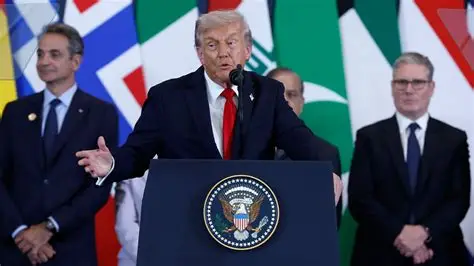
The decision to pull the American delegation was made swiftly and communicated directly by the Commander-in-Chief. Donald Trump stated that sending his special envoy, Steve Witkoff, along with his son-in-law and senior advisor Jared Kushner, would be wasting “too much time.” In his characteristically blunt communication style, the President suggested that the onus is now entirely on Tehran to initiate any future dialogue.
Communication and Immediate Fallout
Announcing that the trip had been definitively called off on Saturday, Trump painted a picture of a fractured Iranian government. He claimed there was “tremendous infighting and confusion” within Iran’s leadership hierarchy, asserting that “nobody knows who is in charge, including them.” Emphasizing his negotiating position, he wrote on his Truth Social platform: > “Also, we have all the cards, they have none! If they want to talk, all they have to do is call!!!”
When Trump cancels the US envoys’ trip to Pakistan for talks on the Iran war, it raises natural questions about the immediate resumption of hostilities. However, when asked by the news site Axios whether the cancelled U.S. trip meant the war would instantly resume, Trump offered a tempered response: “No, it doesn’t mean that. We haven’t thought about it yet.” He confirmed that the current ceasefire, which had been extended past its original April 22 expiration date to facilitate these very talks, would hold through the weekend despite the fading hopes for face-to-face diplomacy.
The Role of Vice-President JD Vance in Peace Talks
The architecture of the American diplomatic strategy had been highly scrutinized leading up to the weekend. The White House noted on Friday that U.S. Vice-President JD Vance had been placed “on standby” to join the negotiations in Islamabad if they proved successful and required top-level executive sign-off. This layered approach to diplomacy indicated a cautious optimism from Washington just hours before the talks fell apart.
Vance had previously led the U.S. delegation in the first round of peace talks earlier this month on April 11. That initial round ended without a concrete agreement, though it successfully established a framework for future discussions. His prior involvement made him a key figure in the administration’s Middle East strategy.
His planned absence from the initial delegation this weekend perhaps signaled to international observers that a major breakthrough was not expected, even before the trip was officially scrapped. Without the Vice-President leading the initial charge, the delegation of Witkoff and Kushner was meant to lay the groundwork—a plan that was ultimately discarded once the President decided the effort was no longer worth the time investment.
Pakistan as the Vital Mediator for Iran
Prior to the U.S. withdrawal from the weekend’s itinerary, Iranian Foreign Minister Abbas Araghchi held extensive talks with officials in Pakistan, the nation acting as the primary mediator between the two warring adversaries. Following his meetings, Araghchi stated that he had clearly shared Iran’s position on ending the war, but noted he had “yet to see if US is truly serious about diplomacy.”
Pakistan has played a crucial, delicate role in mediating contact between Washington and Tehran in recent weeks. Navigating the demands of both nations requires significant diplomatic finesse. Pakistan’s Prime Minister Shebaz Sharif commented on the diplomatic efforts, stating that he and the Iranian delegation had shared “a most warm, cordial exchange of views on the current regional situation.”
Iran’s Diplomatic Stance
Despite the major setback in American negotiations, Araghchi took to the social media platform X to describe his visit to Pakistan as “fruitful.” He reiterated that he had shared a “workable framework to permanently end the war on Iran.” According to Iranian state media, Araghchi’s diplomatic tour is not over; his itinerary includes visits to Oman and Russia, after which he is expected to return to Islamabad to regroup.
Iranian President Masoud Pezeshkian had previously emphasized that Tehran remained open to negotiations. However, Pezeshkian was incredibly firm in his conditions. He stated clearly that the “breach of commitments, blockade and threats are main obstacles to genuine negotiations,” drawing a hard line on what Iran expects before formal peace can be achieved.
A Dangerous Standoff in the Strait of Hormuz
The diplomatic stalemate is occurring against the backdrop of a severe and highly volatile military standoff. Both sides have been locked in a dangerous confrontation over the Strait of Hormuz, a narrow but vital maritime chokepoint. The tensions skyrocketed in the wake of the U.S. and Israel commencing joint military strikes against Iranian targets in February.
In retaliation, Iran has aggressively restricted passage through this key shipping route. The strategic importance of this waterway cannot be overstated, as roughly a fifth of the entire world’s global oil supply passes through it daily. Any disruption here sends immediate shockwaves through global energy markets, driving up crude oil prices and threatening international economic stability.
Naval Blockades and Counter-Measures
The United States has significantly increased its naval presence in and around the strait. The primary objective of this deployment is to enforce a strict blockade on Iranian oil exports, effectively crippling Tehran’s primary source of national revenue. In response, Iran has utilized its fast-attack naval vessels and coastal defense systems to harass and restrict commercial shipping, using the strait as a geopolitical bargaining chip against the West.
As the talks dissolve, the situation in the Strait of Hormuz remains a powder keg. The White House had initially stated on Friday that the Iranians “want to talk,” suggesting a willingness to de-escalate the maritime blockade. However, Iran quickly countered that narrative, stating there were absolutely no plans for a direct, bilateral meeting with the Americans, keeping the naval tensions at an all-time high.
Nuclear Ambitions at the Heart of the Conflict
While the immediate military conflict was ignited by recent strikes, the foundational justification for Washington and Israel’s aggressive posture is rooted in Tehran’s nuclear ambitions. Washington’s steadfast opposition to Iran gaining nuclear weapons was cited as the primary reason for instigating the current conflict, driving the overarching foreign policy narrative.
The U.S. and Israeli intelligence agencies have long suspected Tehran of seeking to develop an atomic bomb under the guise of a civilian energy program. These suspicions reached a boiling point earlier this year. It was this fear of a nuclear-armed Iran that prompted the preemptive military strikes designed to severely degrade the nation’s nuclear infrastructure.
Tehran, for its part, has always vehemently denied any such intentions. The Iranian government maintains that its nuclear program is strictly intended for domestic energy generation and medical research. However, international watchdog agencies have confirmed that Iran has enriched uranium up to near weapons-grade levels—a technical reality that leaves a vanishingly small breakout time should the regime decide to pursue a bomb. This irreconcilable difference over nuclear capability remains the most significant hurdle to any lasting peace agreement.
Regional Spillover: Israel, Hezbollah, and Lebanon
The news of the cancelled peace talks does not exist in a vacuum; the ripple effects are being felt violently across the broader Middle East. The conflict with Iran is inextricably linked to the ongoing violence between Israel and Iranian proxy groups, most notably Hezbollah operating out of Lebanon.
Despite a technical ceasefire between Israel and the Iran-backed militant group, the reality on the ground tells a very different story. Both sides have continued to exchange heavy fire in recent weeks. Each faction has repeatedly accused the other of flagrantly violating the terms of the agreement, keeping the border regions in a state of constant peril.
Escalation in the Levant
On Saturday, exactly as diplomatic efforts crumbled in Islamabad, violence escalated in the Levant. According to Lebanon’s state news agency, at least four people were killed in severe Israeli airstrikes targeting southern Lebanon. The Israeli military justified the strikes by stating that Hezbollah forces had fired a barrage of rockets into northern Israel earlier in the day.
The escalation appears highly coordinated with the broader geopolitical breakdown. A formal statement released from the office of Israeli Prime Minister Benjamin Netanyahu on Saturday confirmed that the military had been explicitly ordered to “vigorously attack Hezbollah targets in Lebanon.” This aggressive posture ensures that even if Washington and Tehran pause direct hostilities, the proxy war will continue to exact a heavy toll on the region.
The Future of Diplomacy
The international community is now left to navigate a highly uncertain future. The cancellation of the Islamabad summit represents a significant missed opportunity to formalize the temporary ceasefire and address the root causes of the conflict. Without direct communication, the risk of miscalculation between the heavily armed adversaries grows exponentially.
YOU MAY LIKE:
Trump claims Tehran ‘making an offer’ as US team heads for talks
The Maximum Pressure Campaign
The strategy of the Trump administration appears to rely on maximum pressure—maintaining the crippling economic blockade and the overwhelming naval presence in the Strait of Hormuz. The goal is to hold this posture until Iran concedes to American demands regarding its nuclear program and regional proxy support. By stating “we have all the cards,” the U.S. President is betting that economic strangulation will eventually force Tehran back to the negotiating table on more favorable terms for Washington.
Conversely, Iran’s diplomatic outreach to Russia and Oman suggests that Tehran is seeking to bypass the U.S. entirely. They are actively looking for sympathetic international partners who might help circumvent the blockade or offer alternative economic lifelines. Foreign Minister Araghchi’s framing of the U.S. as having “excessive demands” is a clear signal to domestic and international audiences that Iran views itself as the aggrieved party in the stalled negotiations.
Ultimately, the collapse of these talks guarantees that the geopolitical temperature in the Middle East will remain dangerously high. With naval forces staring each other down in the Strait of Hormuz, enriched uranium stockpiles growing, and proxy wars raging in Lebanon, the window for a peaceful, negotiated settlement appears to be rapidly closing. The next few weeks will be critical in determining whether the temporary ceasefire holds, or if the region plunges back into open, devastating warfare.
References
- Reuters – “U.S. and Iran tensions escalate amid stalled nuclear and regional talks”
https://www.reuters.com/world/middle-east/us-iran-tensions-talks-nuclear-2026-04 - BBC News – “Strait of Hormuz tensions rise as US and Iran clash over diplomacy”
https://www.bbc.com/news/world-middle-east-2026-hormuz-tensions
Keep the Headlines Fresh!

Quality news takes time, effort, and a whole lot of coffee. If you value what we do at eKayNews, consider “buying a round” for the team!
-
Join the Inner Circle: Set up a custom subscription.
-
The Instant Jolt: Send a one-time “coffee” donation.
Why trust us? We use PayFast for 100% secure, encrypted transactions. Your data stays yours; the news stays ours.
To our amazing readers: You’re the reason we’re first on the scene. Thanks for being part of the family!
Feel the Pulse of the News with eKayNews!

Join the ever-growing eKayNews community and stay connected to the stories that matter. Follow us on Facebook, X, and WhatsApp for real-time updates, breaking news, and exclusive alerts straight to your feed. Your support keeps us digging deeper and sharing the news you can trust.
Stay Connected:
-
Facebook: [eKayNews on Facebook]
-
X (Twitter): [eKayNews on X]
-
WhatsApp: [Join the eKayNews WhatsApp Channel]
Become part of our inner circle and get instant news alerts as events unfold across South Africa and beyond!
Promote Your Brand with eKayNews
Looking to reach a wide, engaged audience? Explore our advertising packages:
-
Link Booster: 7 links to 7 articles over 7 days – R2,500
-
Permanent Feature: Sponsored blog article hosted permanently – R4,000
-
Prime Visibility: Home page banner ad for 30 days – R5,000
Don’t miss your chance to connect with our audience. Book your package today via email at info@ekaynews.co.za or WhatsApp us on +27710961185.
Be part of a platform where news meets community—stay informed, stay ahead, stay with eKayNews!