Tehran says US continues to have ‘unreasonable demands’
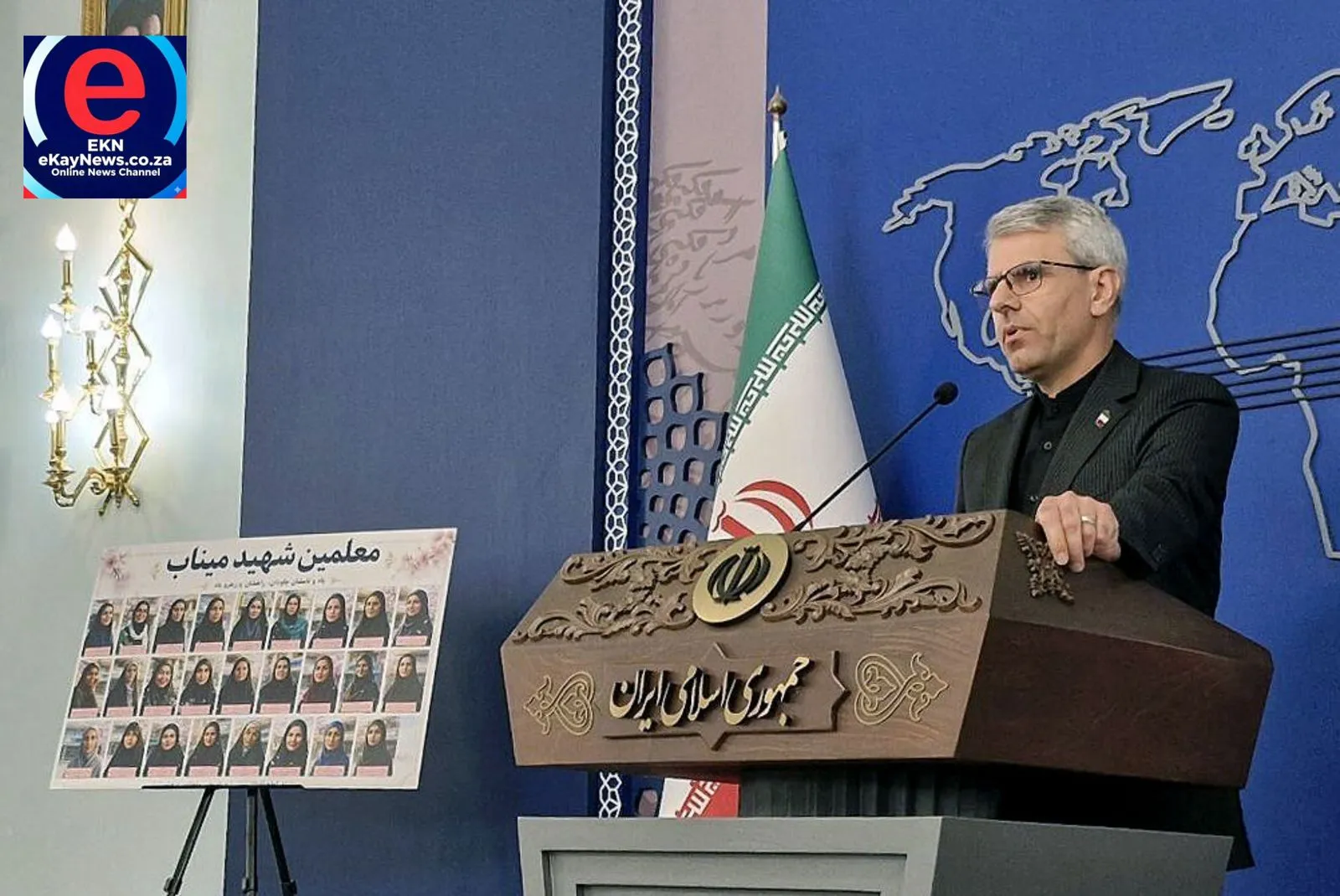
Tehran says US continues to have ‘unreasonable demands’ following a weekend of high-stakes diplomatic friction that has left the Middle East teetering on the edge of a broader conflagration. In a blistering press conference held in the Iranian capital on Monday, May 11, 2026, Foreign Ministry spokesperson Esmaeil Baghaei addressed the fallout from President Donald Trump’s summary rejection of Iran’s counter-offer. According to Baghaei, the refusal by the United States to acknowledge what he described as a “generous and responsible” offer proves that Washington is more interested in regional hegemony than in actual peace.
The tension follows a period where Pakistan acted as a neutral ground for the transmission of a 14-point ceasefire proposal. While the world hoped for a breakthrough, the rhetoric emanating from both sides suggests a fundamental breakdown in the “rules of diplomacy.” For the Iranian leadership, the refusal by the Trump administration to lift the naval blockade or release frozen assets constitutes a form of “bullying” that cannot be reconciled with their national sovereignty.
Iran Slams Rejection of the Latest Ceasefire Proposal
The pivot from potential peace to renewed hostility occurred almost instantly after Donald Trump took to social media to label Tehran’s reply as “totally unacceptable.” Baghaei’s response on Monday was measured but firm, arguing that the Iranian position was far from excessive.
“Whenever we are forced to fight, we will fight, and whenever there is room for diplomacy, we will seize that opportunity,” Baghaei told reporters. “However, diplomacy has its own rules. The decision will be based on our national interests.”
The core of the dispute lies in the sequencing of the ceasefire proposal. While Washington demands an immediate and verifiable end to Iran’s nuclear enrichment as a prerequisite for any relief, Tehran insists that the lifting of the “illegal” blockade and the return of frozen billions must happen concurrently, if not beforehand.
A Breakdown of the Disputed Demands
| Issue | Iranian Position | U.S. Position |
| Sanctions | Immediate lifting of all banking and oil sanctions. | Relief contingent on permanent nuclear dismantling. |
| Strait of Hormuz | Iranian management and “safe passage” for cooperative nations. | Unrestricted international access and no Iranian military interference. |
| Frozen Assets | Unconditional release of assets unjustly held in foreign banks. | Assets to remain frozen as leverage for a final deal. |
| Lebanon | Inclusion of a permanent ceasefire for Lebanese allies. | Primary focus on the direct Iran-Israel-US conflict. |
The Strait of Hormuz and the Battle for Maritime Security
At the heart of this conflict is the Strait of Hormuz, a waterway that has effectively become a no-go zone for much of the world’s energy supply. The spokesperson noted that Iran’s proposal to reopen the Strait was “legitimate” and intended to restore global economic stability. However, Baghaei was quick to categorize the U.S. naval presence as “piracy” and “aggression.”
For Iran, the closure of the Strait is a defensive measure against the U.S.-led naval blockade that has crippled their ports. This “tit-for-tat” maritime warfare has led to skyrocketing oil prices and a sense of desperation in global markets. Baghaei’s insistence that Iran is a “responsible power” in the region contrasts sharply with the U.S. view of Iran as an agitator of maritime trade.
The Warning to European Powers
A significant portion of Monday’s press conference was dedicated to warning European nations. As the UK and France consider deploying warships to escort commercial vessels through the Strait of Hormuz, Baghaei issued a stern caution. He urged European leaders “not to be fooled” by the U.S. and Israeli narratives, asserting that such a deployment would only undermine European interests and further destabilize the region.
The spokesperson’s rhetoric suggests that Tehran views any European naval involvement not as a security mission, but as an expansion of the “cycle of violence” initiated by the United States.
United States Labeled the “Greatest Threat” to Regional Stability
In what was perhaps the most inflammatory part of the briefing, Baghaei characterized the United States as “the greatest threat to international peace and security.” He argued that the mere presence of U.S. military bases in the region serves as the primary catalyst for conflict.
This sentiment reflects the deep-seated Iranian view that the 2026 war was not an accident but a calculated act of “bullying” by the Trump administration. By rejecting the latest ceasefire proposal, Baghaei claims that the U.S. has “undermined” the very security it claims to protect.
Unreasonable Demands and the Failure of Diplomacy
The spokesperson repeatedly used the phrase “unreasonable demands” to describe the U.S. 14-point memo. To Tehran, the U.S. plan is less of a peace treaty and more of a surrender document.
-
The Blockade: Iran views the U.S. naval blockade as a violation of international law.
-
The Assets: The freezing of Iranian funds is seen as “unjust” and a form of economic warfare.
-
The Nuclear Question: Iran maintains that its nuclear program is for peaceful purposes and that U.S. demands for total dismantling are “excessive.”
“We are against bullying,” Baghaei stated. “Iran has shown that it is a responsible power, but we will not bow to demands that sacrifice our national dignity.”
The Lebanon Connection: A Truce in Name Only
The Iranian ceasefire proposal also included an urgent demand for a settled peace in Lebanon. While a technical truce has been in place between Israeli forces and Lebanese groups, the reality on the ground has been one of constant “unraveling.”
Baghaei emphasized that regional security cannot be compartmentalized. In the eyes of Tehran, there can be no peace in the Persian Gulf if their allies in Lebanon remain under threat. This insistence on a “package deal” remains a major point of friction, as the United States often prefers to treat these conflicts as separate theaters of operation.
YOU MAY LIKE:
Conclusion: The National Interest vs. International Pressure
As the sun sets on another day of failed diplomacy, the statement that Tehran says US continues to have ‘unreasonable demands’ stands as a somber epitaph for the latest round of mediation. The rejection by the United States has not only stalled the Pakistani channel but has also intensified the military posturing on both sides of the Strait of Hormuz.
For the people of the region, the “cycle of violence” Baghaei spoke of feels increasingly inescapable. If Washington continues to view the Iranian counter-offer as a “game,” and if Tehran continues to see U.S. demands as “unreasonable,” the ceasefire that has largely held since April may finally collapse.
In the final analysis, the 2026 conflict has become a battle of wills between two leaders—Trump and Pezeshkian—who both view “surrender” as a political death sentence. Diplomacy, as Baghaei noted, has its own rules; but in 2026, those rules are being rewritten by the realities of blockades, frozen billions, and the strategic importance of a narrow strip of water known as the Strait of Hormuz.
Until one side is willing to blink, the “generous offer” from one will always be the “unacceptable demand” of the other. The world can only watch and wait to see if the next transmission through Pakistan brings a olive branch or a final ultimatum.
References
-
IRNA (Islamic Republic News Agency)
-
Reference: Spokesman: Iran’s response to US proposal was ‘legitimate and responsible’. (May 11, 2026). IRNA English.
-
Link: en.irna.ir/news/20260511/iran-spokesman-press-conference
-
-
Al Jazeera English
-
Reference: Tehran slams Trump’s rejection of peace offer, warns Europe on naval deployments. (May 11, 2026). Al Jazeera News.
-
Link: aljazeera.com/news/2026/5/11/tehran-says-us-demands-unreasonable
-
Kindly consider to support eKayNews, Buy Us a Coffee & Keep the News Flowing!

Love what we do? You can now support eKayNews directly! Your contributions empower us to deliver the breaking news, sports, and local updates you trust.
Ways to Support:
-
Subscribe: Choose any amount (cancel anytime).
-
Virtual Coffee: A quick, once-off donation to say thanks.
Note: Payments are 100% secure via PayFast. We never see your banking details.
To our amazing readers: Your support fills us with gratitude. You are the reason we can keep doing this every day. Thank you for being a vital part of the eKayNews family!
We’re feeling the love at eKayNews!

Facebook: [eKayNews on Facebook] X (Twitter): [eKayNews on X] WhatsApp: [Follow the eKayNews WhatsApp Channel] Join our inner circle for real-time news alerts!
📢 Advertising Packages on www.eKayNews.co.za
Package 1. Link Booster: We add 7 links to 7 articles over 7 days – R2,500
Package 2. Permanent Feature: Sponsored Blog Article (hosted permanently) – R4,000
Package 3. Prime Visibility: Home Page Banner Ad (30 days) – R5,000
Book now: Email info@ekaynews.co.za or WhatsApp us on +27710961185