Trump says Tehran’s reply to US proposal ‘unacceptable’
Trump says Tehran’s reply to US proposal ‘unacceptable’ — this was the blunt verdict delivered from the President’s digital pulpit on Sunday, effectively throwing the latest round of diplomatic efforts into a state of chaotic uncertainty. US President Donald Trump wasted no time in slamming the formal response from Tehran regarding Washington’s latest peace proposal, a document intended to wind down a conflict that has gripped the Middle East since February 2026. As the world waited for a sign of de-escalation, the response from the White House suggested that the gap between the two nations remains as wide as ever.
The rejection came only hours after the world learned that negotiations had reached a critical junction. Through Pakistani mediators, Iran had transmitted its counter-offer to a 14-point US memorandum. While the international community hoped for a “serious offer,” as Secretary of State Marco Rubio put it on Friday, the actual contents of the Iranian reply appear to have fallen far short of Trump’s demands, particularly regarding the Strait of Hormuz and the Iranian nuclear program.
Trump Slams Iranian Peace Counter-Offer as “Totally Unacceptable”
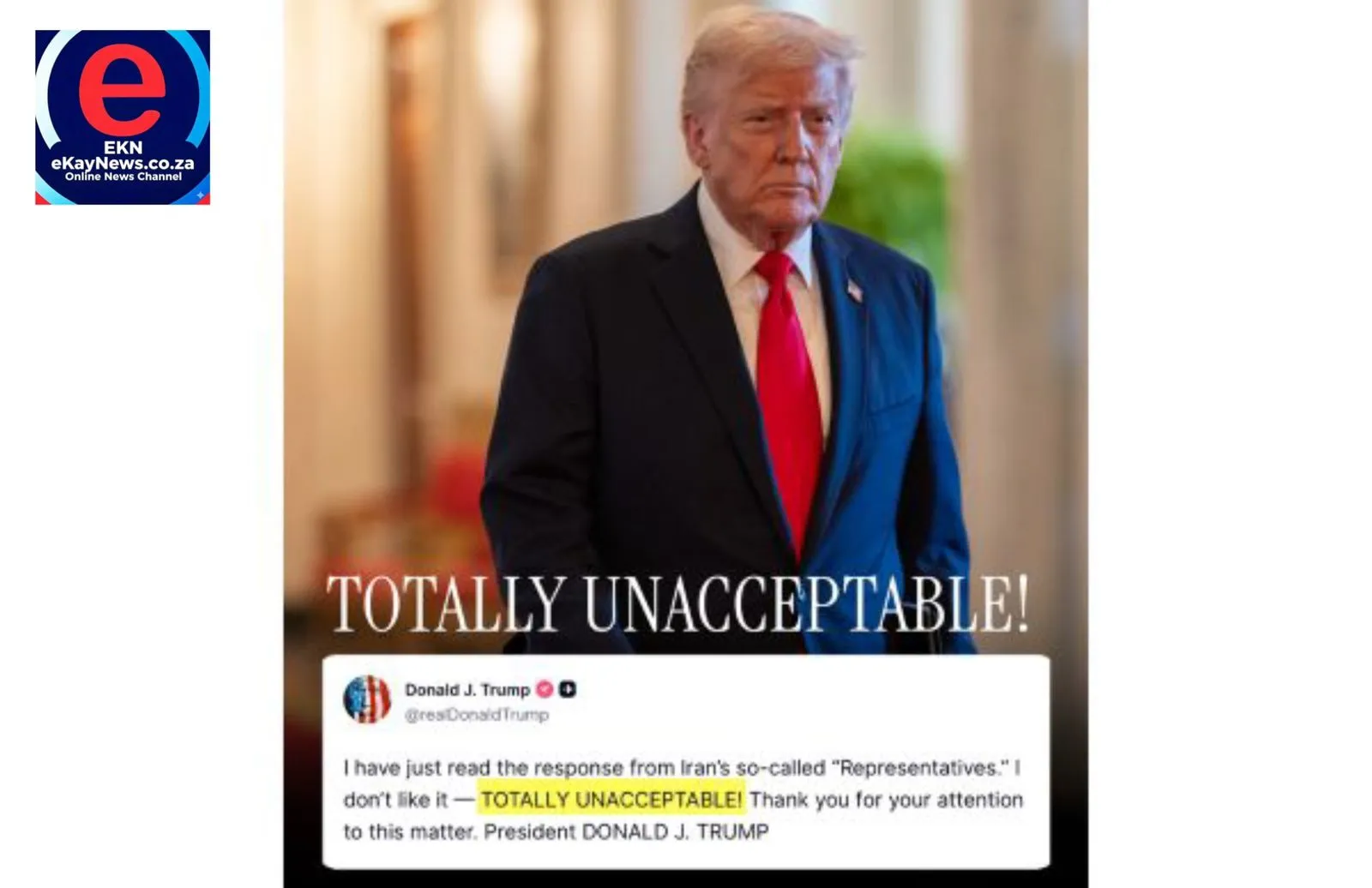
The immediate fallout of the Sunday announcement was felt across social media and global diplomatic circles. President Donald Trump, writing on his Truth Social platform, did not mince words about the quality of the communication he received.
“I have just read the response from Iran’s so-called ‘Representatives.’ I don’t like it — TOTALLY UNACCEPTABLE! Thank you for your attention to this matter,” Trump posted.
In a subsequent post, the President escalated his rhetoric, accusing the Iranian leadership of “playing games with the United States” and suggesting that Tehran had been “laughing” at the U.S. for years. The “laughing no longer” warning has become a signature of Trump’s wartime communication style, signaling a potential return to increased military pressure if the diplomatic track fails to yield the results he demands.
The Contents of the Iranian Counter-Proposal
While the White House has not released the full text of either the U.S. 14-point plan or the Iranian reply, state media in Tehran and various diplomatic leaks have painted a picture of a counter-offer that prioritizes immediate relief over long-term concessions. According to IRNA, the official Iranian news agency, the reply focuses exclusively on the “cessation of hostilities around the region.”
Tehran’s primary demands reportedly include:
-
An official and immediate end to the war.
-
The withdrawal of all U.S. naval vessels currently enforcing a blockade.
-
The immediate lifting of all U.S. economic sanctions.
-
The full reopening and Iranian management of the Strait of Hormuz.
-
An effective ceasefire in Lebanon.
-
A further 30-day period of negotiations to “iron out details.”
Crucially, Iran has proposed that all discussions regarding its nuclear program be relegated to a subsequent, separate set of talks. This “de-coupling” of the nuclear issue from the immediate ceasefire appears to be one of the primary reasons Donald Trump labeled the response “unacceptable,” as the U.S. administration has consistently maintained that any final peace proposal must include the total dismantling of Iran’s nuclear enrichment capabilities.
The Strait of Hormuz: A Conflict Zone in Crisis
The tension surrounding the negotiations is mirrored by the volatile situation on the water. The Strait of Hormuz remains the central chokepoint of the conflict, both strategically and economically. In recent days, the fragile ceasefire reached over a month ago has been tested by an exchange of hostilities that threatens to ignite a larger regional conflagration.
On Thursday, Iran launched an attack on three U.S. naval destroyers, claiming retaliation for the ships’ entry into the Strait—waters over which Iran claims total control. Tehran asserted that it had inflicted “serious damage” on the destroyers using a combination of ballistic missiles, cruise missiles, and drones. However, U.S. military officials contradicted this report, stating that the ships sailed away unscathed.
In response to the aggression, U.S. warplanes launched strikes against sites on Qeshm Island and the city of Bandar Abbas. Furthermore, U.S. Central Command confirmed it had struck two Iranian-flagged tankers that were attempting to violate the naval blockade. These military actions serve as a somber backdrop to the failed peace proposal exchange, highlighting that while diplomats talk, the drums of war continue to beat in the Persian Gulf.
Regional Spillover and Qatari Mediation
The conflict is no longer a strictly bilateral affair. Over the weekend, Qatar’s defense ministry reported that a commercial cargo vessel originating from Abu Dhabi was struck by a drone off the coast of Doha. While the strike caused only a small fire and no casualties, it underscored the danger to international shipping.
Secretary of State Marco Rubio and Special Envoy Steve Witkoff met with Qatari Prime Minister Mohammed bin Abdulrahman Al Thani on Saturday to discuss the Pakistani-led mediation efforts. Qatar has been working alongside Pakistan to find a route toward “enhancing security and stability,” but the “devastated and fractured” nature of Iran’s leadership, as described by U.S. Ambassador to the UN Mike Waltz, has made finding a singular, authoritative voice in Tehran difficult.
Domestic Fallout: Gas Prices, Recession Fears, and Public Discontent
As Donald Trump maintains his hardline stance, the domestic cost of the war is becoming a significant political liability. A recent Washington Post-ABC News-Ipsos poll conducted in late April revealed that the war in Iran is as unpopular today as the Iraq War was during its most violent period in 2006.
The economic data accompanying the poll is equally startling:
-
60% of Americans believe U.S. military action has increased the risk of a recession.
-
40% of Americans report driving less or cutting household expenses due to rising gas prices.
-
3 in 10 Americans have canceled travel or vacation plans.
Energy Secretary Chris Wright addressed these concerns on Sunday, stating that the administration is “open to all ideas” to lower prices for consumers, including a potential suspension of the federal gas tax. While Wright expressed optimism that the Strait of Hormuz would eventually see a “free flow of traffic,” he avoided making specific price predictions, leaving many Americans anxious about the prospect of gas hitting $5 a gallon.
The Nuclear Stumbling Block and UN Resolutions
The U.S. administration is now pivoting toward the United Nations to exert further pressure. Ambassador Mike Waltz noted that the U.S. is pushing for a new UN resolution to explicitly declare that Iran cannot close international waterways.
“No country can do what Iran is doing in international waterways,” Waltz told ABC News.
The strategy appears to be a dual-track approach: using the UN to delegitimize Iran’s claim over the Strait of Hormuz while maintaining a crushing naval blockade to force a “serious offer” on the nuclear front. The administration believes that as “things get tough” for the Iranian leadership, their motivation to sign a deal—on U.S. terms—will grow. However, the “totally unacceptable” verdict on the latest reply suggests that the breaking point has not yet been reached.
Strained Negotiations and the Pakistani Mediation Channel
The role of Pakistan in these negotiations cannot be overstated. Prime Minister Shehbaz Sharif has found himself in the middle of a global firestorm, acting as the primary courier for messages that neither side seems willing to deliver directly. On Sunday, Sharif confirmed that he had conveyed the Iranian response but refused to elaborate on its specifics, citing the delicacy of the current phase.
The “longer and slower” pace of these talks is a source of frustration for the White House. The Donald Trump administration had hoped for a quick resolution to the “war in Iran,” but the fractured state of Tehran’s decision-making apparatus has resulted in a series of half-measures and counter-proposals that Washington views as stalling tactics.
Iranian State Media Defends the Response
While Trump slams the reply, state-run media in Iran has launched a vigorous defense of their proposal. IRNA and other outlets have characterized the U.S. 14-point plan as a demand for “surrender to Trump’s greed.” They argue that the U.S. is attempting to use military force to extract concessions that belong in a formal, long-term diplomatic framework, rather than a ceasefire agreement.
By demanding the lifting of sanctions and the management of the Strait of Hormuz upfront, Tehran is attempting to regain economic leverage before discussing the dismantling of its nuclear program. This fundamental disagreement on the sequencing of the peace proposal is the primary obstacle to any lasting settlement.
YOU MAY LIKE:
Conclusion: The Path Ahead for the 2026 Conflict
Trump says Tehran’s reply to US proposal ‘unacceptable’, and with that statement, the clock has effectively reset on the 2026 peace efforts. The rejection of the Pakistani-mediated response leaves the Middle East in a perilous state of limbo. On one side, we have an American administration that believes “Maximum Pressure” and a total blockade will eventually force a complete capitulation. On the other, we have an Iranian leadership that is “devastated and fractured” but still capable of launching sophisticated attacks on U.S. destroyers and international shipping.
The domestic unpopularity of the war and the looming threat of a recession put significant pressure on Donald Trump to find a resolution before the economic damage becomes irreversible. However, as the President’s Truth Social posts make clear, he is unwilling to accept any deal that he perceives as a sign of weakness or a “game” being played by Tehran.
As we move into mid-May, the “30 days of talks” requested by Iran seem unlikely to materialize under the current conditions. Instead, the world must brace for continued hostilities around the Strait of Hormuz and perhaps an even tighter U.S. blockade. The route to a “GREAT AGAIN” peace remains obscured by the smoke of recent drone strikes and the uncompromising rhetoric of two nations that are nowhere near a common ground.
Ultimately, the goal remains a free-flowing Strait and a permanent end to the Iranian nuclear program. But as this Sunday has proven, the road to that end is paved with “unacceptable” offers and a ceasefire that is being tested to its absolute limit.
References
-
Truth Social (Official Account of Donald J. Trump)
-
Reference: Trump, D. J. (2026, May 10). Response to Iranian “Representatives” Regarding Peace Proposal. Truth Social.
-
-
IRNA (Islamic Republic News Agency)
-
Reference: IRNA Staff. (2026, May 10). Tehran Conveys Formal Response to U.S. Peace Plan via Pakistani Mediators. IRNA Official.
-
Link: en.irna.ir
-
-
The Washington Post / ABC News / Ipsos
-
Reference: Public Opinion Poll: U.S. Involvement in Iran and Economic Recession Risk. (2026, April 28). The Washington Post.
-
Kindly consider to support eKayNews, Buy Us a Coffee & Keep the News Flowing!

Love what we do? You can now support eKayNews directly! Your contributions empower us to deliver the breaking news, sports, and local updates you trust.
Ways to Support:
-
Subscribe: Choose any amount (cancel anytime).
-
Virtual Coffee: A quick, once-off donation to say thanks.
Note: Payments are 100% secure via PayFast. We never see your banking details.
To our amazing readers: Your support fills us with gratitude. You are the reason we can keep doing this every day. Thank you for being a vital part of the eKayNews family!
We’re feeling the love at eKayNews!

Facebook: [eKayNews on Facebook] X (Twitter): [eKayNews on X] WhatsApp: [Follow the eKayNews WhatsApp Channel] Join our inner circle for real-time news alerts!
📢 Advertising Packages on www.eKayNews.co.za
Package 1. Link Booster: We add 7 links to 7 articles over 7 days – R2,500
Package 2. Permanent Feature: Sponsored Blog Article (hosted permanently) – R4,000
Package 3. Prime Visibility: Home Page Banner Ad (30 days) – R5,000
Book now: Email info@ekaynews.co.za or WhatsApp us on +27710961185