Trump says Iran ceasefire is ‘on life support’
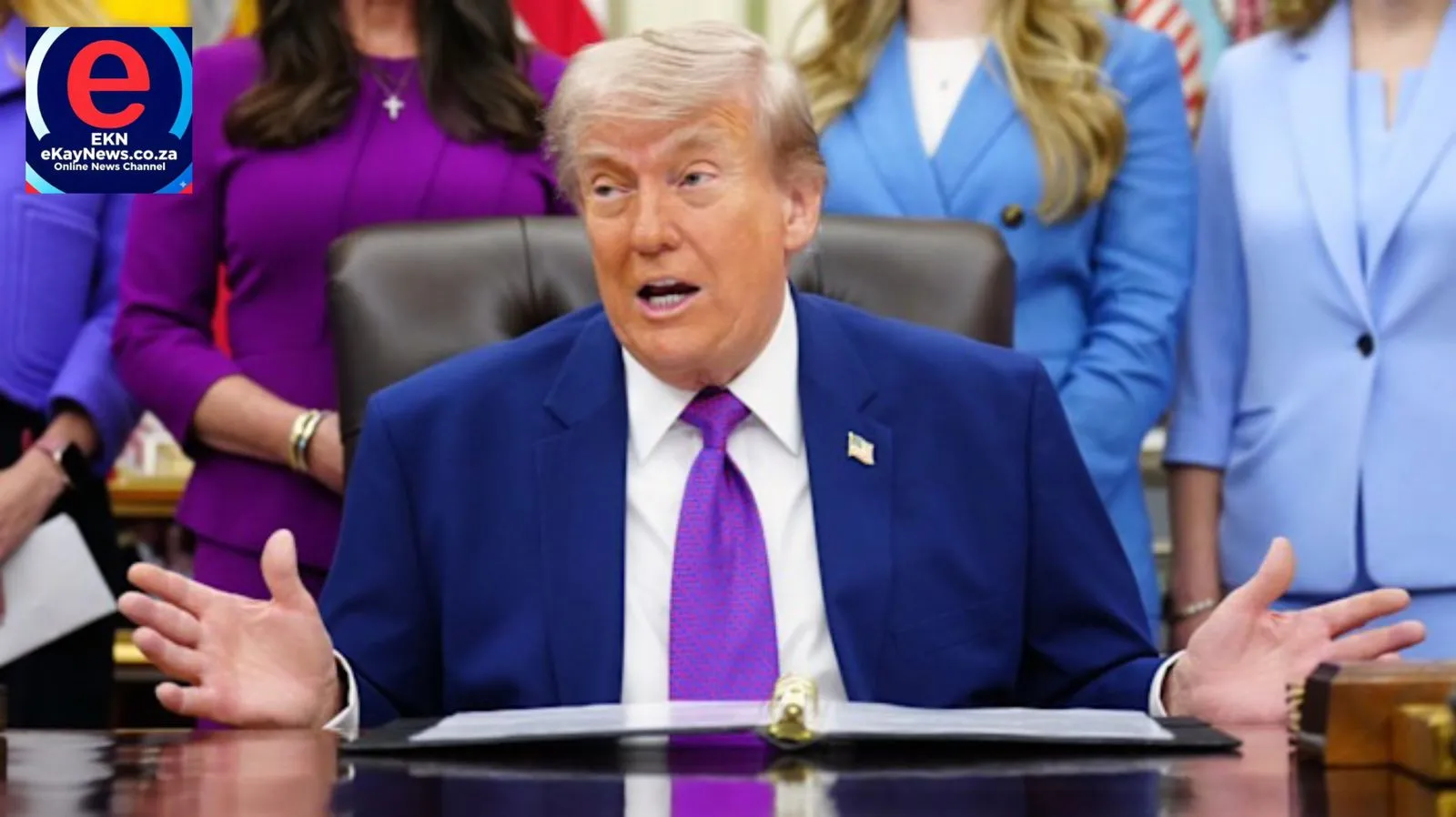
Trump says Iran ceasefire is ‘on life support’ following a sharp and dismissive response from Tehran regarding the latest United States peace proposal. As the conflict, which began with a massive aerial campaign on February 28, 2026, enters its third month, the fragile truce established on April 7 appears to be disintegrating. President Donald Trump, speaking from the Oval Office, characterized the Iranian counter-offer as a “piece of garbage,” signaling a potential return to full-scale hostilities that could further destabilize global energy markets and the already volatile Middle East.
The impasse comes at a critical juncture for the Trump administration. With nationwide elections less than six months away, the President is facing a domestic audience increasingly weary of high gasoline prices and a military engagement that many feel has not been adequately explained. Yet, the rhetoric from Washington remains uncompromising, mirroring the defiant stance taken by Iran’s leadership in Tehran.
The Fragile April 7 Truce and the “Piece of Garbage”
The ceasefire that has been in effect since early April was intended to provide a window for diplomatic negotiations. However, the optimism that greeted the initial truce has evaporated. According to the President, the document sent by Tehran in response to the American peace proposal was not only insufficient but insulting.
“I would call it the weakest right now, after reading that piece of garbage they sent us. I didn’t even finish reading it,” Trump remarked to reporters.
Tehran’s demands are extensive and, from the perspective of the White House, non-starters. Iran has called for an immediate end to the war on all fronts. This includes not just the direct conflict with the U.S., but also the fighting in Lebanon, where U.S. ally Israel is currently engaged with Iran-backed Hezbollah militants. Furthermore, Tehran is demanding:
-
Full compensation for war damages inflicted since February.
-
An immediate end to the U.S. naval blockade.
-
A formal guarantee that no further attacks will be carried out on Iranian soil.
-
The unconditional resumption of Iranian oil sales to the global market.
Because these demands precede any discussion regarding Iran’s nuclear program—which was the central pillar of the U.S. peace proposal—the administration believes Trump says Iran ceasefire is ‘on life support’ is an accurate assessment of the diplomatic reality.
The Strait of Hormuz: A Global Economic Chokepoint
Central to the tension is the Strait of Hormuz. Tehran has reasserted its sovereignty over this narrow waterway, which historically carries one-fifth of the world’s oil and liquefied natural gas (LNG). By shutting down the majority of shipping traffic, Iran has effectively seized the “jugular” of the global economy.
Currently, traffic through the strait is a mere trickle of its pre-war volume. Shipping data from Kpler and LSEG indicates that while a few tankers have managed to exit the waterway—often with their transponders switched off to avoid Iranian detection—the risk remains prohibitively high for most commercial vessels. A recent attempt by a Qatari LNG tanker to transit the strait under a special arrangement involving Pakistan has been watched closely, but sporadic flare-ups and “warning shots” from Iranian patrol boats continue to test the limits of the ceasefire.
The near-closure of the strait has had a catastrophic impact on regional oil producers, who have been forced to drastically cut exports. A Reuters survey released this Monday showed that OPEC oil output dropped in April to its lowest level in over two decades. This supply crunch is the primary driver behind the recent surge in energy costs.
Brent Crude Oil and the Economic Toll
The deadlock in negotiations has sent shockwaves through the commodities market. Brent crude oil futures jumped 3% on Monday, climbing to more than $104 a barrel. This price point represents a significant burden for global economies still recovering from the initial shocks of the February 28 outbreak.
The U.S. has attempted to maintain pressure on Tehran through economic warfare, even as the military ceasefire falters. On Monday, Washington imposed a new round of sanctions targeting individuals and companies accused of helping Iran ship oil to China. These measures are part of a broader “maximum pressure” strategy intended to cut off the funding for Tehran’s military and nuclear initiatives. However, with Brent crude oil at such high levels, the incentive for “ghost tankers” and sanctions-evading entities remains high, particularly as China continues to seek affordable energy to fuel its own industrial complex.
The economic reality is that as long as Trump says Iran ceasefire is ‘on life support’, the risk premium on oil will remain. Analysts warn that if the ceasefire officially collapses and the Strait of Hormuz remains contested, prices could easily breach the $120 mark, a scenario that would have devastating effects on global inflation.
Domestic Unpopularity and the “Unexplained” War
While the President maintains a hardline stance internationally, the domestic front is becoming increasingly treacherous. New polling data from Reuters/Ipsos suggests that the American public is losing patience with the conflict.
The survey, completed this Monday, reveals a startling lack of clarity regarding the war’s objectives:
-
66% of respondents say President Trump has not “clearly explained the goals of U.S. military involvement in Iran.”
-
This dissatisfaction is bipartisan, including one in three Republicans and nearly all surveyed Democrats.
-
Voters are particularly sensitive to the rising cost of gasoline, which has become a primary talking point for opposition candidates as the midterms approach.
Iran’s Parliament Speaker, Mohammad Baqer Qalibaf, has been quick to weaponize this domestic discontent. In a recent post on X (formerly Twitter), Qalibaf warned that “The longer they drag their feet, the more American taxpayers will pay for it,” specifically targeting the economic burden placed on U.S. citizens by the prolonged naval standoff and the closure of the Strait of Hormuz.
Regional Rifts and Secret Strikes: The UAE Factor
The conflict is also exposing deep fissures among Middle Eastern allies. While the U.S. has struggled to build a broad international coalition to reopen the Strait of Hormuz—with many NATO allies hesitant to commit ships without a comprehensive peace deal—regional players are taking matters into their own hands.
The Wall Street Journal reported on Monday that the United Arab Emirates (UAE) has carried out unacknowledged military strikes against Iranian targets. The UAE has reportedly borne the brunt of Iranian counterattacks since the war began and appears to be adopting a more proactive defensive posture.
Specific incidents cited include:
-
An attack on a refinery on Iran’s Lavan Island last month.
-
Reports from Iran’s Mizan news agency claiming the use of Mirage fighter jets, which are part of the UAE’s arsenal.
-
Sporadic naval skirmishes that the UAE government has yet to publicly confirm.
These developments suggest that even if the U.S. seeks to maintain a ceasefire, regional dynamics may force a broader escalation. If Trump says Iran ceasefire is ‘on life support’, it is partly because the “shadow war” between Iran and its neighbors is becoming increasingly difficult to contain.
The China Connection: Trump Heads to Beijing
In a final attempt to salvage the peace proposal, President Trump is expected to arrive in Beijing on Wednesday for high-level talks with Chinese President Xi Jinping. China remains Iran’s most significant economic lifeline and its primary customer for sanctioned oil.
The U.S. strategy involves leaning on Beijing to use its considerable leverage over Tehran. Washington wants China to convince the Iranian leadership that a return to full-scale war would be more costly than accepting the U.S. peace proposal. However, China’s own interests are complex; while they desire a stable oil supply, they also benefit from a U.S. military that is bogged down in a protracted Middle Eastern conflict.
The meeting between Trump and Xi will likely determine whether the “life support” currently keeping the ceasefire alive will be disconnected or if a new diplomatic ventilator can be found.
YOU MAY LIKE:
Conclusion: A World on Edge
As of May 12, 2026, the global community remains in a state of high anxiety. The rhetoric coming out of both Washington and Tehran suggests a fundamental misalignment of goals. Iran seeks a total reset of regional power dynamics and compensation for its losses, while the U.S. remains focused on dismantling Iran’s nuclear capabilities and ensuring the freedom of navigation through the Strait of Hormuz.
With Brent crude oil prices soaring and domestic pressure mounting, the President’s warning that Trump says Iran ceasefire is ‘on life support’ serves as a grim harbinger. Whether the upcoming talks in Beijing or the mediation efforts by Turkey and Pakistan can produce a breakthrough remains to be seen. For now, the world watches the narrow waters of the Gulf, where a single miscalculation could reignite a war that no one seems to know how to finish.
References
-
The Guardian
-
Financial Times
Kindly consider to support eKayNews, Buy Us a Coffee & Keep the News Flowing!

Love what we do? You can now support eKayNews directly! Your contributions empower us to deliver the breaking news, sports, and local updates you trust.
Ways to Support:
-
Subscribe: Choose any amount (cancel anytime).
-
Virtual Coffee: A quick, once-off donation to say thanks.
Note: Payments are 100% secure via PayFast. We never see your banking details.
To our amazing readers: Your support fills us with gratitude. You are the reason we can keep doing this every day. Thank you for being a vital part of the eKayNews family!
We’re feeling the love at eKayNews!

Facebook: [eKayNews on Facebook] X (Twitter): [eKayNews on X] WhatsApp: [Follow the eKayNews WhatsApp Channel] Join our inner circle for real-time news alerts!
📢 Advertising Packages on www.eKayNews.co.za
Package 1. Link Booster: We add 7 links to 7 articles over 7 days – R2,500
Package 2. Permanent Feature: Sponsored Blog Article (hosted permanently) – R4,000
Package 3. Prime Visibility: Home Page Banner Ad (30 days) – R5,000
Book now: Email info@ekaynews.co.za or WhatsApp us on +27710961185