‘We owe them nothing’ – Anti-illegal immigration group not backing down
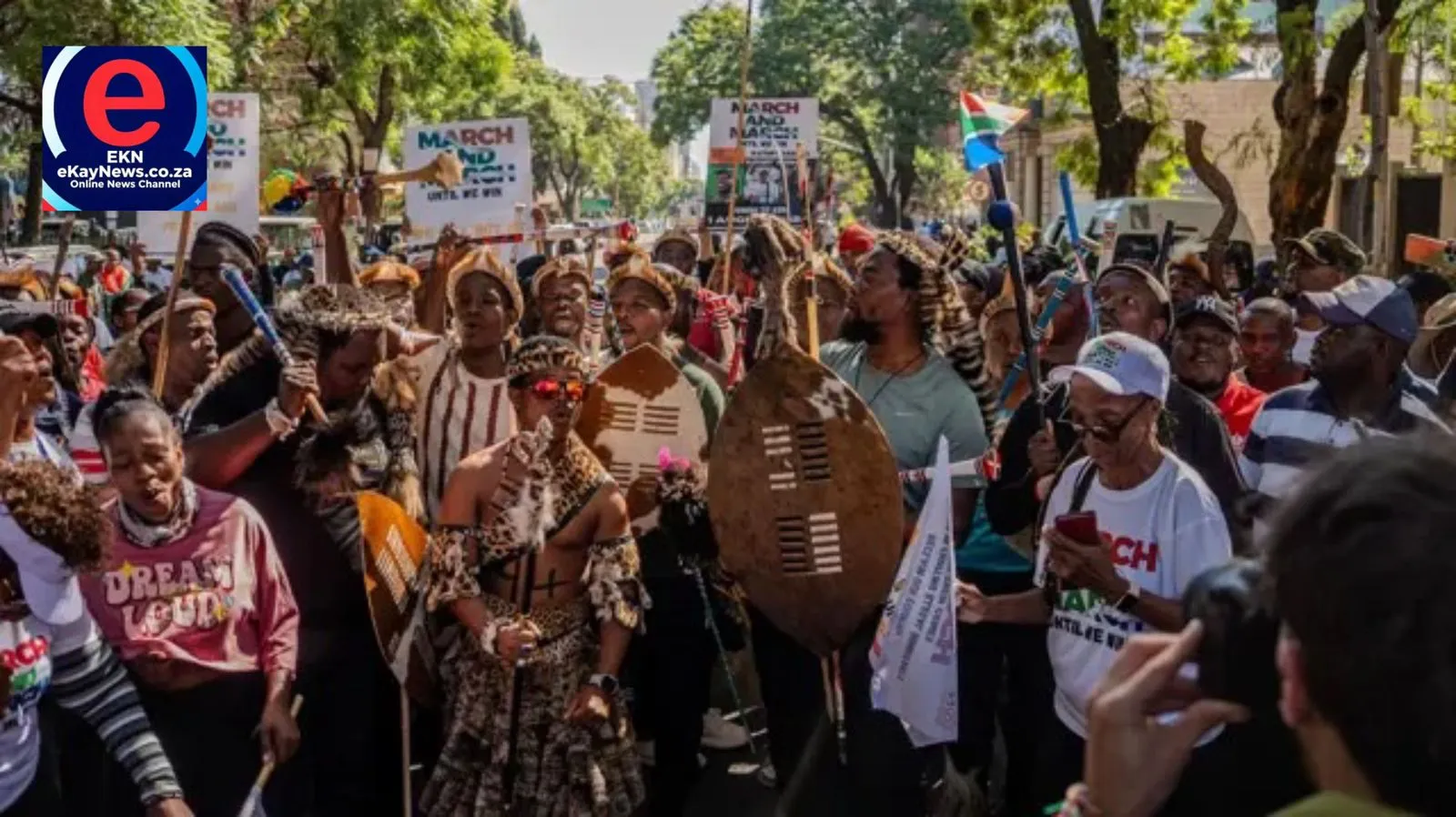
‘We owe them nothing’ – Anti-illegal immigration group not backing down, marking a defining and highly controversial moment in the escalating tensions surrounding undocumented migrants in South Africa. The anti-illegal migration group, famously known as March and March, has taken a rigid and unapologetic stance against what they describe as a profound crisis of lawlessness and entitlement among undocumented foreign nationals residing within the country’s borders. As protests spread from coastal cities to the economic heartland of Gauteng, the socio-political landscape of South Africa is being radically reshaped by these fierce debates over immigration, economic scarcity, and national identity.
The situation has reached a boiling point in recent weeks, with widespread demonstrations shutting down businesses, disrupting daily life, and drawing both massive domestic support and intense international criticism. While foreign nationals allege that March and March members have intimidated them and forcibly removed them from their residences, the movement’s leadership remains steadfast, insisting that their actions are a necessary response to a government that has seemingly lost control of its borders and its obligation to prioritize its own citizens.
The Rise of March and March and the Fight Against Illegal Immigration
At the center of this storm is Jacinta Ngobese-Zuma, the outspoken founder and leader of the March and March movement. Under her guidance, the group has mobilized thousands of frustrated South Africans, transforming localized grievances into a formidable national campaign against illegal immigration. Ngobese-Zuma has consistently argued that undocumented foreign nationals have reached a level of entitlement that is no longer tolerable, which she claims has made them believe that they do not have to heed the laws of the country.
“We don’t owe them anything,” Ngobese-Zuma stated emphatically during a recent address. “I think this is something that we need to reiterate to foreign nationals, because somewhere in their heads there’s a movie that’s playing that South Africa owes them.”
This uncompromising rhetoric has resonated deeply with a significant portion of the South African working class, who feel abandoned by the state and squeezed by a stagnant economy. When analyzing the core philosophy of this rapidly growing movement, their guiding principle is unequivocally clear: ‘We owe them nothing’ – Anti-illegal immigration group not backing down. The group’s grassroots mobilization strategies, utilizing social media and community forums, have allowed them to coordinate massive marches in major cities, demanding strict enforcement of immigration laws and the mass deportation of undocumented individuals.
Jacinta Ngobese-Zuma’s Stance on Foreign Nationals and the “Refugee” Label
A recurring point of contention in the immigration debate is the status of asylum seekers and refugees. Many who have spoken to news outlets like eNCA have passionately pleaded their cases, stating that they came to South Africa to seek refuge from war, political persecution, and economic collapse in their home countries.
“We’ve noticed that they keep saying we’ve been refugees for 20 years,” Ngobese-Zuma pointed out. “There’s no refugee who can stay in a country for 20 years as a refugee.” She argues that the asylum system is being heavily abused by economic migrants who use the refugee label to justify long-term, undocumented stays in South Africa, thereby placing an unsustainable burden on the country’s already strained public resources, including healthcare, housing, and education.
Her sentiments highlight a growing frustration among locals who feel that South Africa’s compassionate policies are being exploited. For these citizens, the rallying cry of ‘We owe them nothing’ – Anti-illegal immigration group not backing down perfectly encapsulates their demand for an immigration system that prioritizes national interests over regional humanitarian obligations.
Widespread Protests: The Escalating Crisis Across South Africa
The rhetoric has quickly translated into action on the streets. Over the past month, protests against illegal immigration have intensified dramatically. The African Diaspora Global Network, a prominent advocacy group, has strongly condemned the recent attacks on foreign nationals in South Africa, warning of a looming humanitarian crisis. The atmosphere of fear has forced many to flee their homes. Refugees and undocumented migrants alike have been reported camping outside Durban police stations and community shelters, desperately seeking protection from the rising tide of hostility.
This alarming situation unfolds as protests continue against undocumented migrants across multiple provinces. What started as localized demonstrations in KwaZulu-Natal has rapidly metastasized. In Qonce, formerly known as King Williams Town in the Eastern Cape, protesters have taken aggressive action, specifically targeting businesses they suspect are owned or operated by foreign nationals. The indiscriminate nature of these demonstrations means that even legally documented immigrants and refugees often find themselves caught in the crossfire. In one highly publicized incident, even a local carwash owner was not spared from the protesters’ wrath, illustrating how the anger is spilling over into everyday community life.
The protests have also reached the administrative and economic capitals, Pretoria and Johannesburg. In these urban centers, hundreds of South Africans have marched, demanding immediate government intervention. The presence of other anti-immigration factions and political figures showing sympathy for the movement has only added fuel to the fire, solidifying the movement’s presence and proving that ‘We owe them nothing’ – Anti-illegal immigration group not backing down is not just a passing phase, but a deeply rooted political force.
The Impact on the Economy and Foreign-Owned Businesses
The economic impact of these protests is profound. In areas where the March and March movement is most active, foreign-owned spaza shops, salons, and corner cafes have frequently been forced to close their doors to avoid the threat of looting and violence. While the movement’s leadership maintains that they advocate for non-violent, lawful enforcement of immigration policies, the sheer scale of the crowds and the intense emotions involved have inevitably led to localized skirmishes and severe economic disruption.
Furthermore, some political figures have publicly thrown their weight behind the movement. They argue that the private sector is largely to blame for exploiting undocumented labor to avoid paying minimum wages, thereby undercutting South African workers. This perspective frames illegal immigration not just as a border security issue, but as a severe labor market distortion that actively harms the poorest South African citizens. It is within this context of intense economic competition that the message of the anti-illegal immigration group finds its most fertile ground.
Misdirected Anger? Experts Weigh In on South Africa’s Socioeconomic Failures
While the March and March movement continues to gain momentum, many sociologists, economists, and human rights advocates warn that the anger directed at foreign nationals is fundamentally misdirected. Loren Landau, a respected researcher from the Wits-Oxford Mobility Governance Lab, has offered a sobering analysis of the ongoing crisis. He believes that the intense frustration felt by local communities—while entirely valid in its origin—is being dangerously channeled toward the most vulnerable groups in society, rather than the systemic failures that are the true root of the problem.
Landau emphasizes that the locals’ profound frustration at the staggering lack of jobs, failing infrastructure, and inadequate public services should be directed squarely at the government. South Africa is currently grappling with massive unemployment rates, devastating rolling blackouts, water shortages, and widespread political corruption.
Government Trust, Scapegoating, and the Future of Foreign Nationals
Landau also stressed that the government must work urgently to regain public trust, which has severely eroded over the past decade. “I think what’s failed is that the South African government has lost the faith of the people,” Landau explained. “They’ve lost faith in the people, not only because of immigration, but all of the issues you’ve been speaking about, water, electricity, etc.”
This concept of scapegoating is central to understanding the current xenophobic and anti-immigrant sentiments sweeping the nation. When a government fails to deliver basic services and economic opportunities, populist movements often rise to fill the void, pointing the finger at external “others” as the source of the nation’s woes. Despite evidence suggesting that immigrants often contribute positively to the economy by creating informal jobs and paying taxes, the narrative of the “job-stealing foreigner” remains deeply entrenched.
However, for the supporters of Jacinta Ngobese-Zuma, academic analyses about scapegoating do little to ease the daily reality of poverty and intense competition for scarce resources. They view the strict enforcement of borders as a basic sovereign right and a necessary first step toward national recovery. As the debate rages on, the polarization in South African society only deepens, leaving foreign nationals in a precarious and terrifying state of limbo.
YOU MAY LIKE:
Operation Dudula sparks tension in Joburg CBD after operations resume
Conclusion
South Africa stands at a critical crossroads. The intersection of severe economic stagnation, failing public infrastructure, and massive migration flows has created a volatile powder keg. The government faces an immense challenge: it must simultaneously address the legitimate grievances of its impoverished citizens while upholding its international human rights obligations and preventing xenophobic violence.
The actions and rhetoric of the March and March movement have undoubtedly forced the issue of illegal immigration to the absolute top of the national agenda. Their uncompromising approach has resonated with millions, fundamentally altering the political discourse. As the country navigates this incredibly complex and sensitive issue, one thing remains abundantly clear: the sentiments driving these protests are not going to simply fade away. ‘We owe them nothing’ – Anti-illegal immigration group not backing down, and their continued mobilization guarantees that the fight over South Africa’s borders, resources, and identity will dominate the nation’s politics for the foreseeable future.
References from mainstream media
-
eNCA. (2026). “‘We owe them nothing’: March and March leader Jacinta Ngobese-Zuma stands firm on deportations.” eNCA News. https://www.enca.com/news/we-owe-them-nothing-march-and-march-leader-stands-firm
-
News24. (2026). “Protests escalate in Qonce and Durban as anti-illegal immigration groups target foreign-owned businesses.” News24 South Africa. https://www.news24.com/news24/southafrica/news/protests-escalate-qonce-durban-anti-immigration-groups-20260521
Keep the Headlines Fresh!

Quality news takes time, effort, and a whole lot of coffee. If you value what we do at eKayNews, consider “buying a round” for the team!
-
Join the Inner Circle: Set up a custom subscription.
-
The Instant Jolt: Send a one-time “coffee” donation.
Why trust us? We use PayFast for 100% secure, encrypted transactions. Your data stays yours; the news stays ours.
To our amazing readers: You’re the reason we’re first on the scene. Thanks for being part of the family!
Feel the Pulse of the News with eKayNews!

Join the ever-growing eKayNews community and stay connected to the stories that matter. Follow us on Facebook, X, and WhatsApp for real-time updates, breaking news, and exclusive alerts straight to your feed. Your support keeps us digging deeper and sharing the news you can trust.
Stay Connected:
-
Facebook: [eKayNews on Facebook]
-
X (Twitter): [eKayNews on X]
-
WhatsApp: [Join the eKayNews WhatsApp Channel]
Become part of our inner circle and get instant news alerts as events unfold across South Africa and beyond!
Promote Your Brand with eKayNews
Looking to reach a wide, engaged audience? Explore our advertising packages:
-
Link Booster: 7 links to 7 articles over 7 days – R2,500
-
Permanent Feature: Sponsored blog article hosted permanently – R4,000
-
Prime Visibility: Home page banner ad for 30 days – R5,000
Don’t miss your chance to connect with our audience. Book your package today via email at info@ekaynews.co.za or WhatsApp us on +27710961185.
Be part of a platform where news meets community—stay informed, stay ahead, stay with eKayNews!