Eskom Threatens Johannesburg With Blackouts Over Massive City Power Debt
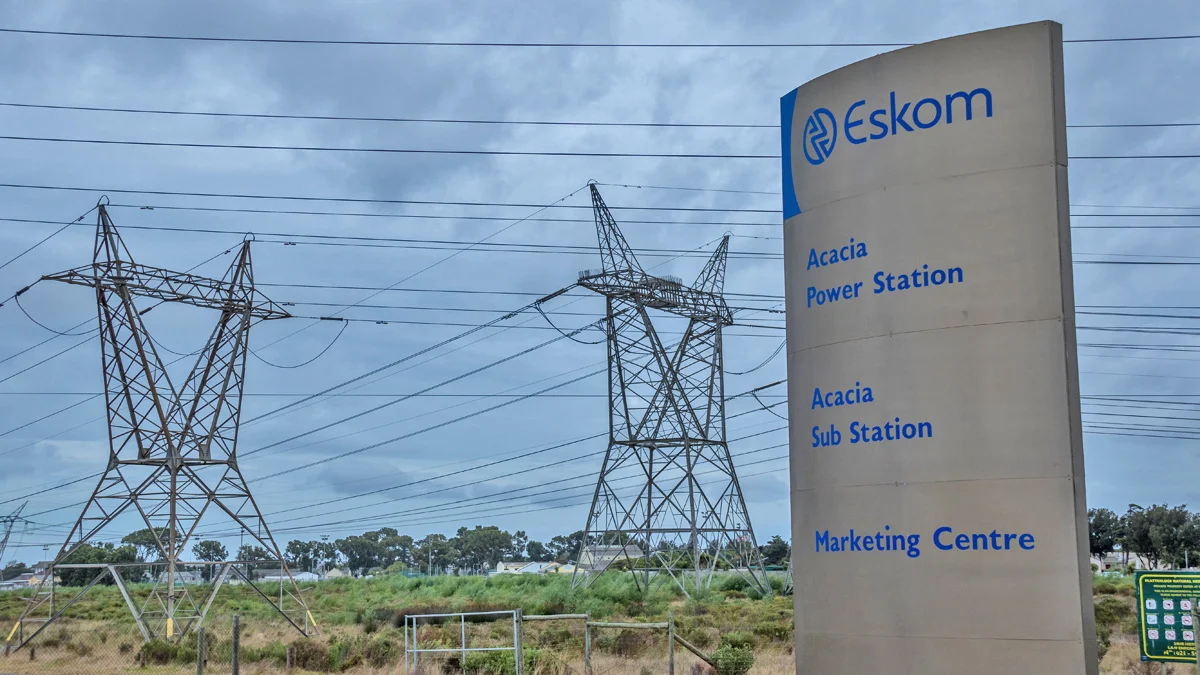
Eskom threatens Joburg blackouts over R5 billion debt crisis, sending shockwaves through the economic heart of South Africa. The national power utility has officially announced that it may significantly reduce, interrupt, or completely cut electricity supply to various parts of Johannesburg. This drastic measure comes after the City of Johannesburg and its electricity distribution entity, City Power, failed to pay more than R5 billion in outstanding debt. The looming threat of power interruptions casts a dark shadow over the country’s most populous metropolitan area, raising severe concerns for residents, businesses, and the broader economy of Gauteng.
For millions of South Africans living and working in Johannesburg, the prospect of targeted power cuts due to municipal financial mismanagement is a terrifying scenario. In a detailed statement issued to the media, the state-owned utility explained that it had been working patiently with the city for two consecutive years to resolve the massive arrears. However, repeated missed payments and a continuous failure to honor financial commitments have forced Eskom into a corner, compelling the utility to consider cutting power to certain critical bulk supply points across the metro.
The Financial Breakdown: The R5 Billion Debt Escalation
The core of the dispute lies in a staggering accumulation of unpaid bills. The utility sternly warned that unless this monumental debt is immediately addressed, electricity supply to key operational areas could be severely affected. According to the official financial figures released by the power utility, the arrears have reached a critical tipping point that can no longer be sustained by the national grid operator.
“The City of Johannesburg (CoJ) and/or City Power (CP) currently owes Eskom an arrear debt of R5 255 421 994.16,” the utility stated clearly. This astronomical figure represents historical debt that has accumulated over months of underpayment and missed financial deadlines. Furthermore, this multi-billion-rand arrear debt entirely excludes the current account. Eskom noted that a further R1 582 093 993.32 is due to be paid by the city on 5 June 2026. If this upcoming payment is also missed, the total owed by Johannesburg will soar closer to the R7 billion mark, a catastrophic financial burden for Eskom to carry.
As the situation deteriorates, it is clear why Eskom threatens Joburg blackouts over R5 billion debt crisis. The utility emphasized that the city has breached its foundational agreements. “As a result of CoJ/CP’s continued failure to honour its Electricity Supply Agreement with Eskom, including repeated defaults, Eskom has been forced to issue a notice of its intention to reduce, interrupt and/or terminate the supply of electricity to certain bulk supply points against the City of Johannesburg and City Power,” the statement read. Terminating bulk supply points would mean entire suburbs, industrial zones, and commercial districts could be plunged into darkness, completely independent of the standard load-shedding schedules South Africans have historically faced.
The Immediate Threat of Blackouts in Johannesburg
The operational reality of interrupting bulk supply points is devastating. If Eskom follows through on its notice, City Power will be unable to distribute electricity to its end-users. This means that hospitals, schools, manufacturing plants, and millions of households could face extended periods without power. The potential blackouts are not due to a lack of generation capacity, but rather a direct punitive measure to enforce debt collection.
For the residents of Johannesburg, this feels like a profound betrayal. Many citizens diligently pay their monthly utility bills directly to the municipality or through prepaid City Power meters. The revelation that these collected funds are not being passed on to Eskom has sparked immense public outrage. The fact that Eskom threatens Joburg blackouts over R5 billion debt crisis highlights a severe disconnect between municipal revenue collection and the actual settling of bulk supplier accounts.
Revenue Collection Disputes Between Johannesburg and Eskom
Eskom did not mince its words regarding the ethical and administrative failures of the City of Johannesburg. The utility explicitly called out the municipality for what it views as highly unfair financial practices. The utility added that “it simply cannot be acceptable to the City’s residents and all South Africans that COJ/CP is collecting electricity revenue but failing to pay over Eskom’s share”.
This specific grievance cuts to the heart of the municipal debt crisis in South Africa. When ratepayers fulfill their civic duty by paying for the electricity they consume, they rightfully expect that the municipality will pay the generator of that electricity. When City Power collects these revenues but uses the funds to plug other municipal financial holes or simply fails to manage its cash flow effectively, it directly threatens the stability of the national grid.
Eskom elaborated on the broader economic implications of this localized failure. “While Eskom continues to focus on being cost-efficient, escalating municipal and metro arrear debt undermines these efforts,” the utility explained. The state-owned enterprise is currently engaged in a massive turnaround strategy aimed at stabilizing the power grid and returning the company to profitability. However, these noble efforts are constantly sabotaged when the largest metros in the country refuse to pay their bills.
How City Power Debt Impacts National Electricity Tariffs
The financial shortfall caused by Johannesburg’s massive debt has a direct and painful impact on every single citizen in South Africa. Eskom pointed out that its financial sustainability, as well as its ability to supply electricity at affordable prices, is entirely dependent upon its ability to improve its balance sheet. This can only be achieved by increasing revenue and strictly reducing operational expenses.
When a major entity like City Power defaults on over R5 billion, Eskom is forced to find that missing revenue elsewhere. “Revenue can only be increased by collecting electricity debts and/or increasing electricity tariffs,” the utility warned. Ultimately, if Eskom cannot recover the R5 billion from Johannesburg, it will be forced to apply to the National Energy Regulator of South Africa (NERSA) for higher national tariff increases. This means that paying customers in other provinces could end up subsidizing the financial failures of the City of Johannesburg. It is precisely because of this domino effect that Eskom threatens Joburg blackouts over R5 billion debt crisis, attempting to force the city’s hand before national tariffs are pushed even higher.
Beyond Johannesburg: The National Eskom Debt Crisis
While the situation in Johannesburg is currently dominating headlines due to the sheer size of the metro and the volume of the debt, it is unfortunately not an isolated incident. The standoff between Eskom and City Power is merely a symptom of a much larger, systemic disease plaguing South African local governance.
IOL previously reported that Eskom has been forced to take drastic administrative measures across the country to secure its revenues. Eskom said that nine municipalities have recently agreed to sign Distribution Agency Agreements following a nationwide consultation process. These agreements are part of desperate, last-ditch efforts to recover unpaid electricity bills. Under a Distribution Agency Agreement, Eskom essentially bypasses the failing municipality and takes over the direct distribution and revenue collection from the end-users. While it is unclear if City Power will be forced into a similar agreement, the precedent has firmly been set.
Navigating the R111 Billion National Debt Crisis
The crisis in Johannesburg comes as the total debt owed to the utility continues to mount nationally at an alarming rate. Currently, the national municipal debt standing owed to Eskom sits at a breathtaking R111.6 billion. This astronomical figure persists despite numerous high-level interventions by the National Treasury through the municipal debt relief programme.
The National Treasury introduced the debt relief programme to give struggling municipalities a lifeline, allowing them to write off historical debt to Eskom provided they meet strict conditions, including keeping their current accounts up to date. However, the fact that a powerhouse metro like Johannesburg is severely defaulting suggests that the municipal financial crisis is far deeper than previously anticipated. If the richest city in the country cannot balance its electricity books, the prospects for smaller, rural municipalities are incredibly grim.
YOU MAY LIKE:
Major maintenance set to impact water supply across Ekurhuleni
Conclusion: Will City Power Avert the Blackouts?
The coming weeks will be absolutely critical for the future of Johannesburg’s power supply. The City of Johannesburg and City Power are now on the clock. With the June 2026 deadline for an additional R1.5 billion rapidly approaching, municipal leadership must urgently negotiate a viable, concrete payment plan with Eskom. Empty promises and delayed meetings will no longer suffice.
As Eskom threatens Joburg blackouts over R5 billion debt crisis, the residents of Gauteng are left to watch and wait. Small businesses, large corporations, and everyday citizens are bracing for the worst-case scenario. The utility has made it abundantly clear that it is willing to pull the plug to protect its own financial survival. The ball is now firmly in the court of the City of Johannesburg to honor its Electricity Supply Agreement, pay over the revenue it has collected from its residents, and prevent a catastrophic infrastructural collapse in South Africa’s most vital economic hub.
References:
-
News24. (2026). “Eskom threatens Joburg with massive blackouts over R5bn City Power debt.” News24 South Africa. https://www.news24.com/news24/southafrica/news/eskom-threatens-joburg-with-massive-blackouts-over-r5bn-city-power-debt-20260520
-
eNCA. (2026). “Eskom issues notice to cut City Power bulk supply over R5 billion arrears.” eNCA Business. https://www.enca.com/business/eskom-issues-notice-to-cut-city-power-bulk-supply-over-r5-billion-arrears
Keep the Headlines Fresh!

Quality news takes time, effort, and a whole lot of coffee. If you value what we do at eKayNews, consider “buying a round” for the team!
-
Join the Inner Circle: Set up a custom subscription.
-
The Instant Jolt: Send a one-time “coffee” donation.
Why trust us? We use PayFast for 100% secure, encrypted transactions. Your data stays yours; the news stays ours.
To our amazing readers: You’re the reason we’re first on the scene. Thanks for being part of the family!
Feel the Pulse of the News with eKayNews!

Join the ever-growing eKayNews community and stay connected to the stories that matter. Follow us on Facebook, X, and WhatsApp for real-time updates, breaking news, and exclusive alerts straight to your feed. Your support keeps us digging deeper and sharing the news you can trust.
Stay Connected:
-
Facebook: [eKayNews on Facebook]
-
X (Twitter): [eKayNews on X]
-
WhatsApp: [Join the eKayNews WhatsApp Channel]
Become part of our inner circle and get instant news alerts as events unfold across South Africa and beyond!
Promote Your Brand with eKayNews
Looking to reach a wide, engaged audience? Explore our advertising packages:
-
Link Booster: 7 links to 7 articles over 7 days – R2,500
-
Permanent Feature: Sponsored blog article hosted permanently – R4,000
-
Prime Visibility: Home page banner ad for 30 days – R5,000
Don’t miss your chance to connect with our audience. Book your package today via email at info@ekaynews.co.za or WhatsApp us on +27710961185.
Be part of a platform where news meets community—stay informed, stay ahead, stay with eKayNews!