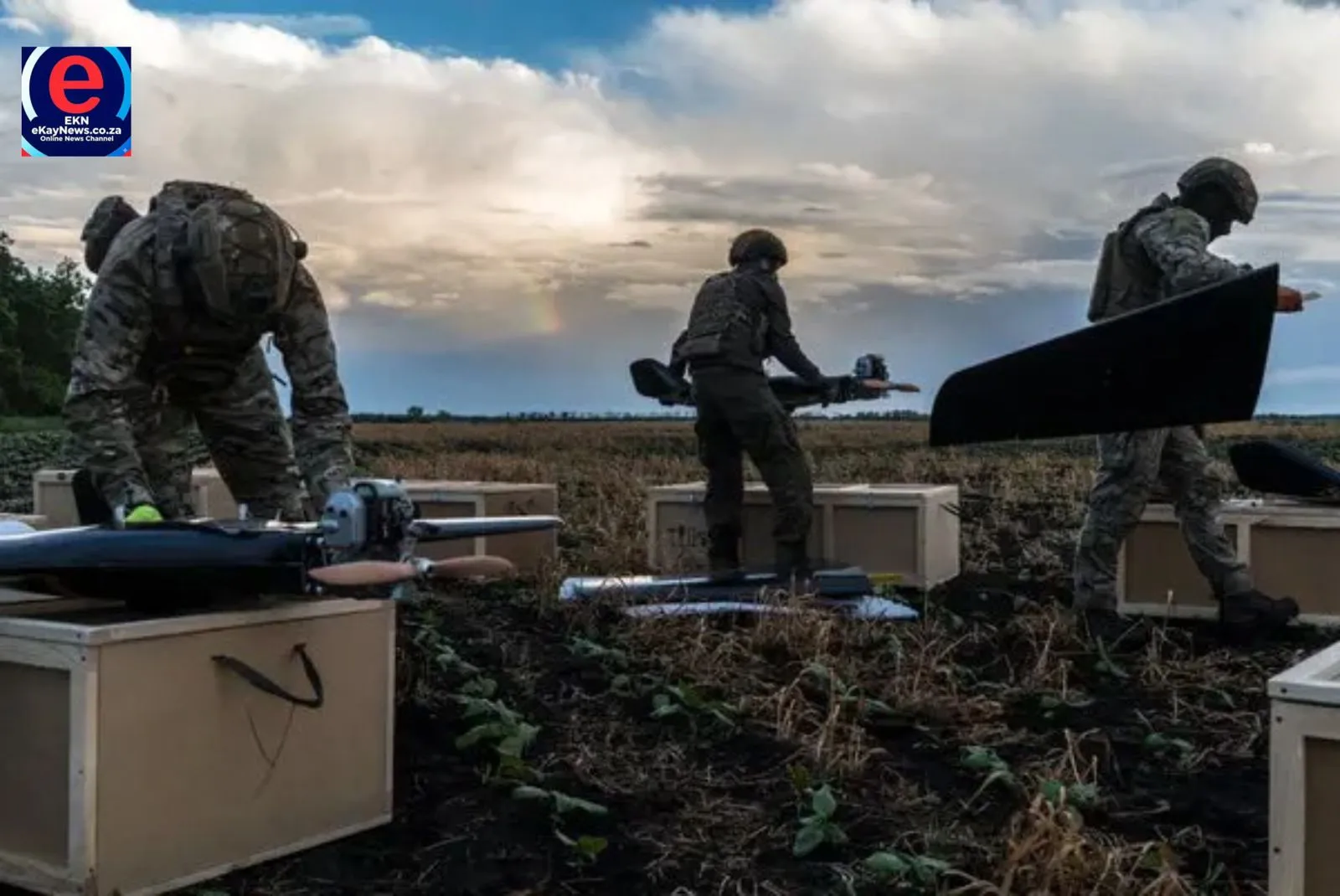
Ukrainian Drone Campaign Menacing Russian Logistics
Ukrainian drone campaign menacing Russian logistics is emerging as one of the most significant developments in the ongoing Ukraine-Russia war. By targeting critical supply routes, bridges, railways, fuel convoys, and military transport networks, Ukraine has intensified its efforts to weaken Russia’s ability to sustain operations in occupied territories.
Military analysts say the latest phase of Ukraine’s drone warfare strategy is producing measurable results. Russian logistics networks are facing unprecedented pressure as swarms of advanced drones strike deep behind frontline positions, disrupting troop movements and reducing the effectiveness of Moscow’s military campaign.
The strategy reflects Ukraine’s growing emphasis on technology-driven warfare, where unmanned aerial systems are increasingly replacing traditional military operations. As the conflict evolves, logistics have become a primary battlefield, with both sides recognizing that supply chains often determine success or failure on the front lines.
Ukraine Expands Drone Warfare Against Russian Supply Networks
Ukraine’s military has dramatically increased its use of drones in recent months. The focus has shifted from direct battlefield engagements to attacks on strategic infrastructure and supply routes used by Russian forces.
One of the primary targets is the R-280 highway, commonly referred to by Russian forces as the “Novorossiya Route.” This critical transportation corridor links Russian territory with occupied regions including Melitopol, Mariupol, and Crimea along the Sea of Azov coastline.
For Moscow, the route serves as a vital artery for transporting fuel, ammunition, military equipment, and personnel. However, Ukrainian drone operators have reportedly transformed the highway into what many soldiers now call the “highway of death.”
The sustained campaign has led to repeated attacks on military convoys, fuel tankers, and logistics vehicles traveling along the route. Videos circulating online have shown destroyed trucks and vehicles scattered across roadsides, highlighting the effectiveness of the strikes.
Drones Become a Key Weapon in Modern Warfare
The growing role of drones illustrates how modern warfare is rapidly changing. Instead of relying solely on artillery or conventional airpower, Ukraine is using relatively inexpensive unmanned systems to inflict significant damage on Russian military infrastructure.
Many of the drones deployed have enhanced capabilities, including:
- Artificial intelligence-assisted targeting
- Extended flight ranges
- Improved batteries and engines
- Satellite communications through Starlink
- Precision strike capabilities
These technologies allow operators to identify targets quickly and maintain continuous surveillance over critical transportation routes.
Military experts note that the ability to monitor roads and launch strikes in real-time has fundamentally altered battlefield dynamics.
Russian Logistics Under Increasing Pressure
The Ukrainian drone campaign menacing Russian logistics has reportedly created severe challenges for Moscow’s military planners.
According to Ukrainian military officials, attacks on supply routes have resulted in a significant decline in cargo traffic moving through occupied territories. Reports suggest military transport activity along some major routes has fallen substantially due to fears of drone attacks.
The consequences extend beyond damaged vehicles.
Fuel Shortages Emerging in Crimea
One of the most notable impacts has been fuel shortages in Crimea. Russian military operations rely heavily on steady fuel deliveries to maintain troop movements, armored vehicles, and logistical support systems.
When fuel tankers become targets, the effects ripple across the entire military network.
Supply disruptions have reportedly complicated:
- Troop rotations
- Vehicle maintenance schedules
- Equipment transportation
- Ammunition deliveries
- Frontline resupply missions
As supply chains become less reliable, Russian forces face increased operational challenges.
Military analysts argue that logistics disruptions often have a greater long-term impact than direct battlefield losses because they weaken an army’s ability to sustain combat operations over time.
The Rise of the “Middle Strike Campaign”
Ukraine’s latest strategy has been described as a “middle strike campaign,” focusing on targets located between 20 and 200 kilometers behind Russian front lines.
Rather than attacking heavily defended positions directly, drone units target infrastructure that supports military operations.
Strategic Targets Include Roads and Railways
The campaign concentrates on several critical objectives:
Roads
Road transportation remains one of Russia’s primary methods for moving supplies into occupied territories. Frequent drone attacks force drivers to alter routes, slow movements, or halt operations entirely.
Rail Networks
Railways are essential for transporting large quantities of military equipment. Disruptions can delay shipments and reduce operational flexibility.
Bridges
Bridges serve as logistical chokepoints. Successful strikes can create bottlenecks that slow or stop military traffic for extended periods.
Fuel Storage Sites
Fuel depots are particularly vulnerable targets because their destruction can affect multiple military units simultaneously.
By attacking these interconnected systems, Ukraine seeks to create what officials describe as a “logistics lockdown.”
Advanced Drone Technology Driving Success
A major factor behind Ukraine’s growing success is the rapid development of drone technology.
Reports indicate that both domestically produced and foreign-supplied drones are playing important roles in the campaign.
Hornet Drones Deliver Long-Range Capabilities
Among the systems reportedly being used are Hornet drones, which possess long operational ranges and advanced targeting features.
These drones can patrol extensive areas and identify military traffic moving through vulnerable corridors.
Artificial intelligence assists operators in recognizing potential targets and tracking vehicle movements.
Such capabilities enable continuous monitoring of Russian logistics routes and increase the likelihood of successful strikes.
Morrigan Drone Expands Tactical Flexibility
Ukraine is also deploying the locally developed Morrigan drone.
The lightweight fixed-wing system can reportedly be launched from portable rail systems or slingshots, eliminating the need for conventional airfields.
This flexibility allows drone teams to operate from remote locations while maintaining operational secrecy.
The ability to rapidly deploy drones from concealed positions gives Ukrainian forces additional tactical advantages.
Russia Responds to Growing Drone Threat
Russian authorities have acknowledged the growing impact of Ukrainian drone operations.
Officials in occupied territories have implemented various measures aimed at reducing vulnerabilities.
Traffic Restrictions Introduced
Authorities have introduced restrictions on civilian truck movements along sections of the R-280 highway.
The measures are intended to reduce congestion and improve military security.
However, such restrictions also highlight concerns regarding the safety of transportation routes that were once considered secure.
In some regions, local officials have warned drivers to avoid unnecessary travel due to the increased risk of drone attacks.
Increased Air Defense Efforts
Russia has also expanded efforts to strengthen air defenses around key logistics hubs.
Additional electronic warfare systems and anti-drone technologies have reportedly been deployed to counter Ukrainian unmanned aircraft.
Despite these measures, Ukrainian drones continue to penetrate deep into occupied territories.
Military experts note that defending every road, bridge, and railway simultaneously presents a significant challenge.
Why Logistics Matter in Warfare
The Ukrainian drone campaign menacing Russian logistics demonstrates a fundamental military principle: armies depend on supply networks.
Without fuel, ammunition, food, replacement equipment, and transportation systems, even the largest military force can struggle to maintain combat effectiveness.
Historical Lessons
Throughout history, successful military campaigns have often depended on logistics rather than battlefield victories alone.
From ancient empires to modern conflicts, commanders have recognized the importance of securing supply lines.
In contemporary warfare, logistics networks are even more critical because modern armies require vast quantities of fuel, ammunition, and technical support.
Disrupting those systems can reduce operational effectiveness without engaging enemy forces directly.
Technology Changes the Battlefield
The widespread use of drones is accelerating this trend.
Low-cost unmanned systems allow smaller forces to target high-value logistical assets with remarkable precision.
As a result, transportation routes, fuel depots, and supply centers are becoming increasingly vulnerable.
Ukraine’s campaign serves as a clear example of how technology is reshaping military strategy.
Impact on the Wider Ukraine-Russia Conflict
The success of Ukraine’s drone operations could have broader implications for the conflict.
By forcing Russia to dedicate more resources to defending logistics routes, Ukraine may be reducing pressure on frontline troops.
Additionally, supply disruptions can limit offensive operations and slow troop movements.
Military observers believe the campaign may continue expanding as Ukraine increases drone production and introduces new technologies.
Future of Drone Warfare
The conflict is increasingly viewed as a testing ground for next-generation military technologies.
Artificial intelligence, autonomous targeting systems, satellite communications, and long-range drones are becoming central components of modern warfare.
Future military doctrines around the world are likely to study Ukraine’s experience closely.
The effectiveness of drone-based logistics interdiction could influence how militaries plan operations for decades to come.
YOU MAY LIKE:
Conclusion
The Ukrainian drone campaign menacing Russian logistics has emerged as one of the most consequential developments in the Ukraine-Russia war. Through a combination of advanced drone technology, strategic targeting, and sustained operational pressure, Ukraine is disrupting critical Russian supply networks across occupied territories.
By attacking highways, bridges, railways, fuel convoys, and military transport routes, Ukrainian forces are demonstrating how logistics can become a decisive battlefield. The resulting fuel shortages, transportation delays, and reduced military activity highlight the growing effectiveness of drone warfare in modern conflicts.
As both sides continue adapting to new technological realities, the campaign offers a glimpse into the future of warfare—one where unmanned systems, artificial intelligence, and logistics disruption may play as important a role as traditional combat operations.
References (Mainstream Media)
- Reuters – Fuel stations in Crimea run dry after fresh night of Ukrainian drone strikes
Reuters: Fuel stations in Crimea run dry after fresh night of Ukrainian drone strikes - The Guardian – A Twist in Ukraine’s Drone Campaign Is ‘Really Hurting the Russians’
The Guardian Report
Keep the News Flowing – Buy the Team a Coffee! ☕

Love the updates? Help us stay on the beat! Whether it’s a quick one-time donation or a monthly subscription, your support keeps the eKayNews lights on and the stories flowing.
-
Secure & Simple: We use PayFast for total transaction peace of mind.
-
Make an Impact: Every “coffee” you send directly supports our newsroom.
Your Brand, Our Audience: Let’s Make Headlines Together! 🚀

Looking for real engagement? At eKayNews, we don’t just share news—we build connections. Whether you’re a local startup or a growing business, our advertising packages are designed to put your brand in front of a loyal, highly engaged audience.
Choose Your Spotlight:
-
Link Booster (R2,500): Dominate the feed with 7 links across 7 days.
-
Permanent Feature (R4,000): Your story, hosted on our site for a lifetime.
-
Prime Visibility (R5,000): Claim the top spot with a 30-day homepage banner.
Ready to grow? 📩 Email us: info@ekaynews.co.za 💬 WhatsApp us: +27 71 096 1185
Get Connected:
-
Facebook & X (Twitter) : Follow us for real-time updates and community debates.
-
WhatsApp Channel: Get exclusive alerts sent directly to your phone.
Stay informed, ahead, connected with the eKayNews family!