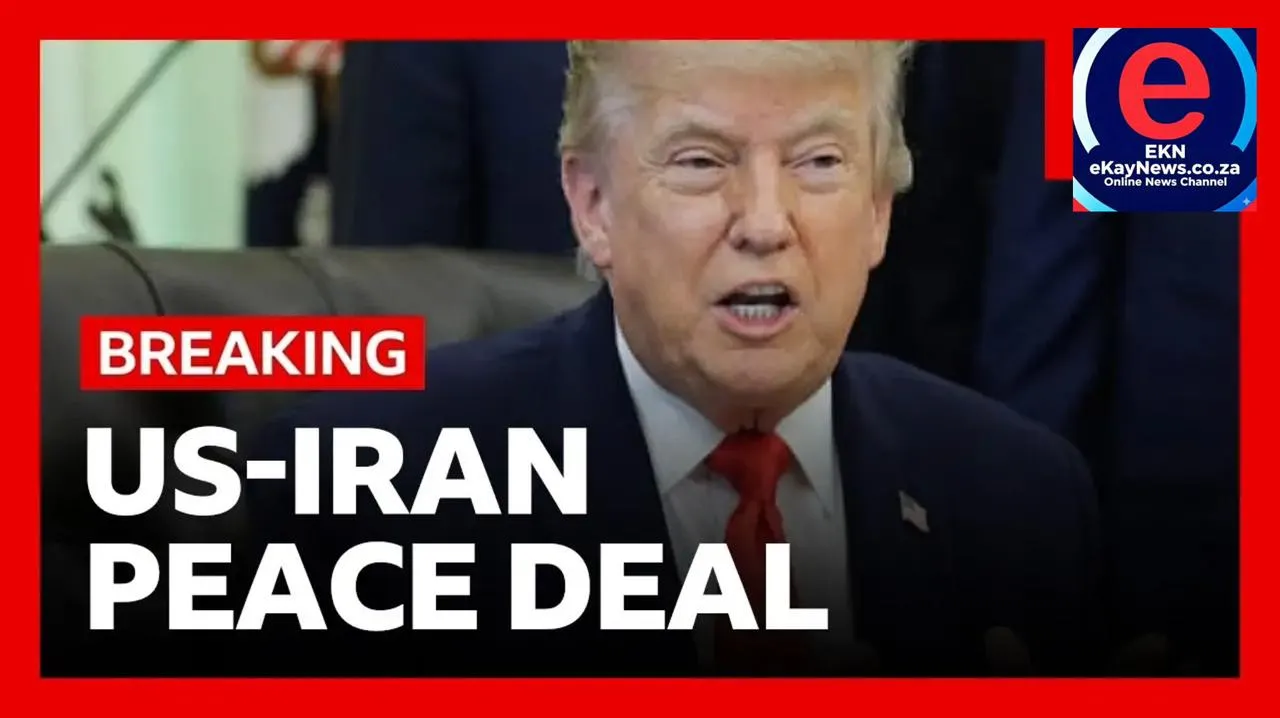
US-Iran peace deal announced with ‘permanent’ end to military action
US-Iran Peace Deal Marks Permanent End to Military Action has emerged as one of the most significant diplomatic breakthroughs in recent Middle East history, with Washington and Tehran agreeing to halt military operations and pursue a path toward long-term stability.
The agreement, announced through mediation efforts led by Pakistan and supported by regional partners, marks an apparent end to more than three months of escalating conflict that threatened to engulf much of the Middle East. Leaders from both nations confirmed the development, while an official signing ceremony was scheduled to take place in Switzerland on June 19.
The announcement has been welcomed globally, with diplomats, international organizations, and world leaders expressing hope that the deal could pave the way for lasting peace and renewed cooperation in a region that has experienced decades of conflict.
US-Iran Peace Deal Signals Historic Diplomatic Breakthrough
The newly announced US-Iran peace deal represents a major shift in relations between two countries that have spent decades in political and military confrontation.
The agreement reportedly includes an immediate cessation of military operations on all fronts, including Lebanon, where tensions involving regional allies had threatened to widen the conflict. The ceasefire announcement was first made by Pakistani Prime Minister Shehbaz Sharif before being confirmed by both Washington and Tehran.
According to officials involved in the mediation process, the agreement seeks to create conditions for broader negotiations aimed at resolving outstanding disputes and establishing mechanisms to prevent future military confrontations.
For many observers, the deal represents a rare moment of diplomatic success amid a period of heightened geopolitical instability.
Pakistan’s Role in Mediation Efforts
Pakistan played a central role in facilitating dialogue between the two sides.
Prime Minister Shehbaz Sharif announced that both nations had agreed to an “immediate and permanent termination” of military operations. He also acknowledged the contributions of leaders from Qatar, Saudi Arabia, and Turkey, who reportedly supported the mediation process.
The involvement of multiple regional actors underscores the importance of collective diplomacy in addressing complex international disputes.
Analysts note that successful mediation often requires trust from both parties, and Pakistan’s position enabled it to serve as an effective intermediary during negotiations.
Donald Trump Declares Agreement Complete
US President Donald Trump publicly celebrated the agreement, describing it as a completed deal between the United States and the Islamic Republic of Iran.
In a social media post, Trump declared that military hostilities had come to an end and announced measures related to maritime trade routes in the Persian Gulf.
The president’s comments reflected optimism that the agreement would reduce tensions and create opportunities for economic recovery across the region.
Strait of Hormuz Reopened for Global Shipping
One of the most significant aspects of the announcement involved the reopening of the Strait of Hormuz, one of the world’s most strategically important maritime routes.
The waterway serves as a critical channel for global energy supplies, with a substantial percentage of the world’s oil exports passing through it each day.
Trump stated that restrictions affecting shipping through the Strait of Hormuz would be lifted, allowing commercial vessels to resume operations without disruption.
The announcement immediately attracted attention from global energy markets, shipping companies, and governments concerned about the security of international trade routes.
Economists believe that uninterrupted access to the Strait of Hormuz could help stabilize energy prices and improve confidence among investors.
Iran Welcomes Immediate End to Conflict
Iranian officials also confirmed the agreement and described it as a significant step toward ending hostilities.
Deputy Foreign Minister Kazem Gharibabadi stated that the deal would bring an immediate end to the war and establish a framework for future discussions.
According to Iranian authorities, both sides are expected to hold additional talks within two months in pursuit of a comprehensive final agreement.
The commitment to continued dialogue suggests that while military operations may have ended, important political and security issues remain unresolved.
Tehran Seeks Long-Term Stability
Iran has consistently emphasized the importance of preserving regional stability while protecting its national interests.
Officials in Tehran argue that diplomacy offers the best path toward resolving longstanding disagreements with Washington and reducing the risk of future conflicts.
The current agreement could provide an opportunity for both countries to rebuild communication channels that have often been strained by decades of mutual distrust.
Many political analysts view the peace deal as a potential turning point in US-Iran relations.
Iran Nuclear Negotiations Remain Central
Although the ceasefire has generated optimism, experts believe that Iran nuclear negotiations will remain one of the most challenging aspects of future discussions.
The United States has long expressed concerns about Iran’s nuclear program, particularly regarding highly enriched uranium and nuclear development activities.
At the same time, Iran maintains that its nuclear program is intended for peaceful purposes and has repeatedly called for the removal of sanctions.
Frozen Assets Could Support Negotiations
Reports from Iranian media suggest that the agreement includes provisions related to frozen Iranian assets held abroad.
According to these reports, billions of dollars in Iranian assets could be released before formal negotiations begin.
The reported memorandum of understanding outlines a phased approach to asset releases during a 60-day negotiation period.
While details remain unconfirmed by US officials, such measures could play a role in building trust between the two nations.
Observers note that economic incentives are often critical components of successful diplomatic agreements.
Middle East Conflict Could Enter New Phase
The peace agreement has raised hopes that the broader Middle East conflict could enter a new and more stable phase.
For months, escalating tensions involving multiple regional actors had increased fears of a wider war.
The conflict affected not only the United States and Iran but also several neighboring countries and allied groups throughout the region.
The ceasefire announcement therefore carries significance far beyond bilateral relations between Washington and Tehran.
Impact on Lebanon and Regional Security
Lebanon was among the areas directly affected by recent tensions.
Just hours before the agreement was announced, concerns had emerged regarding potential retaliation following military actions involving Hezbollah.
The ceasefire’s inclusion of all fronts, including Lebanon, is considered a key component of efforts to prevent further escalation.
Regional security experts believe that maintaining calm in Lebanon will be essential to preserving the broader peace process.
Success could encourage similar diplomatic initiatives elsewhere in the region.
International Community Welcomes Agreement
Governments and international organizations across the world responded positively to the announcement.
Many leaders described the deal as an important step toward reducing violence and promoting dialogue.
The international community has repeatedly urged both nations to pursue peaceful solutions rather than military confrontation.
United Nations Calls It a Critical Step
António Guterres welcomed the agreement and described it as a critical step toward resolving conflict in the Middle East.
The United Nations has long advocated for diplomatic engagement as the preferred method of addressing disputes involving regional and global powers.
Officials at the organization expressed hope that the agreement would create momentum for additional peace initiatives.
International observers believe that sustained diplomacy will be essential to transforming the ceasefire into a durable and lasting settlement.
Economic Implications of the US-Iran Peace Deal
Beyond security concerns, the US-Iran peace deal could have significant economic consequences.
Financial markets generally respond positively to reductions in geopolitical risk, particularly when major energy-producing regions are involved.
The reopening of the Strait of Hormuz and the possibility of increased trade activity could strengthen economic confidence worldwide.
Energy analysts predict that greater stability in the region may help moderate oil price volatility.
Investors Watching Future Developments
Investors and businesses will closely monitor future negotiations between Washington and Tehran.
The success of the agreement will likely depend on whether both sides can implement their commitments and resolve remaining disputes.
A durable settlement could encourage investment, improve trade relations, and contribute to broader economic growth across the Middle East.
YOU MAY LIKE:
Conclusion
US-Iran Peace Deal Marks Permanent End to Military Action represents a potentially historic moment for international diplomacy and regional security. By agreeing to halt military operations and pursue further negotiations, both countries have opened the door to a future that prioritizes dialogue over conflict.
While significant challenges remain, including complex Iran nuclear negotiations, the agreement has generated hope that the long-running Middle East conflict may move toward a more peaceful chapter. The reopening of the Strait of Hormuz, international support for the process, and commitments from both governments suggest that the opportunity for lasting stability is real.
As leaders prepare for the official signing ceremony and future talks, the world will be watching closely to see whether this landmark US-Iran peace deal can deliver the lasting peace that many have sought for decades.
References
- Reuters. (2026, June 15). US, Iran reach preliminary agreement to end war, signing set for Friday. Available at:
https://www.reuters.com/world/asia-pacific/us-iran-reach-peace-deal-signing-set-friday-pakistan-says-2026-06-14/ - Reuters. (2026, June 15). Trump says the US and Iran have signed a deal to end the war. Available at:
https://www.reuters.com/world/iran-war-live-trump-says-us-tehran-have-reached-peace-deal-2026-06-15/
Keep the News Flowing – Buy the Team a Coffee! ☕

Love the updates? Help us stay on the beat! Whether it’s a quick one-time donation or a monthly subscription, your support keeps the eKayNews lights on and the stories flowing.
-
Secure & Simple: We use PayFast for total transaction peace of mind.
-
Make an Impact: Every “coffee” you send directly supports our newsroom.
Your Brand, Our Audience: Let’s Make Headlines Together! 🚀

Looking for real engagement? At eKayNews, we don’t just share news—we build connections. Whether you’re a local startup or a growing business, our advertising packages are designed to put your brand in front of a loyal, highly engaged audience.
Choose Your Spotlight:
-
Link Booster (R2,500): Dominate the feed with 7 links across 7 days.
-
Permanent Feature (R4,000): Your story, hosted on our site for a lifetime.
-
Prime Visibility (R5,000): Claim the top spot with a 30-day homepage banner.
Ready to grow? 📩 Email us: info@ekaynews.co.za 💬 WhatsApp us: +27 71 096 1185
Get Connected:
-
Facebook & X (Twitter) : Follow us for real-time updates and community debates.
-
WhatsApp Channel: Get exclusive alerts sent directly to your phone.
Stay informed, ahead, connected with the eKayNews family!