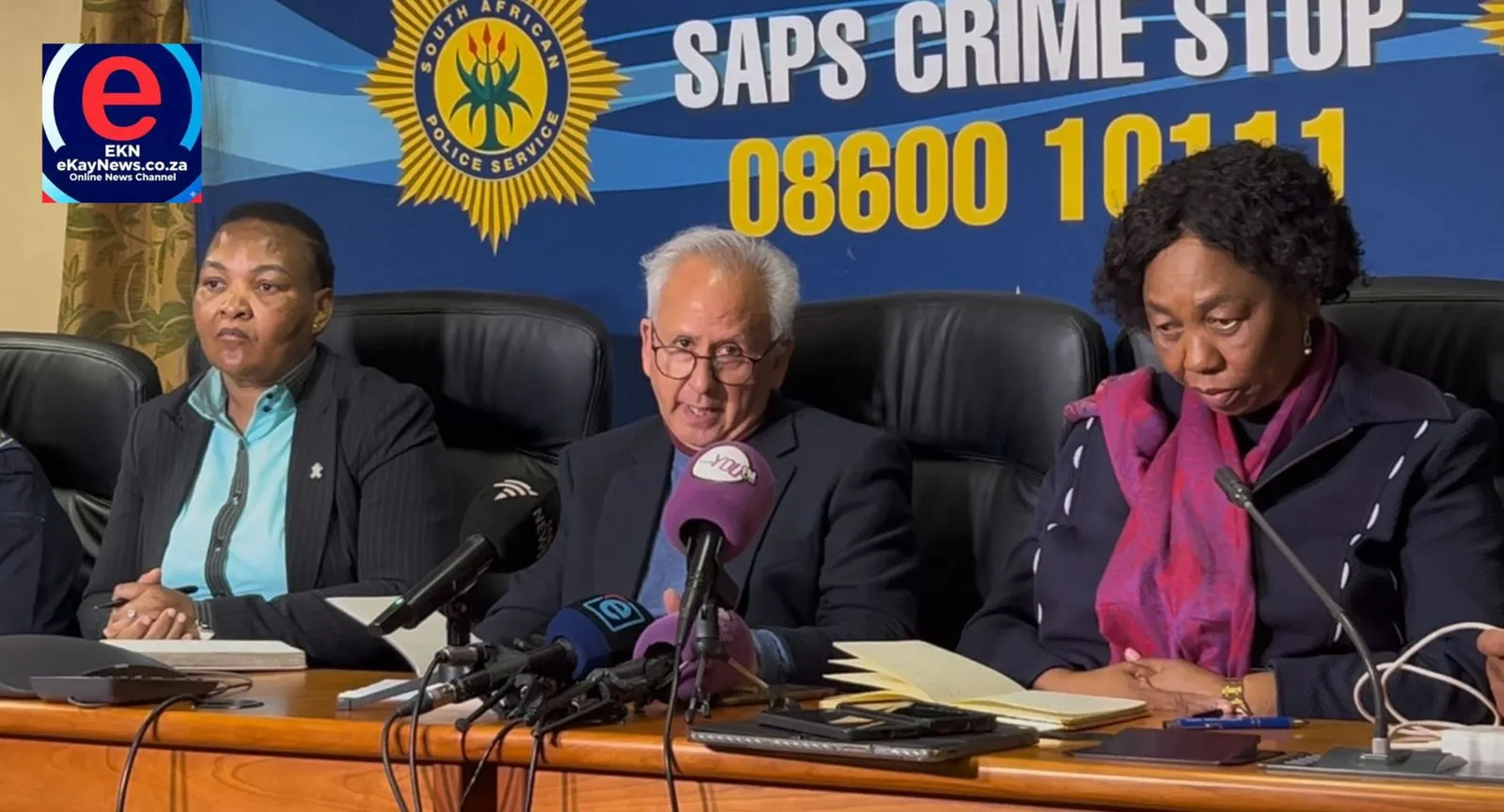
Police Minister Sets the Record Straight on Traditional Weapons at Protests
Police Minister issue warns on Traditional Weapons at Protests as South African authorities move to strengthen enforcement measures against armed demonstrations. The warning comes amid growing concerns about public safety during marches and gatherings, with officials emphasizing that constitutional rights to protest must be exercised peacefully and without weapons.
The South African government has reiterated that while citizens have the right to assemble, demonstrate, and picket, all protests must remain unarmed. This includes traditional weapons such as the isagila (knobkerrie) and ihawu (shield), which authorities say cannot be carried during public demonstrations regardless of cultural significance.
The statement from the Police Minister follows renewed directives from the South African Police Service (SAPS) and the National Joint Operational and Intelligence Structure (NATJOINTS), both of which have adopted a zero-tolerance approach to weapons at protests.
Police Minister Clarifies the Law on Protest Weapons
The Police Minister has stressed that South Africa’s Constitution guarantees the right to peaceful assembly, but that right comes with clear limitations. Citizens may gather and express their views, but they may not do so while carrying weapons that could be used to intimidate, threaten, or harm others.
According to authorities, traditional weapons often seen during cultural ceremonies cannot be brought to protest marches or demonstrations. Law enforcement agencies argue that the presence of such weapons creates safety risks and increases the possibility of violence during public gatherings.
The clarification seeks to eliminate confusion among protest organizers and participants who may believe that cultural or traditional items are exempt from existing legislation.
Understanding the Dangerous Weapons Act
One of the key legal frameworks governing public gatherings is the Dangerous Weapons Act of 2013.
The Act prohibits the possession of dangerous weapons under circumstances that may raise reasonable suspicion that the weapon could be used for unlawful purposes. Authorities say protests and demonstrations are environments where weapons can easily contribute to intimidation, public violence, or conflict.
Examples of prohibited weapons at demonstrations include:
- Firearms
- Airguns
- Knobkerries (Isagila)
- Traditional shields (Ihawu)
- Spears
- Machetes
- Knives carried for offensive purposes
- Any object capable of causing serious bodily harm
Law enforcement agencies maintain that these restrictions are necessary to protect both protesters and members of the public.
SAPS Protest Rules and Enforcement Measures
The latest warning also highlights stricter enforcement of SAPS Protest Rules.
Police officials have indicated that officers will take proactive action against anyone found carrying weapons during demonstrations. Unlike previous situations where officers sometimes exercised discretion to avoid escalating tensions, authorities are now emphasizing immediate intervention.
SAPS says all demonstrations must comply with legal requirements and that officers will not make exceptions based on cultural or political considerations.
Zero-Tolerance Approach
The zero-tolerance directive means:
- Protesters carrying weapons may be arrested immediately.
- Dangerous weapons may be confiscated.
- Organizers may face scrutiny if they fail to maintain order.
- Criminal charges may be pursued against violators.
- Gatherings may be dispersed if public safety is threatened.
Authorities argue that a firm approach is necessary to prevent violence and maintain public confidence in lawful demonstrations.
Peaceful Assembly South Africa: Constitutional Rights and Responsibilities
South Africa’s Constitution remains one of the strongest defenders of democratic rights globally.
Section 17 of the Constitution states that everyone has the right, peacefully and unarmed, to assemble, demonstrate, picket, and present petitions.
However, constitutional experts point out that the phrase “peacefully and unarmed” is critical. The right to protest is protected only when participants remain peaceful and do not carry weapons.
Government officials have emphasized that constitutional freedoms are accompanied by responsibilities. Citizens are encouraged to exercise their democratic rights while respecting public safety and the rule of law.
Why Authorities Are Taking a Firmer Stance
The decision to strengthen enforcement comes amid concerns about violent incidents associated with some demonstrations in recent years.
Officials argue that weapons at protests can:
- Escalate tensions quickly.
- Increase the likelihood of injuries.
- Intimidate members of the public.
- Create challenges for crowd-control operations.
- Undermine the legitimacy of peaceful demonstrations.
Authorities believe that removing weapons from gatherings reduces risks and helps ensure that protests remain focused on their intended message.
Responsibilities of Protest Organizers
Under South African law, organizers carry significant responsibility for ensuring demonstrations are conducted lawfully.
The Police Minister has called on organizers to play a proactive role in maintaining order and preventing violence.
What Organizers Must Do
Organizers are expected to:
Communicate with Municipal Authorities
Organizers must notify local municipalities and relevant authorities about planned demonstrations. This allows officials to coordinate logistics, traffic management, and security arrangements.
Appoint Marshals
Marshals help maintain discipline among participants and ensure that protest activities remain orderly.
Educate Participants
Organizers must clearly communicate rules to supporters, including the prohibition on carrying weapons.
Promote Peaceful Conduct
Leaders should encourage participants to engage respectfully and avoid actions that could provoke confrontation or violence.
Authorities say effective organization is one of the most important factors in ensuring successful and peaceful demonstrations.
Traditional Weapons and Cultural Significance
The debate surrounding traditional weapons is particularly sensitive in South Africa due to the cultural significance attached to certain items.
Many communities regard traditional weapons as symbols of heritage, identity, and cultural pride. Knobkerries, shields, and spears are commonly used during traditional ceremonies, cultural celebrations, and heritage events.
However, government officials emphasize that cultural recognition does not override public safety laws during protests.
The Police Minister has clarified that while traditional weapons remain important cultural symbols, their presence at political marches and demonstrations falls under legal restrictions designed to protect public order.
Balancing Culture and Public Safety
Authorities say the objective is not to undermine cultural traditions but to ensure demonstrations remain safe for everyone involved.
Legal experts note that cultural rights and constitutional rights can coexist, provided they are exercised within the boundaries of the law.
Many traditional leaders have also encouraged communities to respect protest regulations while continuing to celebrate cultural heritage through appropriate channels.
NATJOINTS and National Security Coordination
The National Joint Operational and Intelligence Structure (NATJOINTS) plays a central role in coordinating security responses during major events and demonstrations.
The body brings together representatives from:
- SAPS
- Intelligence agencies
- Emergency services
- Traffic authorities
- Government departments
By coordinating information and operational planning, NATJOINTS aims to identify risks before they escalate into security threats.
The latest directive reflects a broader effort to ensure that demonstrations remain peaceful and do not pose risks to public safety or national stability.
Public Reaction to the New Warning
Reaction to the Police Minister’s warning has been mixed.
Supporters of the directive argue that weapons have no place in peaceful demonstrations and that stricter enforcement is necessary to prevent violence.
Others believe authorities should engage more closely with communities to ensure that cultural concerns are addressed appropriately.
Civil society organizations have generally supported efforts to reduce violence while emphasizing the importance of protecting constitutional rights.
Many legal analysts believe the government’s position aligns with existing legislation and constitutional requirements.
Looking Ahead
As South Africa continues to experience active civic participation and public demonstrations, authorities are likely to maintain their firm stance on weapons at protests.
The Police Minister’s warning serves as a reminder that the right to protest remains protected, but only when exercised peacefully and within the law.
SAPS and NATJOINTS have made it clear that future demonstrations will be closely monitored and that anyone carrying traditional or dangerous weapons during protests may face arrest and prosecution.
For organizers and participants, the message is straightforward: demonstrations are welcome in South Africa’s democracy, but they must remain peaceful, lawful, and unarmed.
YOU MAY LIKE:
Conclusion
The Police Minister issue warns on Traditional Weapons at Protests directive underscores South Africa’s commitment to balancing constitutional freedoms with public safety. While citizens retain the right to assemble and voice their concerns, authorities insist that protests must remain unarmed.
With stricter enforcement measures now in place, organizers and participants are being urged to comply fully with SAPS Protest Rules, respect the Dangerous Weapons Act, and uphold the principles of Peaceful Assembly South Africa. As the country continues to navigate important social and political issues, ensuring safe and lawful demonstrations remains a key priority for law enforcement and government officials alike.
References (Mainstream and Authoritative Sources)
- South African Government – Dangerous Weapons Act, 2013
https://www.gov.za/documents/dangerous-weapons-act-15-2013
Covers the legal framework regulating dangerous weapons and restrictions applicable at public gatherings. - South African Police Service (SAPS) – Regulation of Gatherings Act 205 of 1993
https://www.saps.gov.za/resource_centre/acts/downloads/juta/a205of1993.pdf
Official legislation governing public demonstrations, gatherings, and the responsibilities of organizers and participants. - South African Human Rights Commission (SAHRC) – Community Protest Guide
https://www.sahrc.org.za/home/21/files/SAHRC%20Community%20Protest%20Pamphlet%20revised%2020%20March%202018.pdf
Keep the News Flowing – Buy the Team a Coffee! ☕

Love the updates? Help us stay on the beat! Whether it’s a quick one-time donation or a monthly subscription, your support keeps the eKayNews lights on and the stories flowing.
-
Secure & Simple: We use PayFast for total transaction peace of mind.
-
Make an Impact: Every “coffee” you send directly supports our newsroom.
Your Brand, Our Audience: Let’s Make Headlines Together! 🚀

Looking for real engagement? At eKayNews, we don’t just share news—we build connections. Whether you’re a local startup or a growing business, our advertising packages are designed to put your brand in front of a loyal, highly engaged audience.
Choose Your Spotlight:
-
Link Booster (R2,500): Dominate the feed with 7 links across 7 days.
-
Permanent Feature (R4,000): Your story, hosted on our site for a lifetime.
-
Prime Visibility (R5,000): Claim the top spot with a 30-day homepage banner.
Ready to grow? 📩 Email us: info@ekaynews.co.za 💬 WhatsApp us: +27 71 096 1185
Get Connected:
-
Facebook & X (Twitter) : Follow us for real-time updates and community debates.
-
WhatsApp Channel: Get exclusive alerts sent directly to your phone.
Stay informed, ahead, connected with the eKayNews family!