European leaders criticize Trump’s foreign policies as Greenland tensions loom over Davos
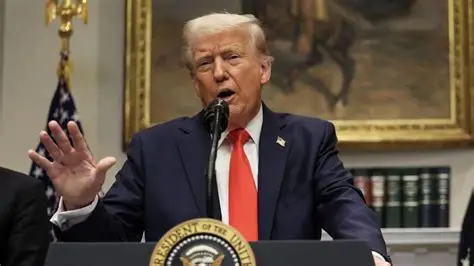
European leaders criticize Trump’s foreign policies as Greenland tensions loom over Davos, setting the tone for a tense World Economic Forum as global leaders clash over international law, sovereignty and geopolitical stability. Remarks made by senior European figures reflect growing unease over United States foreign policy positions, particularly former President Donald Trump’s renewed rhetoric regarding Greenland.
As world leaders, business executives and policymakers gathered in Davos, Switzerland, the issue of Greenland unexpectedly emerged as a focal point of debate, highlighting deeper divisions between the US and its European allies.
Macron response to Trump dominates Davos discussions
One of the strongest reactions came from French President Emmanuel Macron, whose comments were widely interpreted as a direct rebuke of Trump’s foreign policy approach. Speaking at the World Economic Forum, Macron warned of a world order “where international law is trampled under foot,” a statement many analysts linked directly to Trump’s stance on Greenland.
The Macron response to Trump underscored European frustration with what leaders see as unilateral decision-making and disregard for established diplomatic norms. While Macron did not mention Trump by name during his address, his remarks drew immediate attention amid reports that Trump had once again raised the idea of acquiring Greenland.
European diplomats at Davos described the moment as emblematic of broader transatlantic tensions that have resurfaced with Trump’s return to the political spotlight.
Greenland tensions at Davos raise sovereignty concerns
The issue of Greenland took centre stage after Trump publicly reiterated his interest in the Arctic island, reigniting controversy that first emerged during his presidency. Although Greenland is an autonomous territory within the Kingdom of Denmark, Trump’s remarks were viewed by many European leaders as dismissive of sovereignty and international agreements.
These Greenland tensions at Davos were further amplified when Trump shared screenshots of private messages exchanged with world leaders on social media. One message, reportedly from Macron, read: “I do not understand what you are doing on Greenland.” The public release of such communications sparked criticism over diplomatic decorum and trust between allies.
Greenland’s Prime Minister also weighed in, calling for respect for the global order and reaffirming that Greenland’s future would be determined by its people, not foreign powers.
European leaders criticize Trump foreign policy openly
Across Davos, a growing chorus of voices echoed concern about the direction of US foreign policy. European Commission President Ursula von der Leyen stated that Europe must prepare for “a new form of European independence” in response to mounting geopolitical shocks.
Her remarks reinforced the view that European leaders criticize Trump foreign policy not only on Greenland but on broader issues such as global cooperation, climate commitments and security alliances.
Several European officials privately expressed fears that unilateral actions could weaken global institutions designed to prevent conflict and promote cooperation.
NATO unity concerns grow amid Greenland dispute
Beyond Europe, reactions from other global players highlighted the wider implications of the standoff. Russian Foreign Minister Sergey Lavrov commented that divisions over Greenland could threaten NATO’s “continued existence as a unified bloc.”
These statements added fuel to existing NATO unity concerns, particularly at a time when the alliance faces ongoing challenges related to the war in Ukraine, energy security and defence spending commitments.
Analysts warn that public disagreements between major NATO members could be exploited by rival powers seeking to undermine Western cohesion.
Why Greenland matters geopolitically
Greenland’s strategic importance lies in its location and resources. The Arctic region is becoming increasingly significant due to melting ice caps, opening new shipping routes and access to valuable minerals.
For the US, Greenland represents a strategic military and economic interest. For Europe, however, the manner in which the issue is raised matters as much as the island itself. European leaders argue that negotiations must respect sovereignty, international law and diplomatic processes.
This clash of perspectives explains why European leaders criticize Trump’s foreign policies as Greenland tensions loom over Davos, framing the issue as a test of global governance norms.
Davos reflects wider geopolitical uncertainty
The World Economic Forum has long been a platform for addressing global challenges, and this year’s gathering was no exception. Discussions on economic recovery, climate change and technological innovation were frequently overshadowed by geopolitical tensions.
Speakers repeatedly warned that the erosion of trust between allies could have lasting economic and security consequences. The Greenland debate served as a reminder that political decisions made by major powers reverberate far beyond national borders.
What comes next after Davos?
Despite the tensions, Trump has reportedly agreed to participate in discussions regarding Greenland later this week. European officials hope dialogue can de-escalate the situation and restore diplomatic norms.
Whether these talks will ease concerns remains uncertain. What is clear, however, is that European leaders criticize Trump’s foreign policies as Greenland tensions loom over Davos not as an isolated issue, but as part of a broader debate about leadership, cooperation and the future of the global order.
YOU MAY LIKE:
Trump threatens to put tarrifs on countries that don’t back U.S control of Greenland
Conclusion: A test for transatlantic relations
As Davos draws to a close, the fallout from the Greenland controversy continues to ripple through diplomatic circles. The strong reactions from Europe signal that allies are prepared to push back publicly when they believe core principles are at stake.
With NATO unity concerns, rising geopolitical competition and shifting power dynamics, the debate sparked at Davos may shape international relations well beyond the conference halls.
For now, the message from Europe is clear: respect for international law and collective decision-making remains non-negotiable in an increasingly uncertain world.
Mainstream media references
- Trump’s Greenland push turns Davos into diplomatic crisis — The Washington Post reports that President Trump’s renewed push on Greenland has upended the World Economic Forum agenda, prompting reactions from European leaders and broader geopolitical concern.
Kindly consider to support eKayNews, Buy Us a Coffee & Keep the News Flowing!

Love what we do? You can now support eKayNews directly! Your contributions empower us to deliver the breaking news, sports, and local updates you trust.
Ways to Support:
-
Subscribe: Choose any amount (cancel anytime).
-
Virtual Coffee: A quick, once-off donation to say thanks.
Note: Payments are 100% secure via PayFast. We never see your banking details.
To our amazing readers: Your support fills us with gratitude. You are the reason we can keep doing this every day. Thank you for being a vital part of the eKayNews family!
We’re feeling the love at eKayNews!

Facebook: [eKayNews on Facebook] X (Twitter): [eKayNews on X] WhatsApp: [Follow the eKayNews WhatsApp Channel] Join our inner circle for real-time news alerts!
📢 Advertising Packages on www.eKayNews.co.za
Package 1. Link Booster: We add 7 links to 7 articles over 7 days – R2,500
Package 2. Permanent Feature: Sponsored Blog Article (hosted permanently) – R4,000
Package 3. Prime Visibility: Home Page Banner Ad (30 days) – R5,000
Book now: Email info@ekaynews.co.za or WhatsApp us on +27710961185