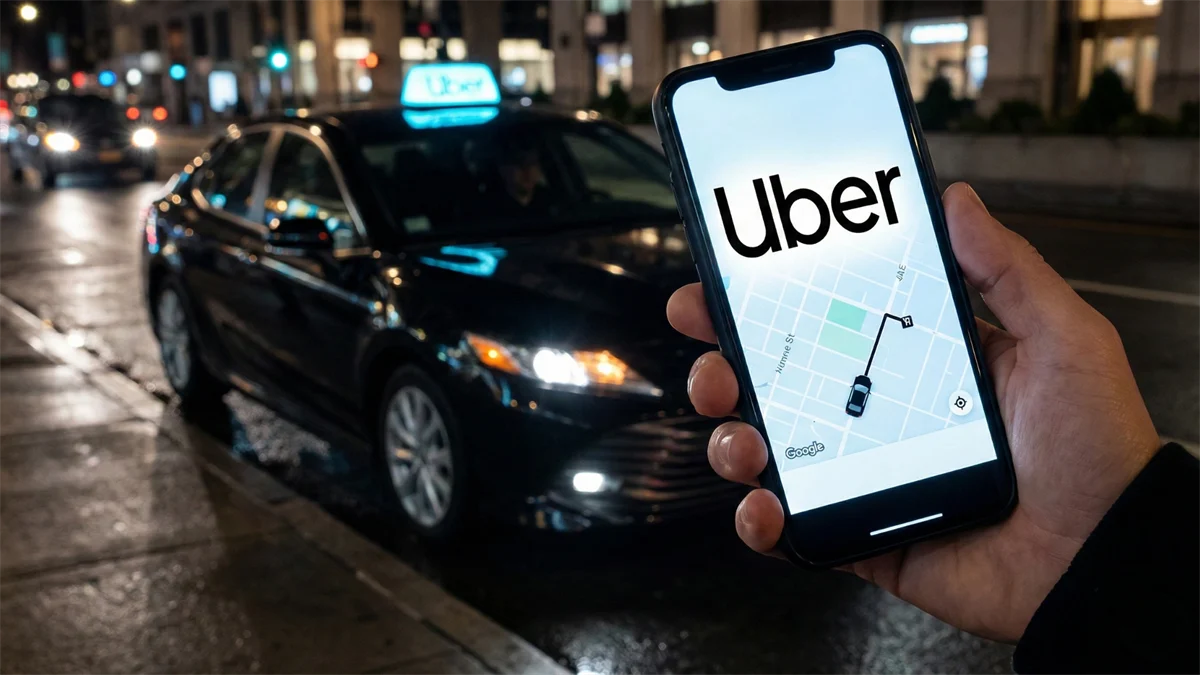
Fake Ubers forcing people to pay R4,200 for a single trip in South Africa
Fake Ubers forcing people to pay R4,200 for a single trip have become a growing concern for travellers in South Africa, particularly those using airports to begin or end their journeys. Reports of scammers posing as legitimate Uber drivers have prompted fresh warnings from transport authorities and airport operators, urging passengers to remain vigilant and only use authorised e-hailing services.
According to reports from frequent travellers, unsuspecting passengers have been tricked into accepting rides from fraudulent drivers pretending to represent Uber. In some cases, customers expecting to pay around R420 for a journey have instead discovered charges of R4,200 after checking their bank accounts.
The alarming incidents have highlighted the importance of passenger awareness and renewed calls for stricter measures to combat Fake Uber scams South Africa.
Fake Uber scams South Africa on the rise
Concerns over Fake Uber scams South Africa have intensified following reports from travellers who claim scammers are operating around major airports.
Speaking during an interview with Cape Talk, frequent traveller Johan van Schalkwyk warned that fraudulent drivers were targeting tourists and local passengers by pretending to offer legitimate Uber services.
“They are offering the services like they were an Uber to unsuspecting people. They are scamming them,” Van Schalkwyk said.
He explained that online travel forums and social media groups contain numerous accounts from visitors who experienced similar scams while travelling in South Africa.
Many victims reportedly only realised they had been overcharged after arriving at their destination and checking their banking notifications.
Airport Uber fraud targeting unsuspecting travellers
Victims charged thousands for short trips
One of the most concerning aspects of the growing Airport Uber fraud problem is the size of the fraudulent charges.
According to Van Schalkwyk, many travellers expected to pay only a few hundred rand but later discovered charges exceeding R4,000.
“The thing you read often is someone saying, ‘My trip should have been R420, but I got to the hotel and connected to the Wi-Fi to see I’ve been charged R4,200,'” he explained.
While the exact method used by scammers remains unclear, the reports suggest that victims may unknowingly share their payment card details or use unauthorised payment systems outside the official Uber application.
Unlike legitimate Uber trips, all official fares should be calculated and processed directly through the app.
How the scams may be happening
Although authorities have not confirmed the exact techniques being used, transport experts believe scammers may persuade passengers to:
- Accept rides without booking through the official Uber app.
- Provide bank card details directly to drivers.
- Make payments using unauthorised card machines.
- Trust individuals falsely claiming to be official Uber representatives.
These methods allow fraudsters to bypass the security protections built into legitimate e-hailing platforms.
Passengers are therefore encouraged never to share banking information directly with drivers.
Cape Town International Airport strengthens security
Passenger safety remains the priority
In response to concerns about Airport Uber fraud, Cape Town International Airport has expanded several passenger safety initiatives.
Airport operator Airports Company South Africa (ACSA) says protecting travellers remains its highest priority.
According to ACSA, significant improvements have recently been introduced to help passengers identify authorised transport services while avoiding unauthorised operators.
These measures include enhanced signage, better wayfinding systems and improved security visibility throughout passenger arrival areas.
The airport has also launched its Travel Safely passenger tunnel, providing clear guidance from international arrivals to approved transport collection zones.
Airports Company South Africa (ACSA) responds
Airports Company South Africa (ACSA) confirmed that all airports under its management continue strengthening awareness campaigns aimed at protecting travellers.
The organisation said new initiatives include:
- Passenger safety signage throughout domestic and international arrivals.
- Increased security patrols in key passenger areas.
- Digital safety messages displayed on airport information screens.
- Printed awareness pamphlets.
- Regular public announcements every 15 minutes reminding passengers to use authorised taxis only.
- Strategically positioned authorised taxi kiosks.
- Ongoing safety messaging across digital and social media platforms.
ACSA believes these improvements will help passengers make informed decisions while reducing opportunities for scammers.
E-hailing safety tips for travellers
Protect yourself from fake Uber drivers
Following the recent reports, experts have shared several important E-hailing safety tips for passengers using airport transport.
These include:
Book only through official apps
Always request rides using the official Uber or other recognised e-hailing application.
Never accept offers from individuals approaching you inside airport terminals or parking areas.
Confirm vehicle details
Before entering the vehicle, compare:
- Registration number.
- Vehicle make and model.
- Driver photograph.
- Driver’s name.
All information must match exactly with the details displayed inside the app.
Use designated pickup areas
Passengers should proceed only to official Ride-App Pick-Up Areas indicated by airport signage.
At Cape Town International Airport, ACSA directs travellers to the designated collection point on the Ground Floor of Parkade 1.
Never share payment information
Legitimate Uber drivers never require passengers to hand over their bank cards or enter payment information outside the official app.
Any request to process payment separately should immediately raise suspicion.
Travellers urged to ignore unsolicited offers
One of ACSA’s strongest recommendations is that passengers should never accept transport offers from strangers approaching them inside or outside airport terminals.
Fraudsters often identify tired travellers arriving after long flights and attempt to convince them they are legitimate transport providers.
Airport officials stress that authorised taxi services operate through official kiosks or designated pickup zones.
Ignoring unsolicited offers significantly reduces the risk of becoming a victim.
Calls for better regulation
Van Schalkwyk believes authorities could further improve passenger safety by creating dedicated areas for legitimate independent taxi operators.
He argued that clearly identifying approved transport providers would reduce confusion for visitors unfamiliar with South African airports.
“Make it clear that this is an approved taxi pickup area. That improves the situation, and it gives those legitimate drivers a real place to make money and to do business,” he said.
Many industry observers agree that better regulation, combined with increased passenger awareness, could help reduce transport-related fraud.
Why tourists are particularly vulnerable
International visitors are often unfamiliar with South African airports and local transport systems.
Scammers frequently target travellers who:
- Have just arrived after long international flights.
- Are unfamiliar with pickup procedures.
- Need immediate transport to hotels.
- May not have mobile internet access immediately after landing.
These factors create opportunities for fraudsters pretending to provide legitimate transport services.
Airport operators therefore encourage visitors to connect to airport Wi-Fi if necessary before requesting rides through official apps.
Passenger awareness remains the strongest defence
Although airports continue investing in additional security measures, experts agree that informed passengers remain the best defence against fraud.
Understanding how legitimate e-hailing services operate makes it much more difficult for criminals to deceive travellers.
Passengers should remain cautious whenever approached unexpectedly by individuals offering transportation.
If anything appears suspicious, travellers should immediately seek assistance from airport security personnel or official information desks.
YOU MAY LIKE:
Gautrain to challenge Uber and Bolt with taxi e-hailing platform
Conclusion
Fake Ubers forcing people to pay R4,200 for a single trip have highlighted the growing threat posed by transport scammers operating around South African airports. Reports of Fake Uber scams South Africa have prompted renewed warnings from Airports Company South Africa (ACSA) and increased security measures at Cape Town International Airport to protect travellers.
By following simple E-hailing safety tips, including booking rides only through official apps, verifying vehicle details, using designated pickup areas and avoiding unsolicited transport offers, passengers can greatly reduce their risk of becoming victims of Airport Uber fraud. As authorities continue strengthening awareness campaigns, informed travellers remain the strongest defence against these increasingly sophisticated scams.
References (Mainstream Media)
- BusinessTech – Fake Ubers forcing people to pay R4,200 for a single trip in South Africa
BusinessTech – Fake Ubers forcing people to pay R4,200 for a single trip in South Africa - CapeTalk – CapeTalk interview discussing fake Uber scams at South African airports with Johan van Schalkwyk
CapeTalk - TopAuto – Warning over fake Uber drivers at South African airports
TopAuto – Warning over fake Uber drivers at South African airports - MyBroadband – Fake Uber drivers scamming people out of thousands of rands in South Africa
MyBroadband – Fake Uber drivers scamming people out of thousands of rands in South Africa
Keep the News Flowing – Buy the Team a Coffee! ☕

Love the updates? Help us stay on the beat! Whether it’s a quick one-time donation or a monthly subscription, your support keeps the eKayNews lights on and the stories flowing.
-
Secure & Simple: We use PayFast for total transaction peace of mind.
-
Make an Impact: Every “coffee” you send directly supports our newsroom.
Your Brand, Our Audience: Let’s Make Headlines Together! 🚀

Looking for real engagement? At eKayNews, we don’t just share news—we build connections. Whether you’re a local startup or a growing business, our advertising packages are designed to put your brand in front of a loyal, highly engaged audience.
Choose Your Spotlight:
-
Link Booster (R2,500): Dominate the feed with 7 links across 7 days.
-
Permanent Feature (R4,000): Your story, hosted on our site for a lifetime.
-
Prime Visibility (R5,000): Claim the top spot with a 30-day homepage banner.
Ready to grow? 📩 Email us: info@ekaynews.co.za 💬 WhatsApp us: +27 71 096 1185
Get Connected:
-
Facebook & X (Twitter) : Follow us for real-time updates and community debates.
-
WhatsApp Channel: Get exclusive alerts sent directly to your phone.
Stay informed, ahead, connected with the eKayNews family!