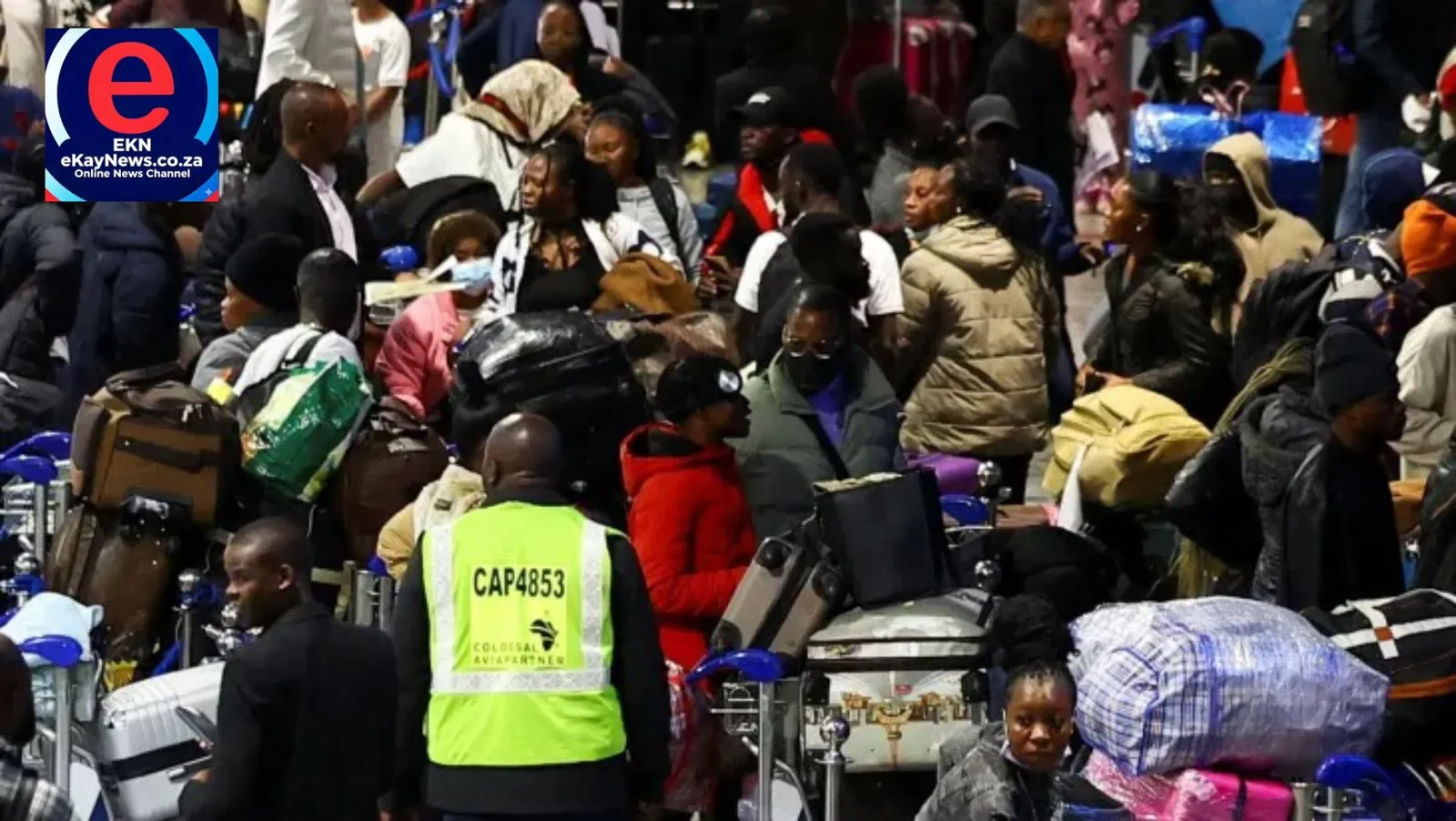
Ghana repatriates citizens fearful of xenophobic attacks
Ghana repatriates citizens fearful of xenophobic attacks as tensions surrounding immigration continue to rise in South Africa. Hundreds of Ghanaian nationals have now returned home through a voluntary evacuation programme organised by the Ghanaian government amid fears that anti-immigrant protests could escalate into violence.
The first evacuation flight carrying nearly 300 Ghanaian citizens landed safely in Accra after departing from Johannesburg. The move comes as growing anti-immigrant sentiment in South Africa has left many foreign nationals worried about their safety and economic future.
Officials in Ghana say the repatriation process is aimed at protecting citizens who believe they are at risk due to increasing hostility towards migrants in parts of South Africa. The development has once again drawn international attention to the ongoing South Africa immigration crisis and concerns over xenophobic violence.
Ghana repatriation flight brings nearly 300 citizens home
The first group of evacuees included 297 Ghanaian nationals who voluntarily chose to leave South Africa. Ghana’s Foreign Minister, Samuel Okudzeto Ablakwa, together with other government officials, welcomed the returning citizens at the airport in Accra.
According to Ghana’s High Commissioner to South Africa, Benjamin Quashie, additional flights are expected in the coming days as more citizens register for evacuation. Authorities estimate that around 800 Ghanaians have already signed up for the repatriation programme.
One Ghanaian resident who had spent nearly a decade in South Africa explained that fear and uncertainty pushed him to leave. Rudolph, a salon owner based in Johannesburg, said the atmosphere had become uncomfortable for many foreigners.
“It’s not comfortable for us to stay here anymore, so we have to go. I think we will find peace at home,” he said.
His concerns reflect growing anxiety among many foreign nationals living in South Africa as anti-immigrant protests spread to different provinces.
Rising xenophobic attacks South Africa spark fear among migrants
The latest developments follow weeks of demonstrations led by groups demanding stricter immigration enforcement in South Africa. Protesters argue that undocumented migrants are placing pressure on public services, employment opportunities, and housing systems.
A movement known as March and March has been one of the main organisers behind the demonstrations. The group describes itself as a citizen-led campaign advocating for immigration reform. Organisers have reportedly issued a deadline demanding that undocumented migrants leave the country by 30 June.
While protest organisers insist their demonstrations remain peaceful, many migrants fear the situation could deteriorate into violence. Previous outbreaks of xenophobic attacks South Africa have resulted in deaths, injuries, and destruction of property.
In 2019, at least 12 people lost their lives during attacks targeting foreign nationals. Earlier incidents in 2008 left 62 people dead during one of the country’s worst waves of xenophobic violence.
These historical events continue to haunt migrant communities who now fear another resurgence of attacks.
Ghana citizens evacuation highlights safety concerns
The Ghana citizens evacuation operation reflects the growing concern among African governments regarding the safety of their nationals abroad. Ghanaian officials say they acted after receiving distress calls from citizens who felt threatened and economically vulnerable.
Benjamin Quashie stated that the government had a responsibility to protect its people both within Ghana and overseas.
“The Ghanaian government listened to the plight of its citizens in South Africa, who felt that their lives were in danger,” he said.
He added that many Ghanaian migrants reported that their businesses and daily activities had slowed dramatically because of fear and uncertainty.
South Africa remains home to an estimated 25,000 Ghanaians, many of whom operate small businesses or work in informal sectors. However, increasing tensions surrounding immigration policies have made life difficult for some foreign residents.
Officials also confirmed that some evacuees lacked proper documentation, a situation that has further complicated immigration debates in the country.
Anti-immigrant protests intensify across South Africa
The recent anti-immigrant protests have spread beyond Durban and reached several other provinces across South Africa. Demonstrators continue to call on the government to strengthen border controls and remove undocumented migrants from the country.
The issue of illegal immigration has become a major political topic ahead of South Africa’s upcoming local elections. Some analysts believe political tensions and economic frustrations are contributing to the rise in anti-immigrant sentiment.
South African authorities have acknowledged concerns regarding undocumented migration but have also condemned violence and intimidation directed at foreign nationals.
Earlier this month, the South African government released a statement rejecting criminal acts targeting migrants while promising to address immigration challenges through lawful measures.
Despite those assurances, many migrants remain fearful.
In Durban, hundreds of foreign nationals reportedly camped outside the Department of Home Affairs offices after seeking protection from possible attacks. Some initially sought refuge at local police stations before being relocated.
A Congolese migrant told local media that foreigners feared they could be attacked once the protest deadline expires.
“We are being told repeatedly that on 30 June, we will be killed and that no foreigner will remain in South Africa,” she said.
South Africa immigration crisis fuels regional concerns
The ongoing South Africa immigration crisis is becoming a wider regional issue affecting several African countries. Governments across the continent are monitoring the situation closely as fears of instability and violence grow.
Migration into South Africa has increased over the years due to the country’s relatively stronger economy compared to many neighbouring states. However, unemployment, poverty, and economic inequality within South Africa have fueled resentment among some local communities.
Critics argue that migrants are unfairly blamed for deeper economic and social problems. Human rights groups have repeatedly warned against inflammatory rhetoric that could trigger violence against foreign nationals.
At the same time, governments are being pressured to address undocumented migration more effectively.
Ghanaian authorities say they are working on reintegration programmes for returning citizens. Officials plan to assist evacuees in rebuilding businesses and restarting their lives back home.
Quashie noted that the government hopes the reintegration strategy will reduce the likelihood of undocumented migration in the future.
“The government is willing to establish them into whatever business they were doing in South Africa,” he explained.
The repatriation effort is also being viewed as a diplomatic response aimed at protecting bilateral relations while addressing humanitarian concerns.
Economic impact of Ghana repatriation
The Ghana repatriation programme could have economic consequences for both Ghana and South Africa. Many Ghanaian migrants have contributed to South Africa’s informal economy through small businesses, retail operations, salons, restaurants, and trading activities.
Their sudden departure may affect local communities and business networks where migrants have played important roles for years.
For Ghana, the return of hundreds of citizens presents both challenges and opportunities. Authorities will need to create employment opportunities and support systems for returnees who may struggle to reintegrate into the local economy.
Economists say successful reintegration programmes will be critical in preventing unemployment and financial hardship among evacuees.
At the same time, some returning migrants may use skills and business experience gained abroad to start new enterprises in Ghana.
Calls for peace and unity amid tensions
Civil society groups, religious leaders, and international organisations have continued calling for calm as tensions rise. Many activists are urging governments and communities to reject violence and promote peaceful dialogue on immigration concerns.
Human rights organisations warn that xenophobic rhetoric can quickly escalate into deadly violence if not addressed responsibly.
Community leaders in South Africa have also encouraged citizens to avoid targeting innocent migrants and instead focus on constructive solutions to economic and social challenges.
The African Union and regional bodies are expected to continue monitoring developments as concerns over migrant safety remain high.
YOU MAY LIKE:
Conclusion
Ghana repatriates citizens fearful of xenophobic attacks at a time when immigration tensions in South Africa are drawing global attention. The evacuation of hundreds of Ghanaian nationals highlights growing fears among migrant communities as anti-immigrant protests continue to spread.
Although South African authorities have condemned violence, memories of previous xenophobic attacks South Africa remain fresh for many foreign nationals. The Ghana citizens evacuation programme demonstrates how seriously governments are taking threats against their citizens abroad.
As the South Africa immigration crisis continues to unfold, leaders across the continent face increasing pressure to find balanced solutions that protect both national interests and human rights. For now, many migrants remain uncertain about their future, while returning Ghanaians hope to rebuild their lives safely back home.
References
- BBC News – Ghana begins repatriating citizens as xenophobia surges in South Africa
https://www.bbc.com/news/articles/cn0xv4m9xvvo - Reuters – Ghana evacuates citizens from South Africa amid anti-immigrant protests
https://www.reuters.com/world/africa/
Keep the Headlines Fresh!

Quality news takes time, effort, and a whole lot of coffee. If you value what we do at eKayNews, consider “buying a round” for the team!
-
Join the Inner Circle: Set up a custom subscription.
-
The Instant Jolt: Send a one-time “coffee” donation.
Why trust us? We use PayFast for 100% secure, encrypted transactions. Your data stays yours; the news stays ours.
To our amazing readers: You’re the reason we’re first on the scene. Thanks for being part of the family!
Feel the Pulse of the News with eKayNews!

Join the ever-growing eKayNews community and stay connected to the stories that matter. Follow us on Facebook, X, and WhatsApp for real-time updates, breaking news, and exclusive alerts straight to your feed. Your support keeps us digging deeper and sharing the news you can trust.
Stay Connected:
-
Facebook: [eKayNews on Facebook]
-
X (Twitter): [eKayNews on X]
-
WhatsApp: [Join the eKayNews WhatsApp Channel]
Become part of our inner circle and get instant news alerts as events unfold across South Africa and beyond!
Promote Your Brand with eKayNews
Looking to reach a wide, engaged audience? Explore our advertising packages:
-
Link Booster: 7 links to 7 articles over 7 days – R2,500
-
Permanent Feature: Sponsored blog article hosted permanently – R4,000
-
Prime Visibility: Home page banner ad for 30 days – R5,000
Don’t miss your chance to connect with our audience. Book your package today via email at info@ekaynews.co.za or WhatsApp us on +27710961185.
Be part of a platform where news meets community—stay informed, stay ahead, stay with eKayNews!