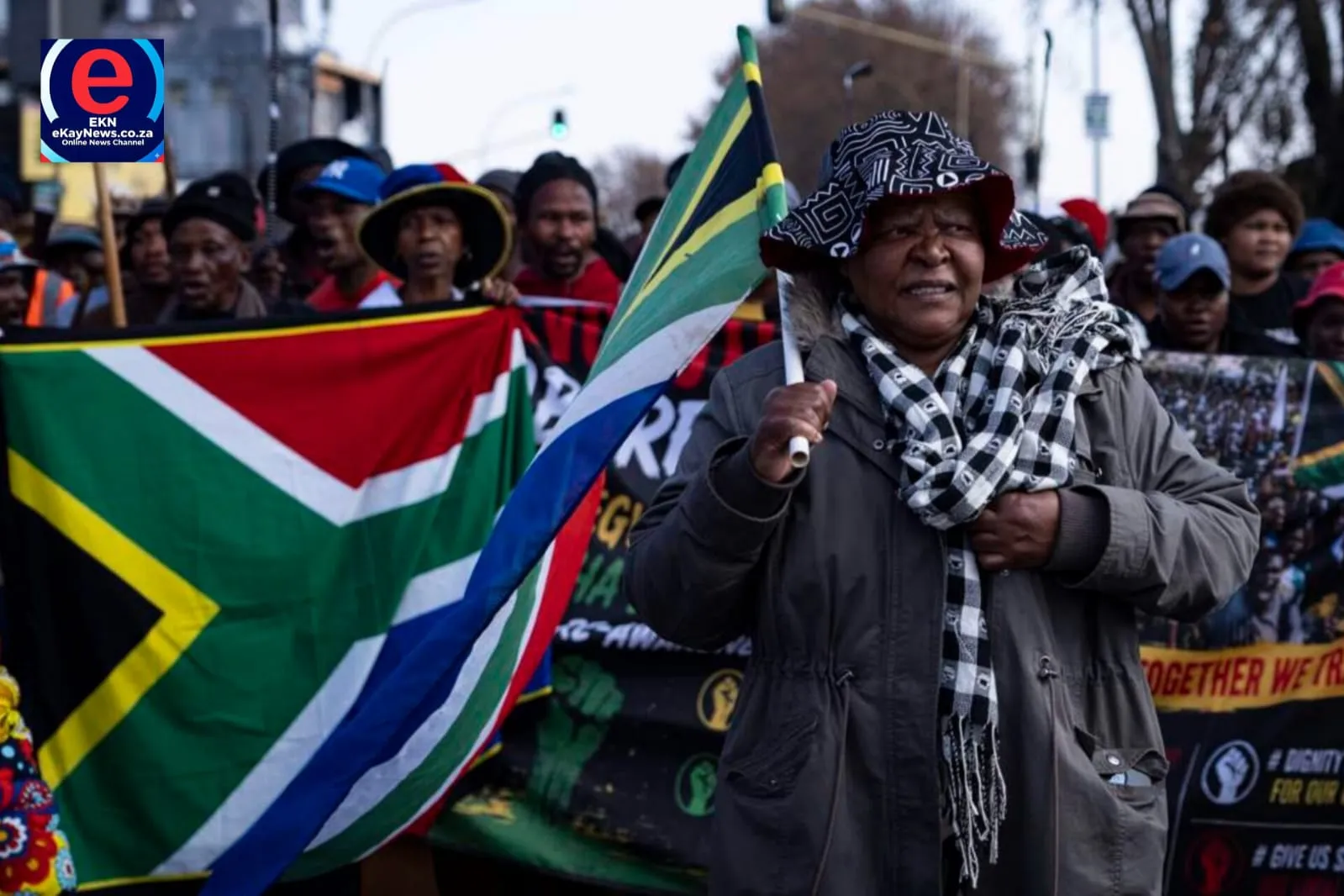
March and March challenges eThekwini municipality over alleged 30 June protest ban
March and March challenges eThekwini protest ban as tensions rise ahead of a planned nationwide demonstration on 30 June 2026. The movement, led by Jacinta MaNgobese-Zuma, has accused the eThekwini Municipality of unlawfully attempting to block a protest march by citing a “national security threat” without providing written justification.
The dispute has sparked debate about the Constitutional Right to Protest, government accountability, and the balance between public safety and freedom of assembly in South Africa.
The March and March Movement insists that it has complied with all legal requirements under the Regulation of Gatherings Act and maintains that the demonstration will proceed as planned unless a lawful prohibition is issued.
March and March Movement Challenges Municipal Decision
The controversy began after the movement alleged that the eThekwini Municipality Protest Ban was communicated following consultations involving municipal officials, Metro Police, and the South African Police Service (SAPS).
According to the movement, notice of the planned June 30 Protest March was submitted on 15 June 2026 in accordance with legal requirements governing public gatherings.
A consultation meeting reportedly took place on 24 June, during which authorities and organisers discussed logistics, crowd management, and protest routes.
The movement claims it accepted recommendations to alter the planned route in an effort to cooperate fully with authorities and ensure a peaceful demonstration.
However, organisers say they were later verbally informed that the protest had effectively been denied due to concerns that it posed a national security threat.
Jacinta Ngobese-Zuma Speaks Out
Jacinta Ngobese-Zuma, founder and leader of the movement, publicly criticized the alleged decision and questioned its legal basis.
In a social media post, she stated that authorities had denied citizens their constitutional right to protest and challenged the reasoning behind the decision.
Ngobese-Zuma argued that the movement had followed all required procedures and had worked constructively with officials throughout the consultation process.
She further stated that no formal written explanation had been provided to justify the alleged refusal.
According to her, the absence of written reasons raises concerns about transparency and accountability in decision-making.
The movement insists that any restriction on public gatherings must comply with constitutional principles and established legal procedures.
Understanding the Constitutional Right to Protest
South Africa’s Constitution guarantees citizens the right to assemble, demonstrate, picket, and present petitions peacefully and unarmed.
Section 17 of the Constitution is widely regarded as one of the key protections of democratic participation in the country.
The Constitutional Right to Protest allows individuals and groups to express concerns, advocate for policy changes, and engage in public discourse.
However, this right is not absolute.
Authorities may impose restrictions under specific circumstances, particularly when there are legitimate concerns about public safety, violence, or significant disruptions.
Such restrictions must generally be lawful, reasonable, and supported by evidence.
Legal experts often emphasize that any decision limiting constitutional rights should be transparent and clearly justified.
This is one of the reasons the March and March Movement has requested written documentation outlining the legal basis for the alleged prohibition.
What the Regulation of Gatherings Act Requires
The Regulation of Gatherings Act establishes procedures that organisers must follow when planning public demonstrations.
These procedures include:
- Providing advance notice to local authorities.
- Participating in consultation meetings.
- Discussing safety and logistical arrangements.
- Cooperating with law enforcement agencies.
The legislation does not require organisers to obtain permission in the traditional sense. Instead, it provides a framework for communication and coordination between organisers and authorities.
The movement argues that it has met all obligations under the Act and therefore believes the gathering remains lawful.
According to representatives, all requested documentation was submitted and all consultations were attended in good faith.
June 30 Protest March Remains Planned
Despite the dispute, organisers have reiterated that the June 30 Protest March remains scheduled.
The movement says it intends to proceed peacefully while continuing to seek clarification from municipal authorities.
In a formal communication, organisers requested:
- Written reasons for the alleged refusal.
- Details of the legal provisions relied upon.
- Copies of any security threat assessments.
- Records related to the decision-making process.
The movement maintains that these requests are necessary to ensure transparency and to allow for proper legal review if required.
Organisers have also stated that they remain committed to peaceful protest and lawful conduct.
Concerns Over National Security Claims
One of the most contentious aspects of the dispute involves the alleged classification of the protest as a national security threat.
The movement argues that such a serious designation should be supported by clear evidence and formal documentation.
Without written explanations, organisers say it is difficult to understand the basis for the decision or to respond appropriately.
Critics of restrictions on public gatherings often argue that vague security concerns can undermine democratic participation if not properly substantiated.
Supporters of stronger security measures, on the other hand, contend that authorities have a responsibility to prevent potential risks before they escalate.
The debate highlights the challenge of balancing civil liberties with public safety in a democratic society.
Growing Public Interest in the March and March Movement
The March and March Movement has attracted significant public attention in recent months, particularly around issues related to immigration, governance, and national sovereignty.
The movement describes itself as a citizen-driven initiative focused on protecting South Africa’s interests and promoting lawful governance.
Supporters argue that public demonstrations are an important way for citizens to voice concerns and participate in democratic processes.
Opponents have expressed concerns about some of the movement’s positions and the potential impact of large-scale protests.
Regardless of differing viewpoints, the current dispute has placed the movement at the center of a broader national conversation about rights, responsibilities, and public participation.
Calls for Dialogue and Cooperation
Many observers believe that dialogue between organisers and authorities remains the most constructive path forward.
Successful public demonstrations often rely on cooperation between municipalities, law enforcement agencies, and organisers.
Such collaboration can help ensure:
- Public safety.
- Effective traffic management.
- Protection of constitutional rights.
- Peaceful conduct throughout the event.
The movement has repeatedly stated that it is willing to engage with authorities and comply with reasonable safety measures.
At the same time, it insists that constitutional protections must be respected.
What Happens Next?
As the 30 June date approaches, attention is focused on whether the municipality will provide the requested written explanations.
A formal response could clarify the legal and security considerations behind the alleged decision and potentially influence the movement’s next steps.
If the dispute remains unresolved, legal action could become a possibility, particularly if organisers believe constitutional rights are being infringed.
For now, the March and March challenges eThekwini protest ban story continues to develop, with both sides facing increasing public scrutiny.
The outcome could have implications not only for the planned demonstration but also for future debates surrounding public gatherings, municipal authority, and democratic participation in South Africa.
YOU MAY LIKE:
Conclusion
The ongoing dispute between the March and March Movement and the eThekwini Municipality underscores the complexities of balancing constitutional freedoms with public safety concerns. As organisers continue preparing for the June 30 Protest March, questions remain about the legal basis for the alleged refusal and whether sufficient justification exists for restricting the gathering.
With Jacinta Ngobese-Zuma and her supporters standing firm, the issue has evolved beyond a single protest and into a broader discussion about the Constitutional Right to Protest in South Africa’s democracy. The coming days will determine whether dialogue, clarification, or legal intervention shapes the final outcome.
References (Mainstream Media)
- IOL – March and March Movement vows June 30 protest will go ahead despite eThekwini refusal
https://iol.co.za/news/south-africa/2026-06-25-march-and-march-movement-vows-june-30-protest-will-go-ahead-despite-ethekwini-refusal/ - Eyewitness News (EWN) – 30 June protests: Organisations insist campaign against illegal immigration not xenophobic
https://www.ewn.co.za/2026/06/25/30-june-protests-organisations-insist-campaign-against-illegal-immigration-not-xenophobic
Keep the News Flowing – Buy the Team a Coffee! ☕

Love the updates? Help us stay on the beat! Whether it’s a quick one-time donation or a monthly subscription, your support keeps the eKayNews lights on and the stories flowing.
-
Secure & Simple: We use PayFast for total transaction peace of mind.
-
Make an Impact: Every “coffee” you send directly supports our newsroom.
Your Brand, Our Audience: Let’s Make Headlines Together! 🚀

Looking for real engagement? At eKayNews, we don’t just share news—we build connections. Whether you’re a local startup or a growing business, our advertising packages are designed to put your brand in front of a loyal, highly engaged audience.
Choose Your Spotlight:
-
Link Booster (R2,500): Dominate the feed with 7 links across 7 days.
-
Permanent Feature (R4,000): Your story, hosted on our site for a lifetime.
-
Prime Visibility (R5,000): Claim the top spot with a 30-day homepage banner.
Ready to grow? 📩 Email us: info@ekaynews.co.za 💬 WhatsApp us: +27 71 096 1185
Get Connected:
-
Facebook & X (Twitter) : Follow us for real-time updates and community debates.
-
WhatsApp Channel: Get exclusive alerts sent directly to your phone.
Stay informed, ahead, connected with the eKayNews family!