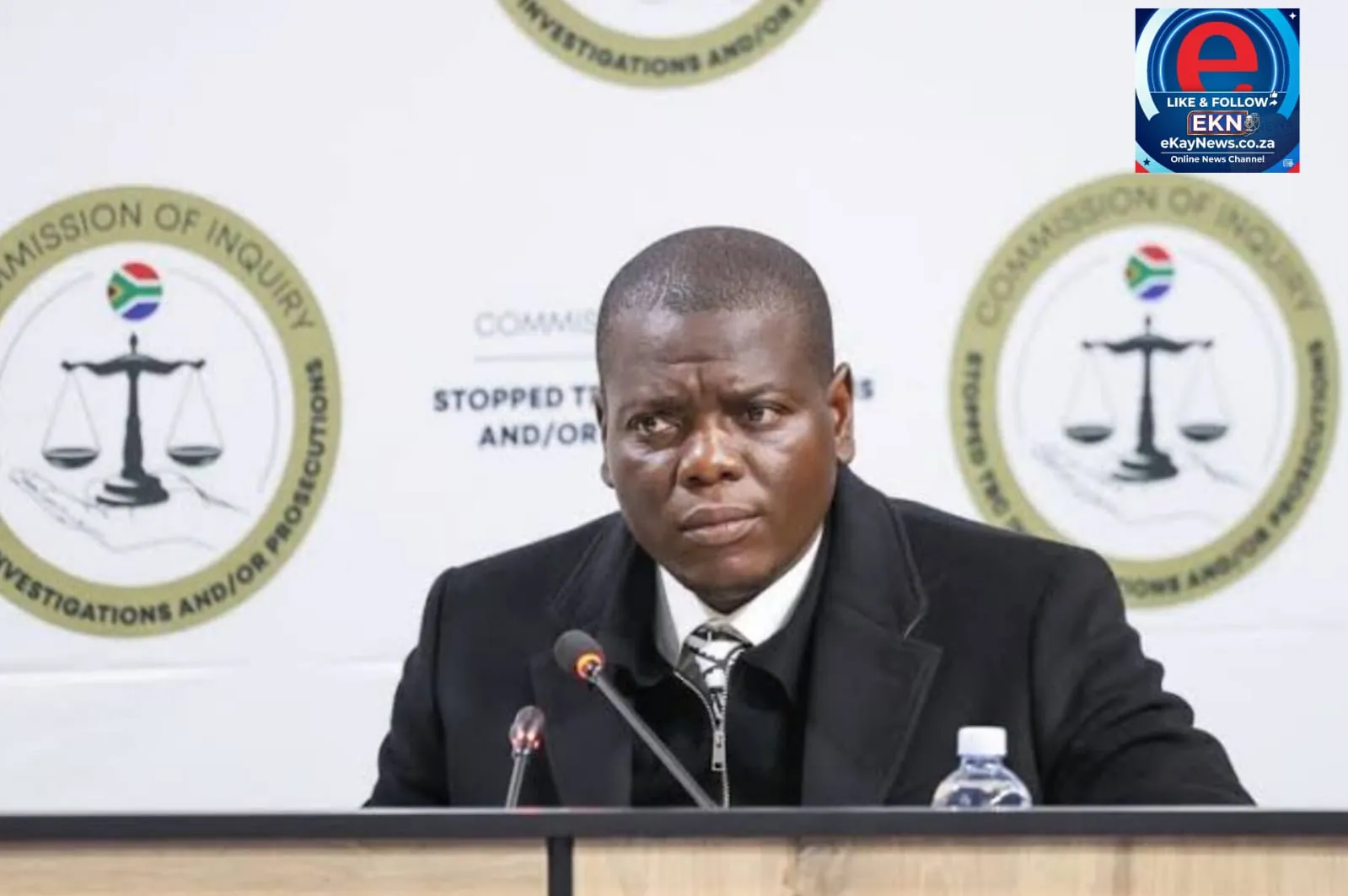
South Africa responds to United States visa restrictions
South Africa responds to United States visa restrictions after US Secretary of State Marco Rubio announced new measures targeting certain South African nationals over policies Washington says involve race-based discrimination, land expropriation and incitement of violence against minority groups.
SA’s Minister of International Relations and Cooperation, Ronald Lamola, said Pretoria viewed the restrictions with concern and rejected what he described as a mischaracterisation of the country’s domestic policies.
The latest development adds another point of tension to already strained South Africa-US relations, with both governments continuing to disagree over issues including racial redress, land policy and South Africa’s approach to addressing inequalities inherited from apartheid. Reuters reported that the United States had not identified specific individuals who would be affected when the restrictions were announced.
Ronald Lamola responds to US visa restrictions
Ronald Lamola said South Africa had noted the US decision and maintained that the country’s democratic government has the right to develop legislation addressing historical inequalities.
In a statement issued by the Department of International Relations and Cooperation, Lamola said the announcement reflected what he described as a mischaracterisation of South Africa’s domestic policies by groups claiming to represent minorities and Afrikaners.
The minister said South Africa’s constitutional framework is based on addressing the divisions created by its past while establishing a society founded on democratic values, social justice and fundamental human rights.
DIRCO said South Africa remained committed to addressing historical injustices as well as contemporary challenges through its constitutional institutions, democratic processes and the rule of law.
Lamola also acknowledged that the United States is entitled to hold different views about South African legislation and its implementation.
However, he argued that South Africa should be afforded the same sovereign right to develop laws addressing its own circumstances.
US visa restrictions announced by Marco Rubio
The US visa restrictions were announced by Marco Rubio on 15 September 2026.
According to the US policy announcement reported by Reuters, Washington intends to target certain foreign nationals who are responsible for, or complicit in, laws or policies that enable what the US describes as uncompensated land seizures, race-based discrimination or the incitement of imminent violence against minority ethnic or racial groups in South Africa.
The announcement did not publicly identify specific individuals who would immediately be affected.
The measures form part of a broader deterioration in relations between Washington and Pretoria. Reuters reported that tensions have included disagreements over South Africa’s domestic policies, land reform and other diplomatic issues.
The US position and the South African government’s response therefore differ significantly over how certain domestic policies should be interpreted and their effects on different communities.
South Africa-US relations under pressure
The latest dispute has placed South Africa-US relations under further pressure.
Reuters reported that the new restrictions came after several months in which tensions between Washington and Pretoria had shown periods of relative calm. The two countries remain important economic and diplomatic partners, but disagreements have increasingly involved South Africa’s approach to racial inequality and land reform.
The US administration has argued that some South African policies have negative consequences for minority groups.
Pretoria has rejected that interpretation and maintains that its policies are designed to address inequalities that originated during apartheid and earlier periods of racial exclusion.
Lamola said South Africa respected America’s right to develop laws addressing its own circumstances, while expecting the same principle to apply to South Africa.
He called for the bilateral relationship to be managed through engagement between the two governments rather than unilateral measures.
Marco Rubio and Pretoria’s differing positions
The disagreement between Marco Rubio and Pretoria centres partly on how South Africa’s laws and policies should be understood.
Washington has raised concerns about legislation and policies relating to land, racial redress and alleged discrimination. Reuters reported that the US visa policy specifically refers to individuals involved in policies that Washington says enable race-based discrimination, uncompensated land seizures or imminent violence against minority groups.
South Africa, meanwhile, says its democratic-era legislation seeks to address the consequences of centuries of racial inequality.
SABC News reported that Lamola reaffirmed the government’s position that addressing divisions from the past and building a society based on democratic values, social justice and human rights is a constitutional imperative.
The disagreement therefore involves both foreign policy and different interpretations of South Africa’s domestic legal framework.
South African sovereignty and domestic legislation
South African sovereignty has become a central issue in Pretoria’s response.
Lamola said South Africa has the sovereign right to enact laws addressing the country’s historical circumstances. He argued that the government should continue dealing with contested policies through constitutional institutions and democratic processes.
The minister also referred to South Africa’s Prevention and Combating of Hate Crimes and Hate Speech Act 16 of 2023.
According to DIRCO, the legislation establishes a legal framework for addressing hate crimes and hate speech and applies to state and non-state actors.
Lamola’s broader argument is that South Africa’s legal system provides domestic mechanisms through which disagreements over policy can be debated, challenged and addressed.
The US government, however, has used its own immigration and visa powers to respond to policies it considers inconsistent with its stated interests.
Crime remains another point of disagreement
Lamola also addressed concerns about crime in South Africa.
Rather than accepting that crime is directed at a particular racial group, the minister said crime affects South Africans broadly and should not be understood as targeting people based on race, colour or social origin.
His statement came as the US administration raised concerns about violence involving minority groups.
The two governments therefore continue to differ over the interpretation of crime, racial discrimination and the broader social conditions affecting communities in South Africa.
The issue is politically sensitive, and claims about crime and racial targeting have been contested by the South African government.
Calls for constructive engagement
Despite the disagreement, Lamola emphasised the importance of continuing diplomatic discussions.
He said ongoing bilateral talks between South Africa and the United States demonstrated the importance both countries attach to finding a lasting resolution to their differences.
South Africa’s position is that any solution should take account of the country’s specific historical circumstances, constitutional order, democracy and sovereignty.
Reuters reported that the US ambassador to South Africa had described the visa restrictions as the first step in a broader series of measures, indicating that tensions could continue.
Lamola, however, argued that bilateral challenges should be addressed through constructive engagement between state actors.
Lamola heads to Washington amid tensions
The diplomatic dispute comes as Ronald Lamola travels to the United States for high-level engagements.
Jacaranda FM reported on 18 September that Lamola had arrived in Washington for a working visit, where he was expected to attend engagements and hold meetings with US officials and members of Congress.
His visit provides an opportunity for direct discussions at a time when South Africa-US relations face significant challenges.
The outcome of those engagements could provide further information about whether Pretoria and Washington can narrow their differences over domestic policy, visa restrictions and other bilateral matters.
YOU MAY LIKE:
Trump blocks visas for South Africans accused of Afrikaner discrimination
What happens next?
The new US visa restrictions have not publicly named specific South Africans affected by the policy, according to Reuters reporting at the time of the announcement.
For now, Pretoria continues to defend its domestic legislation and its right to determine policy through its constitutional and democratic institutions.
Washington maintains that its visa measures are intended to respond to policies it says contribute to racial discrimination, land-related concerns or violence against minorities.
The dispute illustrates the continuing challenges facing South Africa-US relations as both countries attempt to manage disagreements while maintaining diplomatic and economic ties.
Lamola’s response makes clear that South Africa intends to continue engaging with the United States while defending what it regards as its constitutional responsibilities and South African sovereignty.
The next stage of the dispute is likely to depend on further diplomatic discussions and any additional measures announced by Washington or responses from Pretoria.
References from mainstream media
- Reuters – South Africa pushes back against US visa curbs over alleged racial discrimination — coverage of Ronald Lamola’s response and the dispute over US visa restrictions. Read the Reuters report
- Associated Press (AP) – Trump administration hits South Africa with new sanctions over alleged discrimination against whites — reports on Marco Rubio’s announcement and South Africa’s response. Read the AP report
- SABC News – Lamola says new US visa restrictions concerning — reports Lamola’s concerns and Pretoria’s position on the restrictions. Read the SABC News report
- TimesLIVE – Pretoria hits back at US visa sanctions over race and land policies — covers Lamola’s response, US concerns and the diplomatic tensions between the two countries. Read the TimesLIVE report
Support Independent Journalism with eKayNews! 📰✨
At eKayNews, we are dedicated to bringing you honest, independent, and reliable news. But we can’t do it alone—independent journalism relies on the strength and generosity of its community.
If you value our work, please consider supporting us today! You can help keep us going by choosing a subscription or simply buying us a one-off virtual coffee:
👉 Support us here: ekaynews.co.za/subscribe-form/
You can also support our mission by visiting our main site at www.ekaynews.co.za and following @eKayNews on all social media platforms.
Thank you so much for your incredible generosity and for being part of our journey! 🙏💙