Starlink blocked from South Africa, Musk says it’s because he is not black
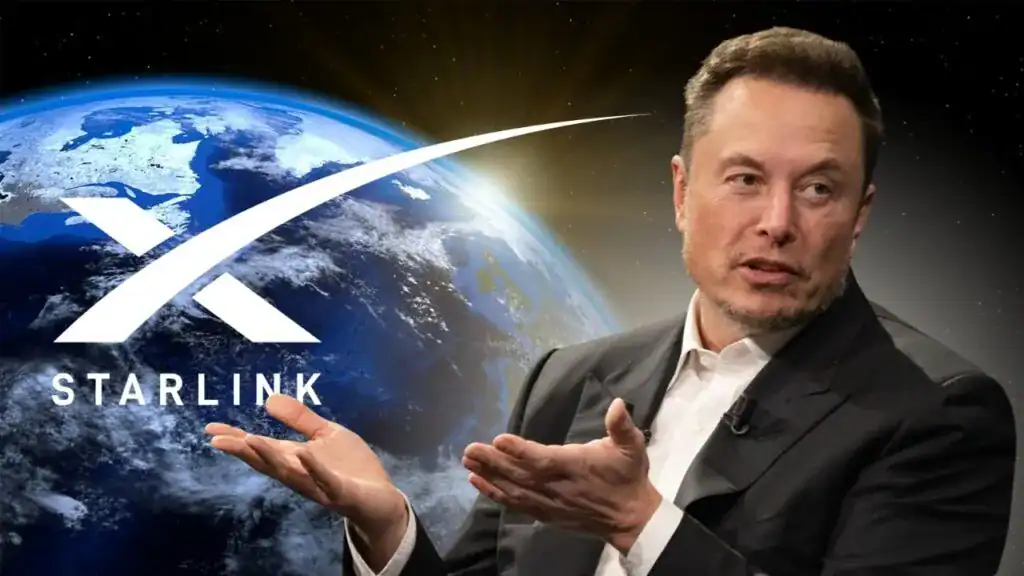
Starlink blocked from South Africa, Musk says it’s because he is not black—this bold assertion by Elon Musk has reignited a fierce national debate over the intersection of transformation policy and technological advancement. In early 2026, the Pretoria-born billionaire took to his social media platform, X, to claim that the primary reason his satellite internet service remains unavailable in his home country is due to race-based ownership regulations. While Starlink has successfully launched in over 100 countries, including neighboring African nations, South Africa remains a notable gap in its global network.
The core of the issue lies within Starlink South Africa regulations, specifically the requirement that telecommunications licensees must have at least 30% ownership by historically disadvantaged groups. Musk has argued that these mandates are not just bureaucratic hurdles but are fundamentally discriminatory, stating that the current legal framework creates an uneven playing field that favors racial quotas over consumer needs and technological progress.
Elon Musk B-BBEE Criticism and the Ownership Standoff
The Elon Musk B-BBEE criticism reached a boiling point this month when Musk compared current South African legislation to apartheid-era laws, claiming there are now more “anti-white laws” than there were “anti-black laws” under the previous regime. These remarks have polarized the public; many rural South Africans, desperate for high-speed connectivity, support Musk’s call for deregulation, while government officials argue that Broad-Based Black Economic Empowerment (B-BBEE) is essential for correcting systemic historical inequalities.
Under current Icasa telecommunications licensing rules, any entity wishing to provide internet services must show 30% black ownership. Starlink, as a subsidiary of SpaceX with a global shareholding structure, has historically resisted diluting equity in individual regional markets. This has led to a protracted stalemate that has left South Africa trailing behind its neighbors in satellite-based connectivity.
Equity Equivalent Investment Programmes: A Potential Solution?
In a significant move to break the deadlock, Communications Minister Solly Malatsi has championed the use of Equity Equivalent Investment Programmes (EEIPs). These programs allow multinational corporations to fulfill their empowerment obligations through direct socio-economic investments rather than the transfer of equity or ownership.
How EEIPs Could Change the Landscape:
-
Infrastructure Development: Starlink has already pledged roughly $105 million toward broader infrastructure investments.
-
Education Focus: A committed $26 million would provide free high-speed internet and necessary equipment to 5,000 rural schools across the country.
-
Local Partnerships: The company plans to collaborate with local firms for deployment, maintenance, and business support services.
By utilizing Equity Equivalent Investment Programmes, Starlink could technically operate as a B-BBEE-compliant entity without Musk having to sell 30% of the local operation. Recent public consultations showed that over 90% of submissions supported the recognition of these programs as a viable path forward for foreign tech giants.
Navigating Icasa Telecommunications Licensing
Despite the Minister’s directive, the path through Icasa telecommunications licensing remains complex. Icasa is an independent regulator, and while it must consider policy directives, it also has a mandate to uphold the existing Electronic Communications Act.
The Regulatory Hurdle:
-
Compliance: Starlink must prove that its investment plans provide “equivalent” value to the 30% ownership requirement.
-
Spectrum Allocation: Securing the necessary radio frequency spectrum to operate satellite ground stations.
-
National Security: Addressing government concerns regarding data sovereignty and the control of communication infrastructure by a foreign entity.
Critics of the “EEIP path” worry that it sets a precedent that allows wealthy multinationals to “buy their way out” of transformation requirements, potentially undermining the long-term goals of economic inclusion in the ICT sector.
Impact on Rural Connectivity and the Digital Divide
The headline Starlink blocked from South Africa, Musk says it’s because he is not black masks a deeper tragedy for those on the wrong side of the digital divide. In many parts of the Eastern Cape, Limpopo, and Northern Cape, traditional fiber and LTE coverage are nonexistent. For these communities, satellite internet is not a luxury but a necessity for education, healthcare, and economic participation.
Starlink’s commitment to providing internet to 5,000 schools would be a game-changer for the Department of Basic Education. However, as long as the Elon Musk B-BBEE criticism continues to frame the debate as a racial conflict rather than a policy negotiation, progress remains stalled.
YOU MAY LIKE:
Malatsi issues directive to bypass Icasa BEE deadlock and clear Starlink for landing
Conclusion: Will 2026 be the Year of Starlink in SA?
As the 2026 regulatory cycle continues, the pressure is on Icasa to finalize the new licensing framework. If the Starlink South Africa regulations are successfully amended to embrace investment-based empowerment, we could see an official launch by the third quarter of the year.
The saga of Starlink blocked from South Africa, Musk says it’s because he is not black serves as a litmus test for the country’s “Government of National Unity.” It challenges the state to find a middle ground where historical redress and 21st-century innovation can coexist. For now, millions of South Africans remain in a digital waiting room, watching as the rest of the continent connects to the stars.
Mainstream Media References
Kindly consider to support eKayNews, Buy Us a Coffee & Keep the News Flowing!

Love what we do? You can now support eKayNews directly! Your contributions empower us to deliver the breaking news, sports, and local updates you trust.
Ways to Support:
-
Subscribe: Choose any amount (cancel anytime).
-
Virtual Coffee: A quick, once-off donation to say thanks.
Note: Payments are 100% secure via PayFast. We never see your banking details.
To our amazing readers: Your support fills us with gratitude. You are the reason we can keep doing this every day. Thank you for being a vital part of the eKayNews family!
We’re feeling the love at eKayNews!

Facebook: [eKayNews on Facebook] X (Twitter): [eKayNews on X] WhatsApp: [Follow the eKayNews WhatsApp Channel] Join our inner circle for real-time news alerts!
📢 Advertising Packages on www.eKayNews.co.za
Package 1. Link Booster: We add 7 links to 7 articles over 7 days – R2,500
Package 2. Permanent Feature: Sponsored Blog Article (hosted permanently) – R4,000
Package 3. Prime Visibility: Home Page Banner Ad (30 days) – R5,000
Book now: Email info@ekaynews.co.za or WhatsApp us on +27710961185