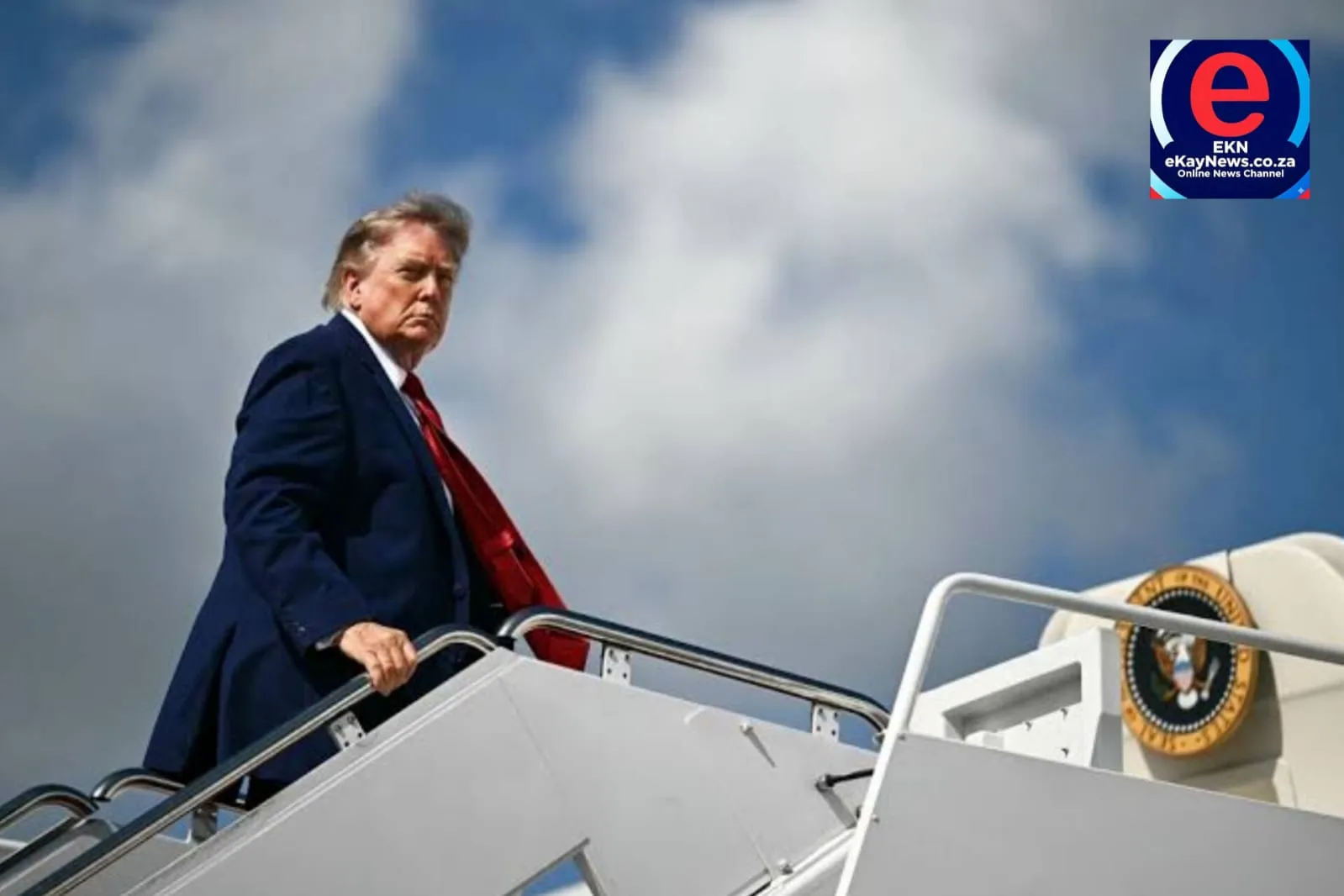
President Donald Trump said on Sunday the U.S. was “semi-negotiating” with Iran.
Trump said on Sunday the U.S. was “semi-negotiating” with Iran, signalling that Washington is maintaining limited diplomatic contact with Tehran while continuing to rely heavily on economic pressure amid the ongoing conflict.
President Donald Trump’s latest comments suggest that the United States is not pursuing full-scale negotiations with Iran at this stage, despite previous diplomatic efforts aimed at ending the conflict.
In an interview with Axios on Sunday, Trump described the US approach as “low-keying it” and said his administration was allowing economic pressure to build on Tehran. Reuters reported that Trump pointed to Iran’s inflation and economic difficulties as evidence that the pressure was having an impact.
The comments come as the conflict continues to centre heavily on the Strait of Hormuz, a crucial global energy route that has become one of the biggest points of confrontation between the United States and Iran.
Trump Iran negotiations remain uncertain
The latest Trump Iran negotiations appear to be taking place against a complicated military and economic backdrop.
According to the information supplied for the latest developments, US and Iranian delegations entered negotiations in June with the objective of reaching an agreement that could bring the conflict to an end.
However, the diplomatic process has faced significant obstacles.
While Washington has indicated that economic pressure could force Tehran to make concessions, Iran has continued to demand major changes before agreeing to reopen the Strait of Hormuz.
Earlier negotiations had been linked to a memorandum of understanding intended to provide a framework for ending the conflict and addressing several outstanding issues.
But the continuation of military strikes has made diplomacy considerably more difficult.
Trump’s latest comments therefore appear to indicate that Washington is keeping diplomatic channels available without committing to a comprehensive negotiation process.
Economic pressure becomes key US strategy
Trump’s remarks also highlighted the importance of economic pressure in the administration’s strategy.
Rather than immediately escalating military operations, the US president indicated that allowing Iran’s economic difficulties to deepen could create additional pressure on Tehran.
Reuters reported that Trump highlighted inflation and financial distress in Iran while describing the US approach as relatively restrained.
The strategy reflects an attempt to pressure Iran without necessarily expanding the military conflict.
However, Tehran has shown little indication that it is prepared to accept Washington’s demands without securing concessions of its own.
Iran has reportedly linked the reopening of the Strait of Hormuz to demands including compensation for war damage and changes to the US military posture in the region.
US Iran war continues despite diplomatic efforts
The US Iran war has continued despite previous attempts to establish a diplomatic pathway towards an agreement.
Trump announced “major combat operations” against Iran on 28 February, with US and Israeli forces launching extensive strikes against military, government and infrastructure targets, according to the information provided.
Since then, the conflict has involved military strikes, diplomatic efforts, economic sanctions and growing tensions around the Strait of Hormuz.
The waterway has become particularly important because of its significance to global oil and energy shipments.
Previous reporting has also shown that the waterway has been central to negotiations between Washington and Tehran. The Washington Post reported in June that Trump said US and Iranian representatives would meet to negotiate after days of strikes, although Iran disputed whether such a meeting was actually scheduled.
That uncertainty demonstrates how difficult it has been for both sides to establish a consistent diplomatic process.
Strait of Hormuz crisis intensifies
The Strait of Hormuz crisis remains one of the most serious elements of the wider conflict.
The strategic waterway connects the Persian Gulf with the Gulf of Oman and is vital to international energy markets.
Iran has demanded significant concessions as part of discussions over reopening the waterway. The latest reporting indicates that Tehran has tied reopening the Strait to demands that go beyond simply restoring normal shipping.
The Guardian reported that Iran’s Revolutionary Guards continued to restrict the waterway while Tehran demanded broader concessions from Washington.
The dispute has consequently created another major obstacle for negotiators.
For Washington, reopening the Strait is a critical objective. For Tehran, control over access provides significant leverage in negotiations.
Why Hormuz matters to the global economy
The importance of the Strait extends far beyond the Middle East.
Large volumes of global oil and gas shipments normally pass through the waterway. Any prolonged disruption can therefore affect energy prices, shipping costs and inflation in countries far from the region.
The crisis has also raised concerns about alternative shipping routes.
As the Strait remains at the centre of the confrontation, international governments and businesses are watching developments closely.
A prolonged closure or restriction could place additional pressure on already strained energy markets.
Iran war latest developments
The Iran war latest developments indicate that diplomatic efforts remain uncertain while military and economic pressure continues.
Trump’s “semi-negotiating” description suggests that the US does not consider the current contacts with Tehran to be a fully developed peace process.
At the same time, the White House appears to be keeping the possibility of negotiations alive.
This creates a complicated situation in which diplomacy and pressure are taking place simultaneously.
Iran’s position is also critical.
Tehran has continued to demand conditions for reopening the Strait of Hormuz, while Washington has sought to use economic and military pressure to influence Iranian decision-making.
The result is a fragile environment where a diplomatic breakthrough remains possible but far from guaranteed.
US Iran tensions spread across the region
The US Iran tensions are also having consequences beyond the immediate US-Iran confrontation.
The information provided indicates that Iranian-backed Houthi forces in Yemen attacked the government-held port city of Mocha for a second time within 24 hours.
Such attacks raise concerns that the conflict could spread into another major shipping corridor around the Red Sea.
The possibility of simultaneous disruption in the Strait of Hormuz and the Red Sea would create additional pressure on international shipping.
The wider Middle East is therefore facing the risk of further escalation even as Washington and Tehran continue to consider diplomatic options.
Gaza adds another layer of tension
The wider regional situation is further complicated by developments in Gaza.
Israeli Prime Minister Benjamin Netanyahu rejected Trump’s Gaza peace proposal and said Israel would remain in Gaza until Hamas genuinely disarms.
Trump had previously described the proposal as historic.
The disagreement highlights the challenges facing US diplomacy across the Middle East, where Washington is attempting to manage multiple interconnected conflicts simultaneously.
Developments involving Gaza, Iran, Yemen and the Strait of Hormuz could all influence the wider regional security environment.
YOU MAY LIKE:
Iran says Oman deal is in ‘final stages’ but US must open Hormuz
What happens next?
The immediate future of the conflict will likely depend on whether Washington and Tehran can bridge their differences over the Strait of Hormuz and the broader terms of a potential agreement.
Trump’s decision to describe the US approach as “semi-negotiating” suggests that diplomacy remains possible, but the administration is not prepared to offer Tehran an easy path to an agreement.
Iran, meanwhile, appears determined to use its position over the Strait as leverage.
The next stage could therefore involve further economic pressure, renewed diplomatic contacts or another escalation in military activity.
For now, the Trump Iran negotiations remain uncertain, while the US Iran war continues to affect security, energy markets and international shipping.
The Strait of Hormuz crisis is likely to remain at the heart of the dispute, making the latest developments important not only for Washington and Tehran but also for countries and businesses dependent on stable global energy and shipping routes.
As the situation develops, the world will be watching closely to see whether Trump’s “semi-negotiating” approach can eventually lead to a wider agreement or whether tensions will continue to escalate.
References
- Reuters – Trump says US is ‘low-keying it’ with Iran
Reuters: Trump says U.S. is ‘low-keying it’ with Iran - The Guardian – Iran and the Strait of Hormuz
The Guardian: Chaos and confusion bring US no closer to resolution on Strait of Hormuz - The Guardian – US-Iran negotiations
The Guardian: US-Iran talks strained as Trump threats spark Iranian walkout
Support Independent Journalism with eKayNews! 📰✨

At eKayNews, we are dedicated to bringing you honest, independent, and reliable news. But we can’t do it alone—independent journalism relies on the strength and generosity of its community.
If you value our work, please consider supporting us today! You can help keep us going by choosing a subscription or simply buying us a one-off virtual coffee:
👉 Support us here: ekaynews.co.za/subscribe-form/
You can also support our mission by visiting our main site at www.ekaynews.co.za and following @eKayNews on all social media platforms.
Thank you so much for your incredible generosity and for being part of our journey! 🙏💙