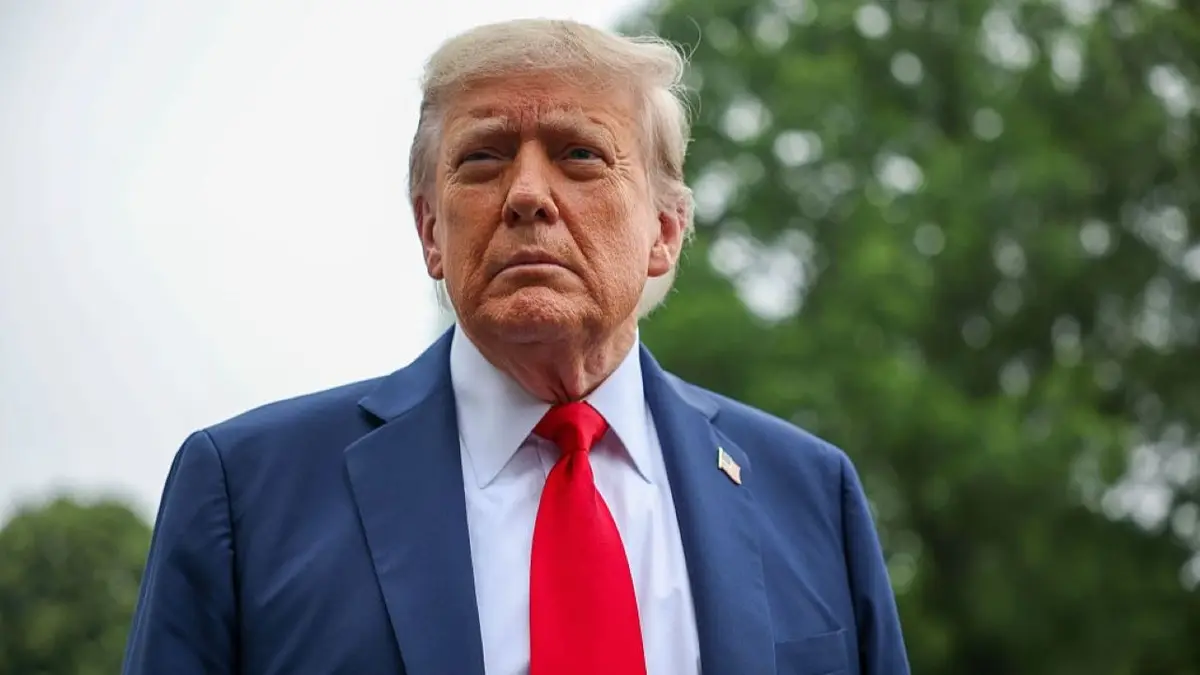
Trump says no rush to end Iran war
Trump says no rush to end Iran war, according to recent statements made to reporters from the Reuters news agency. In a detailed briefing addressing the ongoing US conflict, Donald Trump emphasized that he is in no hurry to bring the military campaign to a premature conclusion. The President has made it clear that achieving the mission’s overarching strategic objectives remains fundamentally more important than adhering to a rigid timeline for peace. This marks a critical moment in the ongoing conflict, as it sets the stage for a prolonged military engagement that could permanently reshape the geopolitical landscape of the Middle East.
For months, the international community has closely watched the escalation of hostilities, wondering when diplomatic solutions might eventually replace military force. However, the President’s latest remarks confirm that the administration’s primary focus is on permanently dismantling strategic threats rather than watching the calendar. The firm assertion that Trump says no rush to end Iran war highlights a strategy of military endurance. It indicates that the United States is willing to absorb the diplomatic and economic costs of a drawn-out confrontation to secure long-term regional security and limit adversarial capabilities.
The Current Timeline for Peace
When evaluating the current situation, the concept of a definitive timeline seems increasingly elusive. Since the White House officially detailed its goals in early April, the global expectations for a swift resolution have been steadily dialed back. The President has repeatedly argued that artificial deadlines only serve to embolden adversaries, giving hostile forces a date to wait out rather than forcing them into meaningful capitulation. Because Trump says no rush to end Iran war, US military planners and regional allies are adjusting their long-term strategies, actively preparing for an extended period of tension, diplomatic standoffs, and sporadic kinetic engagements.
The conflict has already caused immense disruptions across global markets, particularly concerning the transit of energy resources and commercial freight. However, the administration maintains that a rushed peace deal—one that leaves Iranian military infrastructure largely intact—would only lead to future blockades and renewed crises in the coming years. Therefore, the timeline for the war’s conclusion remains completely open-ended, heavily dependent on the measurable degradation of hostile capabilities and the success of continued military operations.
Analyzing Trump’s Strategic Objectives
To understand why the conflict continues to stretch on, one must look at the immense scope of the administration’s goals. The White House explicitly stated in early April that Trump’s primary objectives in the Iran war were comprehensive and uncompromising. The stated mission was to “obliterate Iran’s ballistic missile arsenal and production capability, annihilate its navy, sever its support for terrorist proxies, and ensure the world’s leading state sponsor of terrorism never acquires a nuclear weapon.”
These sweeping goals require a massive expenditure of time and resources. The complete obliteration of a ballistic missile arsenal spread across a vast, mountainous country is an incredibly difficult task, even for the combined might of the US and allied air forces. Despite the overwhelming firepower brought to bear during the opening phases of the conflict, the reality on the ground suggests that achieving total destruction of these assets is a highly complex endeavor. The partial success rate is exactly why Trump says no rush to end Iran war; halting operations now would mean leaving the job dangerously unfinished.
The Role of Airstrikes in Degrading Capabilities
The foundation of the current military strategy heavily relies on sustained aerial bombardments. To accomplish the administration’s sweeping objectives, consecutive waves of coordinated US and Israeli airstrikes have been launched against key military, industrial, and logistical targets across the Iranian landscape.
There is little doubt among global defense analysts that these intensive airstrikes have heavily degraded Iran’s immediate military capabilities. Advanced radar installations, coastal naval bases, and known missile launch sites have sustained catastrophic, paralyzing damage. However, despite the sheer volume of high-precision munitions dropped, many of Trump’s core objectives remain stubbornly unfulfilled. Because the adversary has spent decades preparing for this exact scenario by building hardened, subterranean facilities, airstrikes alone have a limit to their effectiveness. This tactical reality forces the US military to extend its timeline, ensuring that every identified threat is neutralized before the conflict officially concludes.
The Status Quo in the Strait of Hormuz
A massive priority for the United States and its global trading partners is the economic stability of the region. The Strait of Hormuz, a critical chokepoint for international oil and natural gas shipments, has seen its status quo severely threatened since the conflict began. Restoring the free and safe flow of international commercial vessels through this narrow waterway is a cornerstone of the administration’s strategy.
Currently, the administration is essentially trying to get back to the vital status quo of the Strait of Hormuz being freely open to international vessels without the constant threat of naval harassment or sea mines. However, ensuring this level of security requires the complete annihilation of the adversary’s coastal defense capabilities and fast-attack naval fleets. As long as a threat to global shipping remains, the administration believes it cannot safely end the military campaign. By declaring that Trump says no rush to end Iran war, the White House is signaling to global energy markets that it will not accept a fragile peace that leaves commercial shipping vulnerable to future extortion.
Unresolved Challenges: Nuclear Assets and Proxies
As the conflict progresses, the definition of absolute victory is undergoing intense public and political scrutiny. While initial rhetoric focused on the rapid annihilation of the Iranian military apparatus, the practical realities of modern warfare have revealed significant, enduring obstacles.
A primary concern is that a large stockpile of highly enriched uranium is still believed to remain buried deep underground following the initial rounds of US and Israeli airstrikes last June. These subterranean facilities were explicitly designed by engineers to withstand conventional bunker-busting bombs, making the goal of ensuring the regime never acquires a nuclear weapon a continuing logistical and military puzzle. Because these deeply buried nuclear assets remain somewhat intact and functional, the broader objectives of the campaign demand ongoing vigilance, continuous intelligence gathering, and sustained military pressure.
Furthermore, intelligence reports suggest that Iran reportedly retains much of its pre-war missile stockpile. By dispersing these mobile weapons to hidden launch platforms that are notoriously difficult to track from the air, the military has ensured that its retaliatory threat remains potent. This structural resilience means that the danger to neighboring countries and US military installations in the region is far from eliminated, directly impacting the projected timeline for withdrawal.
The Hezbollah and Houthi Threat
Adding to the complexity of the conflict is the objective to sever the adversary’s long-standing support for terrorist proxies. Despite the massive economic blockade and direct military pressure applied by the US-led coalition, Iran still supports heavily armed proxy militant groups such as Lebanon’s Hezbollah and Yemen’s Houthis.
These proxy networks act as a strategic force multiplier for Tehran, allowing the regime to project power, disrupt trade, and cause chaos far beyond its own borders without directly engaging US forces on the ground. The continued, aggressive activity of the Houthis in the Red Sea and Hezbollah along the northern Israeli border demonstrates that the airstrikes, while devastating to domestic infrastructure, have not entirely severed the deeply entrenched financial and logistical lifelines that sustain these militant groups. Consequently, the timeline for achieving lasting regional stability is continually pushed backward, reinforcing the reality that the Iran war cannot end until these dangerous proxy networks are fundamentally dismantled.
Why Trump Says No Rush to End Iran War Amid Regional Tensions
The geopolitical calculus behind the President’s deliberate strategy involves carefully managing both domestic political expectations and fragile international alliances. Domestically, the administration is tasked with explaining to the American public why a conflict that was initially perceived as a targeted, overwhelming air campaign has evolved into a grinding war of attrition. Internationally, allied nations in the Gulf region and across Europe are watching closely, constantly balancing their intense desire for a neutralized threat against their deep fears of a wider, uncontrollable regional conflagration.
By stating clearly and publicly that Trump says no rush to end Iran war, the administration is attempting to project an unshakeable image of resolute patience. It serves as a direct psychological signal to leadership in Tehran that the United States will not grow weary, back down, or be distracted by domestic political pressures or shifting poll numbers. The ultimate objective is to make the economic, infrastructural, and military cost of defiance so astronomically high that the opposing leadership is eventually forced to alter its strategic posture and accept defeat.
However, this high-stakes waiting game comes with immense inherent risks. Every single day the conflict continues naturally increases the likelihood of unintended military escalation, tragic civilian casualties, and further economic destabilization in the interconnected global energy markets. The administration is gambling that its overwhelming military superiority will eventually break the adversary’s will before the political and economic costs at home become too high to sustain.
Conclusion
Ultimately, the resolution of the Iran war will require a highly complex and delicate blend of sustained military pressure, aggressive economic sanctions, and eventual, hard-nosed diplomatic maneuvering. The White House has essentially locked itself into its own maximalist objectives, defining victory as the total dismantling of missile capabilities, the destruction of naval forces, and the permanent eradication of proxy networks.
The heavy reliance on airstrikes has undeniably altered the tempo and physical landscape of the conflict, but it has not yet delivered the definitive knockout blow required to guarantee a lasting peace. As the world watches and anxiously waits for a breakthrough in negotiations or a decisive shift on the battlefield, the guiding principle of the current administration remains crystal clear. Because Trump says no rush to end Iran war, the United States is officially settling in for the long haul, ensuring that the timeline ultimately bends to the accomplishment of its strategic objectives, rather than the other way around.
Kindly consider to support eKayNews, Buy Us a Coffee & Keep the News Flowing!

Love what we do? You can now support eKayNews directly! Your contributions empower us to deliver the breaking news, sports, and local updates you trust.
Ways to Support:
-
Subscribe: Choose any amount (cancel anytime).
-
Virtual Coffee: A quick, once-off donation to say thanks.
Note: Payments are 100% secure via PayFast. We never see your banking details.
To our amazing readers: Your support fills us with gratitude. You are the reason we can keep doing this every day. Thank you for being a vital part of the eKayNews family!
We’re feeling the love at eKayNews!

Facebook: [eKayNews on Facebook] X (Twitter): [eKayNews on X] WhatsApp: [Follow the eKayNews WhatsApp Channel] Join our inner circle for real-time news alerts!
📢 Advertising Packages on www.eKayNews.co.za
Package 1. Link Booster: We add 7 links to 7 articles over 7 days – R2,500
Package 2. Permanent Feature: Sponsored Blog Article (hosted permanently) – R4,000
Package 3. Prime Visibility: Home Page Banner Ad (30 days) – R5,000
Book now: Email info@ekaynews.co.za or WhatsApp us on +27710961185