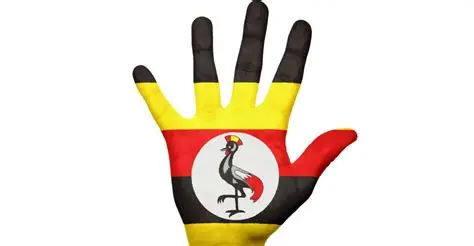
Uganda Authorities shuts down internet ahead of election
Uganda Authorities shuts down internet ahead of election proceedings across the nation, leaving over 46 million people in a digital blackout just 48 hours before the polls open. On Tuesday, 13 January 2026, the government executed a nationwide suspension of mobile data and selected internet services, a move that critics argue is designed to stifle opposition voices. President Yoweri Museveni, 81, is seeking a contentious seventh term in office, facing a significant challenge from the popular singer-turned-politician, Bobi Wine.
This latest Uganda election internet shutdown has paralyzed digital communication, with the Uganda Communications Commission (UCC) citing “national security” and the prevention of “misinformation” as the primary reasons for the blackout.
Uganda Communications Commission directive: The Official Mandate
The Uganda Communications Commission directive was issued in a letter dated 13 January 2026, addressed to all licensed Mobile Network Operators (MNOs) and Internet Service Providers (ISPs). The letter, signed by UCC Executive Director Nyombi Thembo, ordered the immediate suspension of public internet connections starting at 6:00 PM local time.
According to the regulator, the measure is “necessary to mitigate the rapid spread of online misinformation, disinformation, electoral fraud, and related risks.” However, the timing of the directive—falling exactly two days before the Uganda 2026 general election—has drawn sharp condemnation from international human rights observers and digital rights activists.
Bobi Wine vs Yoweri Museveni: A High-Stakes Rivalry
The core of the political tension remains the fierce rivalry of Bobi Wine vs Yoweri Museveni. Robert Kyagulanyi Ssentamu, known as Bobi Wine, has mobilized millions of young Ugandans under his National Unity Platform (NUP). He has accused the military of interference and labeled Museveni’s 40-year rule a “dictatorship.”
In the run-up to this election, security forces have:
-
Detained hundreds of opposition supporters.
-
Fired live bullets and tear gas at campaign rallies.
-
Restricted the movement of journalists and independent observers.
Museveni, who has led the country since 1986, has often dismissed Bobi Wine as an agent of foreign interests. Having changed the constitution twice to remove age and term limits, the President is determined to secure his authority amidst a youth-led movement demanding change.
Uganda 2026 general election: Repression and NGO Closures
The Uganda 2026 general election is taking place in what the United Nations describes as an “atmosphere of repression.”19 Parallel to the internet blackout, the National Bureau for NGOs ordered prominent rights groups to cease operations immediately.
Among the organizations targeted are:
-
Chapter Four Uganda: A legal advocacy group focused on civil liberties.
-
Human Rights Network for Journalists-Uganda (HRNJ-U): An organization documenting attacks on the press.
The NGO bureau, led by Stephen Okello, claimed these groups were involved in activities “prejudicial” to national security.23 These shutdowns effectively remove the eyes and ears of civil society during the most critical 48 hours of the democratic process.
Election Quick Facts
| Category | Details |
| Election Date | 15 January 2026 |
| Registered Voters | 21.6 Million |
| Incumbent | Yoweri Museveni (NRM) |
| Main Challenger | Bobi Wine (NUP) |
| Shutdown Type | Nationwide Mobile Data & Social Media |
Impact of the Uganda election internet shutdown
The economic and social cost of the Uganda election internet shutdown is immense. Beyond silencing political debate, the blackout has disrupted:
-
Mobile Money Services: Essential for daily trade in a cash-light economy.
-
Logistics: Transportation and delivery apps used in urban centers like Kampala.
-
Voter Verification: While the EC uses private channels, the public’s ability to find polling stations online is severely hindered.
YOU MAY LIKE:
Uganda Election People’s Favourite Kyagulanyi Challenges incumbent Museveni
Conclusion: A Test for Democracy
The news that Uganda Authorities shuts down internet ahead of election day is a sobering reminder of the challenges facing democracy in the region. As the world watches the Uganda 2026 general election, the focus remains on whether the vote can be considered free or fair in the absence of an open digital space. For the 46 million people of Uganda, the coming days will determine the trajectory of the nation for the next five years.
Mainstream Media Reference
1: Reuters
Kindly consider to support eKayNews, Buy Us a Coffee & Keep the News Flowing!

Love what we do? You can now support eKayNews directly! Your contributions empower us to deliver the breaking news, sports, and local updates you trust.
Ways to Support:
-
Subscribe: Choose any amount (cancel anytime).
-
Virtual Coffee: A quick, once-off donation to say thanks.
Note: Payments are 100% secure via PayFast. We never see your banking details.
To our amazing readers: Your support fills us with gratitude. You are the reason we can keep doing this every day. Thank you for being a vital part of the eKayNews family!
We’re feeling the love at eKayNews!

Facebook: [eKayNews on Facebook] X (Twitter): [eKayNews on X] WhatsApp: [Follow the eKayNews WhatsApp Channel] Join our inner circle for real-time news alerts!
📢 Advertising Packages on www.eKayNews.co.za
Package 1. Link Booster: We add 7 links to 7 articles over 7 days – R2,500
Package 2. Permanent Feature: Sponsored Blog Article (hosted permanently) – R4,000
Package 3. Prime Visibility: Home Page Banner Ad (30 days) – R5,000
Book now: Email info@ekaynews.co.za or WhatsApp us on +27710961185