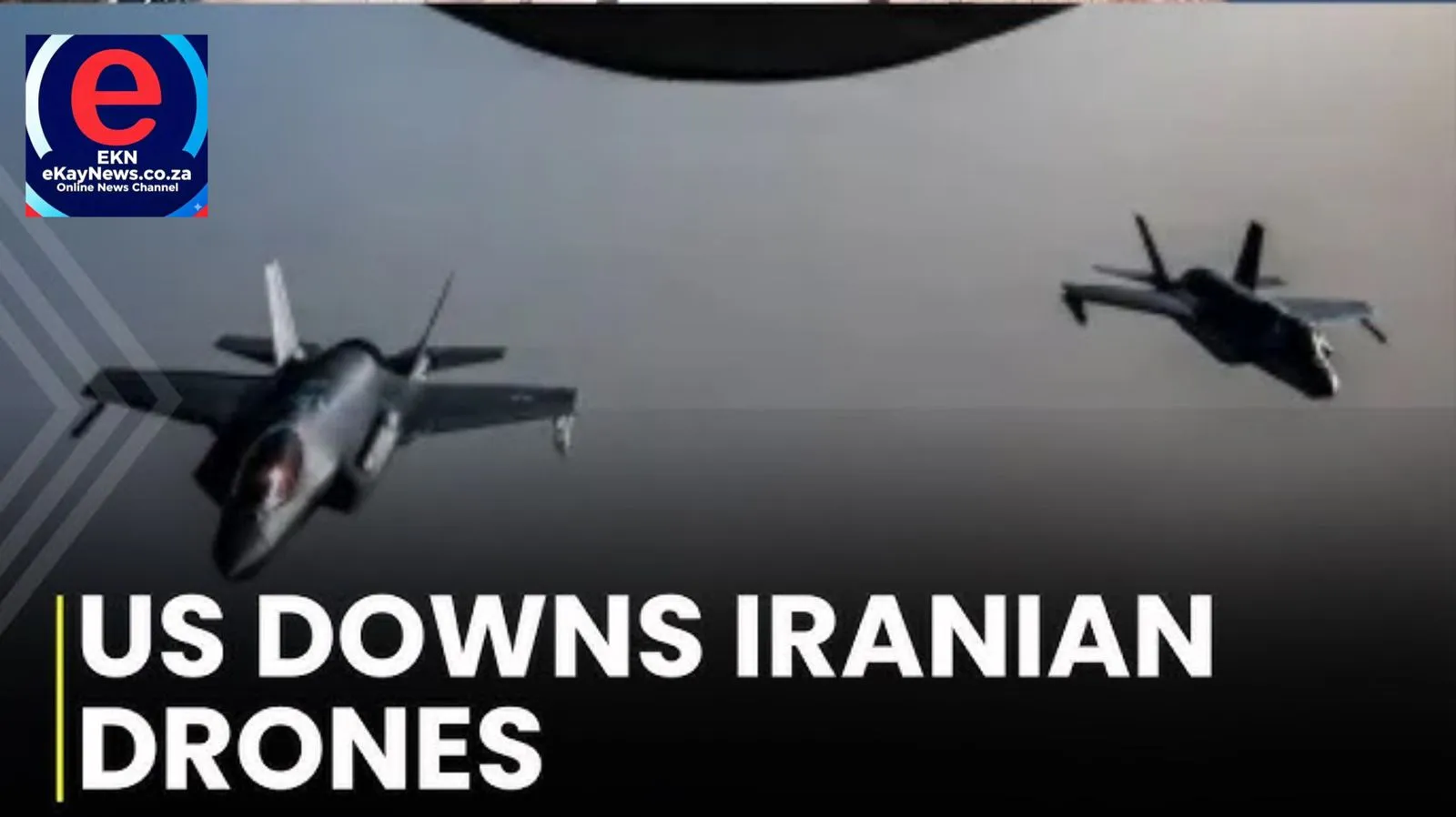
US forces shoot down 2 Iranian drones threatening Strait of Hormuz traffic
US forces down 2 Iranian drones endangering Strait of Hormuz as tensions in the Middle East continue to escalate following a series of military confrontations between Washington and Tehran. The latest incident occurred in one of the world’s most strategically important waterways, where the United States military said it intercepted and destroyed two Iranian attack drones that posed a threat to international maritime traffic.
According to the U.S. military, the drones were operating in the vicinity of the Strait of Hormuz, a critical shipping lane through which a significant percentage of the world’s oil supplies pass every day. The action comes just one day after the United States and Iran exchanged military strikes, while Tehran reportedly launched attacks targeting Kuwait and Bahrain.
The interception highlights growing concerns over regional security, freedom of navigation, and the risk of wider conflict affecting global trade routes.
US Forces Respond to Threats in Strategic Waterway
The United States Central Command (CENTCOM) announced that US forces successfully shot down two Iranian one-way attack drones after determining that they posed a direct threat to international shipping operations in the Strait of Hormuz.
In a statement posted on social media platform X, CENTCOM said:
“Earlier today, U.S. forces in the Middle East shot down two Iranian one-way attack drones that threatened international maritime traffic in the Strait of Hormuz.”
Military officials emphasized that American forces remain vigilant and prepared to respond to any threats against commercial vessels and allied interests in the region. The latest operation underscores Washington’s commitment to maintaining safe passage through one of the world’s busiest maritime corridors.
Iranian Drones Raise Security Concerns
The destruction of the two Iranian drones follows a similar incident just a day earlier when U.S. military forces reportedly intercepted and destroyed four additional Iranian attack drones.
Defense analysts say the repeated use of unmanned aerial systems signals a growing reliance on drone warfare in regional conflicts. Such drones can be used for surveillance, targeting, or direct attacks against ships and military assets.
The latest drone activity has increased concerns among shipping companies and international governments that commercial vessels traveling through the Strait of Hormuz could become unintended targets amid rising hostilities.
Military experts warn that continued drone deployments near major shipping lanes increase the risk of accidental escalation and potential disruptions to global trade.
Strait of Hormuz Remains Critical to Global Energy Markets
The Strait of Hormuz is considered one of the most important maritime chokepoints in the world. Located between Iran and Oman, the narrow waterway connects the Persian Gulf with the Gulf of Oman and the Arabian Sea.
A substantial portion of global oil exports and liquefied natural gas shipments pass through the strait every day. Any threat to navigation in the area can have significant consequences for energy markets, shipping operations, and international commerce.
Because of its strategic importance, the region has long been a focal point of geopolitical tensions involving Iran, the United States, and Gulf nations.
Security experts note that even minor disruptions to vessel movements in the strait can trigger concerns among energy traders and investors worldwide.
Maritime Traffic Faces Growing Risks
The recent drone incidents have once again drawn attention to the vulnerability of maritime traffic operating in the Gulf region. Commercial shipping companies rely on the Strait of Hormuz as a primary route for transporting oil, gas, and other goods between the Middle East, Asia, Europe, and North America.
When military confrontations occur near key shipping lanes, vessel operators often face increased insurance costs, security risks, and potential delays.
Industry observers say the latest developments may prompt shipping companies to reassess security measures and coordinate more closely with naval forces operating in the region.
Protecting maritime traffic remains a top priority for international coalitions seeking to ensure uninterrupted global trade flows.
Escalating Military Aggression in the Region
The downing of the drones occurred amid broader concerns about increasing military aggression across the Middle East.
Recent exchanges of strikes between Iran and the United States have heightened fears of a wider regional conflict. Reports that Tehran launched attacks targeting Kuwait and Bahrain have further increased tensions among Gulf nations.
Regional governments continue to monitor developments closely, while military forces remain on heightened alert.
The possibility of additional drone attacks, missile launches, or retaliatory military operations has raised concerns among international observers and diplomatic leaders.
US Forces Maintain Defensive Posture
American military officials have repeatedly stated that their operations are intended to protect personnel, allies, and international shipping routes from potential threats. CENTCOM reiterated that US forces remain prepared to defend against Iranian aggression and safeguard freedom of navigation throughout the region.
Military commanders have stressed that maintaining stability in critical waterways is essential to preventing disruptions to global commerce and preserving regional security.
The continued presence of U.S. naval and air assets in the Middle East reflects Washington’s longstanding commitment to protecting strategic interests and supporting partner nations.
International Reaction to the Drone Shootdowns
Governments and international organizations are expected to closely examine the latest developments in the Strait of Hormuz. Many nations depend on the uninterrupted flow of energy resources through the region, making maritime security a matter of global concern.
Analysts suggest that the destruction of the Iranian drones may be viewed by some countries as a necessary defensive action to protect commercial shipping and prevent further escalation. Others may call for renewed diplomatic efforts aimed at reducing tensions and avoiding a broader military confrontation.
As the situation evolves, international stakeholders are likely to emphasize the importance of dialogue, de-escalation, and adherence to international maritime law.
Impact on Global Markets
Financial markets often react quickly to security incidents involving the Strait of Hormuz because of its central role in global energy transportation. Any perceived threat to shipping activity can influence oil prices and create uncertainty among investors.
Although maritime traffic has continued flowing through the waterway, analysts remain cautious about the possibility of future disruptions if tensions persist.
Energy companies, shipping operators, and governments worldwide are closely monitoring developments for signs of further instability.
Regional Stability Remains a Priority
The latest drone interceptions highlight the fragile security environment that continues to characterize the Gulf region. While US forces successfully neutralized the immediate threat posed by the drones, broader concerns about military aggression and regional conflict remain unresolved.
Diplomatic channels may play an increasingly important role in preventing future incidents and reducing the risk of escalation.
Security experts argue that sustained international cooperation will be necessary to ensure safe navigation, protect maritime traffic, and preserve stability in one of the world’s most strategically important regions.
YOU MAY LIKE:
Conclusion
The incident in which US forces down 2 Iranian drones endangering Strait of Hormuz marks another significant development in the ongoing tensions between Washington and Tehran. The destruction of the drones underscores growing concerns about maritime security, military aggression, and the safety of commercial shipping in a vital global trade corridor.
As regional tensions continue to unfold, the Strait of Hormuz remains at the center of international attention. Governments, military leaders, and shipping operators will continue watching closely as efforts to safeguard maritime traffic and maintain regional stability move forward.
References
- Reuters – US attacks Iranian coastal sites after Iran launches drones in latest flare-up
Reuters Report - Associated Press (AP News) – Pakistan’s interior minister is in Tehran as the US downs more Iranian drones over Hormuz
AP News Report
Keep the News Flowing – Buy the Team a Coffee! ☕

Love the updates? Help us stay on the beat! Whether it’s a quick one-time donation or a monthly subscription, your support keeps the eKayNews lights on and the stories flowing.
-
Secure & Simple: We use PayFast for total transaction peace of mind.
-
Make an Impact: Every “coffee” you send directly supports our newsroom.
Your Brand, Our Audience: Let’s Make Headlines Together! 🚀

Looking for real engagement? At eKayNews, we don’t just share news—we build connections. Whether you’re a local startup or a growing business, our advertising packages are designed to put your brand in front of a loyal, highly engaged audience.
Choose Your Spotlight:
-
Link Booster (R2,500): Dominate the feed with 7 links across 7 days.
-
Permanent Feature (R4,000): Your story, hosted on our site for a lifetime.
-
Prime Visibility (R5,000): Claim the top spot with a 30-day homepage banner.
Ready to grow? 📩 Email us: info@ekaynews.co.za 💬 WhatsApp us: +27 71 096 1185
Get Connected:
-
Facebook & X (Twitter) : Follow us for real-time updates and community debates.
-
WhatsApp Channel: Get exclusive alerts sent directly to your phone.
Stay informed, ahead, connected with the eKayNews family!