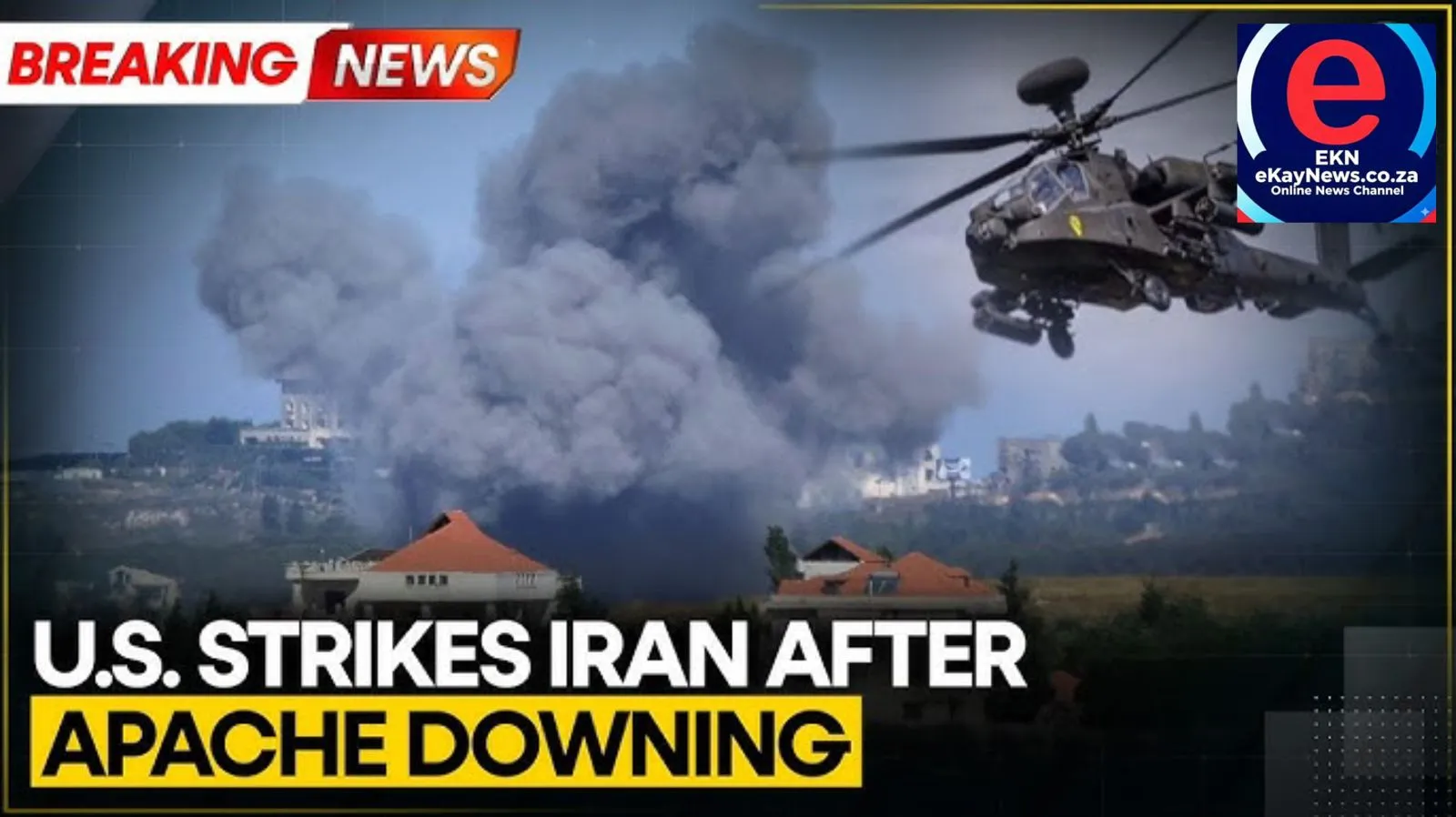
US Strikes Iran After Apache Helicopter Downing
US strikes Iran after Apache helicopter downing in a dramatic escalation of tensions in the Middle East, raising fears of a broader regional conflict and threatening global energy markets. The latest military action comes after the United States accused Iran of shooting down an American Army Apache helicopter, prompting President Donald Trump to authorize retaliatory strikes against Iranian military assets.
The strikes, which reportedly targeted air defense systems and radar installations near the strategically vital Strait of Hormuz, mark a significant turning point in the ongoing confrontation between Washington and Tehran. The development comes despite recent claims from Trump that negotiations aimed at ending the conflict were nearing completion.
As both sides exchange threats and military actions, concerns are mounting about regional stability, maritime security, and the future of diplomatic efforts in one of the world’s most volatile regions.
Trump Orders Retaliation Against Iran
President Donald Trump confirmed that American forces carried out strikes against Iran in response to the downing of a US Army Apache helicopter.
Speaking shortly after the military operation, Trump described the action as a necessary response to what he characterized as unjustified Iranian aggression.
According to the president, the United States could not ignore the destruction of one of its military aircraft and had to demonstrate its willingness to defend American personnel and assets.
Trump emphasized that the response would be strong and decisive.
“And I believe the response should be very strong, very powerful, and that’s what this one is,” Trump said during an interview.
The decision signals a hardening of Washington’s position toward Tehran at a time when diplomatic negotiations appeared to be making progress.
CENTCOM Confirms Military Action
The United States Central Command (CENTCOM) confirmed that military operations began at approximately 5:00 PM Eastern Time under orders from the Commander-in-Chief.
According to CENTCOM, the mission was designed as a proportional response intended to protect American forces and interests.
Officials stated that the operation targeted Iranian military capabilities linked to threats against US personnel operating in the region.
Military sources indicated that radar systems and air defense installations near the Strait of Hormuz were among the targets.
Explosions Reported Along Iran’s Southern Coast
Iranian media reported multiple explosions along the country’s southern coastline shortly after the American strikes began.
The explosions were reported near the Strait of Hormuz, a critical maritime route that handles a substantial portion of the world’s oil shipments.
Residents in affected areas reported hearing loud blasts, while local media outlets described increased military activity throughout the region.
Although Iranian authorities did not immediately release comprehensive details regarding damage assessments, reports suggested that strategic defense infrastructure may have been affected.
Strategic Importance of the Strait of Hormuz
The Strait of Hormuz remains one of the world’s most important shipping corridors.
Located between Iran and Oman, the narrow waterway connects the Persian Gulf to international markets.
Approximately one-fifth of global oil supplies normally pass through the strait, making any disruption a matter of international concern.
The latest military escalation has renewed fears that shipping traffic could face further restrictions or security risks.
Global energy analysts warn that prolonged instability in the region could significantly impact international oil supplies and transportation costs.
Iran Threatens Retaliation
Iran responded quickly to the American strikes, warning that it would not allow the attacks to go unanswered.
Foreign Minister Abbas Araghchi issued a strong statement condemning the operation and pledging a response from Iranian armed forces.
According to Araghchi, the United States had chosen confrontation despite what he described as previous military setbacks.
He warned foreign military forces operating near Iranian territory that they remained vulnerable to future actions.
The statement immediately raised concerns that the conflict could escalate further, potentially drawing additional countries into the crisis.
Tehran’s Message to Foreign Forces
Iranian officials also renewed calls for foreign military forces to leave the Strait of Hormuz and surrounding areas.
Araghchi argued that foreign deployments increase the risk of accidents, misunderstandings, and military confrontations.
He warned that any force operating close to Iranian territory could find itself caught in crossfire during future hostilities.
While emphasizing diplomacy as Iran’s preferred option, he made it clear that Tehran retains military alternatives.
The comments have intensified concerns among international observers who fear that additional confrontations could destabilize regional security.
Apache Helicopter Downing Sparks Escalation
The catalyst for the latest round of US strikes was the reported downing of an American Apache helicopter.
According to military officials, the aircraft was shot down during operations near the coast of Oman.
The incident represents the second confirmed loss of a crewed American aircraft since the conflict intensified earlier this year.
Previously, the United States confirmed the loss of an F-15 fighter jet in April.
Rescue Operation Successful
Despite the helicopter’s destruction, US military officials reported that both crew members were safely rescued.
CENTCOM stated that the rescue mission was completed within approximately two hours of the incident.
The operation involved multiple military assets, including a naval surface drone that assisted in locating and recovering the pilots.
Both service members were reported to be in stable condition following the rescue.
Military officials praised the rapid response and coordination that enabled the successful extraction.
Ceasefire Under Increasing Pressure
The latest escalation threatens an already fragile ceasefire that has been in place since April 8.
Although the truce helped reduce direct confrontations between the main parties involved, tensions have remained high.
Recent attacks involving Iran and Israel over the weekend raised concerns that the ceasefire was beginning to unravel.
While both sides later announced a temporary halt to hostilities, the renewed violence demonstrated how quickly the situation can deteriorate.
The US strikes against Iran now represent another major challenge to maintaining regional stability.
Regional Tensions Continue to Grow
The conflict has expanded beyond Iran and Israel, affecting neighboring countries and militant groups throughout the Middle East.
Lebanon remains particularly vulnerable due to the involvement of Hezbollah, the Iran-backed armed movement.
Cross-border exchanges of fire have continued despite ceasefire efforts.
As a result, regional governments remain on high alert amid fears of broader military escalation.
Lebanon Conflict Adds Complexity
The ongoing conflict in Lebanon further complicates efforts to secure peace across the region.
Israeli airstrikes reportedly targeted areas in southern Lebanon, including the historic city of Tyre.
Lebanese officials reported multiple fatalities, while Israeli authorities issued evacuation warnings for residents.
The warnings triggered significant population movements as civilians fled affected areas.
Traffic congestion and displacement were reported across several regions as families sought safety.
Humanitarian Concerns Increase
The continued fighting has created growing humanitarian challenges.
Displaced families are arriving in safer areas with limited belongings and uncertain futures.
Aid organizations have expressed concern about civilian safety and the long-term consequences of ongoing military operations.
The situation highlights the broader human cost of the regional conflict.
Many observers fear that further escalation between the United States and Iran could worsen existing humanitarian pressures throughout the Middle East.
Oil Markets React to Renewed Conflict
Financial markets reacted quickly to news of the American strikes.
Oil prices rose sharply following reports of explosions near the Strait of Hormuz and the potential for further military confrontation.
West Texas Intermediate crude oil increased by approximately 1.4%, reaching around $89.40 per barrel shortly before Asian markets opened.
Energy traders responded to concerns that disruptions in the region could affect global supply chains.
Why Investors Are Concerned
Investors view the Strait of Hormuz as one of the most important energy chokepoints in the world.
Any threat to shipping routes can quickly influence oil prices and market sentiment.
The current conflict has already disrupted maritime activity and increased insurance costs for vessels operating in the region.
If hostilities continue to escalate, analysts warn that energy markets could experience greater volatility.
Such developments would have implications for inflation, transportation costs, and economic growth worldwide.
Diplomatic Efforts Face Uncertainty
Ironically, the military escalation occurred just hours after Trump suggested that negotiations with Iran were nearing a breakthrough.
The president had previously stated that discussions aimed at ending the conflict were in their final stages.
However, the helicopter incident dramatically altered the situation and shifted attention back toward military action.
Diplomats now face the challenge of preventing further escalation while preserving opportunities for future negotiations.
Can Diplomacy Still Succeed?
Despite the latest violence, many international leaders continue to advocate for diplomatic solutions.
Analysts argue that sustained dialogue remains the best path toward long-term stability.
However, rebuilding trust between the parties involved will be difficult following the latest exchange of military actions.
Future negotiations are likely to depend on whether both sides can avoid additional retaliatory measures.
YOU MAY LIKE:
Israel says attacks will stop ‘for now’ but fight ‘not over’
What Happens Next?
US strikes Iran after Apache helicopter downing at a time when the Middle East is already grappling with multiple security challenges. The American response has heightened tensions, triggered threats of retaliation, and increased uncertainty surrounding diplomatic efforts.
The coming days will be critical as world leaders monitor developments around the Strait of Hormuz, assess the risk of further escalation, and attempt to prevent a wider regional conflict. With oil markets reacting and military forces on alert, the situation remains fluid and potentially dangerous.
Whether diplomacy can regain momentum or whether retaliation leads to another cycle of violence will likely determine the next chapter in one of the most consequential geopolitical confrontations of recent years.
References
- eNCA. Middle East tensions and developments involving Iran and the United States. Available at:
eNCA World News - Reuters. (10 June 2026). Iran war: US strikes Iran after its helicopter was shot down. Available at:
Reuters – US strikes Iran after helicopter downing
Keep the News Flowing – Buy the Team a Coffee! ☕

Love the updates? Help us stay on the beat! Whether it’s a quick one-time donation or a monthly subscription, your support keeps the eKayNews lights on and the stories flowing.
-
Secure & Simple: We use PayFast for total transaction peace of mind.
-
Make an Impact: Every “coffee” you send directly supports our newsroom.
Your Brand, Our Audience: Let’s Make Headlines Together! 🚀

Looking for real engagement? At eKayNews, we don’t just share news—we build connections. Whether you’re a local startup or a growing business, our advertising packages are designed to put your brand in front of a loyal, highly engaged audience.
Choose Your Spotlight:
-
Link Booster (R2,500): Dominate the feed with 7 links across 7 days.
-
Permanent Feature (R4,000): Your story, hosted on our site for a lifetime.
-
Prime Visibility (R5,000): Claim the top spot with a 30-day homepage banner.
Ready to grow? 📩 Email us: info@ekaynews.co.za 💬 WhatsApp us: +27 71 096 1185
Get Connected:
-
Facebook & X (Twitter) : Follow us for real-time updates and community debates.
-
WhatsApp Channel: Get exclusive alerts sent directly to your phone.
Stay informed, ahead, connected with the eKayNews family!