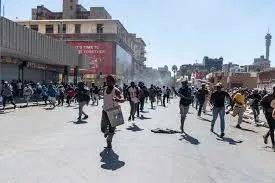
Xenophobic Attacks Durban Closure Forces Factory Lockdown
Xenophobic Attacks Durban Closure developments have forced an unprecedented industrial lockdown across KwaZulu-Natal’s critical textile belts, highlighting an explosive intersection of deep-rooted economic distress, labor supply deficits, and systemic policy failures within the national Department of Home Affairs. As the manufacturing sector stalls under immediate threats of civil disruption, organised business has issued a stark warning to both provincial and national governments: the escalating socio-political friction surrounding undocumented migration, if left unmanaged by coherent political leadership, risks plunging South Africa into an intractable industrial and diplomatic crisis.
The immediate flashpoint centers on Durban’s historic Cut, Make, and Trim (CMT) clothing sector, where a brewing standoff between state law enforcement, localized anti-immigrant movements, and industrial employers has culminated in a unanimous vote for a full five-day protest shutdown. This economic freeze is not an isolated local grievance; it is a direct consequence of a multi-decade administrative paralysis that has failed to reconcile domestic labor realities with statutory compliance. With anti-immigrant formations mobilizing under the banner of the “March and March” movement to demand a total national economic shutdown on June 30, the industrial stability of South Africa’s primary economic corridors hangs precariously in the balance.
The Industrial Microcosm: KhanyiTex and the Reality of Factory Survival
KhanyiTex represents the exact archetype of the transformed, community-centric enterprise that the Department of Trade, Industry and Competition (the dtic) has sought to cultivate through its Black Industrialists program. The factory does not merely generate profit; it anchors a vulnerable socio-economic ecosystem. For years, the factory has operated an on-site early childhood development (ECD) center, appropriately named New Beginnings, which provides free, secure childcare and early education for the children of its predominantly female workforce.
Yet, despite its deep community integration and flawless compliance records—holding a Broad-Based Black Economic Empowerment (B-BBEE) Level 1 status and maintaining strict South African Revenue Service (SARS) alignment—KhanyiTex has found itself trapped in the structural crosscurrents of regional violence and shifting demographics. As documented in a prominent Harvard Business case study and analyzed extensively across South African MBA classrooms, African business leaders like Mabugana face dilemmas completely alien to the Global North. For KhanyiTex, managing a sustainable manufacturing footprint involves navigating intense local socio-economic distress, localized extortion syndicates, and the constant threat of operational disruption from anti-foreigner sentiment.
When regional stability deteriorates, a community-oriented business cannot simply liquidate its capital and relocate. Its survival is explicitly tied to the preservation of local peace and the continuous operation of supply chains that feed millions of South Africans.
Inside the Machinist Deficit: Why the eThekwini Clothing Council Voted for a Shutdown
The impending five-day complete industry shutdown engineered by the eThekwini Clothing and Leather Council exposes a fundamental systemic vulnerability within the manufacturing sector: a massive local skills deficit. Representing approximately 100 business owners within the regional clothing, leather, and footwear manufacturing sectors, the council accounts for more than 10,000 semi-skilled and unskilled jobs. According to council spokesperson Thanasagren Rubbanathan Moodley, over 80% of the industry’s essential, highly specialized machinists are foreign nationals, a segment of whom are currently undocumented.
This heavy reliance on cross-border labor is not a recent strategy to lower overhead costs, as popular political narratives often suggest. Rather, it is the result of a documented 20-year operational shift during which local South African labor consistently and systemically rejected machinist roles. Industry analysts note that industrial sewing and precision leather work are highly demanding, repetitive, and menial occupations that younger domestic job seekers routinely avoid, choosing instead to wait for opportunities in the service sector or automated industries.
“The narrative that our members employ foreign nationals simply because they are a cheap source of labor needs to be thoroughly debunked,” argues Moodley. “The reality on the ground is that local recruitment drives continue to yield critically low response rates. Locals either do not want to do this menial, demanding job of a machinist, or they lack the required technical skillset.”
This structural transition has long been acknowledged in practice by national regulatory frameworks, labor unions, and the Commission for Conciliation, Mediation and Arbitration (CCMA). For decades, government inspectors, labor officials, and law enforcement agencies turned a blind eye to the changing demographic composition of factory floors because these operations kept regional apparel industries alive against fierce import competition from East Asia.
Now, business owners find themselves under the continuous threat of criminal prosecution, workplace raids, and physical threats from vigilante groups. The eThekwini Clothing and Leather Council revealed that they wrote directly to the Office of the Premier on April 29, requesting an urgent, high-level audience to establish a managed, transitional immigration framework. They even offered a proactive, organized five-day pause in operations to facilitate structured negotiations with state authorities. A full month later, that correspondence had received no formal engagement, pushing frustrated business owners to unanimously authorize a full-scale shutdown to force the state to the table.
The Policing Blindspot: Commissioner Nhlanhla Mkhwanazi and the Profiling Problem
However, these operations have encountered critical structural obstacles. In an address to the KwaZulu-Natal Provincial Legislature, KZN Premier Thami Ntuli acknowledged that while law enforcement agencies are actively executing joint anti-illegal immigration sweeps across various sectors, their efforts suffer from a severe communication gap. Because these multi-agency initiatives are not being profiled effectively to the media or the public, a dangerous vacuum has formed. On one side, communities feel the state is completely inactive, fueling the rise of aggressive grassroots anti-immigrant protests and vigilante organizations like the “March and March” movement. On the other side, formal businesses view these sudden, uncoordinated raids as hostile disruptions that fail to offer long-term regulatory paths.
Premier Ntuli has reiterated that the provincial government will maintain an uncompromised commitment to the rule of law. The official position from the Premier’s Office remains firm: no enterprise is permitted to operate outside the constitutional boundaries of the Republic, and any entity found employing undocumented individuals must face the full statutory consequences. Yet, recognizing that heavy-handed policing alone cannot resolve a structural labor crisis, the Premier announced plans for a second provincial roundtable on undocumented foreign nationals. This initiative aims to gather law enforcement, corporate stakeholders, and regional diplomats to build a more transparent, predictable, and profiled migration management strategy for the province.
National and Macroeconomic Alarms: BUSA, BLSA, and the Threat to Pan-African Trade
The escalating tensions driving the Xenophobic Attacks Durban Closure have triggered urgent interventions from South Africa’s highest corporate leadership structures. In a joint declaration, Business Unity South Africa (BUSA) and Business Leadership South Africa (BLSA) implored the state to move past reactive policing and implement immediate, predictable governance to defuse public anger and restore operational predictability.
Organised business acknowledges that in a climate characterized by deep economic stagnation, a 30% plus unemployment rate, high crime indices, and severe service delivery collapses, it is entirely expected that citizens will demand rigorous border management and economic inclusion. However, BUSA and BLSA emphasize that allowing public frustrations to manifest as xenophobic violence or industrial blockades undermines the country’s foundational economic interests.
The economic fallout of unchecked anti-immigrant sentiment carries profound macroeconomic consequences:
| Economic Vulnerability Vector | Strategic Institutional Impact |
| Cross-Border Supply Chain Security | Immediate operational halts along the primary trade corridors connecting Durban Port to the SADC region. |
| Multinational Corporate Retaliation | Heightened risk of asset destruction and operational boycotts against South African corporations active in broader African markets. |
| AfCFTA Integration Stagnation | Disruption of harmonized migration protocols, undermining long-term industrialization and tariff elimination. |
| Socio-Economic Safety Net Damage | Attrition in secondary sectors, including the minibus taxi industry, due to reduced commuter and consumer foot traffic. |
The warning issued by Business Unity South Africa highlights a profound irony: South African multi-nationals are among the primary beneficiaries of expansion into continental markets, pulling in substantial revenue from retail, telecommunications, banking, and mining operations across sub-Saharan Africa. The South African Chamber of Commerce and Industry (SACCI) has repeatedly noted that any resurgence of systemic anti-foreigner violence within domestic borders triggers immediate, volatile counter-reactions in major continental hubs like Lagos and Accra.
Already, the diplomatic ripples are being felt across the continent. Ghana has actively facilitated the emergency repatriation of nearly 300 of its citizens from South African metros due to safety concerns. Concurrently, the governments of Ghana and Nigeria have formally requested a plenary debate on the protection of African nationals at the African Union (AU) coordination summit. Several key regional partners have also revised their official travel advisories, warning continental investors and tourists away from South African commercial centers. In a globalized economy, treating immigration management as a localized policing matter rather than a key component of foreign and economic policy directly threatens South Africa’s position within the African Continental Free Trade Area (AfCFTA).
Collateral Attrition: The Transport Shockwave and Localized Economic Strain
The industrial paralysis stemming from the threat of immigration enforcement is rapidly spreading beyond factory walls into adjacent sectors, most notably the informal transport economy. The South African National Taxi Council (SANTACO) in KwaZulu-Natal has confirmed that commuter operations are facing notable financial strain. In regions like Harding and across the greater eThekwini municipality, taxi operators have raised concerns over a sharp drop in passenger numbers.
As highlighted by SANTACO’s regional representative, Sifiso Shangase, the public transport infrastructure operates as a non-discriminatory utility. The transport network relies heavily on the daily movement of all working-class residents, regardless of their nationality. When manufacturing zones like Hammarsdale or Pinetown face structural lockdowns, or when thousands of undocumented or semi-documented workers retreat from public spaces out of fear of arrest or targeted violence, the financial hit to small-scale transport operators is immediate. While SANTACO notes that this decline is compounded by high fuel costs, structural unemployment, and competition from app-based e-hailing services, the reduction in cross-border commuter traffic is a distinct, painful factor impacting the daily revenue of taxi owners.
Executive Mandate: Re-Architecting South Africa’s Immigration Framework
During the recent Presidency budget vote in the National Assembly, President Cyril Ramaphosa addressed these growing public and continental anxieties directly. The President explicitly acknowledged that unregulated migration strains public infrastructure, distorts localized labor markets, and complicates state efforts to build sustainable employment frameworks. However, the President issued an uncompromising directive against the rise of vigilantism, stating that the execution of immigration enforcement must remain the exclusive domain of designated state organs operating within constitutional boundaries.
For the corporate community, the President’s rhetorical commitment must translate into immediate, structural transformation. An effective immigration policy cannot rely on periodic, uncoordinated factory raids that disrupt production while leaving the underlying demand for specialized skills unaddressed. If the state wishes to protect domestic employment while preventing industrial collapse, it must implement an integrated, modernized immigration framework.
                  ┌────────────────────────────────────────┐
                  │   Modernized Border & Customs Systems  │
                  └───────────────────┬────────────────────┘
                                      │
                                      ▼
                  ┌────────────────────────────────────────┐
                  │ Corporate Transition Regularization    │
                  └───────────────────┬────────────────────┘
                                      │
                                      ▼
                  ┌────────────────────────────────────────┐
                  │  National Machinist Training Academies │
                  └────────────────────────────────────────┘
This structural architecture requires three immediate actions from the Department of Home Affairs and the Department of Employment and Labour:
-
Corporate Transition Frameworks: Rather than executing abrupt deportations that threaten to shut down entire manufacturing supply chains, the state should introduce short-term regularization windows. This would allow compliant companies to formally register and vet their existing specialized workforces while paying appropriate regularization fees to the state.
-
National Skills Development Programs: The Department of Higher Education and Training must partner with bodies like the KwaZulu-Natal Clothing and Textile Cluster (KZNCTC) to fund intensive, stipended training academies for local youth, systematically bridging the machinist skills gap over a defined multi-year transition period.
-
Modernized Border Management: National immigration enforcement must pivot away from ad-hoc urban policing toward the modernization of border points, eliminating illicit syndicates and ensuring that regional labor integration aligns with the economic goals of the AfCFTA.
The Cost of Exclusion: How Rising Social Tensions Threaten South Africa’s Industrial Baseline
Major national business bodies like Business Unity South Africa (BUSA) and Business Leadership South Africa (BLSA) are sounding urgent alarms, warning that escalating anti-immigrant sentiment and threats of nationwide shutdowns risk severely damaging the country’s economic stability. This friction extends far beyond domestic borders, straining critical diplomatic ties and directly threatening South African multinationals that rely heavily on continental trade networks. With peer nations like Ghana already repatriating citizens and calling for formal African Union intervention, organized business emphasizes that true pan-African prosperity under the African Continental Free Trade Area (AfCFTA) requires stable, modernized migration systems rather than reactionary, street-level disruption.
On the factory floor, this crisis translates to an imminent operational standstill, particularly within KwaZulu-Natal’s clothing and textile clusters. The eThekwini Clothing and Leather Council—which represents roughly 100 manufacturers and 10,000 jobs—has initiated a five-day industry shutdown to protest the government’s lack of engagement regarding abrupt immigration crackdowns. Because local recruitment drives consistently yield critically low response rates for demanding machinist roles, over 80 percent of the sector’s vital workforce consists of foreign nationals; consequently, business leaders argue that a blanket, unmanaged removal of these workers will cause an immediate industry collapse that will trigger mass domestic unemployment and stunt interconnected sectors like the minibus taxi industry.
Amidst these shifting social dynamics, pioneering local enterprises like Steven Mabugana’s KhanyiTex serve as a stark case study in both remarkable resilience and profound vulnerability. Based in Hammarsdale, this 100 percent black youth- and women-owned textile manufacturer employs over 300 staff members, supplies major South African retail giants, and actively drives community empowerment through its on-site “New Beginnings” early childhood development center. Yet, like many businesses navigating emerging markets, the operational dilemmas faced by KhanyiTex illustrate the multifaceted challenges entrepreneurs face when trying to sustain vital, community-oriented operations while caught in the crosshairs of localized violence, economic distress, and unyielding regulatory standoffs.
Conclusion: The Path Formulated on Rule of Law and Shared Prosperity
The crisis surrounding the textile lockdowns in Durban serves as a critical warning for South Africa’s economic governance. The eThekwini Clothing and Leather Council’s planned five-day shutdown confirms that the intersection of labor demands, public anxieties, and state administrative failures has reached a tipping point. Heavy-handed policing that ignores structural labor deficits will only accelerate factory closures and drive up unemployment. Conversely, ignoring public anxieties over undocumented migration will continue to fuel the rise of volatile vigilante movements.
The solutions to these challenges cannot be deferred. President Cyril Ramaphosa’s national executive, working alongside Premier Thami Ntuli’s provincial administration and Commissioner Nhlanhla Mkhwanazi’s law enforcement teams, must establish a transparent, balanced approach to migration management. South Africa can protect its domestic workforce and enforce the rule of law without isolating itself from continental trade networks or crippling its own manufacturing base. True industrial resilience requires clear, predictable, and proactive governance that secures domestic stability while advancing pan-African economic integration.
References from mainstream media
- iOL – Durban’s clothing industry warns of collapse amid threat of immigration crackdown
- Moneyweb – SA business warn government over xenophobia backlash
Keep the News Flowing – Buy the Team a Coffee! ☕

Love the updates? Help us stay on the beat! Whether it’s a quick one-time donation or a monthly subscription, your support keeps the eKayNews lights on and the stories flowing.
-
Secure & Simple: We use PayFast for total transaction peace of mind.
-
Make an Impact: Every “coffee” you send directly supports our newsroom.
Your Brand, Our Audience: Let’s Make Headlines Together! 🚀

Looking for real engagement? At eKayNews, we don’t just share news—we build connections. Whether you’re a local startup or a growing business, our advertising packages are designed to put your brand in front of a loyal, highly engaged audience.
Choose Your Spotlight:
-
Link Booster (R2,500): Dominate the feed with 7 links across 7 days.
-
Permanent Feature (R4,000): Your story, hosted on our site for a lifetime.
-
Prime Visibility (R5,000): Claim the top spot with a 30-day homepage banner.
Ready to grow? 📩 Email us: info@ekaynews.co.za 💬 WhatsApp us: +27 71 096 1185
Get Connected:
-
Facebook & X (Twitter) : Follow us for real-time updates and community debates.
-
WhatsApp Channel: Get exclusive alerts sent directly to your phone.
Stay informed, ahead, connected with the eKayNews family!