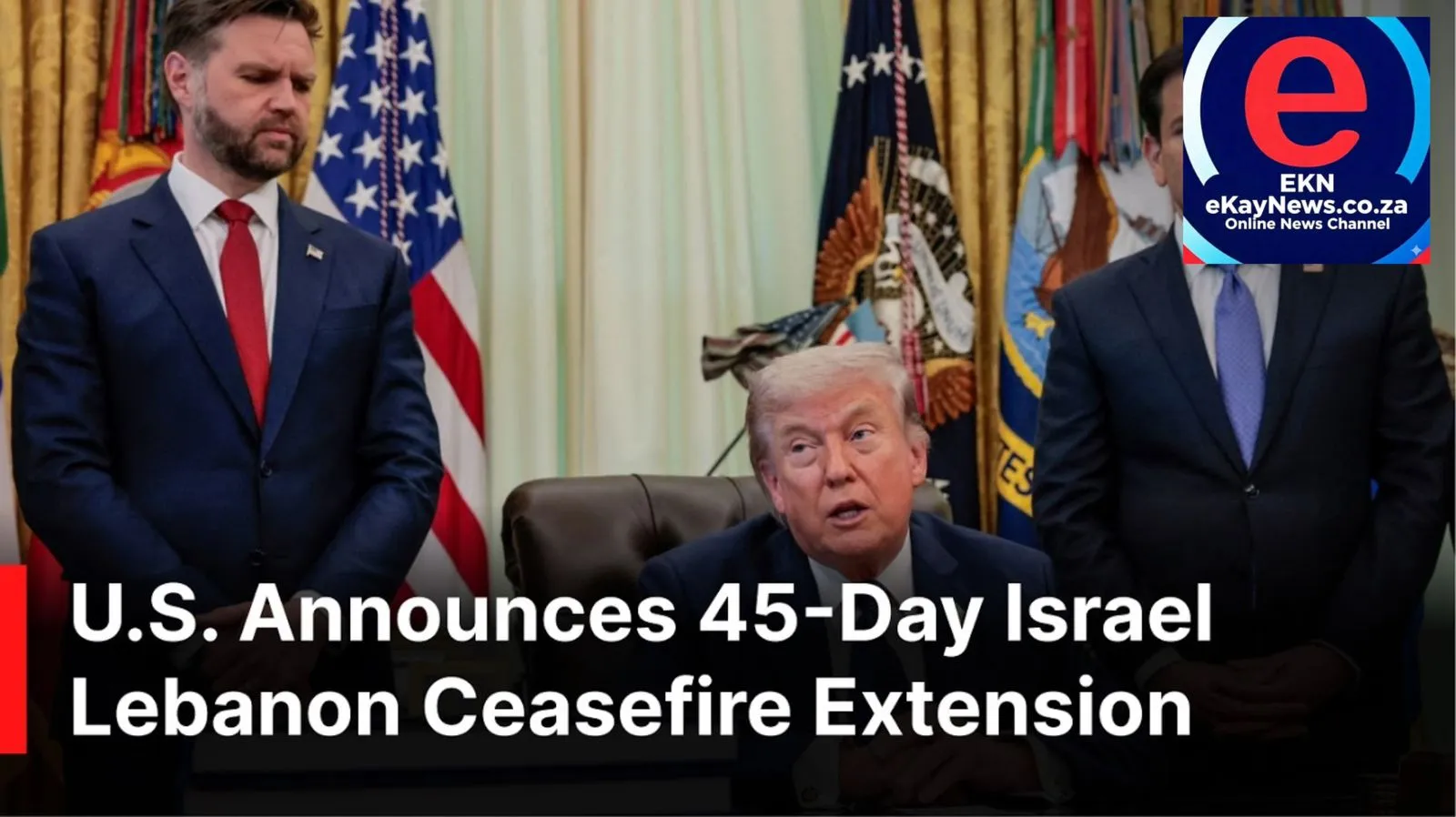
US announces 45-day extension of Israel-Lebanon ceasefire
US announces 45-day extension of Israel-Lebanon ceasefire, but the reality on the ground paints a vastly different and increasingly violent picture. Despite the diplomatic breakthrough orchestrated in Washington D.C., the conflict between Israeli forces and militant factions continues to claim lives, devastate communities, and threaten the broader stability of the Middle East. As the international community watches closely, the dichotomy between the negotiation tables in the United States and the frontlines in southern Lebanon has never been more stark.
The recent extension is meant to build upon the initial, albeit shaky, truce announced by US President Donald Trump on April 16. However, almost immediately following the announcement that the US announces 45-day extension of Israel-Lebanon ceasefire, reports emerged of a deadly Israeli air strike on a town in southern Lebanon, underscoring the immense fragility of the agreement.
The Fragile Ceasefire Between Israel and Hezbollah
The current cessation of hostilities, in theory, was designed to halt the daily exchanges of fire that have plagued the border region since the conflict escalated in early March. However, the reality of the ceasefire has been marked by continuous violations, aerial bombardments, and retaliatory rocket fire.
The Strike on Harouf and the Targeting of Paramedics
In a tragic sequence of events that coincided with the diplomatic announcements, an Israeli air strike targeted the town of Harouf in southern Lebanon. According to the Lebanese Health Ministry, this attack resulted in the deaths of six individuals. Alarmingly, three of the casualties were paramedics, and a fourth paramedic sustained “critical injuries” after a civil defense center was directly hit.
-
The Incident: Air strike on a civil defense center in Harouf.
-
Casualties: Six dead, including three paramedics.
-
Injuries: One paramedic critically injured.
-
Response: The BBC has reached out to the Israeli military for comment regarding the targeting of civil defense infrastructure.
Lebanon’s health ministry has vehemently accused Israel of intentionally targeting civilians and medical personnel—a charge that the Israeli military categorically denies. This incident in Harouf is part of a broader pattern of recent escalations. Just days prior, on Wednesday, the Lebanese Health Ministry reported that Israeli air strikes across the south had killed 22 people, tragically including eight children.
As the US announces 45-day extension of Israel-Lebanon ceasefire, incidents like the Harouf strike highlight the immense difficulty of enforcing diplomatic agreements on a volatile and deeply entrenched battlefield.
United States Diplomacy and the Two-Track Negotiation Process
The extension of the truce was formally announced by the US State Department following two days of intense, high-stakes negotiations in Washington D.C. The talks aimed to prevent the complete collapse of the April 16 truce and to establish a roadmap for long-term regional stability.
State Department spokesman Tommy Pigott outlined the administration’s vision for the extended truce period. “We hope these discussions will advance lasting peace between the two countries, full recognition of each other’s sovereignty and territorial integrity, and establishing genuine security along their shared border,” Pigott stated.
To achieve this, the United States has proposed a comprehensive, two-track negotiation strategy designed to address both the political grievances and the immediate security threats.
The Political and Security Tracks
| Negotiation Track | Scheduled Date | Location | Primary Focus |
| Security Track | May 29 | The Pentagon, Washington D.C. | Military delegations from both countries will meet to discuss border security, de-escalation protocols, and the establishment of genuine security mechanisms. |
| Political Track | June | Washington D.C. | Diplomatic representatives will reconvene to discuss sovereignty, territorial integrity, and long-term peace frameworks. |
The reactions to the Washington talks from the involved parties have been mixed, reflecting their disparate strategic goals. Israel’s Ambassador to the US, Yechiel Leiter, characterized the negotiations as “frank and constructive,” suggesting a willingness to engage with the American framework while maintaining Israel’s security imperatives.
Conversely, Lebanon’s Prime Minister Nawaf Salam approached the extension with a focus on regional solidarity. Salam stated his hope to “mobilise all Arab and international support to bolster our position in the negotiations” with Israel, indicating that Lebanon intends to leverage international pressure to protect its territorial sovereignty.
The Humanitarian Toll in Lebanon and Ongoing Strikes
While the US announces 45-day extension of Israel-Lebanon ceasefire in the diplomatic corridors of Washington, the humanitarian catastrophe unfolding within Lebanon continues to reach unprecedented levels. The conflict, which officially ignited on March 2 following a joint US and Israeli attack on Iran, has triggered a massive displacement crisis and a devastating loss of life.
The Scale of Displacement
The relentless bombardment, particularly in the southern regions of the country, has fundamentally altered the demographic landscape of Lebanon. The statistics are staggering and paint a grim picture of a nation in crisis:
-
Total Displaced: More than one million people have been forced to flee their homes.
-
Population Impact: This equates to approximately one in five of the entire Lebanese population.
-
Primary Evacuation Zones: The vast majority of the displaced originate from southern Lebanon, the eastern Bekaa Valley, and the densely populated southern suburbs of Beirut, known as Dahieh.
These areas—the South, the Bekaa Valley, and Dahieh—are widely recognized as regions where Hezbollah holds significant political and social sway, and they represent the heartland of the country’s Shia community. As a result, these zones have been subjected to constant, intense Israeli bombardment.
Casualty Figures and the Human Cost
The human cost of this conflict has been overwhelmingly one-sided in terms of sheer numbers. The structural integrity of Lebanese civil society is buckling under the weight of the ongoing military operations.
Current Casualty Statistics (Since March 2)
Lebanese Fatalities: At least 2,896 people have been killed in Lebanon, according to official figures from the Lebanese Health Ministry.
Israeli Fatalities: Israeli authorities report that 18 soldiers and four civilians have been killed over the same period.
The disparity in casualty figures underscores the devastating impact of Israel’s intensified air and artillery strikes. As the US announces 45-day extension of Israel-Lebanon ceasefire, international human rights organizations are increasingly voicing alarm over the tactics being deployed.
Hezbollah Resistance and the Border Conflict Dynamic
Despite the formal announcement of a truce extension, there have been almost daily reports of Hezbollah and Israeli forces trading fire across the southern border of Lebanon. The military strategies of both sides have hardened, complicating any efforts to implement a lasting peace.
Israel’s Buffer Zone Strategy
The Israeli military has explicitly stated that its intensified operations in southern Lebanon are aimed at creating a designated “buffer zone.” The stated objective is to push militant forces northward and thwart any future attacks on northern Israeli communities. In pursuit of this goal, the Israeli military has utilized heavy artillery and widespread air strikes, claiming to target militant fighters and their infrastructure.
However, the execution of this strategy has resulted in widespread destruction. Reports indicate that entire villages in southern Lebanon have been leveled. Observers and human rights groups have drawn direct parallels between these operations and the highly destructive tactics deployed by the Israeli military in Gaza. Some human rights organizations have warned that cases of targeting civilian infrastructure and medical centers could amount to war crimes—allegations that the Israeli government vehemently denies, maintaining that militants embed themselves within civilian populations.
The Retaliatory Campaign
In response to the creation of this buffer zone and the ongoing bombardment of its strongholds, Hezbollah has maintained a steady campaign of retaliation. The militant group has carried out numerous attacks on Israeli troops positioned within Lebanon, as well as launching rockets and deploying explosive drones into northern Israel.
This reciprocal violence creates a perpetual cycle of escalation. Every rocket fired southward is met with an air strike northward, rendering the daily lives of civilians on both sides of the border completely untenable.
YOU MAY LIKE:
Ship reported seized and another attacked near Strait of Hormuz
Evaluating the Viability of the Extended Ceasefire
The announcement that the US announces 45-day extension of Israel-Lebanon ceasefire serves as a critical juncture in this devastating conflict. The next 45 days will test the diplomatic resolve of the United States and the willingness of both Israel and Lebanon to make painful concessions.
The upcoming security track meetings at the Pentagon on May 29 are paramount. If military delegations cannot agree on the parameters of border security and the cessation of daily fire, the political track scheduled for June will likely collapse before it even begins. The presence of Ambassador Yechiel Leiter and the strategic posturing of Prime Minister Nawaf Salam indicate that both nations are preparing for tough negotiations, fully aware that the alternative is a return to all-out war.
Furthermore, the origins of this specific conflict—the March 2 joint attack on Iran—serve as a constant reminder that the Israel-Lebanon border is merely one front in a much larger, highly volatile regional geopolitical puzzle. The actions of proxy groups, the strategic interests of global superpowers, and the deep-seated historical grievances of the local populations all intersect in the ruins of southern Lebanon.
As the international community monitors the situation, the immediate priority remains the protection of civilian life and the facilitation of humanitarian aid to the one million displaced Lebanese citizens. The world waits to see if the rhetoric of diplomacy in Washington can successfully silence the artillery in Harouf, Dahieh, and the Bekaa Valley, transforming a fragile 45-day extension into a durable, lasting peace.
Mainstream Media References
-
PBS NewsHour: Israel and Lebanon agree to 45-day extension of ceasefire, U.S. State Department says
-
CBC News: Israel and Lebanon agree to 45-day ceasefire extension: U.S. State Department