Escalating Conflict Between Iran and the United States
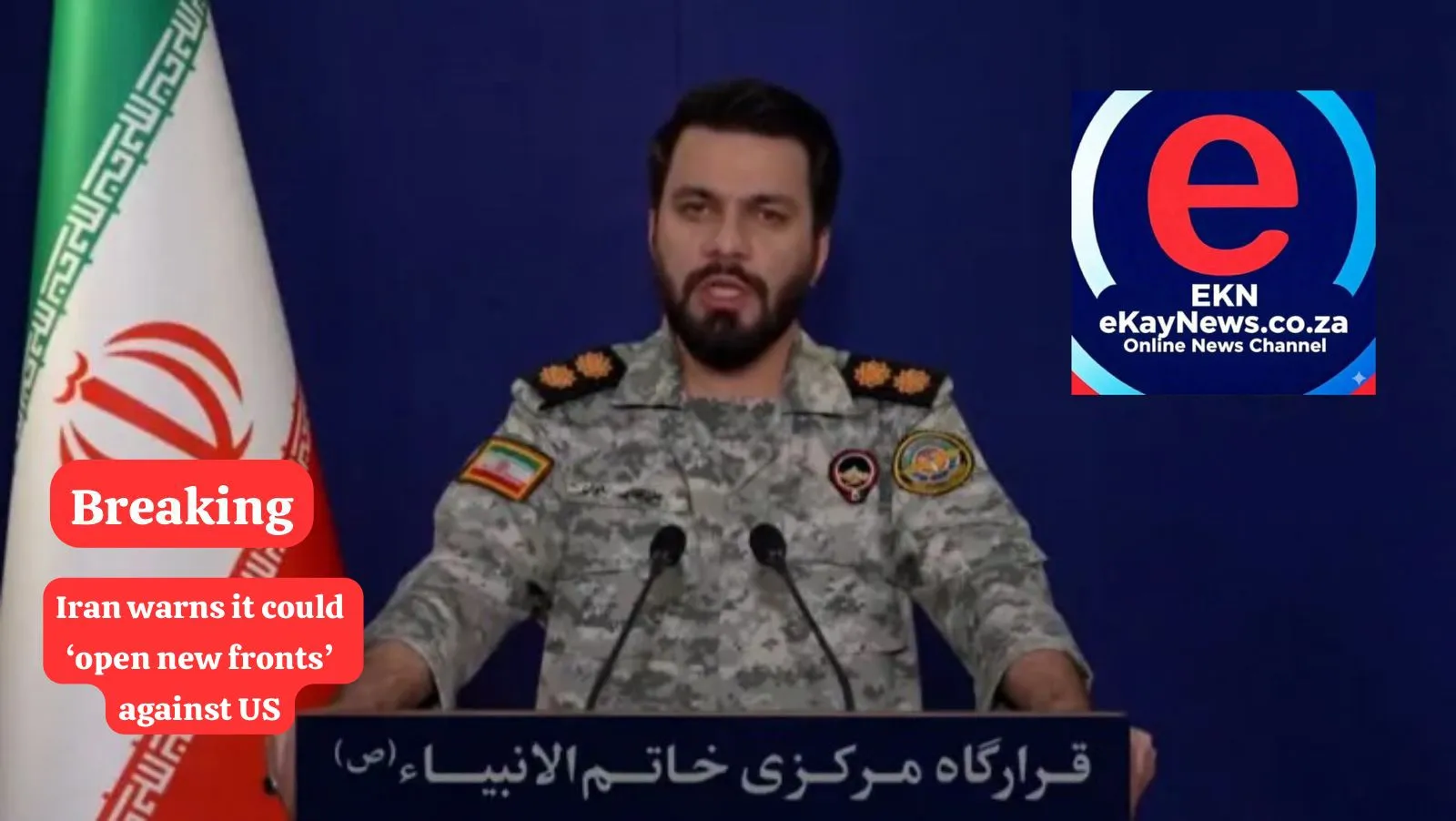
Iran warns it could ‘open new fronts’ against US if the current administration decides to resume military attacks, plunging the already volatile Middle East into a deeper and more catastrophic conflict. This stark warning, delivered by the Iranian army on Tuesday, May 19, marks a significant escalation in rhetoric following a period of uneasy standoff. The threat comes directly on the heels of statements made by US President Donald Trump, who publicly announced that he had temporarily held off on launching a massive new military offensive. Trump stated that the delay was a strategic pause, executed in the hopes of striking a comprehensive diplomatic deal with the Islamic Republic.
The explicit warning from Tehran arrives amid a highly precarious and shaky ceasefire that has officially been in place since April 8. Prior to this temporary truce, the region had been embroiled in a brutal exchange of hostilities that erupted on February 28, drawing in various international actors and destabilizing global markets. Over the past several weeks, Washington and Tehran have been engaged in a high-stakes geopolitical chess match, exchanging various proposals and counter-proposals through intermediaries in a desperate effort to end the war.
Strategic Re-armament During the Precarious Ceasefire
However, trust remains virtually non-existent on both sides. In a revealing post on his Truth Social platform, President Trump disclosed that regional Gulf leaders had directly intervened, asking him “to hold off on our planned military attack of the Islamic Republic of Iran, which was scheduled for tomorrow, in that serious negotiations are now taking place.” Despite this concession to regional allies, the US commander-in-chief maintained a highly aggressive posture. He quickly added that he had instructed the US military machine to remain on high alert, fully “prepared to go forward with a full, large scale assault of Iran, on a moment’s notice, in the event that an acceptable Deal is not reached.”
In direct response to this looming threat of overwhelming force, Iranian army spokesman Mohammad Akraminia issued a fiery broadcast. Iran warns it could ‘open new fronts’ against US interests across the globe if Washington makes the miscalculation of resuming direct military attacks on Iranian soil. Akraminia did not mince words regarding how Tehran has utilized the current pause in fighting. He boldly added that Iran’s military apparatus had strategically used the April 8 ceasefire as a vital opportunity “to strengthen its combat capabilities.” While he refrained from elaborating on the specific nature of these military upgrades, defense analysts suggest this could involve the rapid deployment of anti-aircraft batteries, the repositioning of ballistic missile silos, and the mobilization of allied militia proxy groups stationed across neighboring nations.
The Role of Gulf Leaders in Peace Negotiations
The temporary halt to the bloodshed has not easily translated into lasting diplomacy. Since the ceasefire initially took hold, Tehran and Washington have managed to hold only a single, highly tense round of indirect talks. Unfortunately for global stability, these initial discussions failed to culminate in any actionable deal, leaving the international community on edge.
The broader region is watching these developments with deep anxiety, particularly those nations caught in the crossfire. Qatar, a nation that actively suffered Tehran’s retaliatory military strikes following the initial US-Israeli assaults during the late-February war, has become a vocal advocate for de-escalation. The Qatari government has heavily emphasized that far more time and patience are absolutely necessary for the ongoing, Pakistani-mediated efforts to successfully push for productive Iran-US talks.
“We are supportive of the diplomatic effort by Pakistan that has shown seriousness in bringing parties together and finding a solution, and we do believe it needs more time,” stated Qatari foreign ministry spokesman Majed al-Ansari during a highly attended press conference. The diplomatic reality is complex; bridging the massive divide between Washington’s rigid demands and Tehran’s insistence on sovereignty requires a delicate touch that cannot be rushed by arbitrary military deadlines.
Strategic Dominance Over the Strait of Hormuz
While politicians argue over peace frameworks, a secondary, equally dangerous economic war is being waged on the high seas. All the while, Iran has rigorously maintained a tight, unyielding grip over the Strait of Hormuz. This narrow waterway is arguably the most vital global energy conduit on the planet, responsible for the transit of billions of dollars of crude oil and liquefied natural gas every single day. Conversely, the United States has forcefully imposed its own strict naval blockade on various Iranian ports, attempting to choke off the Islamic Republic’s export economy and force them to the negotiating table through financial starvation.
According to reports broadcasted by Iran’s ISNA news agency, military spokesman Akraminia reiterated that Tehran would unequivocally continue to manage and police the strait. He confidently asserted that the US has very little option but to “respect the Iranian nation and observe the legitimate rights of the Islamic republic.”
Infrastructure Warfare and Digital Undersea Cable Permits
Taking their control a step further, on Monday, Iran officially announced the unprecedented formation of the Persian Gulf Strait Authority. This newly minted governmental body is designed to heavily manage all commercial and military maritime traffic passing through the strait. Tehran declared that all traffic must now operate strictly within the boundaries and regulations communicated by the Iranian armed forces.
Furthermore, the Revolutionary Guards—the powerful ideological arm of Iran’s military—have expanded their threats beyond physical shipping lanes to include the digital infrastructure of the modern world. They recently threatened to place the massive internet fiber optic cables passing beneath the waterway under a strict system of Iranian permits.
“Following the imposition of control over the Strait of Hormuz, Iran, citing its absolute sovereignty over the bed and subsoil of its territorial sea… could declare that all fibre-optic cables passing through the waterway are subject to permits,” the Guards announced in a provocative social media post.
This move would effectively allow Tehran to hold global internet traffic and international banking communications hostage, serving as a powerful new weapon in their asymmetric warfare arsenal. This digital threat aligns perfectly with the rhetoric that Iran warns it could ‘open new fronts’ against US global interests, moving beyond traditional kinetic warfare into the realm of cyber and infrastructural disruption.
“Excessive” Conditions and the Nuclear Program
At the very core of this geopolitical standoff lies the deeply contested issue of weapons development. At the same time that maritime tensions are peaking, Iran’s foreign ministry publicly stated that it has formally responded to the latest US diplomatic proposal. However, Iranian state media wasted no time in describing Washington’s terms as heavily “excessive” and offering absolutely “no tangible concessions” to the Iranian people.
On Sunday, Iran’s semi-official Fars news agency leaked that Washington had presented a rigid five-point list of demands. Chief among these demands is an uncompromising directive targeting the country’s controversial nuclear program. The US proposal explicitly included a demand for Iran to immediately scale back its operations, keeping only one single nuclear site in operation, and to permanently transfer its entire existing stockpile of highly enriched uranium directly to the United States for disposal and safekeeping.
Frozen Assets and the Brinkmanship of Retaliation
Adding insult to injury from Tehran’s perspective, Fars added that the US had flatly refused to release “even 25 per cent” of Iran’s billions of dollars in sovereign assets that remain frozen in banks abroad. Furthermore, Washington rejected any notion of paying reparations for the extensive war damage inflicted upon Iranian infrastructure during the initial February and March bombing campaigns. The media report further claimed that the US had made it abundantly clear it would only permanently cease military hostilities when Tehran formally engages in binding, unconditional peace negotiations on American terms.
These counter-demands include the immediate and total release of all frozen international assets, the permanent lifting of the crippling, long-standing economic sanctions that have devastated the country’s economy, and the payment of comprehensive war reparations.
Despite this apparent deadlock, there are faint glimmers of potential compromise. Later in the week, the Tasnim news agency, citing an unnamed but highly placed source close to the Iranian negotiating team, reported a slight shift in momentum. The source claimed that the United States had actually made one new, significant step forward in the latest draft text by tentatively agreeing to waive specific international oil sanctions temporarily while the active negotiations were underway.
This minor concession, however, has done little to cool the fiery rhetoric emanating from the White House. US President Donald Trump publicly addressed the media on Tuesday, stating unequivocally that the United States may still need to hit Iran again. He revealed the sheer proximity of the averted crisis, noting that he was only an hour away from officially deciding on a massive, devastating strike before he ultimately postponed the attack.
“I was an hour away from making the decision to go today,” Trump told a pool of reporters gathered at the White House, projecting an image of absolute military readiness. He confidently concluded his remarks by claiming that Iran’s leaders are privately begging to make a deal to save their economy and infrastructure.
YOU MAY LIKE:
Conclusion: A Fragile Lifeline for Regional Diplomacy
Ultimately, the global community watches the unfolding situation with bated breath. While the immediate threat of a Tuesday bombardment has been safely averted, the underlying economic and military tensions remain incredibly volatile. The temporary pause highlights the profound influence wielded by regional Gulf states, who managed to pull the United States back from a catastrophic military escalation to protect their own infrastructure.
Whether these intricate back-channel discussions, facilitated by Pakistani mediators and driven by moving economic data in Washington, can permanently bridge the immense gap between the U.S. and Tehran is yet to be determined. For now, the implementation of raw military power has stepped aside to grant diplomacy a temporary, fragile lifeline, but eKayNews will continue to monitor the situation closely as the global community remains fully aware that the clock is still ticking.
References from mainstream media
-
The National News: Iranian army warns of ‘new fronts’ if Trump resumes strikes
Kindly consider to support eKayNews, Buy Us a Coffee & Keep the News Flowing!

Love what we do? You can now support eKayNews directly! Your contributions empower us to deliver the breaking news, sports, and local updates you trust.
Ways to Support:
-
Subscribe: Choose any amount (cancel anytime).
-
Virtual Coffee: A quick, once-off donation to say thanks.
Note: Payments are 100% secure via PayFast. We never see your banking details.
To our amazing readers: Your support fills us with gratitude. You are the reason we can keep doing this every day. Thank you for being a vital part of the eKayNews family!
We’re feeling the love at eKayNews!

Facebook: [eKayNews on Facebook] X (Twitter): [eKayNews on X] WhatsApp: [Follow the eKayNews WhatsApp Channel] Join our inner circle for real-time news alerts!
📢 Advertising Packages on www.eKayNews.co.za
Package 1. Link Booster: We add 7 links to 7 articles over 7 days – R2,500
Package 2. Permanent Feature: Sponsored Blog Article (hosted permanently) – R4,000
Package 3. Prime Visibility: Home Page Banner Ad (30 days) – R5,000
Book now: Email info@ekaynews.co.za or WhatsApp us on +27710961185