Donald Trump Shifts Military Stance on Iran
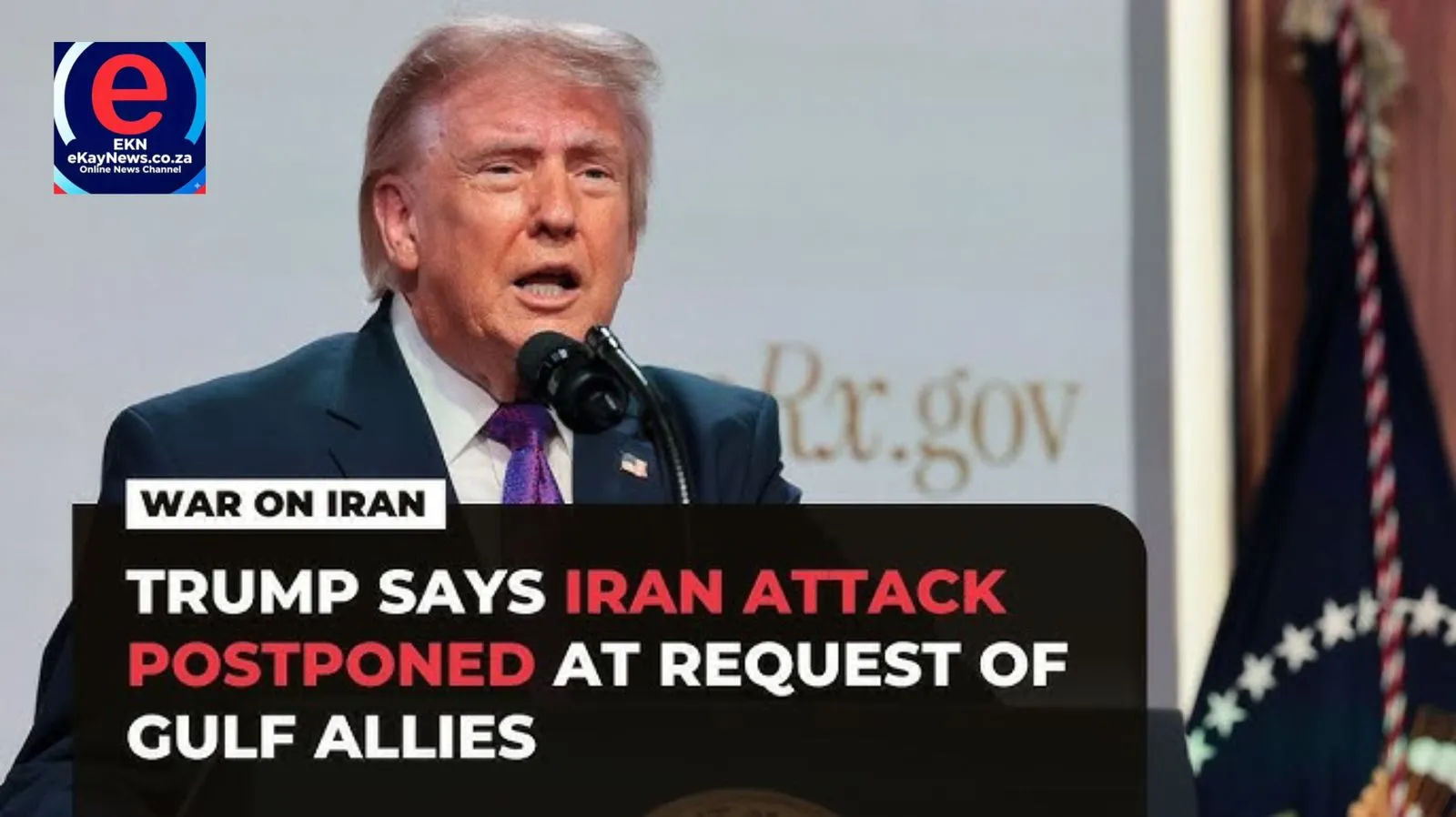
Trump calls off scheduled attack on Iran amid “serious negotiations” toward peace deal, marking a sudden and dramatic pivot in United States foreign policy in the Middle East. President Donald Trump announced on Monday that he was officially holding off on a massive, highly anticipated military strike against the Islamic Republic that was meticulously planned to take place on Tuesday. The abrupt cancellation comes at a critical juncture in global geopolitics, as the president explicitly cited that diplomatic channels are currently making unprecedented progress. According to the White House, these back-channel discussions are actively moving toward a comprehensive agreement that will be highly acceptable not only to the United States but also to its strategic allies across the Middle East.
The sudden de-escalation follows a weekend of intense rhetoric. Just on Sunday, Mr. Trump had issued a stark and uncompromising warning to Tehran, declaring that “the Clock is Ticking” for the nation to accept a binding peace agreement. In his characteristically direct tone, he warned that “there won’t be anything left of them” if the country’s senior leaders did not “get moving, FAST.”
However, by Monday, the aggressive posturing shifted drastically into cautious optimism, highlighting the unpredictable and fast-moving nature of the current geopolitical crisis. As global markets and international watchdogs monitor the situation, the fact that Trump calls off scheduled attack on Iran amid “serious negotiations” toward peace deal has brought a temporary sigh of relief to a region that has been teetering on the absolute edge of all-out war since late February.
Gulf States Influence the Trajectory of Peace Negotiations
The sudden reversal of military action was not made in a vacuum. In a detailed post on his Truth Social platform, President Donald Trump revealed that the decision to pause the impending Tuesday assault was made directly at the urgent request of prominent Gulf states. Specifically, the leaders of Qatar, Saudi Arabia, and the United Arab Emirates reached out to the Oval Office to request a stay of execution, emphasizing that fragile but genuine peace negotiations are currently underway.
A major, underlying factor at play in this diplomatic intervention is the deep-seated fear these Gulf Arab states harbor regarding regional collateral damage. Should the United States proceed with a full-scale bombardment, allied nations in the immediate vicinity are highly aware of how Tehran is likely to retaliate. The Islamic Republic is known to retain a vast, highly sophisticated arsenal of drones and ballistic missiles. In the event of a U.S. strike, there is widespread consensus among intelligence agencies that Tehran would immediately resume full-scale, devastating attacks on neighboring states.
Vulnerability of Arab Infrastructure and the Mediator Role
The infrastructure vulnerabilities of the Gulf states are massive. Potential targets include international airports, multi-billion-dollar petrochemical facilities, and, perhaps most critically, the vital desalination plants that provide the vast majority of drinking water to these arid nations. With scorching summer temperatures building up across the Gulf, the destruction of water infrastructure would instantly trigger a humanitarian catastrophe of unprecedented proportions. Recognizing this existential threat, regional leaders leaned heavily on Washington to allow diplomatic mediators, including those from Pakistan, to bridge the divide.
Despite the pause, the American commander-in-chief made it clear that the military option remains firmly on the table. He warned that the United States Armed Forces stand ready to “go forward with a full, large scale assault of Iran, on a moment’s notice” should the current diplomatic window close without an acceptable resolution. In response to this looming threat, a senior Iranian military commander issued a stern counter-warning, advising the U.S. administration not to make “strategic mistakes and miscalculations again.”
Addressing the Threat of Nuclear Weapons
At the very core of this decades-long standoff is the international community’s deep concern over the proliferation of nuclear weapons. As Trump calls off scheduled attack on Iran amid “serious negotiations” toward peace deal, the framework of the proposed agreement heavily features nuclear containment. According to the president, he has been reliably informed that the impending deal will be “very acceptable” to the United States, emphatically adding in his social media address that there would be “NO NUCLEAR WEAPONS FOR IRAN!”
The United States and its European allies have long claimed, backed by various intelligence assessments, that Tehran is actively seeking to develop a nuclear arsenal by enriching uranium beyond civilian utility levels. Conversely, the Islamic Republic has repeatedly and vehemently denied these allegations, maintaining that its extensive nuclear programme is solely intended for peaceful, civilian purposes such as medical research and energy production.
Shifting Policy Frameworks and Uranium Containment
Recent developments suggest a potential compromise on this major sticking point. Reports from Iran’s semi-official Fars news agency indicated on Sunday that Washington had outlined five strict conditions in response to a recent proposal from Tehran. These conditions reportedly included a non-negotiable demand that the country keep only a single nuclear site in operation and permanently transfer its existing stockpile of highly enriched uranium to U.S. custody.
Interestingly, President Trump suggested on Friday that he might be willing to accept a 20-year suspension of the nuclear programme. This statement appears to be a significant confirmation of a policy shift, moving away from previous hawkish demands for the total and permanent eradication of the country’s nuclear infrastructure.
“If we can do that without bombing the hell out of them, I would be very happy,” Trump told reporters, underscoring his willingness to explore this diplomatic avenue.
Economic Fallout, Blockades, and the Strait of Hormuz
The necessity for successful peace negotiations is further amplified by the severe economic disruptions caused by the ongoing hostilities. The conflict escalated dramatically on February 28, when Israeli and U.S. forces initiated massive, coordinated air strikes against Iranian targets. In retaliation, Tehran launched a barrage of drones and missiles aimed at Israeli territory and U.S. military installations scattered across the Gulf region.
While a temporary ceasefire agreed upon in April—intended specifically to facilitate high-level talks—has been largely observed despite occasional, localized exchanges of fire, the economic warfare remains intense. Crucially, the Iranian Revolutionary Guard has continued to exert operational control over the Strait of Hormuz. By effectively closing this vital global waterway, through which approximately 20% of the world’s oil and liquefied natural gas (LNG) travels, Tehran has sent international energy prices soaring to punishing levels. The Islamic Republic has explicitly stated that this maritime blockade is a direct retaliation for the joint U.S. and Israeli military strikes.
Conflicting Demands and the Enforcement of Naval Blockades
In response, the United States has been aggressively enforcing its own naval blockade of Iranian ports. This strategy is designed to exert maximum economic pressure on Tehran, crippling its export economy in order to force compliance with Washington’s diplomatic terms. The resulting economic strangulation has led to a tense standoff, with both sides demanding immediate concessions.
According to Iran’s semi-official Tasnim news agency, Tehran’s counter-demands are extensive. They include an immediate, unconditional end to the war on all fronts—which serves as a direct reference to the continued Israeli military campaigns against Iran-supported Hezbollah forces in Lebanon. Furthermore, Tehran is demanding an immediate halt to the U.S. naval blockade, ironclad guarantees that there will be no further military attacks, comprehensive financial compensation for war damages, and a formal international recognition of Iranian sovereignty over the heavily contested Strait of Hormuz.
While the U.S. previously labelled these demands as “totally unacceptable,” putting the truce on “massive life support,” Iranian foreign ministry spokesperson Esmail Baghaei has firmly insisted that their terms are both “responsible” and “generous.”
Domestic Pressures and Polling Realities for Donald Trump
While geopolitical strategy dictates much of the current crisis, domestic political pressures within the United States are undeniably playing a pivotal role in why Trump calls off scheduled attack on Iran amid “serious negotiations” toward peace deal. The president’s latest announcement comes amid a significant and noticeable drop in his domestic approval ratings, as the prospect of another prolonged Middle Eastern war becomes increasingly unpopular among the American electorate.
According to a highly publicized New York Times/Siena poll published on Monday, a staggering 64% of American voters firmly believe that it was the wrong decision to initiate armed conflict with the Islamic Republic. The comprehensive survey also delivered sobering numbers regarding the president’s overall job performance, finding that just 37% of voters currently approve of his administration’s actions.
Midterm Election Logistics and Saberrattling from Tehran
This polling data underscores a massive, looming challenge for the Republican Party as they face highly contested midterm elections. There is a growing, palpable public frustration not only with the financial and human costs of the overseas war but also with the administration’s handling of pressing domestic issues, including the economy and border immigration. By pivoting toward diplomacy, Donald Trump may be seeking a major foreign policy victory that can be touted on the campaign trail without the political liability of American casualties or a localized economic recession triggered by skyrocketing gas prices.
As the situation develops, mixed signals continue to emanate from Tehran. Late on Monday, the Tasnim news agency published warnings attributed to Supreme Leader Mojtaba Khamenei, stating that new military fronts would be opened where the enemy is highly vulnerable. However, analysts noted that Tasnim appeared to be reposting older quotes from March 12, a tactic frequently used by state media to project strength during delicate diplomatic back-and-forths.
YOU MAY LIKE:
Conclusion: A Fragile Lifeline for Regional Diplomacy
Ultimately, the global community watches the unfolding situation with bated breath. While the immediate threat of a Tuesday bombardment has been safely averted, the underlying economic and military tensions remain incredibly volatile. The temporary pause highlights the profound influence wielded by regional Gulf states, who managed to pull the United States back from a catastrophic military escalation to protect their own infrastructure.
Whether these intricate back-channel discussions, facilitated by Pakistani mediators and driven by shifting domestic poll numbers in Washington, can permanently bridge the immense gap between the U.S. and Tehran is yet to be determined. For now, the implementation of raw military power has stepped aside to grant diplomacy a temporary, fragile lifeline, but the world remains fully aware that the clock is still ticking. Keep following eKayNews for breaking geopolitical insights and real-time updates on this developing story.
References from mainstream media:
-
The New York Times: Trump Abruptly Halts Iran Strikes After Approving Them
Kindly consider to support eKayNews, Buy Us a Coffee & Keep the News Flowing!

Love what we do? You can now support eKayNews directly! Your contributions empower us to deliver the breaking news, sports, and local updates you trust.
Ways to Support:
-
Subscribe: Choose any amount (cancel anytime).
-
Virtual Coffee: A quick, once-off donation to say thanks.
Note: Payments are 100% secure via PayFast. We never see your banking details.
To our amazing readers: Your support fills us with gratitude. You are the reason we can keep doing this every day. Thank you for being a vital part of the eKayNews family!
We’re feeling the love at eKayNews!

Facebook: [eKayNews on Facebook] X (Twitter): [eKayNews on X] WhatsApp: [Follow the eKayNews WhatsApp Channel] Join our inner circle for real-time news alerts!
📢 Advertising Packages on www.eKayNews.co.za
Package 1. Link Booster: We add 7 links to 7 articles over 7 days – R2,500
Package 2. Permanent Feature: Sponsored Blog Article (hosted permanently) – R4,000
Package 3. Prime Visibility: Home Page Banner Ad (30 days) – R5,000
Book now: Email info@ekaynews.co.za or WhatsApp us on +27710961185