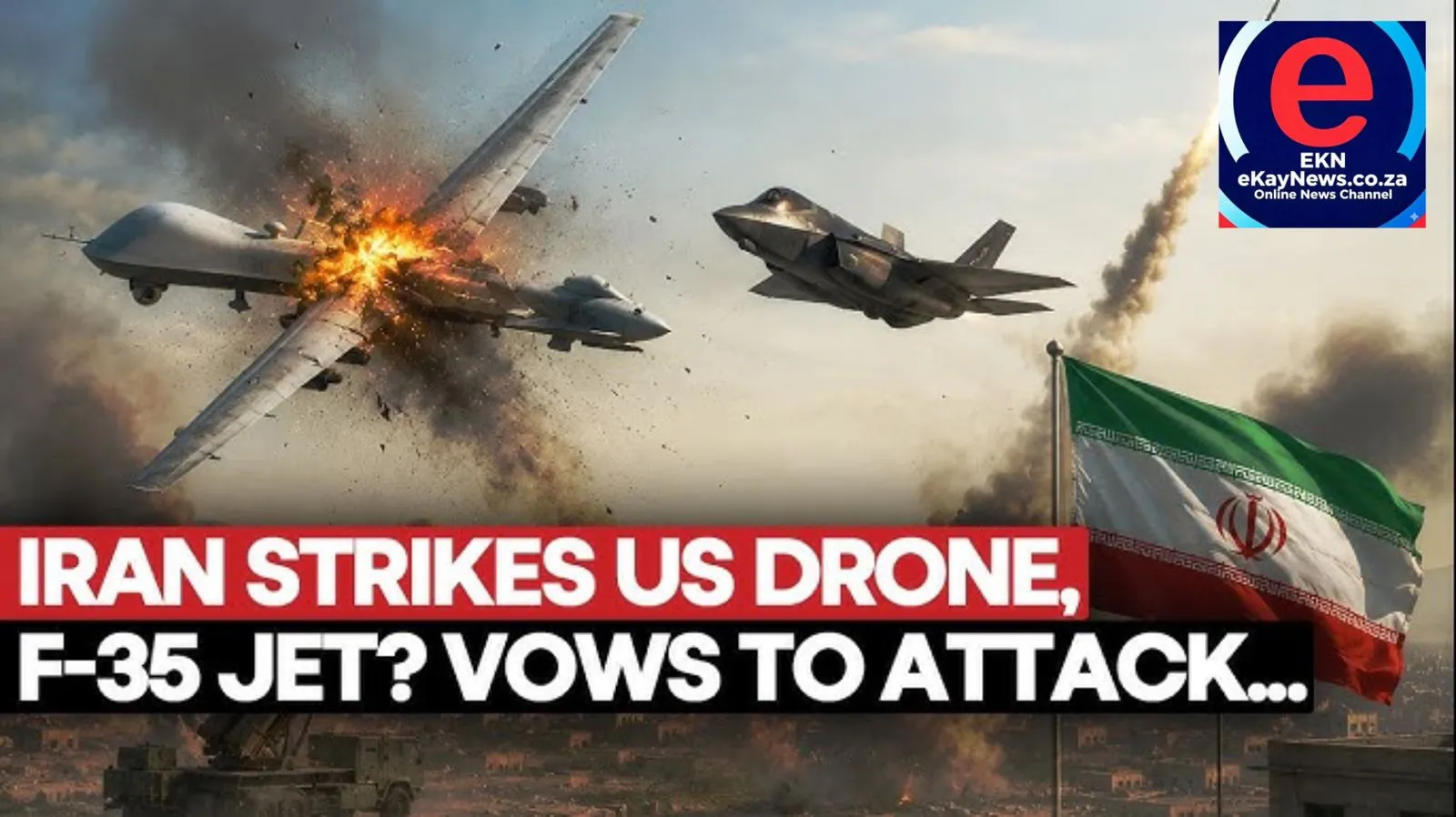
IRGC says it downed US drone entering airspace
IRGC says it downed US drone entering airspace as military tensions between Tehran and Washington escalated sharply during ongoing peace negotiations in Qatar. Iran’s Revolutionary Guard Corps claimed it intercepted and destroyed an American MQ-9 Reaper drone while also opening fire on a US F-35 fighter jet allegedly attempting to enter Iranian airspace.
The latest confrontation comes at a sensitive moment for Iran peace talks, with both nations attempting to preserve a fragile ceasefire that began earlier this year. However, overnight US strikes in the Strait of Hormuz region appear to have pushed the already tense relationship closer to another dangerous escalation.
Iran insists its military actions were defensive and justified under international law, while the United States says its operations targeted threats posed by Iranian forces in the Gulf.
IRGC drone attack raises alarm in Middle East
The reported IRGC drone attack has intensified fears that direct military confrontation between the United States and Iran could once again spiral into wider conflict across the Middle East.
According to Iranian state media, the Islamic Revolutionary Guard Corps detected what it described as hostile American aircraft entering Iranian-controlled airspace on Tuesday morning. The IRGC said it responded by firing at multiple aerial targets, including an MQ-9 Reaper drone, an RQ-4 surveillance drone, and an F-35 stealth fighter jet.
Iranian officials claim the MQ-9 Reaper drone was successfully shot down, while the F-35 allegedly retreated from the area after coming under fire.
In a statement released by Iranian military authorities, the IRGC declared it had the “legitimate and definite” right to retaliate against any violations of the ceasefire agreement between Iran and the United States.
The military escalation follows overnight American strikes targeting missile launch sites and Iranian naval boats near the Strait of Hormuz.
US-Iran tensions grow after overnight strikes
The latest exchange has further increased US-Iran tensions despite ongoing diplomatic efforts to secure a broader peace agreement.
The United States Central Command (CENTCOM) confirmed on Monday evening that American forces carried out what it described as self-defence strikes in southern Iran.
CENTCOM spokesperson Tim Hawkins said the strikes targeted missile launch facilities and boats attempting to deploy naval mines in strategic waters near the Strait of Hormuz.
“U.S. forces conducted self-defense strikes in southern Iran today to protect our troops from threats posed by Iranian forces,” Hawkins said.
“Targets included missile launch sites and Iranian boats attempting to emplace mines.”
American officials argue the military operation was necessary to protect US personnel and maintain freedom of navigation in one of the world’s most important shipping corridors.
Iran, however, condemned the strikes as provocative and accused Washington of violating the terms of the ceasefire agreement that took effect on April 8.
The ceasefire was intended to halt hostilities for 40 days while negotiators from both countries worked toward a longer-term settlement.
MQ-9 Reaper drone central to military conflict
The MQ-9 Reaper drone has become a major symbol of modern American military operations and surveillance capabilities.
Developed for intelligence gathering and precision strikes, the MQ-9 is one of the most advanced unmanned aerial systems in the US military arsenal. Each drone reportedly costs between $30 million and $35 million to manufacture and operate.
Iranian officials claim their forces have destroyed around 30 MQ-9 Reaper drones since the conflict with the United States intensified earlier this year.
If accurate, the losses would represent a significant financial and operational setback for the US military, with estimates suggesting over $1 billion worth of equipment has been destroyed.
Military analysts note that the Reaper drone plays a key role in American surveillance operations throughout the Middle East, particularly in monitoring shipping routes, missile activity, and military installations.
Iran’s claim that it successfully shot down another MQ-9 is likely to be viewed by Tehran as a major propaganda victory, especially during ongoing negotiations with Washington.
However, US officials have not yet publicly confirmed the loss of any aircraft following Tuesday’s reported confrontation.
Strait of Hormuz conflict threatens global trade
The Strait of Hormuz conflict continues to create uncertainty for international markets and global energy supplies.
The narrow waterway between Iran and the Gulf states remains one of the world’s most strategically important shipping routes. A large percentage of global oil exports pass through the strait daily, making stability in the region essential for the international economy.
Recent clashes involving Iranian naval forces, American warships, and military drones have heightened fears of disruption to shipping traffic.
Iran has repeatedly threatened to restrict movement through the strait in response to US military pressure and sanctions.
The latest American strikes reportedly targeted Iranian boats suspected of placing mines near shipping lanes, reinforcing concerns that the Gulf region remains dangerously unstable.
Oil prices have fluctuated sharply in recent months due to fears that any prolonged conflict in the Strait of Hormuz could severely disrupt global energy supplies.
International governments and financial markets are closely monitoring developments between Washington and Tehran as tensions continue to rise.
Iran peace talks face growing uncertainty
The latest military confrontation has cast fresh doubt over the future of ongoing Iran peace talks.
Negotiators from Iran and the United States are currently holding indirect discussions in Qatar in an attempt to preserve the ceasefire and work toward a broader diplomatic agreement.
Despite the recent violence, officials from both sides insist negotiations are continuing.
Iranian authorities, however, have warned that repeated American military operations could undermine trust and derail progress made during recent talks.
The United States maintains that its actions are defensive and aimed solely at protecting troops and ensuring maritime security.
Diplomatic observers say the biggest challenge facing negotiators is balancing military tensions with political efforts to de-escalate the conflict.
Both nations continue to disagree on several major issues, including sanctions relief, naval operations in the Gulf, and Iran’s nuclear programme.
The latest drone incident may further complicate already fragile discussions between the two governments.
International concern over escalating conflict
The international community has reacted with concern to reports of renewed fighting between the United States and Iran.
Several world powers have called for restraint and urged both sides to avoid actions that could trigger a larger regional conflict.
Security analysts warn that any direct military clash involving advanced aircraft like the F-35 fighter jet could significantly escalate the situation.
The Middle East remains highly sensitive following months of conflict involving Iran, Israel, Gulf states, and American forces.
Many governments fear that continued instability around the Strait of Hormuz could damage the global economy and further destabilise energy markets.
Diplomatic pressure is expected to increase in the coming days as international mediators attempt to prevent further military escalation.
Ceasefire remains under pressure
Although the ceasefire between Iran and the United States technically remains in place, recent events show how fragile the agreement has become.
Military analysts believe both nations are carefully testing each other’s limits while attempting to avoid triggering a full-scale war.
Iran’s decision to publicly announce the downing of the MQ-9 Reaper drone and engagement with an F-35 fighter jet signals Tehran’s willingness to project military strength during negotiations.
At the same time, the United States continues to conduct operations aimed at protecting strategic interests in the Gulf region.
The balance between diplomacy and military action remains delicate, with even minor incidents carrying the risk of major escalation.
Conclusion
IRGC says it downed US drone entering airspace at a time when relations between Tehran and Washington remain extremely tense despite ongoing peace negotiations. Iran claims its military successfully intercepted American aircraft following overnight US strikes targeting missile sites and naval operations near the Strait of Hormuz.
The reported destruction of an MQ-9 Reaper drone and confrontation involving an F-35 fighter jet have intensified concerns over the future of the fragile ceasefire agreement.
As Iran peace talks continue in Qatar, both nations face increasing international pressure to prevent the conflict from escalating further. With military operations and diplomatic discussions unfolding simultaneously, the coming days could prove critical for stability in the Middle East and the future of US-Iran relations.
References from mainstream media
- Reuters – “US launches new strikes on Iran as nuclear talks continue”
https://www.reuters.com/world/middle-east/us-launches-new-strikes-iran-targeting-missile-sites-boats-2026-05-26/ - BBC News – “Iran says IRGC downed US drone during ceasefire tensions”
https://www.bbc.com/news/world-middle-east-iran-us-drone-tensions-2026
Keep the Headlines Fresh!

Quality news takes time, effort, and a whole lot of coffee. If you value what we do at eKayNews, consider “buying a round” for the team!
-
Join the Inner Circle: Set up a custom subscription.
-
The Instant Jolt: Send a one-time “coffee” donation.
Why trust us? We use PayFast for 100% secure, encrypted transactions. Your data stays yours; the news stays ours.
To our amazing readers: You’re the reason we’re first on the scene. Thanks for being part of the family!
Feel the Pulse of the News with eKayNews!

Join the ever-growing eKayNews community and stay connected to the stories that matter. Follow us on Facebook, X, and WhatsApp for real-time updates, breaking news, and exclusive alerts straight to your feed. Your support keeps us digging deeper and sharing the news you can trust.
Stay Connected:
-
Facebook: [eKayNews on Facebook]
-
X (Twitter): [eKayNews on X]
-
WhatsApp: [Join the eKayNews WhatsApp Channel]
Become part of our inner circle and get instant news alerts as events unfold across South Africa and beyond!
Promote Your Brand with eKayNews
Looking to reach a wide, engaged audience? Explore our advertising packages:
-
Link Booster: 7 links to 7 articles over 7 days – R2,500
-
Permanent Feature: Sponsored blog article hosted permanently – R4,000
-
Prime Visibility: Home page banner ad for 30 days – R5,000
Don’t miss your chance to connect with our audience. Book your package today via email at info@ekaynews.co.za or WhatsApp us on +27710961185.
Be part of a platform where news meets community—stay informed, stay ahead, stay with eKayNews!