SpaceX launches 27 Starlink satellites, and hackers infect cars with Android-based head units
SpaceX launches 27 Starlink satellites in another major milestone for the company’s rapidly expanding Starlink constellation, while several other important technology developments are drawing attention across global markets.
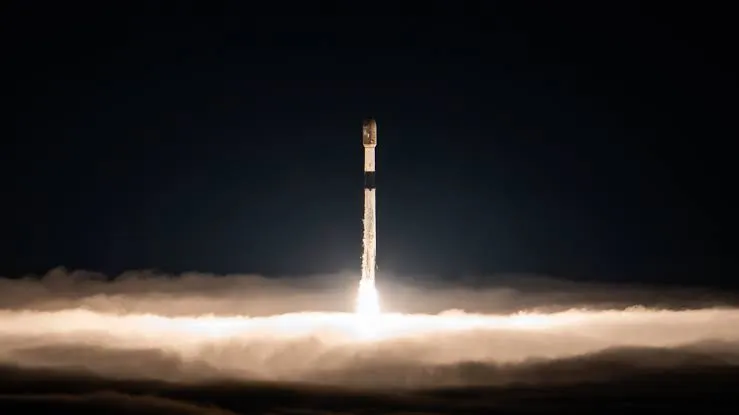
The latest Falcon 9 mission from Vandenberg Space Force Base in California carried 27 Starlink satellites into low Earth orbit on 22 August 2026. The launch marked SpaceX’s 100th Falcon mission of the year, including 99 Falcon 9 missions and one Falcon Heavy flight.
The launch comes as SpaceX continues to expand Starlink, while investors, cybersecurity researchers and technology companies face a rapidly changing environment shaped by artificial intelligence, semiconductor shortages and increasingly sophisticated malware.
SpaceX Starlink launch reaches major milestone
The latest SpaceX Starlink launch represents another step in the company’s aggressive launch schedule.
The Falcon 9 lifted off from Vandenberg Space Force Base and successfully deployed 27 Starlink satellites into orbit. The mission was the company’s 100th Falcon mission of 2026, highlighting the extraordinary pace at which SpaceX has been conducting orbital launches this year.
The milestone included 99 Falcon 9 missions. The only other Falcon mission was a Falcon Heavy flight in April that carried the Viasat-3 F3 telecommunications satellite.
Starlink has become one of the world’s largest satellite constellations, with thousands of operational spacecraft providing broadband connectivity from low Earth orbit.
The latest launch therefore has significance beyond the number of satellites placed into space. It demonstrates SpaceX’s ability to maintain a high-frequency launch programme while continuously adding capacity to its internet network.
Starlink faces growing competition
SpaceX is not operating in an empty market.
Starlink faces competition from companies and satellite networks including Amazon’s Leo, Eutelsat OneWeb and China’s SpaceSail. However, SpaceX’s launch frequency and the scale of its existing constellation give Starlink a substantial head start.
The continued deployment of satellites is important because the network relies on a large constellation to provide coverage and capacity to users around the world.
The company is also working toward an increasingly ambitious launch cadence, making each Falcon mission part of a much larger strategy for satellite communications.
Car head unit malware raises cybersecurity concerns
While SpaceX was adding satellites to orbit, cybersecurity researchers were investigating a very different technology threat involving connected vehicles.
Kaspersky reported the discovery of malware targeting Android-based car head units, marking what researchers described as the first documented malware infection chain specifically designed for these automotive systems.
The affected systems are associated with DoFun-developed Android-based head units. These systems can provide infotainment, navigation and other connected functions inside vehicles.
Researchers discovered that attackers abused legitimate firmware-update mechanisms to deliver malware to the devices.
The campaign reportedly involved a legitimate system application called TWCore, which normally handles software updates and related functions. Attackers exploited this mechanism to install malicious software without the vehicle owner necessarily being aware of the activity.
How the car malware works
According to Kaspersky, the malware can perform activities including advertising fraud and potentially enrol compromised head units into a proxy botnet.
Researchers linked the campaign with the MoYu Group, which has previously been associated with the BadBox ecosystem.
The discovery highlights a growing cybersecurity challenge: as more everyday devices become connected to the internet, attackers have more potential platforms from which to conduct malicious activities.
Kaspersky said the issue affecting the relevant update mechanism was reported to DoFun, which said it had been fixed.
Importantly, the discovery does not mean that every Android-based vehicle system is infected. The research concerns particular DoFun systems and the specific software-update chain identified by researchers.
AI data centre investment continues despite financing pressure
Another major technology story is the enormous amount of capital flowing into artificial intelligence infrastructure.
Companies are investing hundreds of billions of dollars in data centres, processors, networking equipment and other infrastructure required to support AI services.
The investment boom is also changing financial markets as companies seek increasingly large amounts of debt to finance new data-centre projects.
According to the information supplied for this report, companies have borrowed more than $410 billion this year for data centres and other AI-related investments.
The enormous financing requirements demonstrate how the AI boom is expanding beyond software and chatbots. It is increasingly driving demand for physical infrastructure, including electricity generation, cooling systems, high-performance computing equipment and data-centre buildings.
South Korean investors chase higher returns
The AI boom is also influencing South Korea’s stock market.
Retail investors have increasingly turned toward structured products after a major stock-market selloff. Equity-linked securities offering annualised coupons of around 40% to 50% have attracted renewed attention.
The products are linked to major companies including Samsung and SK Hynix, both of which play important roles in the global semiconductor industry.
However, structured products can carry significant risks. Investors may face losses when underlying shares fall beyond predetermined levels.
The developments demonstrate how investors can continue seeking high-risk opportunities even after experiencing significant market volatility.
Amazon Kindle price increases linked to memory shortage
Consumers are also feeling the effects of the technology industry’s semiconductor pressures.
Amazon Kindle price increases have reportedly affected several devices as an AI-driven memory-chip shortage puts pressure on electronics manufacturers.
According to the information provided for this report, the 16GB Kindle increased from approximately $110 to $150, representing a 36% increase.
The 16GB Kindle Paperwhite reportedly increased from $160 to $200, a 25% rise.
The increases illustrate how the demand created by artificial intelligence infrastructure can eventually affect ordinary consumer electronics.
AI data centres require enormous quantities of advanced memory and other semiconductor components. When demand increases dramatically, manufacturers and suppliers can face shortages that affect pricing across the broader technology market.
Memory demand affects consumer technology
The semiconductor industry is already dealing with intense demand for memory products used in AI systems.
Samsung and SK Hynix are among the companies benefiting from demand for high-bandwidth memory used in AI data centres.
However, increased demand can also create supply constraints and higher costs for other technology products.
Consumers could therefore continue to see price changes in smartphones, computers, e-readers and other electronic devices if memory supply remains tight.
Microsoft Teams malware targets corporate users
Another cybersecurity warning involves Microsoft’s popular collaboration platform.
Security researchers at Expel discovered a new malware family called SynkLoader, which was distributed through a Microsoft Teams phishing campaign.
Attackers reportedly impersonated an organisation’s IT help desk and persuaded a target to download a malicious installer.
The campaign used a fake “PowerShell Cleaner” file hosted through Microsoft Azure infrastructure, potentially making the download appear more legitimate to the victim.
Microsoft Teams malware uses fake lock screen
SynkLoader is particularly concerning because it can attempt to steal credentials through a fake lock screen.
Expel’s analysis found that the malware is modular and can deploy additional components. Researchers also observed functionality designed to facilitate network access by attackers.
The incident demonstrates why employees should remain cautious even when receiving messages through trusted workplace platforms.
Users should verify unexpected requests from supposed IT staff, particularly when asked to download software or execute files.
YOU MAY LIKE:
Technology industry faces rapid change
The latest developments show how quickly technology is evolving across multiple areas.
The SpaceX Starlink launch demonstrates the rapid expansion of satellite internet infrastructure. At the same time, car head unit malware shows how connected vehicles are becoming targets for cybercriminals.
AI data-centre investment is driving huge demand for infrastructure and semiconductors, while Amazon Kindle price increases demonstrate how those supply pressures can reach consumers.
Meanwhile, Microsoft Teams malware highlights the continuing threat posed by phishing and credential-stealing campaigns.
Together, these developments illustrate a technology industry undergoing major transformation.
SpaceX is increasing the scale of satellite connectivity, AI companies are investing heavily in computing infrastructure, and consumers are adapting to changing hardware prices. At the same time, cybersecurity researchers are warning that increasingly connected devices and workplace platforms provide criminals with new opportunities.
For consumers and businesses, the message is increasingly clear: technological progress is creating new opportunities, but it is also introducing new financial, supply-chain and cybersecurity risks.
References
- Space.com – SpaceX sends 27 Starlink satellites to orbit on 100th Falcon rocket launch of the yearar.
Read the Space.com report - Spaceflight Now – SpaceX launches 100th orbital mission of 2026
Read the Spaceflight Now report - The Hacker News – Android Car Malware Spreads Through Built-In Updaters
Read The Hacker News report - Kaspersky – Kaspersky discovers a malware campaign targeting car head units
Read the Kaspersky research
Support Independent Journalism with eKayNews! 📰✨

At eKayNews, we are dedicated to bringing you honest, independent, and reliable news. But we can’t do it alone—independent journalism relies on the strength and generosity of its community.
If you value our work, please consider supporting us today! You can help keep us going by choosing a subscription or simply buying us a one-off virtual coffee:
👉 Support us here: ekaynews.co.za/subscribe-form/
You can also support our mission by visiting our main site at www.ekaynews.co.za and following @eKayNews on all social media platforms.
Thank you so much for your incredible generosity and for being part of our journey! 🙏💙