Iran rejects Trump’s plan for US control of Hormuz
Iran rejects Trump’s plan for US control of Hormuz after Tehran dismissed President Donald Trump’s proposal to declare the strategically important Strait of Hormuz a territory of the United States.
The latest exchange has intensified the confrontation between Washington and Tehran, with Iran insisting that neither an American presidential statement nor military pressure can change the status of the crucial waterway.
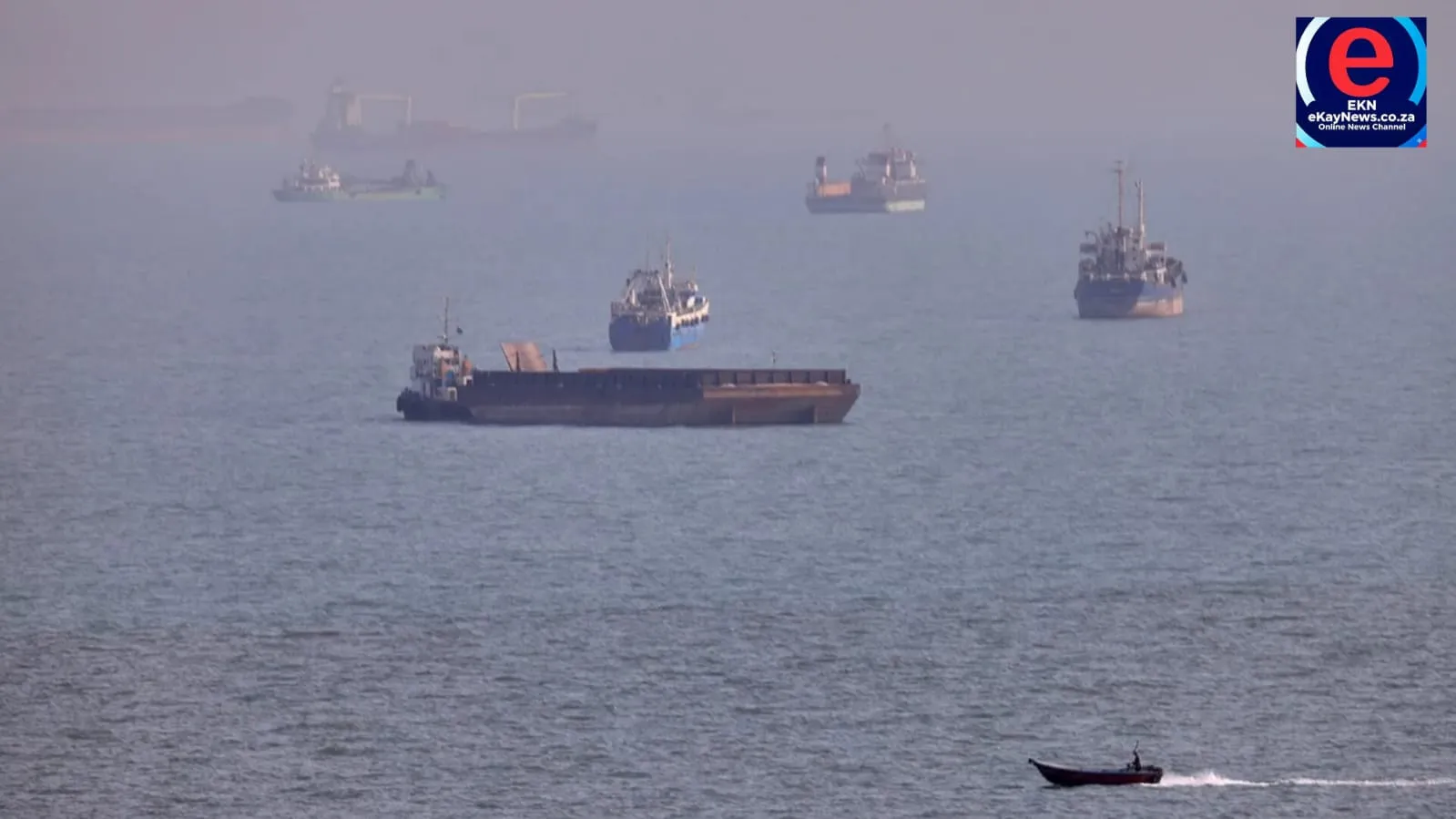
The dispute comes as the Strait of Hormuz remains one of the biggest flashpoints in the ongoing Iran-US conflict and as international shipping through the passage has fallen sharply.
Iranian Deputy Foreign Minister Kazem Gharibabadi rejected Trump’s claim and said Iran would continue determining whether the waterway remains open or closed.
Iran rejects Trump claim over Strait of Hormuz
The latest Iran rejects Trump claim response came after Trump said he could soon declare the Strait of Hormuz a US territory.
Gharibabadi responded on social media, arguing that Washington has no authority to claim sovereignty over the waterway.
He insisted that the strait had historically been Iranian, remains Iranian and would continue to be under Iranian control.
The Iranian official also said Tehran would continue enforcing its blockade while accusing the United States of refusing to accept what he described as defeat.
Trump’s statement followed a series of comments in which he has claimed that the United States effectively controls the strategic passage because of its naval presence.
The president has repeatedly highlighted America’s military capability in the region and said US forces have the ability to determine whether ships can move through the waterway.
Iran, however, has rejected that interpretation.
Strait of Hormuz tensions continue to rise
The Strait of Hormuz tensions have become increasingly important because of the waterway’s role in global energy markets.
The strait connects the Persian Gulf with the Gulf of Oman and is one of the world’s most important routes for oil and natural gas shipments.
Before the conflict began, around one-fifth of global oil and gas supplies moved through the area.
That makes any prolonged disruption a potential threat to international energy markets.
The reduction in shipping has already raised concerns among governments, energy companies and traders.
According to ship-tracking data cited in the supplied report, only six vessels passed through the strait during one recent weekend, compared with approximately 130 to 140 ships a day before the conflict.
The difference illustrates how dramatically the confrontation has affected normal maritime traffic.
Shipping disruption affects global markets
A sharp fall in traffic through Hormuz can create wider consequences even when there is no complete closure.
Shipping companies may face higher insurance costs, longer routes and additional security expenses.
Energy traders may also react to uncertainty by pushing oil prices higher.
Countries heavily dependent on imported fuel can be particularly vulnerable because higher crude prices can increase transportation, manufacturing and electricity costs.
The Strait of Hormuz tensions therefore extend well beyond the Middle East.
Donald Trump doubles down on US control claims
Donald Trump has repeatedly claimed that America has effective control over the waterway.
During remarks earlier in the week, he said the United States had control over the strait and praised the capabilities of the US Navy.
His latest suggestion that the waterway could eventually become US territory represents a much more expansive claim.
The idea has triggered questions over what would be required for such a change to happen and whether a president could make it happen unilaterally.
A declaration from Trump would not automatically transfer sovereignty over territory that is not currently owned by the United States.
The strait is bordered by Iran and Oman, and its legal status is governed by a complex combination of maritime law, coastal-state rights and navigation principles.
Iran-US conflict enters another dangerous phase
The dispute comes amid an escalating Iran US conflict that has already disrupted shipping and energy markets.
The two governments continue to make competing claims about military control, maritime access and the future of negotiations.
Washington has maintained a naval presence in the region while Iran has sought to use the strait as leverage.
The confrontation has also involved economic pressure.
The United States has imposed sanctions on Iran and pursued measures aimed at reducing Tehran’s access to foreign currency.
Iran, meanwhile, has linked the reopening of maritime traffic to demands involving the removal of sanctions and changes to US military activity.
This has created a cycle in which the Strait of Hormuz is both an economic lifeline and a bargaining tool.
Diplomacy remains uncertain
Although the two sides have discussed potential arrangements involving Oman and maritime traffic, no broader settlement has yet resolved the confrontation.
Iranian Foreign Minister Abbas Araghchi has indicated that discussions with Oman could lead to progress on managing the strait, but Tehran has separated that question from the wider dispute with Washington.
That suggests even an agreement on shipping may not be enough to end the larger conflict.
The latest Trump statement is therefore likely to become another negotiating issue rather than a final decision on the status of the waterway.
Is the Strait of Hormuz actually controlled by one country?
The question of control is more complicated than political statements suggest.
The Strait of Hormuz lies between Iran and Oman, and the waterway includes maritime areas subject to different legal rules.
Under widely recognised principles of international maritime law, coastal states have sovereignty over territorial seas extending up to 12 nautical miles from their coastlines, while international straits are also governed by navigation rights.
Because of the geography of Hormuz, the legal and practical situation is highly complex.
Neither the United States nor Iran is in a position to simply redefine the waterway’s international status through a unilateral announcement.
Military power can create de facto control over shipping, but that is not identical to internationally recognised sovereignty.
This distinction is at the heart of the current dispute.
Global oil supply route faces growing risks
The Strait of Hormuz remains a critical global oil supply route, which explains why governments around the world are closely monitoring the confrontation.
Any further deterioration could put additional pressure on energy markets.
A prolonged reduction in vessel traffic could lead to tighter supplies, higher freight costs and increased volatility in oil and gas prices.
Countries in Asia are particularly exposed because many rely on Gulf energy exports moving through the strait.
European economies and global manufacturers could also feel the impact indirectly if higher energy prices increase inflation.
For South Africa and other import-dependent economies, another prolonged spike in oil prices could raise fuel and transport costs.
The importance of Hormuz therefore makes the US-Iran dispute a global economic issue rather than simply a regional geopolitical confrontation.
Iran says Hormuz will remain under its control
Tehran has remained firm in its response.
Gharibabadi said Iran would continue deciding when the strait is open or closed and rejected the suggestion that Trump could transform the waterway’s status through a declaration.
Iran’s position is that the United States cannot claim the strait as territory through political statements or military pressure.
At the same time, Washington continues to insist that its naval forces can influence traffic through the passage.
The competing positions mean the waterway is likely to remain a central point of confrontation for the foreseeable future.
YOU MAY LIKE:
US vows ‘indefinite’ Iran blockade and more economic pressure
What happens next?
The latest dispute adds another layer to already serious Strait of Hormuz tensions.
Trump’s claim has not changed the legal status of the waterway, but it has increased the political stakes around an already sensitive maritime route.
Iran is showing no sign of accepting the US territorial proposal, while Washington continues to use military and economic pressure to influence Tehran.
For shipping companies, energy traders and governments, the main concern is whether the confrontation remains rhetorical or develops into further disruption of commercial traffic.
The longer the dispute continues, the greater the potential consequences for the global economy.
Iran rejects Trump’s plan for US control of Hormuz, making clear that Tehran does not recognise Washington’s territorial claim and will continue to treat the strait as a central element of its negotiating strategy.
With the waterway carrying a major share of global energy supplies, the outcome of the dispute could have consequences far beyond the Gulf and shape international markets for months to come.
Mainstream media references
- Reuters – Gulf shipping traffic through Strait of Hormuz falls sharply
Read the Reuters report - Associated Press – A deal with Iran over the Strait of Hormuz may require a compromise from Trump
Read the AP report - The Wall Street Journal – Trump says Hormuz is under US control, but few ships are listening
Read The Wall Street Journal report - The Washington Post – US and Iran dig in over the Strait of Hormuz
Read The Washington Post report
Support Independent Journalism with eKayNews! 📰✨

At eKayNews, we are dedicated to bringing you honest, independent, and reliable news. But we can’t do it alone—independent journalism relies on the strength and generosity of its community.
If you value our work, please consider supporting us today! You can help keep us going by choosing a subscription or simply buying us a one-off virtual coffee:
👉 Support us here: ekaynews.co.za/subscribe-form/
You can also support our mission by visiting our main site at www.ekaynews.co.za and following @eKayNews on all social media platforms.
Thank you so much for your incredible generosity and for being part of our journey! 🙏💙