Israel also Launches Attack on Iran as Explosions Hit Tehran
Israel also Launches Attack on Iran as Explosions Hit Tehran, marking a dramatic escalation in regional hostilities and pushing the Middle East closer to a wider conflict.
Early Saturday morning, loud blasts were reported across Tehran, as Israel confirmed it had carried out what it described as a pre-emptive military strike against Iran. The development immediately heightened fears of retaliation and a broader regional war, with airspace closures, emergency declarations, and military alerts unfolding across several countries.
Israeli officials said the strikes were aimed at neutralising what they view as imminent threats from Iran, particularly related to missile and nuclear capabilities.
Israel Pre-Emptive Strike Confirmed
Israel’s government confirmed the Israel pre-emptive strike shortly after explosions were heard in multiple districts of Tehran, including central and northern areas of the capital. Israel temporarily shut its civilian airspace, citing security concerns, while sirens sounded across the country warning residents of possible incoming attacks.
In a televised statement, Israel Katz announced the operation, stating that Israel was acting to “remove threats against the State of Israel.” He further declared a “special and permanent state of emergency,” signaling expectations of possible Iranian retaliation.
The announcement marked one of the most direct Israeli military actions against Iranian territory in recent years.
Explosions in Tehran Spark Global Alarm
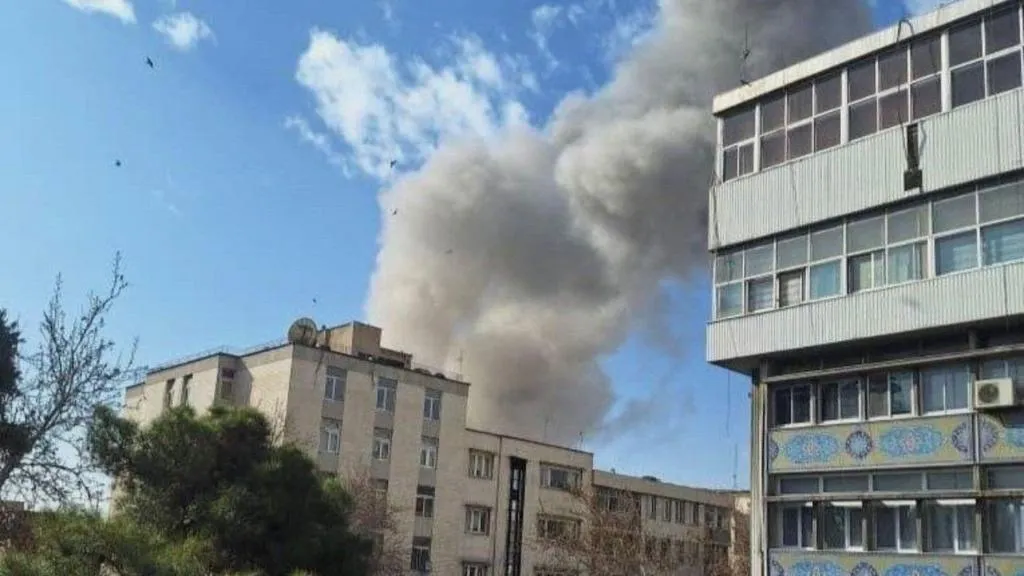
Explosions in Tehran were reported by Iranian state media and independent witnesses, with images and videos circulating online showing smoke rising above parts of the city. The state-affiliated Fars News Agency confirmed multiple blasts in the Republic area and other districts.
Residents described scenes of confusion and fear as emergency services responded across the capital. Although Iranian authorities initially released limited information about casualties or damage, the scale of the explosions suggested a coordinated and significant strike.
The timing of the attack—early on a Saturday, the first day of Iran’s workweek—added to concerns over civilian disruption and economic fallout.
Iran Military Escalation Likely
Analysts warn that the strikes significantly increase the risk of Iran military escalation. Iranian leaders have repeatedly stated that any direct attack on their territory would be met with a forceful response.
Iran has previously demonstrated its ability to retaliate through missile strikes, drone attacks, cyber operations, and by activating allied groups across the region. These include factions in Gaza, Lebanon, Iraq, and Yemen, raising fears of a multi-front conflict.
The Iranian government has rejected international pressure to curb its missile programme or reduce support for regional allies, viewing such demands as infringements on its sovereignty.
Israel Katz Announcement Signals Preparedness
The Israel Katz announcement was widely interpreted as a signal that Israel is preparing for prolonged confrontation. By declaring a nationwide emergency, Israeli authorities effectively placed the country on high alert, mobilising defense systems and restricting civilian movement where necessary.
Schools and public gatherings were suspended in several areas, while hospitals were placed on emergency footing. The Israeli military said it was monitoring multiple scenarios, including long-range missile launches from Iran or attacks by proxy groups.
Donald Trump Response Closely Watched
Donald Trump response to the strikes quickly became a focal point of international attention. The former U.S. president had previously warned Iran that military action remained an option if diplomatic efforts failed.
While Trump has recently expressed frustration with the slow pace of negotiations over Iran’s nuclear programme, he has also stated he prefers a deal to outright conflict. However, the United States has significantly expanded its military presence in the Middle East in recent months, a move widely seen as a deterrent to Iranian retaliation.
Washington officials said diplomatic talks between the U.S. and Iran are still expected to continue next week, though the latest developments have cast doubt over their prospects.
Tensions in the Middle East Reach New High
The latest strikes have sharply intensified tensions in the Middle East, a region already strained by ongoing conflicts and geopolitical rivalries. Israeli Prime Minister Benjamin Netanyahu has long warned about what he describes as the growing threat posed by Iran’s ballistic missile and nuclear ambitions.
He has consistently opposed any agreement that focuses solely on Iran’s nuclear programme without addressing its missile development and regional influence.
Last year’s brief but intense confrontation between Israel and Iran, which later drew in U.S. strikes on Iranian nuclear facilities, now appears to have set the stage for the current escalation.
Diplomacy Under Pressure
The strikes come at a delicate moment for diplomacy. Negotiations between Washington and Tehran aimed at preventing Iran from advancing its nuclear programme were ongoing, though progress had been slow.
Many observers fear that the Israeli attack could derail these efforts entirely, hardening positions on both sides and making compromise more difficult.
International leaders have urged restraint, warning that further escalation could destabilise global energy markets and threaten civilian lives across the region.
YOU MAY LIKE:
Trump warns Iran ‘time is running out’ for nuclear deal as US military builds up in Gulf
What Happens Next
As Israel also Launches Attack on Iran as Explosions Hit Tehran, the world now waits to see how Iran will respond. Any retaliation could trigger a rapid chain reaction involving regional allies and global powers.
For now, uncertainty dominates. Markets remain volatile, airspace across parts of the Middle East is restricted, and millions of civilians are bracing for what may come next.
What is clear is that this latest escalation marks a critical turning point—one that could reshape security, diplomacy, and power dynamics across the Middle East for years to come.
Mainstream Media References
- The Guardian – US and Israel Attack Iran
• US and Israel launch joint attack on Iran as Trump urges regime change — The Guardian reports on coordinated strikes by Israel and the United States against Iran, describing explosions in Tehran and international reactions. US and Israel launch joint attack on Iran (The Guardian) - Al Jazeera – Live Coverage of Attacks
• US, Israel attack Iran live: Trump announces ‘major combat operations’ — Al Jazeera Live provides updates on explosions heard in Tehran and the ongoing military offensive involving both Israel and the U.S. US, Israel attack Iran live updates (Al Jazeera)
Kindly consider to support eKayNews, Buy Us a Coffee & Keep the News Flowing!

Love what we do? You can now support eKayNews directly! Your contributions empower us to deliver the breaking news, sports, and local updates you trust.
Ways to Support:
-
Subscribe: Choose any amount (cancel anytime).
-
Virtual Coffee: A quick, once-off donation to say thanks.
Note: Payments are 100% secure via PayFast. We never see your banking details.
To our amazing readers: Your support fills us with gratitude. You are the reason we can keep doing this every day. Thank you for being a vital part of the eKayNews family!
We’re feeling the love at eKayNews!

Facebook: [eKayNews on Facebook] X (Twitter): [eKayNews on X] WhatsApp: [Follow the eKayNews WhatsApp Channel] Join our inner circle for real-time news alerts!
📢 Advertising Packages on www.eKayNews.co.za
Package 1. Link Booster: We add 7 links to 7 articles over 7 days – R2,500
Package 2. Permanent Feature: Sponsored Blog Article (hosted permanently) – R4,000
Package 3. Prime Visibility: Home Page Banner Ad (30 days) – R5,000
Book now: Email info@ekaynews.co.za or WhatsApp us on +27710961185